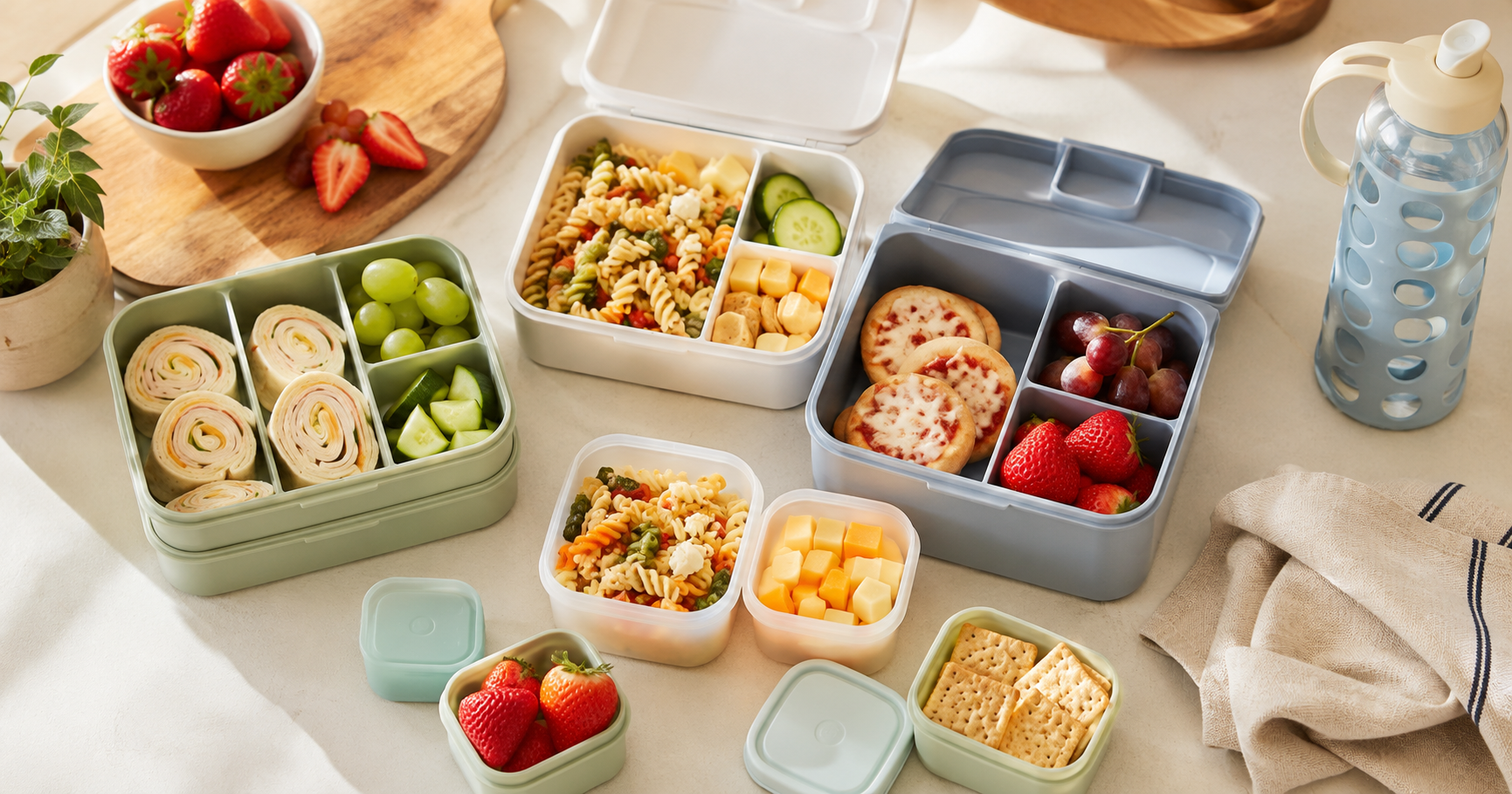
Easy School Lunch Ideas That Make Busy Mornings Simpler
Packing school lunches can feel like a daily puzzle. You need something quick enough for a busy morning, sturdy enough to survive a backpack, and appealing enough that your child will actually eat it. Add school food rules, changing preferences, and limited lunch periods, and even a simple lunch can become surprisingly complicated.
These easy school lunch ideas are designed for real families. They use familiar ingredients, flexible combinations, and simple preparation methods that do not require an elaborate recipe every morning. Most can be assembled in minutes, and several can be prepared partially or completely ahead of time.
The goal is not to create a picture-perfect lunch box every day. A successful school lunch is one your child recognizes, enjoys, and can eat comfortably during the time available. Start with foods your child already likes, add one or two supportive sides, and keep portions realistic.
How to Build a School Lunch Kids Will Actually Eat
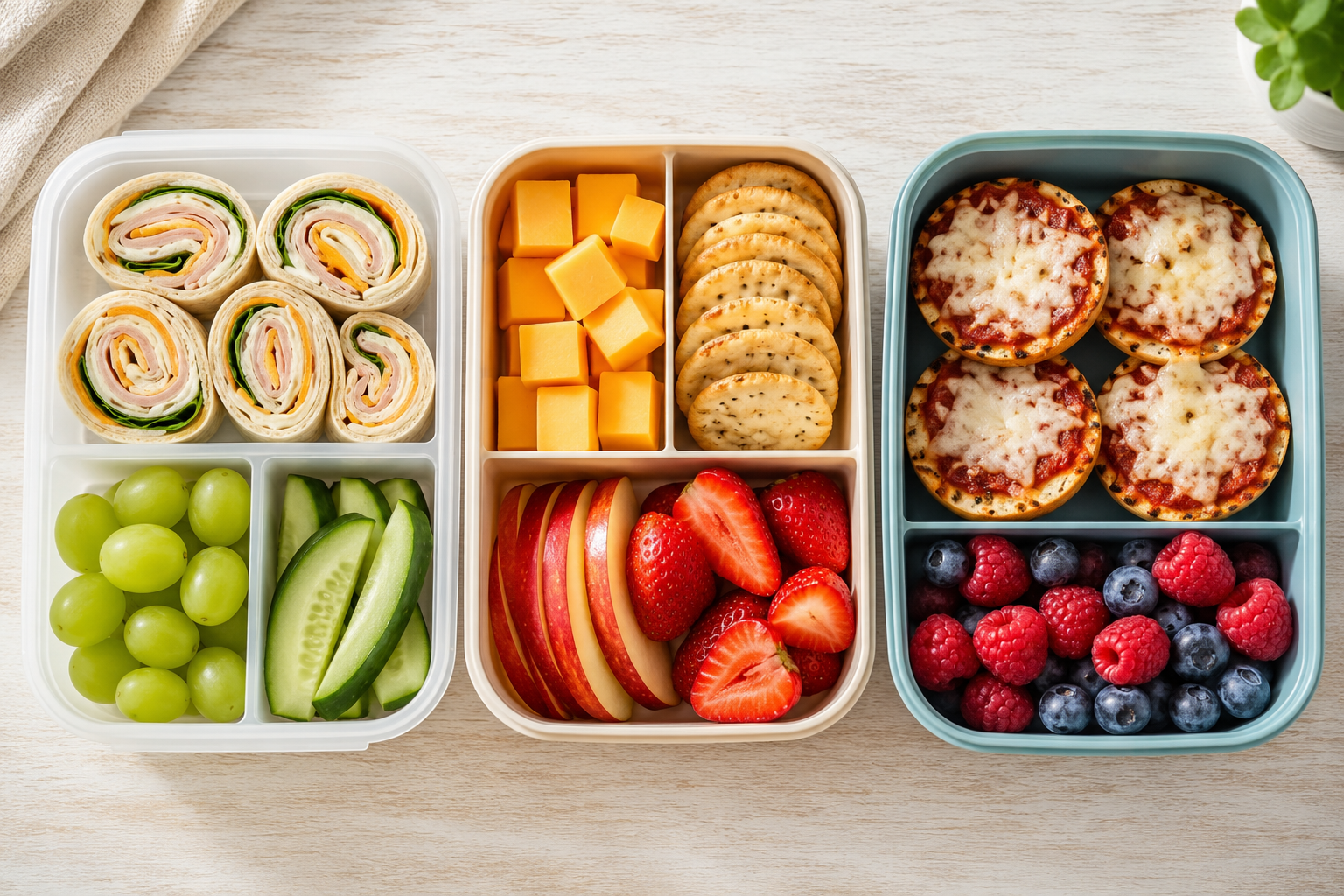
A practical school lunch usually includes four simple parts: a filling main item, a fruit or vegetable, a crunchy or fun side, and a drink. You do not need to pack a large amount of every food group. A few familiar items in manageable portions are often more appealing than an overfilled lunch box.
- Main item: Sandwich, wrap, pasta, quesadilla, yogurt, snack box, or warm thermos meal.
- Produce: Berries, apple slices, grapes, melon, cucumber, carrots, snap peas, or another familiar choice.
- Extra side: Crackers, pretzels, popcorn, mini muffin, cheese cubes, or a small homemade treat.
- Drink: Water, milk, or another school-approved beverage.
For younger children, consider how easy the food is to open and eat independently. Peel oranges, loosen tight lids, cut large foods into smaller pieces, and avoid complicated packaging. A child may love a particular food at home but skip it at school if it takes too long to assemble or unwrap.
1. Turkey and Cheese Pinwheels
Pinwheels are one of the easiest alternatives to a traditional sandwich. They are soft, easy to hold, and simple to customize for children who do not like thick bread or bulky sandwich fillings.
Spread a thin layer of cream cheese, mayonnaise, or hummus over a soft flour tortilla. Add sliced turkey and cheese, then roll the tortilla tightly. Chill it briefly if possible before slicing it into small rounds. Pack the pinwheels with grapes, cucumber slices, and pretzels.
For a different version, use chicken, ham, mashed avocado, or a favorite deli meat. Avoid overfilling the tortilla because tightly rolled pinwheels stay together better inside a lunch box.
2. Build-Your-Own Snack Box
A snack-style lunch works especially well for children who prefer several small foods instead of one large main dish. It also gives you an easy way to use small amounts of ingredients already in the refrigerator or pantry.
Choose one protein, one cracker or bread option, one fruit, and one vegetable. For example, pack cheese cubes, whole-grain crackers, strawberries, and sliced cucumbers. Other easy additions include sliced turkey, hard-boiled egg, mini pita bread, hummus, blueberries, snap peas, or a small yogurt.
Keep the number of choices manageable. Four or five foods are usually enough to create variety without making the lunch feel overwhelming.
3. Mini Bagel Pizzas
Mini bagel pizzas can be served warm in a thermos or packed cold if your child enjoys leftover pizza. Split mini bagels, spread them with pizza sauce, and add shredded mozzarella. Top them with finely chopped bell peppers, cooked chicken, turkey pepperoni, or keep them plain.
Bake until the cheese melts, then allow the pizzas to cool before packing. They can be prepared the night before and refrigerated in an airtight container. Add a side of melon, berries, or carrot sticks to complete the lunch.
English muffins, naan rounds, and small pita breads also work well as pizza bases.
4. Chicken Quesadilla Wedges
Quesadillas are quick, familiar, and easy to prepare with leftover ingredients. Place shredded cheese and cooked chicken on one half of a tortilla, fold it over, and warm it in a skillet until the cheese melts. Let it cool slightly before cutting it into small wedges.
Pack the quesadilla with mild salsa or guacamole in a leakproof container. Corn, orange slices, or sliced bell peppers make simple sides. If your child prefers very plain lunches, use only cheese inside the tortilla and offer the chicken separately.
Quesadilla wedges can be made the night before, refrigerated, and packed cold the next morning.
5. Sunflower Butter and Banana Roll-Ups
For schools with nut-free policies, sunflower seed butter can be a useful sandwich alternative. Always check the product label and your school’s specific allergy guidelines before packing it.
Spread sunflower butter over a tortilla, place a peeled banana near one edge, and roll the tortilla around it. Slice the roll into bite-size pieces or leave it whole for an older child. A thin layer of strawberry jam can add extra sweetness if desired.
Serve the roll-up with apple slices, cheese cubes, or a small container of yogurt. To reduce browning, prepare the banana roll-up in the morning rather than the night before.
6. Colorful Pasta Salad Cups
Cold pasta salad is easy to make ahead and can be adjusted to match your child’s preferences. Cook a small pasta shape such as rotini, bow ties, or shells. Toss the cooled pasta with a small amount of olive oil or a mild dressing.
Add familiar ingredients such as cheese cubes, peas, corn, diced cucumber, chopped chicken, or halved cherry tomatoes. Skip any ingredient your child consistently leaves behind. A simple combination of pasta, cheese, and chicken is completely acceptable.
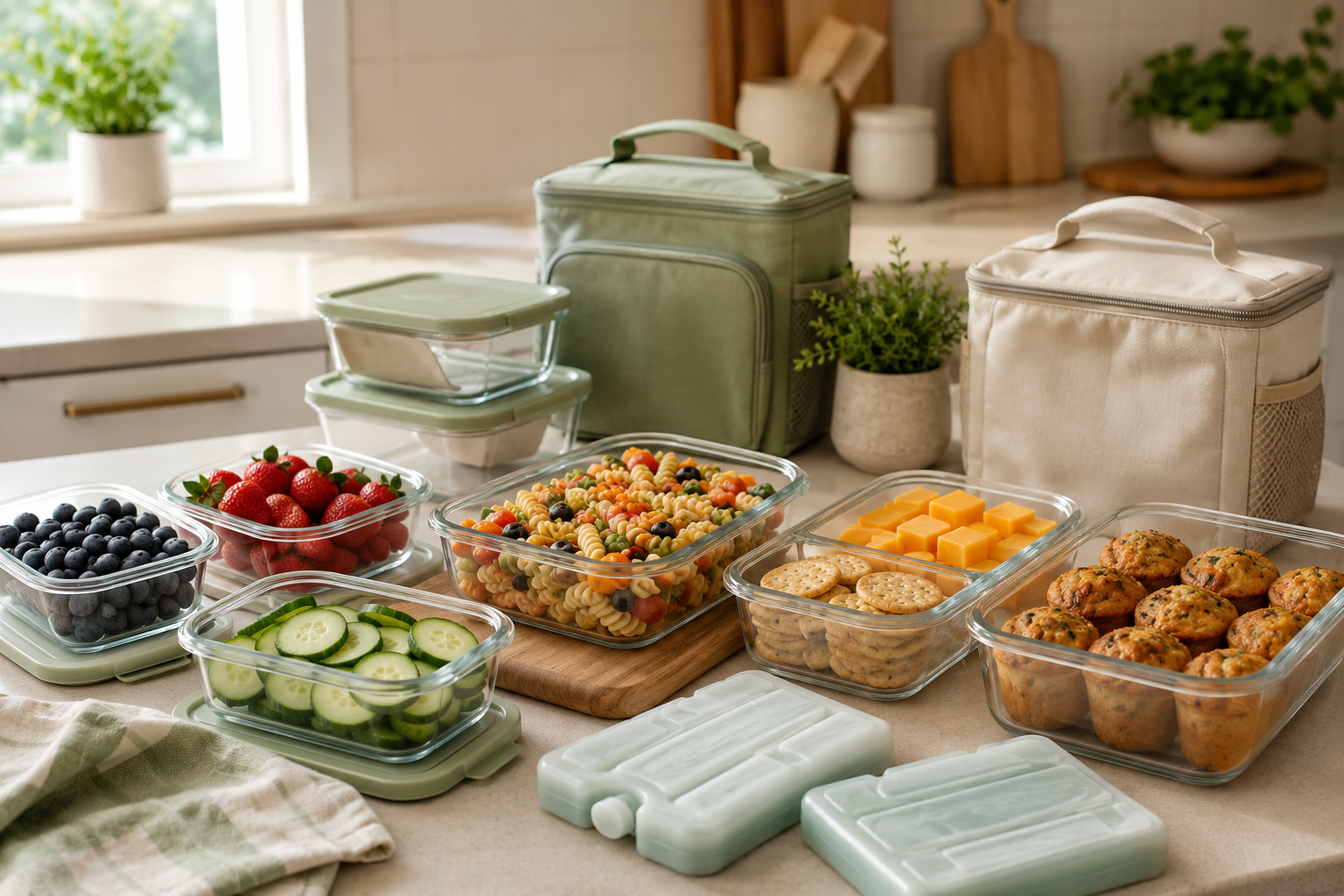
Prepare a batch at the beginning of the week and divide it into small containers. For the best texture, avoid adding too much dressing because heavily coated pasta can become slippery or soggy.
7. Breakfast-for-Lunch Box
Breakfast foods can make lunch feel more interesting without requiring extra cooking. Pack mini pancakes or waffles with a small leakproof container of yogurt, applesauce, or maple syrup for dipping.
Add sliced strawberries, blueberries, turkey sausage, or a hard-boiled egg. Homemade pancakes can be frozen between sheets of parchment paper and thawed overnight in the refrigerator. Store-bought mini waffles also make this lunch quick to assemble.
Make sure any cooked breakfast meat is chilled properly before packing it with an ice pack.
8. Hummus and Pita Dipper Lunch
A dip-based lunch can encourage children to eat foods they might otherwise ignore. Pack hummus in a small leakproof container with mini pita wedges, cucumber rounds, carrot sticks, sweet pepper strips, or pretzels.
Include cheese, grapes, or a small oatmeal cookie for additional variety. Children who are not interested in traditional hummus may prefer a mild version, roasted red pepper hummus, or another school-approved dip.
Keep vegetable portions small at first. A few pieces are less intimidating and more likely to be eaten than a compartment packed tightly with raw vegetables.
9. Build-Your-Own Taco Lunch Box
A deconstructed taco lunch lets children assemble their own bites. Pack tortilla chips or small soft tortillas with cooked seasoned chicken, shredded cheese, corn, and mild salsa. Keep wet ingredients in separate containers so the chips and tortillas stay fresh.
For a simpler version, pack cheese, chicken, and tortilla chips without salsa. You can also substitute black beans or refried beans if your child already enjoys them.
This lunch is a useful way to repurpose taco-night leftovers without serving the exact same meal two days in a row.
10. Savory Mini Muffins
Savory muffins are portable, freezer-friendly, and easy for small hands to manage. Egg muffins, corn muffins, cheese muffins, and zucchini muffins can all become the main item in a school lunch.
Prepare a batch on the weekend and freeze the cooled muffins in an airtight container. Move one or two to the refrigerator the night before they are needed. Pack them with fruit, cheese, cucumber slices, or a small yogurt.
Mini muffins often feel more approachable than a large muffin. They also allow you to offer two flavors without creating an oversized portion.
11. Chicken and Cheese Croissant Sandwich
A small croissant can make a familiar sandwich feel new. Fill it with sliced chicken or turkey and cheese. Use only a small amount of mayonnaise or cream cheese so the bread does not become soggy.
If your child dislikes mixed textures, pack the meat, cheese, and croissant separately. They can eat the components individually or assemble the sandwich at lunch.
Pair it with berries, applesauce, or snap peas. Croissant sandwiches are best prepared the morning they are packed, but the filling ingredients can be portioned the night before.
12. Warm Macaroni and Cheese in a Thermos
A warm lunch can be comforting once the weather becomes cooler. Macaroni and cheese is an easy thermos meal because it is familiar and simple to eat.
Preheat the food thermos by filling it with very hot water and letting it sit for several minutes. Heat the macaroni and cheese until it is steaming hot, empty and dry the thermos, and add the food immediately. Close the lid tightly.
Pack it with apple slices, peas, or a small container of berries. Other thermos-friendly options include buttered noodles, rice and chicken, soup, or leftover pasta.
13. Chicken and Rice Bites
Chicken and rice can be transformed into small, easy-to-eat portions. Combine cooked rice, finely chopped chicken, shredded cheese, and a beaten egg. Spoon the mixture into a mini muffin pan and bake until set and lightly golden.
Once cooled, the bites can be refrigerated or frozen. Pack two or three with fruit, cucumber slices, and a mild dipping sauce. They can be eaten cold or packed warm in a preheated thermos.
This is also a practical way to use leftover rice and chicken without sending a large container that may be difficult for a younger child to manage.
14. Yogurt Parfait Lunch Box
A yogurt parfait lunch is refreshing, quick, and easy to customize. Pack thick yogurt in a leakproof container and keep granola separate until lunchtime so it remains crunchy.
Add berries, sliced banana, peaches, or another soft fruit. Include a mini muffin, cheese stick, or hard-boiled egg to make the meal more filling.
Choose a container your child can open independently and remember to include a spoon. Yogurt must remain properly chilled, so use an insulated lunch bag and frozen ice pack.
Easy School Lunch Ideas for Picky Eaters
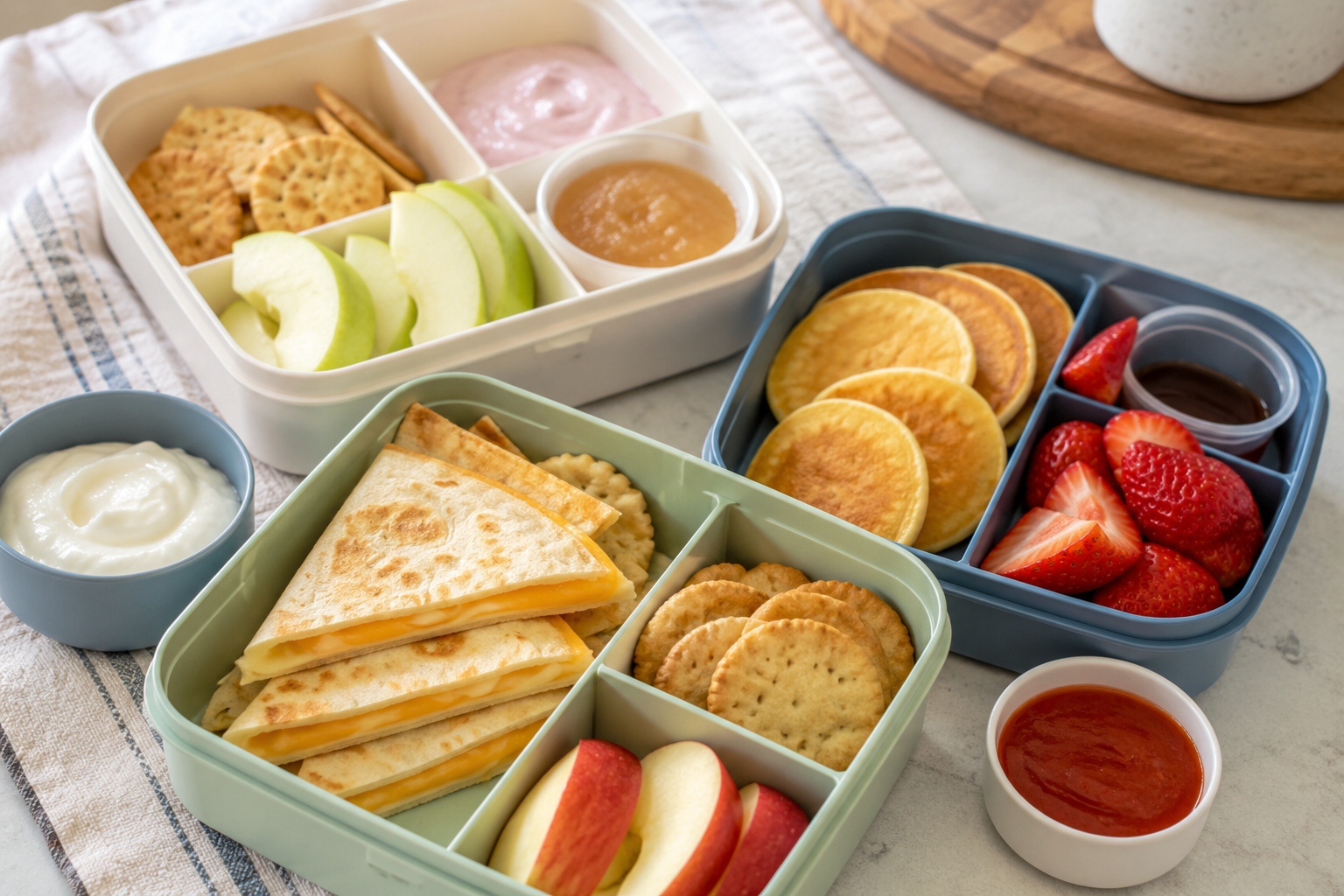
Picky eaters often respond better to familiarity than variety. Instead of introducing a completely new lunch, make a small change to something your child already accepts. Cut a favorite sandwich into strips, use a different type of bread, or serve the same ingredients as a snack box.
Try to include at least one dependable food in every lunch. This could be crackers, a favorite fruit, plain cheese, yogurt, or a familiar sandwich. The dependable item gives your child something comfortable to eat even when another part of the lunch feels unfamiliar.
- Serve sauces and dips on the side.
- Keep foods separated when mixed textures are a problem.
- Use small portions of new foods.
- Let your child choose between two acceptable options.
- Avoid packing several unfamiliar foods at once.
- Ask which items were easiest or hardest to eat at school.
It can also help to observe what comes home rather than asking only whether the lunch was good. A full container may mean the child disliked the food, but it could also mean the packaging was hard to open, the portion was too large, or there was not enough time to eat.
School Lunch Prep Ideas That Save Time
School lunch preparation becomes easier when you separate weekly prep from morning assembly. You do not need to pack five complete lunches on Sunday. Instead, prepare the ingredients that usually slow you down.
- Wash and portion produce. Store sturdy fruits and vegetables in clear containers so they are easy to grab.
- Prepare one main item. Make pasta salad, savory muffins, chicken bites, or pinwheel ingredients ahead of time.
- Create a lunch snack area. Keep crackers, pretzels, applesauce, napkins, and reusable containers together.
- Freeze useful basics. Mini pancakes, muffins, and quesadillas can be prepared in batches.
- Pack nonperishable items at night. Add chilled foods and the ice pack in the morning.
A simple written lunch rotation can also reduce decision fatigue. You might plan wraps on Monday, a snack box on Tuesday, pasta on Wednesday, a thermos lunch on Thursday, and breakfast foods on Friday. The specific foods can change while the structure remains familiar.
A Simple Five-Day School Lunch Rotation
- Monday: Turkey and cheese pinwheels, grapes, cucumbers, and pretzels.
- Tuesday: Snack box with cheese, crackers, berries, and carrots.
- Wednesday: Pasta salad, applesauce, and a mini muffin.
- Thursday: Warm macaroni and cheese, peas, and apple slices.
- Friday: Mini pancakes, yogurt dip, strawberries, and turkey sausage.
You can repeat this basic rotation with different fillings, fruits, and sides. Children do not need a completely unique lunch every day. Familiarity can make planning easier for parents and lunchtime more comfortable for kids.
How to Keep Packed Lunches Fresh and Safe
Use an insulated lunch bag with at least one frozen ice pack for foods that need to remain cold, including deli meat, yogurt, cheese, eggs, cooked chicken, and mayonnaise-based dishes. Place the ice pack close to the most perishable items.
For hot meals, use a clean insulated food container. Preheating the container with hot water helps the food stay warmer. Heat the meal thoroughly before packing it and close the lid immediately.
Choose leakproof containers for yogurt, dips, sauces, and juicy fruit. Keep crackers, granola, and bread away from wet ingredients until lunchtime. Label reusable containers and utensils so they are more likely to return home.
Always follow your school’s allergy rules. Some classrooms or schools restrict peanuts, tree nuts, or other ingredients. Check product labels carefully because packaged foods can contain unexpected allergens or be processed in facilities that handle them.
Final Tips for Stress-Free School Lunches
The easiest school lunch system is one that matches your family’s schedule and your child’s actual eating habits. Use convenient ingredients when they help. Precut fruit, individual hummus cups, frozen pancakes, rotisserie chicken, and packaged snacks can all make busy mornings more manageable.
Ask your child to choose a few preferred main dishes and sides before the school week begins. Giving limited choices can reduce food waste without turning lunch packing into a daily negotiation.
Most importantly, keep expectations realistic. A lunch does not need to contain a complicated recipe or a perfectly arranged selection of foods to be successful. A simple meal made from familiar ingredients can still be balanced, satisfying, and enjoyable.
With a few dependable combinations and some light preparation, these easy school lunch ideas can help you spend less time staring into the refrigerator and more time getting everyone out the door.