
Start With a Dorm Room Essentials Checklist That Covers Real College Life
Moving into a college dorm is exciting, but shopping for the room can become overwhelming fast. Dorm rooms are usually small, storage is limited, and students often share the space with at least one roommate. The best dorm room essentials are not simply decorative. They help a student sleep well, stay organized, study comfortably, manage laundry, keep the room clean, and handle everyday routines without constantly borrowing or buying forgotten items.
This checklist focuses on the items that make the biggest difference during the first semester, helping students and parents prepare for move-in without unnecessary clutter.
Before buying anything, check the college housing rules and the exact room setup. Some schools provide a mini fridge, microwave, desk chair, trash can, or under-bed storage space. Others restrict appliances, extension cords, candles, wall attachments, and certain lighting products. Confirming those details first can prevent duplicate purchases and last-minute returns.
Before You Shop, Measure and Coordinate
A little planning makes dorm shopping easier and more affordable. Ask the housing office for room dimensions, bed size, furniture details, and a list of prohibited items. Most dorm beds use Twin XL mattresses, but it is still worth confirming.
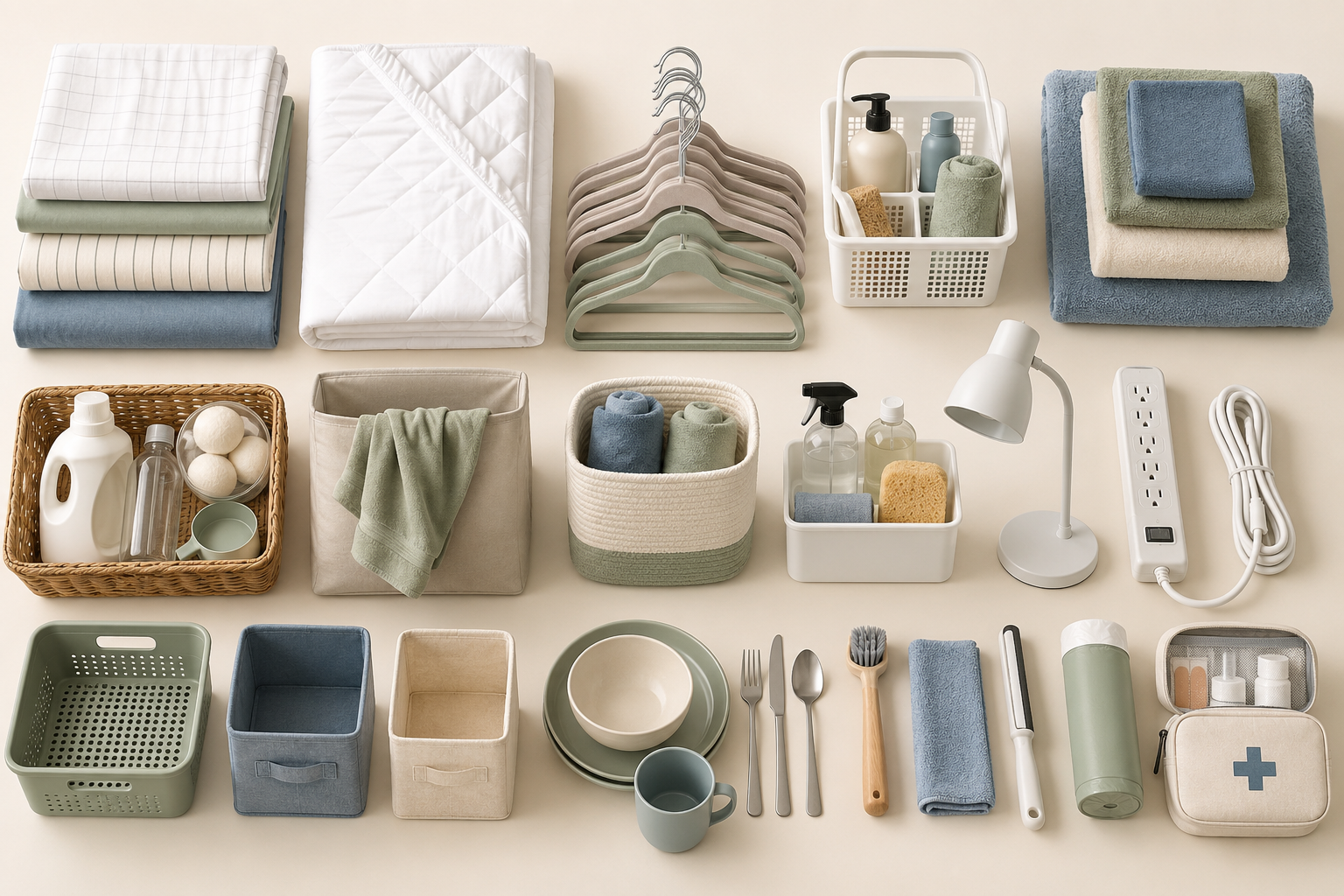
Students should also communicate with their roommates before shopping for shared items. A single room usually does not need two mini fridges, two coffee makers, two large rugs, or multiple cleaning kits. Decide who will bring larger shared essentials and keep personal items separate.
- Measure key areas: Check the space under the bed, inside the closet, beside the desk, and near the door.
- Make three lists: Separate must-haves, shared items, and optional comfort items.
- Choose a simple color palette: Coordinated colors make a small dorm feel calmer and prevent random purchases.
- Leave room for later: Students usually discover a few specific needs after living in the room for a week or two.
1. Comfortable Twin XL Bedding
A supportive and comfortable bed should be the first priority because sleep affects energy, focus, mood, and academic performance. Most college dorms use Twin XL mattresses, which are longer than standard twin mattresses. Regular twin sheets may not fit correctly.
A complete bedding setup should include two fitted sheet sets, a washable comforter or duvet, pillowcases, and at least one supportive pillow. Two sheet sets make laundry days easier because the bed can be remade immediately. Choose machine-washable fabrics that can handle frequent use.
Add one extra blanket if needed, but skip piles of decorative pillows that take up valuable space.
2. A Mattress Topper and Protective Mattress Cover
Dorm mattresses are durable, but they are not always comfortable. A quality mattress topper can make a basic dorm bed feel softer and more supportive. Memory foam, fiber-filled, and cooling toppers are common options. The best choice depends on the student’s sleep preferences and the temperature of the room.
Add a zippered or waterproof mattress protector underneath. It creates a clean barrier, protects against spills, and should also be sized for a Twin XL mattress.
3. Bedside Storage for Everyday Items
Many dorm beds do not have space for a traditional nightstand, especially when the bed is lofted or raised for storage. A bedside caddy, clamp-on shelf, or compact rolling cart gives students a convenient place for a phone, glasses, tissues, water bottle, medication, and charging cable.
A soft hanging caddy works well for a lofted bed, while a narrow rolling cart can serve as both a nightstand and extra storage. Keep the walkway clear.
4. Reliable Power Strip With Surge Protection
Dorm rooms rarely have enough conveniently placed outlets for a laptop, phone, desk lamp, tablet, headphones, and other small electronics. A surge-protected power strip with a long cord can make the space much more functional.
Choose a model that meets housing rules and has enough spacing for larger chargers. Some schools prohibit extension cords but allow approved surge protectors. Never overload outlets or connect power strips together. A cable organizer can keep cords controlled in a shared room.
5. Task Lighting for Studying and Nighttime Use
Overhead dorm lighting can feel harsh and may not be practical when one roommate wants to sleep. A focused desk lamp helps students read, study, and work on assignments without lighting the entire room.
Choose a compact adjustable lamp with a stable base. Built-in USB charging can save outlet space, while a clip-on reading light works well for studying in bed. Review housing policies before installing decorative lighting.
6. Space-Saving Closet Organizers and Hangers
Dorm closets are often narrow, so the right organizers can create much more usable space. Slim non-slip hangers reduce bulk and keep clothing from sliding onto the floor. A hanging shelf organizer can hold sweaters, shoes, towels, or accessories without requiring a separate dresser.
When allowed, over-the-door hooks can hold jackets, bags, and towels. Small bins can group socks, undergarments, and accessories. Bring a practical wardrobe rather than every item from home.
7. Under-Bed Storage Bins
The area under the bed is one of the most valuable storage zones in a dorm room. Clear lidded bins, fabric zippered bags, or rolling containers can hold extra bedding, shoes, snacks, cleaning supplies, and out-of-season clothing.
Measure the available height before buying containers because some dorm beds are adjustable while others are not. Bed risers may create additional storage, but they must be permitted by the school and compatible with the bed frame.
Choose easy-pull, labeled containers. Keep frequently used items near the front and backup supplies farther underneath.
8. A Practical Laundry Setup
A lightweight hamper or laundry bag with sturdy handles is essential for carrying clothes to a shared laundry room. Collapsible hampers are easy to store, while backpack-style laundry bags are helpful when the laundry room is in another building or on a different floor.
Pack detergent, stain remover, and dryer sheets or wool dryer balls. Store detergent pods safely and follow machine instructions. A mesh bag protects delicate clothing and socks, while a fold-flat drying rack helps with air-dry items.

9. Shower Caddy, Towels, and Shower Shoes
Students using a shared bathroom need a portable system for carrying toiletries. A mesh shower caddy dries quickly and drains easily, while a rigid plastic caddy keeps bottles upright. The best option is one that holds daily products without becoming too heavy.
Bring at least two quick-drying bath towels and a robe or cover-up for walking between the room and bathroom. Shower shoes are essential in communal bathrooms; choose a washable, non-slip pair that dries quickly.
10. Basic Cleaning Supplies
A small dorm room becomes dusty and cluttered quickly. A basic cleaning kit makes it easier to handle spills, crumbs, and shared surfaces before they become bigger problems.
- Disinfecting wipes or an approved multipurpose cleaner
- Microfiber cloths or paper towels
- A compact broom and dustpan or handheld vacuum
- Trash bags that fit the room’s wastebasket
- Dish soap and a sponge for reusable cups and dishes
Store everything in one handled bin. Never mix cleaning products, and follow label directions. A simple weekly routine keeps the room comfortable and reduces roommate tension.
11. Compact Food and Drink Essentials
Even students with a meal plan usually keep a few snacks and drinks in their room. A reusable water bottle, insulated mug, microwave-safe bowl, plate, utensils, and food storage containers cover most basic needs.
With an allowed mini fridge and microwave, students can store simple breakfasts, leftovers, fruit, yogurt, and snacks. Use one small bin for shelf-stable foods and avoid oversized packages.
Check appliance rules before bringing a kettle, coffee maker, toaster, hot plate, or rice cooker. Many residence halls restrict exposed heating elements. Never assume an appliance is permitted simply because it is small.
12. Desk Organization and Study Supplies
A dorm desk often functions as a study area, storage station, vanity, and dining surface. Keeping it organized helps the room feel less crowded and makes it easier to focus.
Useful desk essentials include a laptop stand, pencil cup, notebook, pens, headphones, and a small file organizer. Buy course-specific supplies after classes begin rather than filling the room with materials that may not be needed.
13. A Comfortable Desk Chair Upgrade
Some dorm desk chairs are hard or poorly suited for long study sessions. Students do not necessarily need to replace the chair, but a supportive seat cushion and small lumbar pillow can improve comfort without taking up much space.
A lightweight throw can add comfort and double as an extra bed layer. Avoid bulky accessories that are difficult to store or move.
14. A Small First-Aid and Wellness Kit
A compact wellness kit helps students handle minor everyday needs without making an urgent trip to the store. Include adhesive bandages, antiseptic wipes, a thermometer, tissues, a reusable cold pack, and any personal care products the student regularly uses.
Bring prescribed medications in original labeled containers and plan for refills. Use over-the-counter products according to the label. Save the campus health center number, insurance information, emergency contacts, and nearby pharmacy details in the student’s phone.
15. Important Documents and a Secure Storage Option
College students may need identification, insurance cards, financial information, health records, academic documents, and employment paperwork. These items should not be left loose on a desk or mixed with everyday papers.
Use a compact document organizer or locking file box for sensitive materials, and keep digital copies in a secure location. A small lockbox can also hold backup cash, a spare key, or other valuables that should not remain visible.
16. Simple Comfort Items That Make the Dorm Feel Like Home
Practical supplies matter, but a few personal touches can make the transition to college feel easier. A small rug, framed photos, removable wall decor, a favorite blanket, and one or two meaningful objects can make a basic room feel more welcoming.
Choose lightweight decor that is easy to pack and permitted by the residence hall. A simple color palette and a few coordinated pieces usually look better than crowded walls. Preserve open space for studying, dressing, and moving around.
Dorm Room Items You May Not Need Right Away
Back-to-school displays can make every product look essential, but some items are better purchased after move-in. Large furniture, extra storage towers, multiple appliances, oversized decor, and duplicate kitchen supplies can quickly overwhelm a small room.
Wait until the student sees the layout before buying bulky organizers or seating that could block drawers and walkways. Delay extra seasonal clothing and large food supplies until the available storage is clear.
- Large decorative pillows
- Duplicate shared appliances
- Bulky plastic drawer units
- Too many dishes or mugs
- Oversized rugs
- Large quantities of school supplies
- Decor that requires permanent installation
College Move-In Day Packing Tips
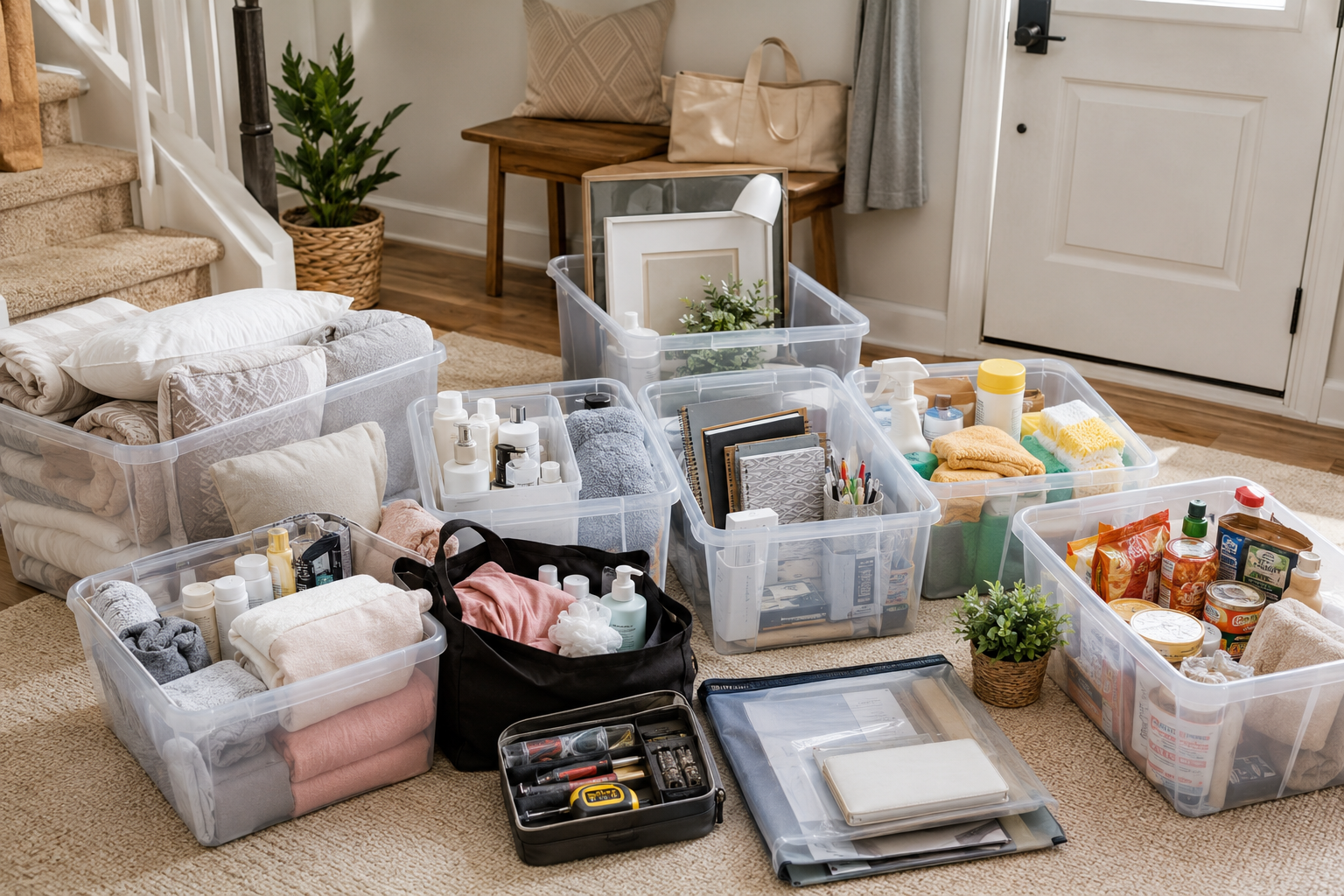
Organized packing can make move-in day much smoother. Group items by zone so bedding, bathroom supplies, desk items, and cleaning products are easy to locate. Use clear bins or label each box on the top and at least one side.
- Pack the bed last or keep bedding accessible. Making the bed early creates a clean place to set lightweight items.
- Create a first-night bag. Include pajamas, toiletries, medication, chargers, a towel, clean clothes, and basic snacks.
- Use soft items as padding. Towels and blankets can protect bins, lamps, and small decor during transport.
- Bring a basic move-in tool kit. Include scissors, tape, a screwdriver, zip ties, labels, and approved removable hooks.
- Keep documents with the student. Do not pack identification, keys, move-in instructions, or required forms at the bottom of a box.
After unloading, set up the bed, bathroom supplies, charging area, and basic clothing storage first. Decorative styling can happen after the essential zones are functional.
Final Dorm Room Essentials Checklist
The most useful dorm room is not the one with the most products. It is the one that supports sleep, studying, organization, hygiene, meals, and daily comfort without feeling crowded. Start with the 16 essentials in this checklist, coordinate shared purchases with the roommate, and wait until after move-in to fill any remaining gaps.
- Twin XL bedding
- Mattress topper and protector
- Bedside storage
- Approved surge protector
- Desk and reading lights
- Closet organizers and slim hangers
- Under-bed storage bins
- Laundry hamper and supplies
- Shower caddy, towels, and shower shoes
- Basic cleaning kit
- Food and drink essentials
- Desk organization and study supplies
- Chair cushion or lumbar support
- First-aid and wellness kit
- Document organizer or lockbox
- Simple personal decor
Saving this dorm room essentials checklist before shopping can help students and parents stay focused, avoid duplicates, and prepare a small college space that feels organized, comfortable, and ready for the semester ahead.