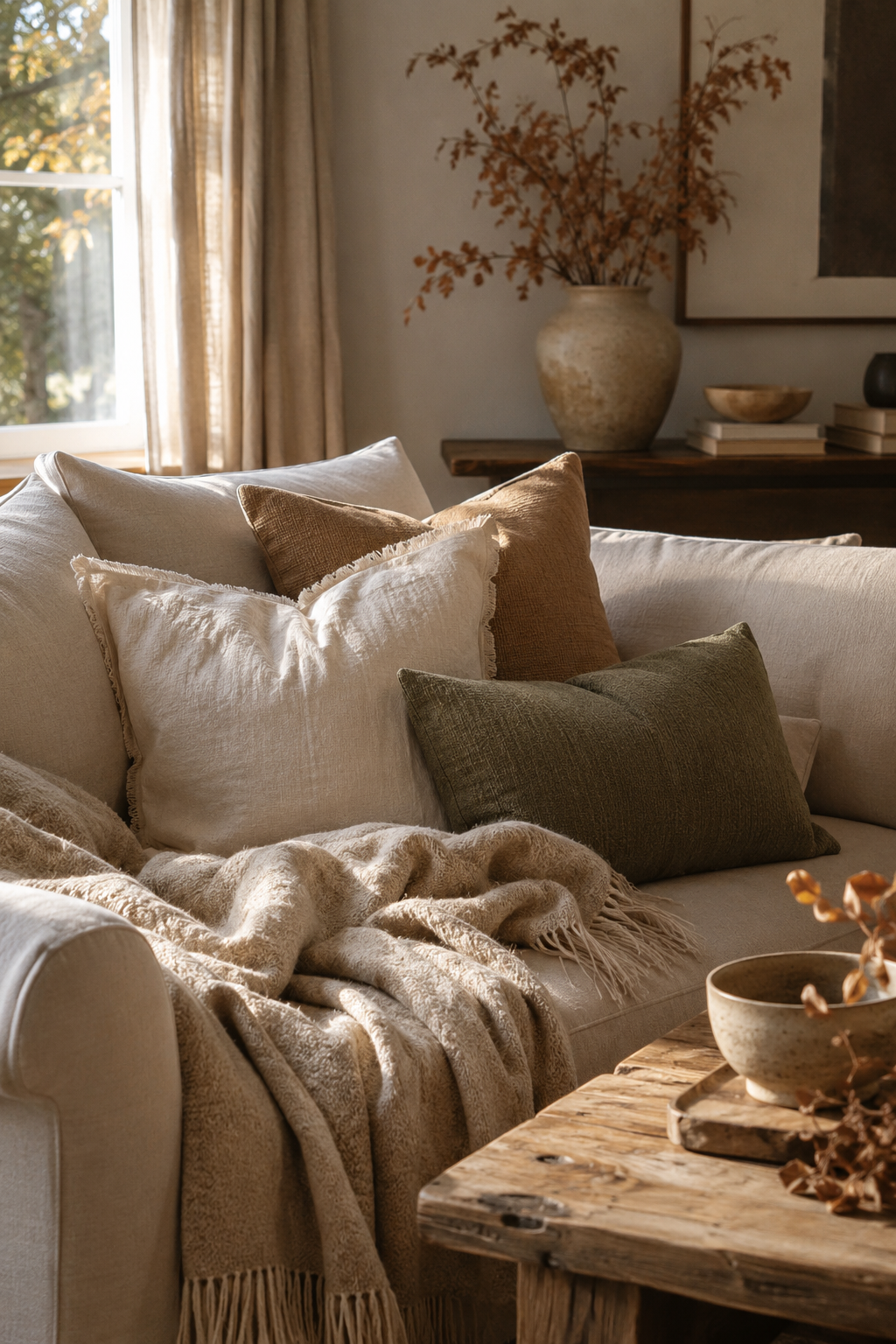
How to Create Cozy Fall Living Room Decor With Texture
A cozy fall living room does not require a new sofa, a different coffee table, or an expensive seasonal furniture haul. In many rooms, the fastest way to create that warm autumn feeling is simply to change how the existing space feels to the touch.
That is where texture becomes useful. Wool, linen, woven fibers, weathered wood, matte ceramic, dried foliage, soft rugs, and slightly rumpled textiles can make an ordinary living room feel noticeably warmer without changing its basic furniture.
The most successful cozy fall living room decor usually combines several textures instead of relying on pumpkins and obvious seasonal decorations alone. A smooth sofa becomes more inviting beside a chunky throw. A plain coffee table gains depth when paired with matte pottery and natural wood. Even a neutral room can feel distinctly autumnal when soft, rough, woven, and organic surfaces are layered intentionally.
The key word is intentionally. Adding every blanket and pillow you own can quickly make a room look crowded. Instead, think of texture as a series of small contrasts. Pair something soft with something structured, something smooth with something weathered, and something woven with something organic.
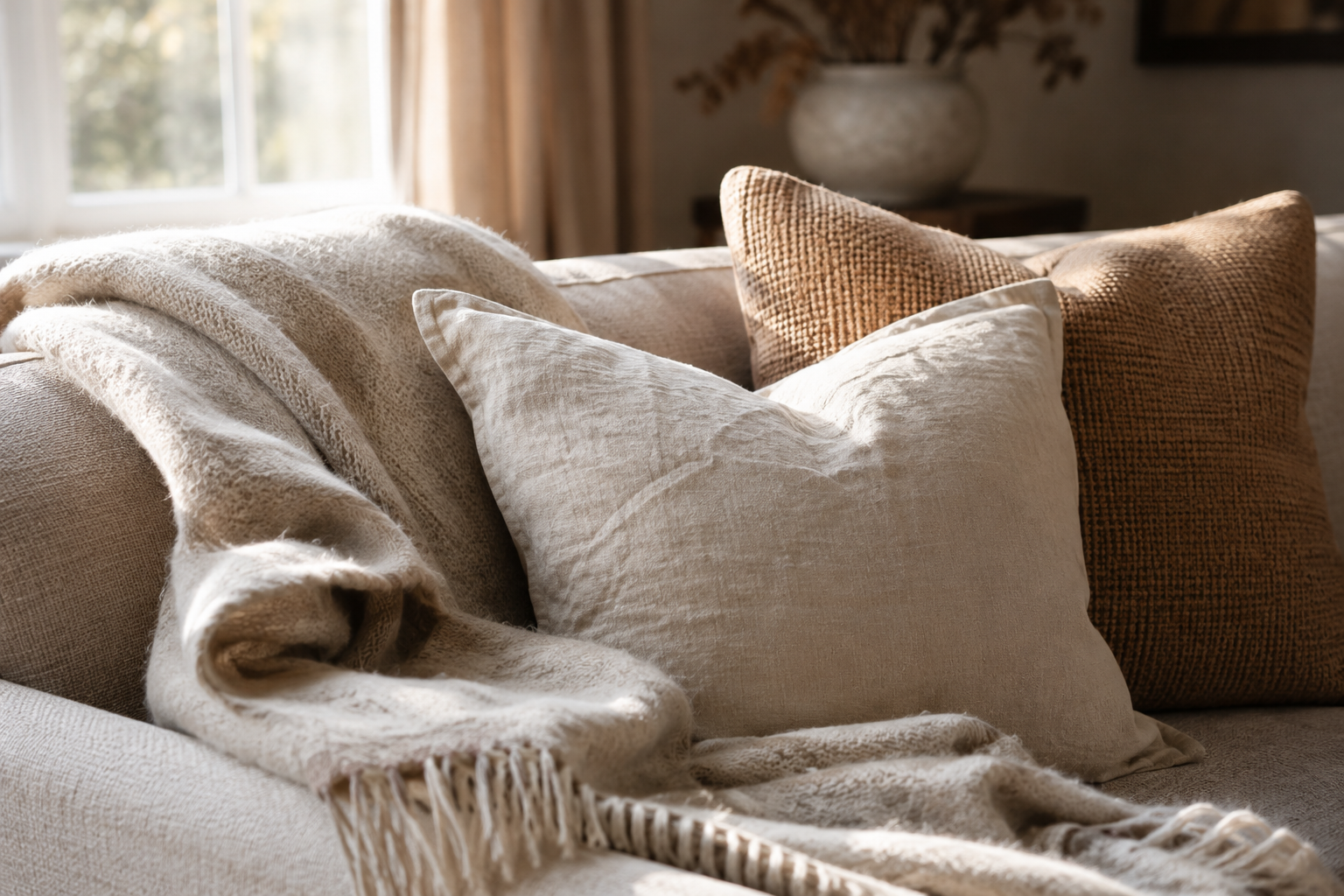
These 20 layered texture ideas will help you create a warmer living room this week using furniture and accessories you may already have.
1. Layer a Wool Throw Over the Sofa
A wool or wool-look throw is one of the simplest ways to introduce autumn texture. Instead of spreading it perfectly across the entire sofa, fold it loosely and drape it over one arm or across a corner of the seat.
The slight irregularity helps the room feel relaxed rather than staged. If your sofa has a smooth fabric, choose a throw with a noticeable weave, fringe, ribbing, or subtle boucle-like texture.
Warm oatmeal, camel, rust, muted brown, moss, and charcoal work particularly well for fall, but you do not need to replace a neutral throw if you already own one. Cream wool against a beige or gray sofa can still create plenty of seasonal warmth.
2. Mix Linen and Heavier Pillow Fabrics
Instead of replacing every pillow cover for fall, combine different fabric weights. Linen brings an airy, slightly rumpled quality, while wool, velvet, boucle, or a heavier woven fabric adds visual weight.
A simple combination might include two existing neutral linen pillows and one smaller textured accent pillow. That single change can make the arrangement feel more layered without covering the sofa in cushions.
For cozy living room styling, varying texture is often more effective than using several competing patterns.
3. Let Natural Linen Stay Slightly Relaxed
Fall rooms do not need to look perfectly pressed. Linen works especially well during this season because its visible fibers and natural wrinkles make a room feel comfortable and lived in.
If you have linen pillow covers, curtains, table runners, or fabric storage baskets, allow their natural texture to show. Pair them with heavier materials so the room still feels substantial enough for cooler weather.
4. Add a Chunky Knit in One Small Area
Chunky knit texture immediately reads as warm, but it is easy to overuse. One chunky knit throw or pillow is usually enough.
Place it where you want the eye to settle, such as one corner of the sofa or an accent chair. Surround it with simpler textiles so the oversized knit remains an accent rather than becoming visual clutter.
If you already have a heavily textured blanket stored away, autumn is the ideal time to bring it back into rotation.
5. Expose More Natural Wood Grain
Wood is one of the most effective materials for warming a fall living room because it provides both visual texture and natural color.
You do not need to purchase new wood furniture. Clear unnecessary objects from an existing coffee table, side table, shelf, or wooden tray so more of the grain becomes visible.
Weathered, medium, and dark woods can look especially rich beside cream textiles and matte ceramics. Even lighter woods can feel autumnal when combined with wool and dried foliage.
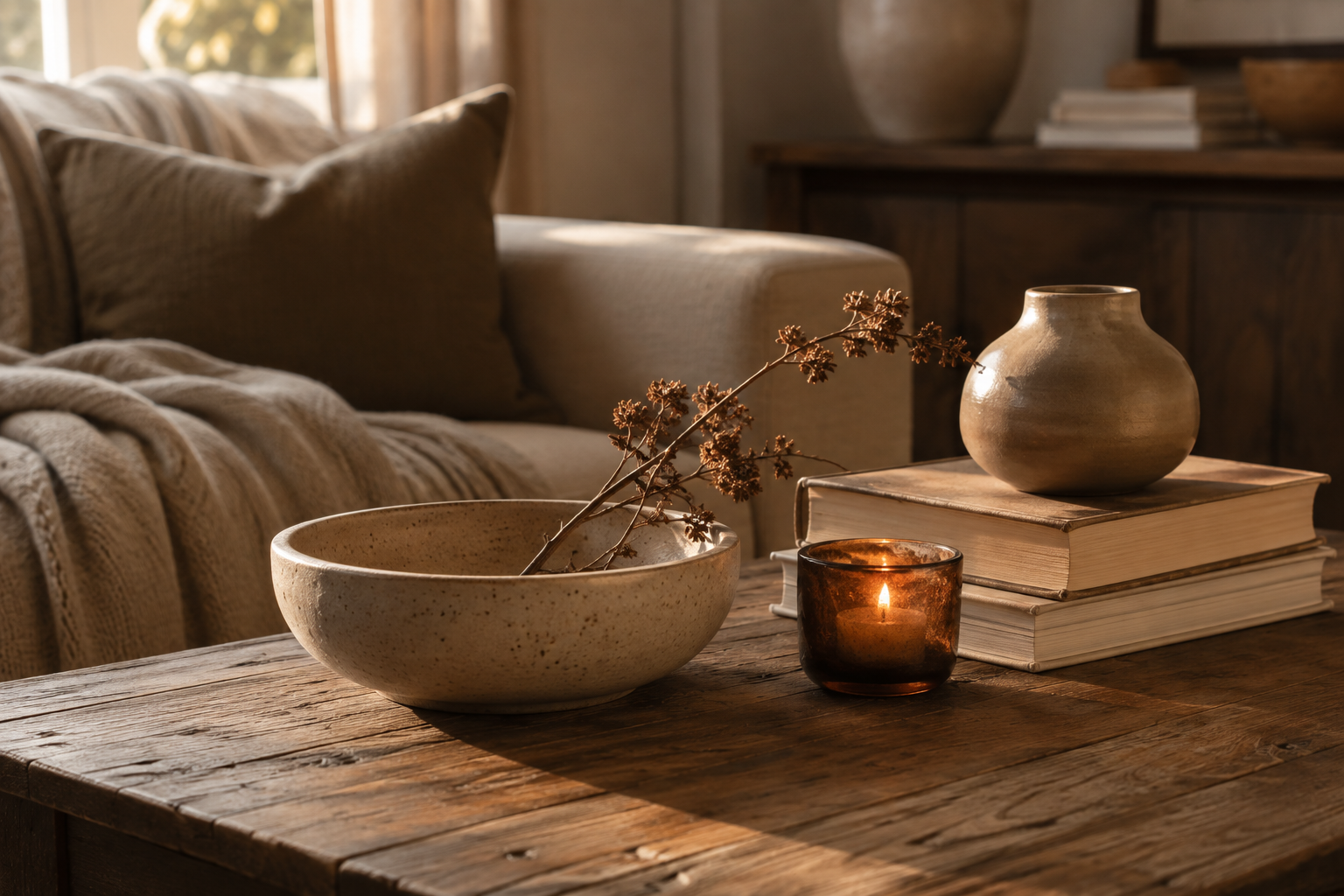
6. Style Matte Ceramic Beside Wood
Texture becomes more noticeable when contrasting materials sit next to each other. Try placing a matte ceramic bowl, vase, or candle holder directly on a wooden table.
The smooth but non-glossy ceramic surface creates a quiet contrast with visible wood grain. Cream, taupe, warm gray, brown, muted terracotta, and charcoal ceramics all fit naturally into fall palettes.
Keep the arrangement simple. One ceramic object and one smaller seasonal element can often create more impact than a crowded tray.
7. Bring in Woven Basket Texture
A basket can serve two purposes at once: practical storage and additional texture. Use one you already own to hold extra throws, magazines, firewood, toys, or other living room essentials.
Natural woven fibers introduce a rougher surface that works especially well against upholstered furniture. If your room contains many smooth modern finishes, one basket can soften the overall appearance considerably.
Place it near the sofa, beneath a console, or beside an accent chair rather than adding multiple baskets around the room.
8. Fold Throws Instead of Piling Them
One common layered texture decor mistake is assuming that more blankets automatically make a room cozier. Too many can make a sofa look untidy and reduce usable seating.
Choose one main sofa throw and store the extras nearby. A second blanket can be folded neatly inside a basket or across an accent chair.
This creates multiple layers around the room without concentrating every textile in one place.
9. Add Dried Foliage for Crisp Organic Texture
Dried branches, grasses, wheat, seed heads, or preserved leaves introduce a completely different texture from fabric. Their crisp edges and irregular shapes provide contrast beside soft upholstery.
A restrained arrangement is usually enough. Try a few tall stems in a matte ceramic vase on a console or a shorter arrangement on a coffee table.
Avoid filling every surface with dried foliage. One or two deliberate botanical moments will feel more editorial and allow the individual textures to stand out.
10. Layer a Smaller Rug Over an Existing Rug
If you already own a small woven rug, consider using it over a larger neutral rug rather than replacing the main floor covering.
This works particularly well beneath a coffee table or near an accent chair. The combination adds another visual layer and can define a seating area without requiring new furniture.
Keep the rug profiles reasonably flat to reduce tripping and bunching. The goal is subtle depth, not a thick stack of floor coverings.
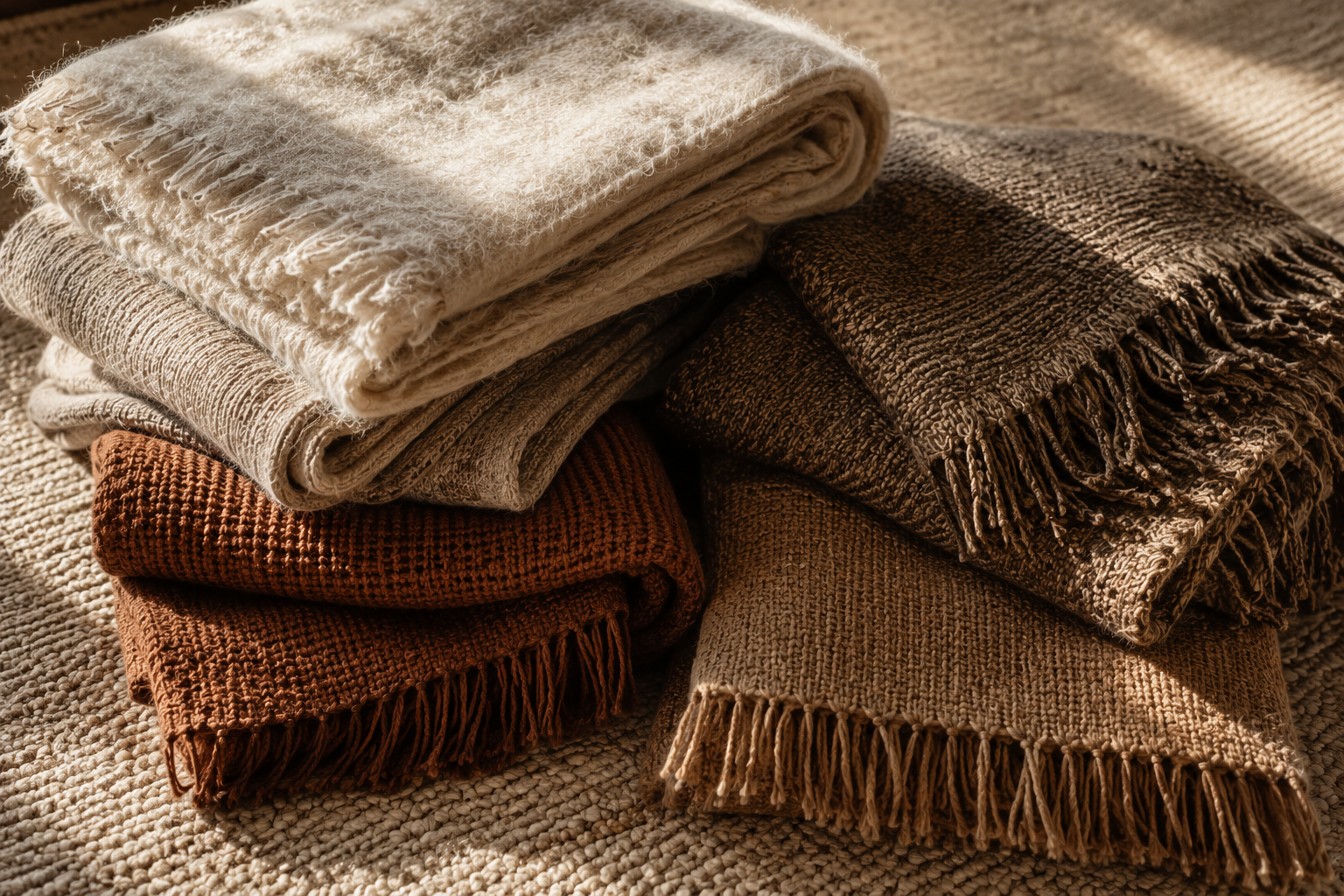
11. Mix Smooth and Nubby Upholstery
You can create contrast even when all your furniture stays exactly where it is. If your sofa is smooth, place a nubby or woven pillow on it. If an accent chair already has heavily textured upholstery, use a smoother throw or linen cushion there.
This balance keeps the room from feeling visually flat while preventing every surface from competing for attention.
Before shopping for anything new, compare the textures already in your room. You may discover that simply moving pillows and throws between seats creates the contrast you need.
12. Use Velvet as a Small Autumn Accent
Velvet reflects light differently from linen and wool, making it a useful material for creating a richer fall look. It works best in small doses.
One velvet pillow in olive, rust, brown, burgundy, or another muted shade can add depth to a neutral sofa. If you already own velvet in a different color, try pairing it with warm neutrals before assuming it needs to be replaced.
The tactile contrast matters more than creating a perfectly matched autumn color scheme.
13. Add Texture With a Simple Wooden Tray
If a coffee table feels disconnected or cluttered, a wooden tray can visually organize a few objects while reinforcing the natural fall palette.
Try grouping a candle, small ceramic bowl, and one natural element such as a dried stem. Leave some of the tray surface visible so the arrangement does not become crowded.
A tray is especially useful when you want seasonal styling that can be moved quickly when the coffee table is needed.
14. Introduce Soft Candlelight Against Rough Materials
Texture is affected by lighting. Directional daylight emphasizes fabric weave and wood grain, while evening candlelight creates soft shadows that make layered materials appear warmer.
Place a candle near matte ceramic, wood, or dried foliage rather than surrounding it with glossy decorative objects. The combination creates a quieter and more natural autumn mood.
Always keep real flames safely away from fabric, dried plants, children, pets, and other flammable materials. Flameless candles can create a similar visual effect in areas where open flames are not practical.
15. Layer Curtains With the Rest of the Room
Window treatments are part of the room’s texture story even when you do not change them seasonally. Linen-look curtains, woven shades, or soft neutral panels can act as a large background layer behind the smaller textures in the seating area.
Instead of buying new curtains, look at how the existing fabric relates to the sofa and pillows. Repeating a similar neutral tone somewhere else in the room can make the entire space feel more cohesive.
For example, cream curtains can connect naturally with a cream throw or ceramic vase without creating a rigid matching set.
16. Use Books as a Structured Texture Layer
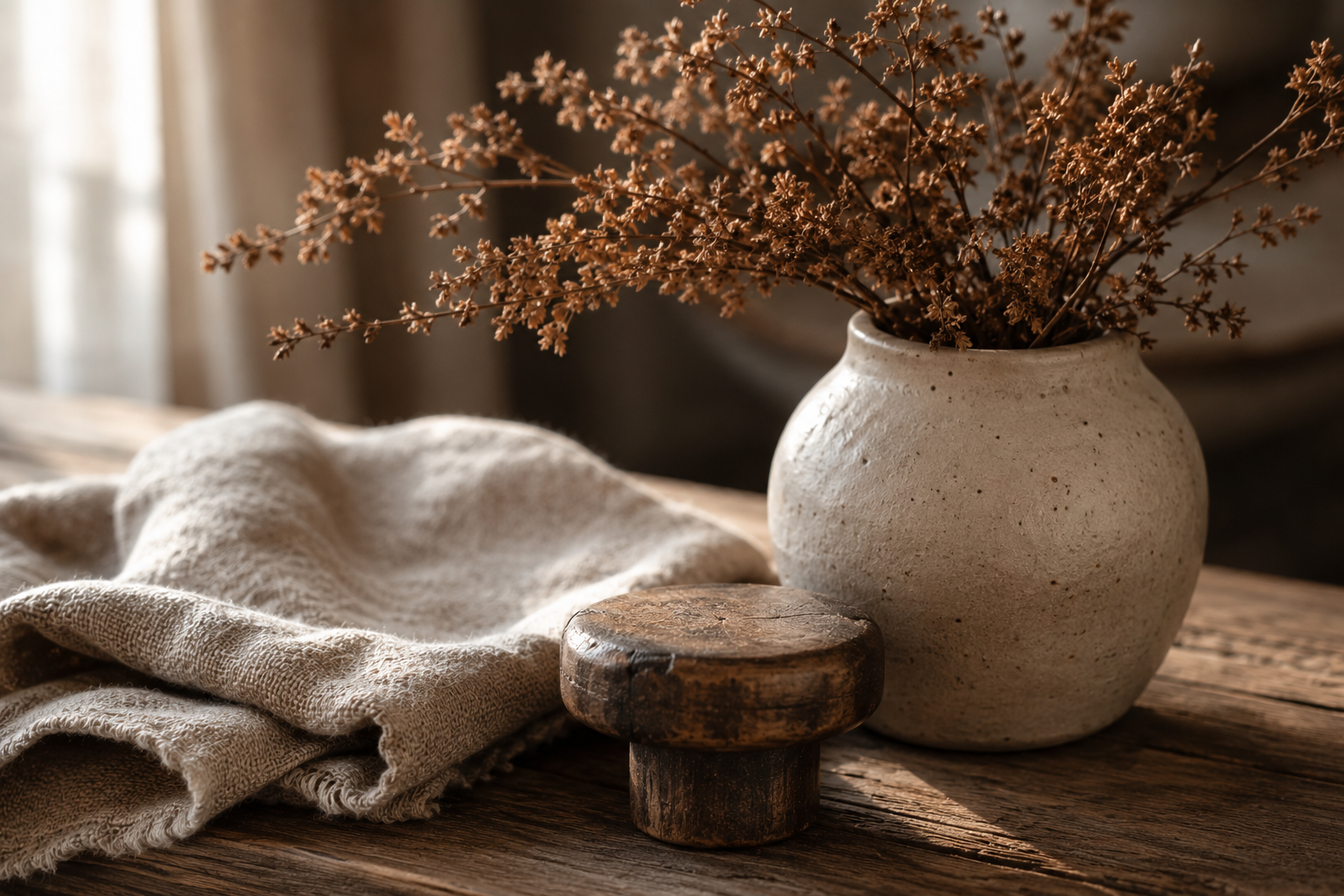
Books provide harder edges that contrast beautifully with blankets, upholstery, and foliage. A small stack on a coffee table or side table can provide structure beneath a ceramic bowl or decorative object.
Use books you already own rather than purchasing books purely for decoration. Two or three are generally enough.
The combination of paper, cloth covers, wood, and ceramic can create a layered vignette without relying on explicitly seasonal merchandise.
17. Add a Touch of Weathered Texture
Perfectly smooth surfaces can make a room feel cooler. A weathered wooden stool, vintage frame, old wooden bowl, slightly aged planter, or thrifted decorative object can introduce the irregular texture that makes a room feel collected over time.
You only need one or two pieces. A living room filled entirely with distressed finishes can become themed, while a single weathered element adds character.
This is also an easy way to adapt existing vintage or secondhand finds to fall living room ideas without buying seasonal-specific decor.
18. Repeat One Texture in Different Areas
A well-layered room should feel connected rather than random. One easy method is to repeat a material two or three times in different locations.
If you use linen pillows on the sofa, for example, you might repeat linen through a folded textile on a nearby chair. If your coffee table has matte ceramic, another small ceramic piece can appear on a shelf across the room.
The objects do not have to match. Repeating the material is enough to establish continuity.
19. Keep Some Surfaces Intentionally Bare
Negative space is an important part of cozy decorating. Without it, all those beautiful wool, wood, linen, ceramic, and botanical textures compete for attention.
Leave part of the coffee table empty. Avoid covering every sofa cushion with pillows. Let some shelves hold only one or two objects.
The empty areas make the textured areas look more deliberate. They also help maintain the practical function of the living room.
If your fall styling suddenly feels messy, removing one layer is often more effective than adding another.
20. Finish With One Cozy Focal Point
After layering the room, choose one area to carry the strongest autumn feeling. It could be the sofa, coffee table, fireplace, reading chair, or a small console.
For a sofa focal point, combine a wool throw, two simple pillows, and one more tactile accent pillow. For a coffee table, try visible wood grain, matte ceramic, a candle, and a small dried arrangement.
Concentrating your strongest textures in one focal area gives the eye somewhere to land and prevents the entire living room from becoming overly decorated.
How to Layer Fall Textures Without Making the Room Look Cluttered
The difference between cozy and cluttered is often editing. Texture layering should make individual materials easier to notice, not bury them underneath one another.
A useful approach is to work from the largest surfaces toward the smallest details.
- Start with the furniture you already own. Notice whether your sofa, chairs, rug, curtains, and tables are smooth, woven, soft, rough, matte, or glossy.
- Add one major soft layer. This might be a wool throw, textured rug, or substantial pillow.
- Introduce a contrasting hard texture. Wood, ceramic, or a woven basket can keep the room from becoming too textile-heavy.
- Add one organic element. Dried foliage, branches, wheat, or another natural detail introduces irregular shapes.
- Step away and edit. Remove anything that blocks seating, crowds a tabletop, or repeats a texture unnecessarily.
This process is especially helpful when decorating a smaller living room because it keeps seasonal styling from consuming valuable space.
A Simple Fall Texture Formula You Can Copy
If you are unsure where to begin, use a simple combination of four materials: one soft texture, one woven texture, one natural hard surface, and one organic texture.
For example, your combination could look like this:
- A wool throw for softness
- A linen pillow for visible weave
- A wooden coffee table or tray for natural grain
- A small arrangement of dried foliage for organic texture
That is enough to establish an autumn atmosphere. You can then add matte ceramic, a candle, a basket, or another subtle layer if the room still feels too flat.
This approach also makes it easier to shop your home first. Look in bedrooms, closets, entryways, and storage areas for blankets, pillow covers, baskets, pottery, trays, and natural accessories that could temporarily move into the living room.
Best Colors for Layered Fall Living Room Decor
Texture can create warmth even in a nearly monochromatic room, so you do not need a completely new autumn color palette. Start with the colors already present and introduce a few warmer variations.
Easy fall-friendly colors include:
- Warm cream and oatmeal
- Camel and muted caramel
- Rust and terracotta
- Olive and moss green
- Warm taupe
- Chocolate and walnut brown
- Muted burgundy
- Soft charcoal
Instead of trying to use every fall color, choose one or two accent tones and let natural materials provide the rest of the warmth.
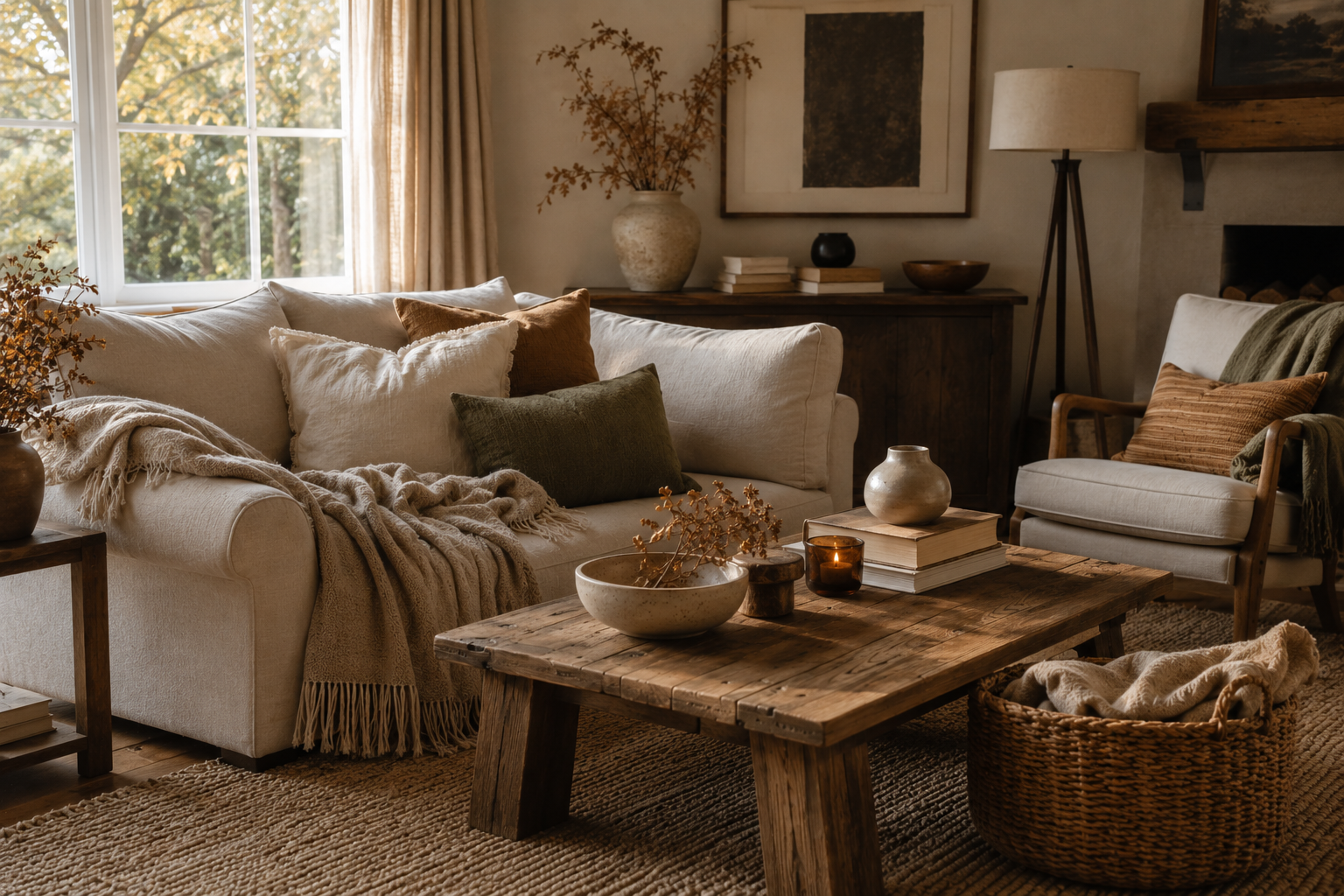
A cream sofa, for example, can feel completely different with an oatmeal wool throw, olive pillow, walnut-toned wood, and dried brown foliage. The furniture stays the same while the room develops a distinctly autumnal character.
What to Use Before Buying New Fall Decor
Before ordering another pillow or decorative pumpkin, walk through your home and look specifically for texture rather than seasonal labels.
Useful items to relocate temporarily include:
- Neutral blankets from a bedroom
- Woven baskets from closets or entryways
- Wooden bowls and trays from the kitchen
- Matte ceramic vases and planters
- Books with simple covers
- Linen pillow covers
- Unused candles
- Vintage wooden objects
- Small rugs that can be safely layered
- Dried or preserved natural materials
Seeing these items together may reveal that you already have most of what you need for a fall refresh.
The Fall Sofa Layering Mistake to Avoid
The sofa tends to attract the most seasonal layers, which also makes it the easiest place to overdecorate.
A practical sofa still needs comfortable seating. If guests have to move four pillows and two blankets before sitting down, the styling is probably working too hard.
Try using fewer, more distinct textures instead. A smooth sofa, one wool throw, two linen or woven pillows, and one smaller accent cushion can create plenty of depth.
Also avoid arranging every textile with identical symmetry. A slightly relaxed throw on one side can balance two pillows on the other and make the sofa feel natural rather than showroom-perfect.
How to Make a Neutral Living Room Feel Like Fall
A neutral living room is actually an ideal foundation for fall texture because small material changes are easy to see.
Keep the large neutral pieces in place and introduce warmth through tactile contrast. Pair beige upholstery with darker wood. Put an oatmeal throw beside a nubby brown pillow. Add dried branches above a matte cream vase. Use an amber candle holder or warm ceramic bowl as a small color accent.
The result can feel unmistakably seasonal without relying on bright orange decorations.
This is particularly useful if you prefer a subtle transition between seasons. When fall ends, removing the dried foliage and heavier throw may be all you need to return the room to a lighter look.
Create Your Cozy Fall Living Room This Week
The easiest way to refresh a living room for fall is not to replace what already works. Instead, change the relationship between the materials already in the room.
Bring a wool throw out of storage. Move a woven basket beside the sofa. Let the grain of the coffee table show. Place matte ceramic against natural wood. Add a restrained dried arrangement and allow soft evening light to emphasize the textures.
Most importantly, edit as you go. Cozy fall living room decor works best when every layer has room to be seen and the living room remains comfortable enough to actually use.
Start with one corner this week. Layer something soft, something woven, something natural, and something organic. You may find that the room already has everything it needs to feel warmer for fall.