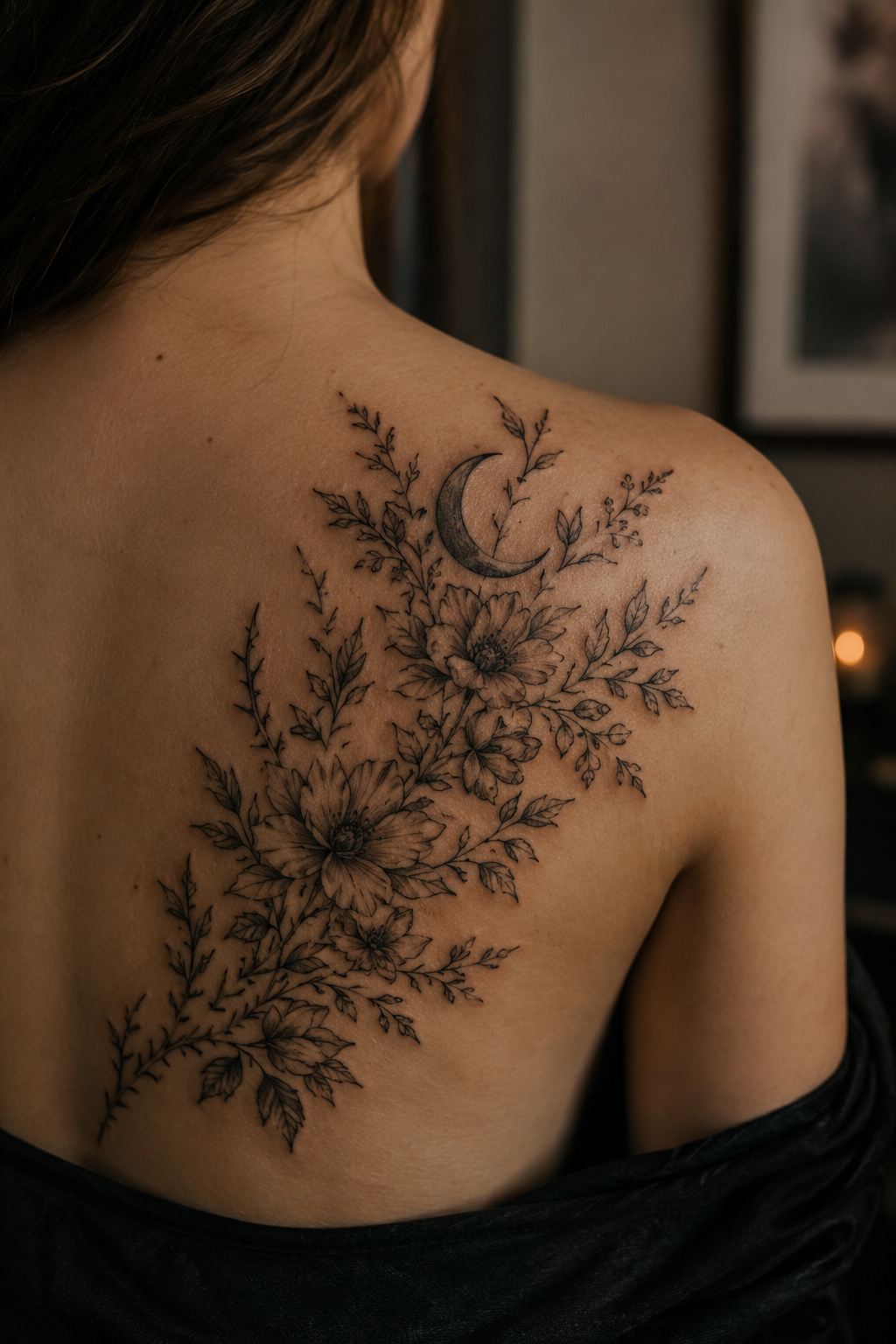
26 Subtle Spooky Botanical Tattoo Ideas for a Moody Fall Aesthetic
Spooky tattoos do not have to feature oversized pumpkins, cartoon ghosts, or imagery that only makes sense during October. Some of the most striking fall-inspired tattoos take a quieter approach, combining flowers, herbs, thorns, moths, mushrooms, branches, and other natural elements with just enough darkness to create a mysterious mood.
That is where subtle spooky botanical tattoo ideas work especially well. They borrow the atmosphere of fall and gothic design without looking like temporary Halloween decorations. Fine lines, restrained black ink, delicate shading, negative space, and carefully chosen botanical elements can create a tattoo that feels romantic, mysterious, and wearable throughout the year.
The key is subtlety. Instead of putting every spooky symbol into one design, choose one or two darker details and let the botanical composition do most of the work. A thorny rose, tiny moth hidden between leaves, delicate poisonous plant, or fading wildflower stem can communicate the mood without becoming overly literal.
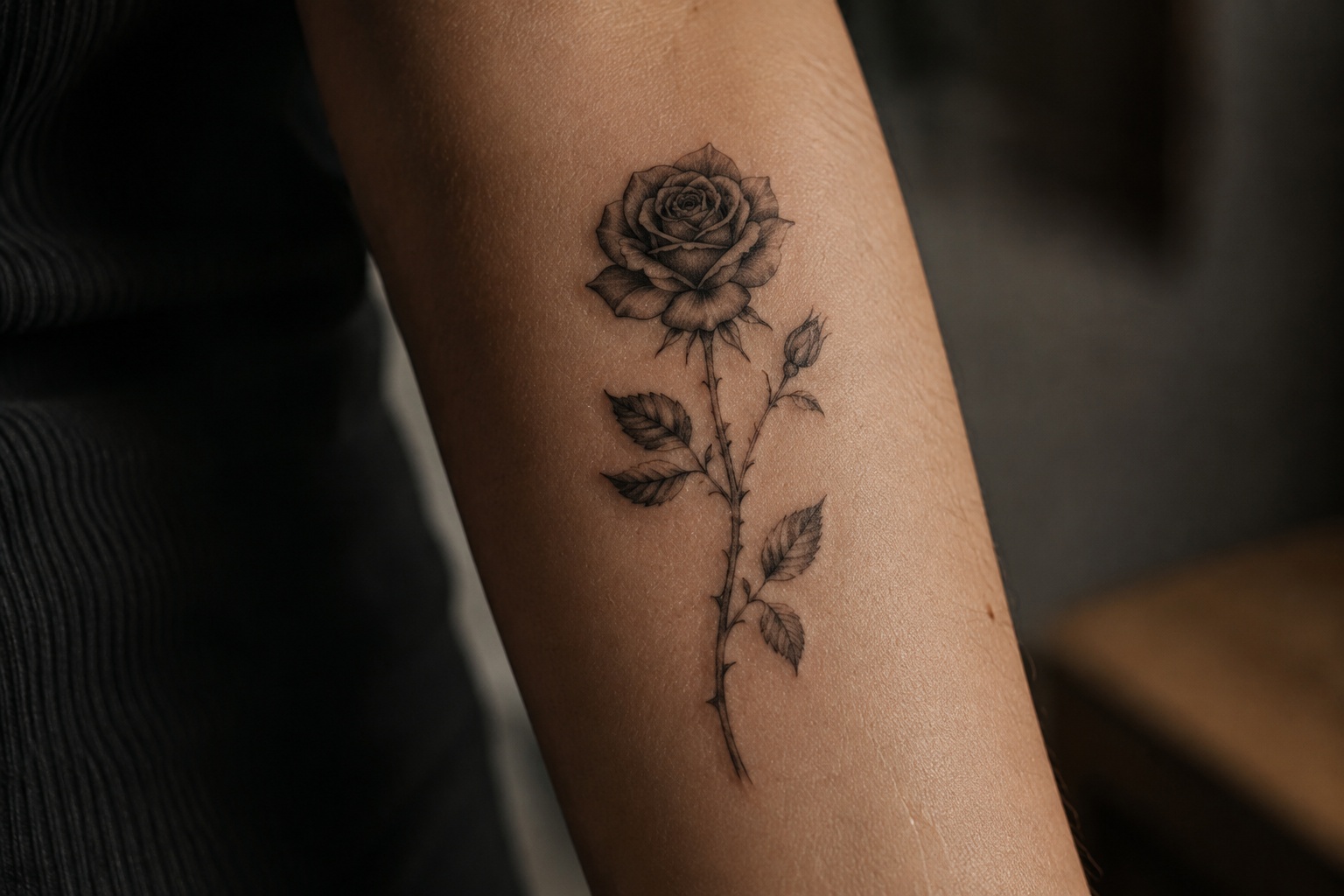
Whether you want a tiny first tattoo or a larger botanical composition, these 26 ideas offer different ways to create dark floral ink that feels sophisticated rather than costume-y.
1. Fine-Line Black Rose With Delicate Thorns
A black rose is one of the easiest ways to introduce gothic character while keeping a tattoo elegant. Instead of using a heavily shaded traditional rose, choose a fine-line outline with a slender stem and a few sharp thorns.
The contrast between the romantic flower and defensive thorns gives the design natural symbolism. It can represent beauty with boundaries, resilience, grief, transformation, or simply an appreciation for darker botanical imagery.
This design works particularly well on the inner forearm, upper arm, ankle, or ribs.
2. Withered Wildflower Stem
Fresh flowers are common tattoo subjects, but a slightly withered flower can feel more atmospheric. Think of a thin stem bending naturally with a few petals beginning to fall.
The design does not need to look dead or macabre. A restrained illustration can capture the fleeting nature of a late-season garden and give the tattoo a quiet autumn mood.
3. Tiny Belladonna Botanical Tattoo
Belladonna has the elegant appearance of a vintage botanical illustration while carrying darker historical associations. Its leaves, berries, and bell-shaped flowers translate beautifully into fine-line ink.
Keep the design small and relatively simple if you want the poisonous-plant reference to remain understated. From a distance, it can look like a graceful botanical sprig; the darker meaning becomes apparent only to someone who recognizes the plant.
4. Crescent Moon Wrapped in Wildflowers
A crescent moon surrounded by delicate stems creates a subtle intersection between botanical and celestial imagery. Instead of making the moon the dominant feature, let thin flowers partially follow its curve.
This approach gives you a witchy atmosphere without relying on an obvious Halloween motif. It is especially suited to the shoulder, ankle, back of the arm, or upper thigh.
5. Thorn Branch Along the Collarbone
A narrow thorn branch following the collarbone can look both delicate and slightly dangerous. The anatomy provides a natural guideline for the tattoo, allowing the branch to move with the body rather than appearing like a separate sticker placed on the skin.
For a more elegant result, use irregular thorns and slight curves instead of making every section perfectly symmetrical.
6. Moth Resting on a Botanical Stem
Moths have become a favorite motif for people who like mysterious tattoos, but they do not need to dominate a composition. A tiny moth resting beside leaves or flowers can provide just enough spooky character.
Ask for fine wing details rather than a large block of dark shading if you want the finished tattoo to remain airy.
7. Dark Fern Frond
A single fern is simple, organic, and naturally suited to fine-line tattooing. To make it moodier, consider an elongated blackwork-inspired silhouette with delicate internal detail.
Fern tattoos can follow the length of the forearm, calf, ribs, or spine beautifully. They are particularly effective when the design maintains enough negative space between individual leaves.
8. Spiderweb Hidden Between Leaves
If you like spiderweb imagery but worry that it might feel too explicitly Halloween-inspired, hide a tiny web within a larger botanical composition.
A nearly invisible web stretching between two leaves creates an interesting detail that viewers may only notice after looking closely. That makes it one of the strongest options for someone who wants genuinely subtle spooky botanical tattoo ideas.
9. Dried Lavender With a Tiny Crescent
Lavender is normally associated with soft, romantic tattoo designs. Drawing it as a dried stem and adding a miniature crescent moon changes the mood without making it dramatically darker.
This combination works well for narrow placements such as the wrist, ankle, side of the forearm, or behind the upper arm.
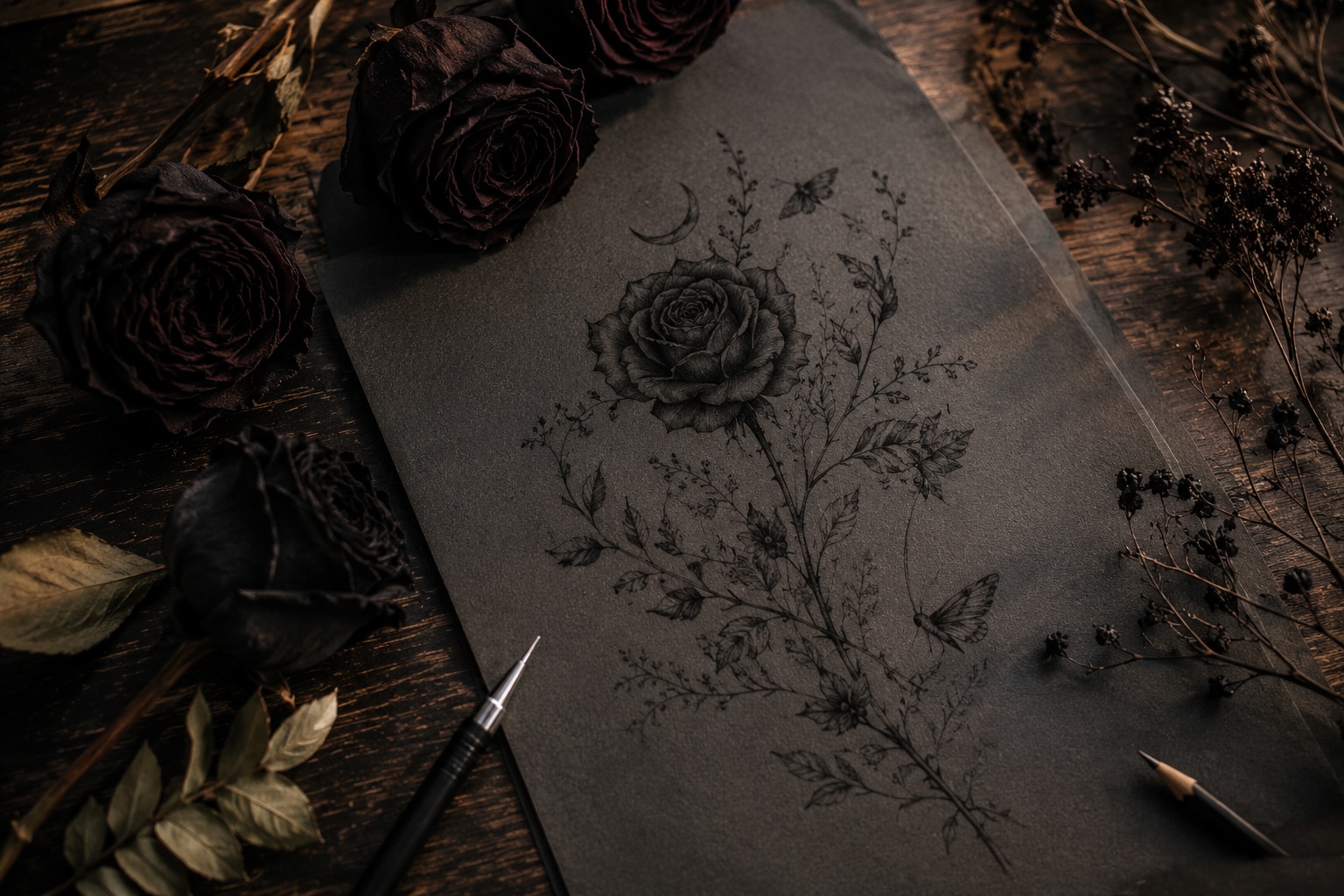
10. Black Dahlia Fine-Line Tattoo
Dahlias have layered petals that can create impressive visual depth without requiring heavy color. A black-ink dahlia with restrained interior shading feels romantic and dramatic at the same time.
Because the flower contains considerable detail, avoid making the design excessively small. Giving the petals enough room can help preserve the visual separation of the linework.
11. Tiny Mushroom and Fern Cluster
Mushrooms naturally bring woodland mystery to botanical tattoos. Instead of a colorful fantasy mushroom, consider a tiny black-ink cluster emerging beneath a fern.
Small dots, fine gill lines, and slightly imperfect stems can create an old botanical-field-guide appearance. The ankle, calf, forearm, and upper arm are practical placements.
12. Thorny Vine Wrapping the Wrist
A thorny vine can function almost like permanent botanical jewelry. Allowing the vine to wrap partially around the wrist makes the design feel integrated with the body.
It does not have to form a complete bracelet. An incomplete vine with natural gaps often feels lighter and can keep the tattoo from becoming visually heavy.
13. Pressed Flower With a Tiny Skull Detail
For a design that rewards a second look, combine a delicate pressed-flower silhouette with an extremely small skull incorporated into the center or base of the plant.
The skull should remain secondary. If it becomes the focal point, the design can shift from subtle botanical ink toward a more conventional spooky tattoo.
14. Botanical Snake With Fine Leaves
A slender snake weaving through leaves can create beautiful movement, particularly on the forearm or calf. Keep the snake narrow and use minimal scale detail to prevent the design from feeling too heavy.
The combination of a snake and plants can suggest transformation, renewal, secrecy, temptation, or personal growth depending on the meaning you attach to it.
15. Poison Garden Bouquet
Instead of choosing a traditional floral bouquet, build a composition around plants historically associated with poison or folklore. Belladonna, foxglove, hemlock-inspired foliage, and other recognizable shapes can create an unusual botanical arrangement.
The result can resemble a vintage scientific illustration rather than obvious Halloween artwork. This concept is particularly effective for a medium-size forearm or upper-arm piece.
16. Raven Feather With Botanical Sprigs
A single dark feather surrounded by small botanical stems offers another way to create a mysterious aesthetic without using an entire raven illustration.
Keep the feather slightly imperfect and organic. Fine parallel lines can create texture while a few leaves soften the darker central motif.
17. Falling Petals and Tiny Stars
A flower releasing two or three falling petals can create a sense of movement and impermanence. Adding a few extremely small stars or dots gives the design a faintly magical atmosphere.
This is a useful choice if you want spooky elegance without traditional gothic imagery. The mood comes primarily from the composition rather than recognizable Halloween symbols.
18. Fine-Line Bat Hidden in Flowers
A bat does not need to be the centerpiece. Try hiding a tiny flying bat among dark flowers, vines, or branches.
At first glance, the tattoo reads as a botanical design. The bat becomes a small discovery within the composition, which makes the tattoo more interesting without making it seasonal.
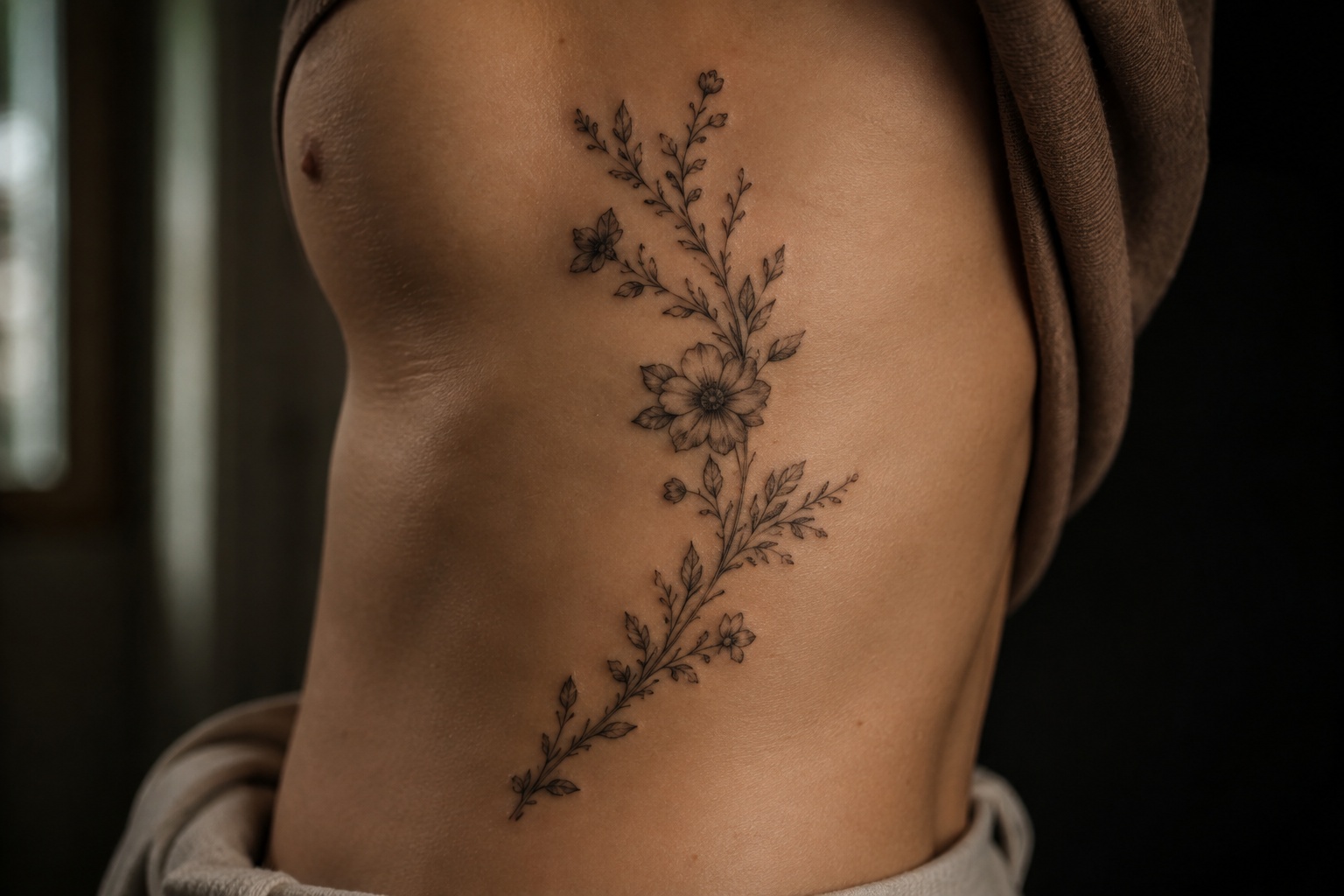
19. Dark Botanical Spine Tattoo
A narrow botanical stem following the spine can create an elegant vertical composition. For a darker version, use thorny branches, dried leaves, or slightly wilted flowers rather than a lush bouquet.
Placement matters considerably with this concept. A tattoo artist can adapt the design to follow your individual anatomy rather than simply transferring a perfectly straight illustration.
20. Tiny Ghost Among Wildflowers
If you genuinely love ghost imagery, scale it down and allow the surrounding plants to carry the design. A tiny simplified ghost partially obscured by wildflowers can feel playful without becoming cartoonish.
Avoid adding too many supporting Halloween elements. You probably do not need a ghost, pumpkin, bat, spiderweb, and crescent moon all in the same small composition.
21. Antique Botanical Illustration Tattoo
Vintage botanical books are excellent conceptual inspiration for moody tattoos because their illustrations often feature intricate roots, seed pods, leaves, and flowers.
A tattoo inspired by that visual language can feel scientific, historical, and slightly mysterious. Thin black linework and selective stippling can help capture the character of an old engraved illustration.
22. Rose Stem With a Small Spider
A delicate spider positioned beneath a rose or crawling along its stem provides a darker detail without taking over the entire tattoo.
The size relationship is important. Keeping the spider small allows the flower to remain the visual focal point, while the unexpected detail introduces the spooky element.
23. Dead Leaves and Seed Pods
Botanical tattoos do not need flowers at all. Curling leaves, dried stems, berries, and seed pods can capture late autumn beautifully.
These natural forms often have more unusual silhouettes than conventional flowers, making them useful if you want a botanical tattoo that does not look like every other floral design.
24. Moonlit Floral Arch
Create a narrow arch from dark leaves and flowers, then place a small moon or star detail inside the negative space. The arch can frame the celestial element without becoming overly ornamental.
This composition is well suited to the upper arm, thigh, shoulder blade, or calf where there is enough room to preserve the negative space.
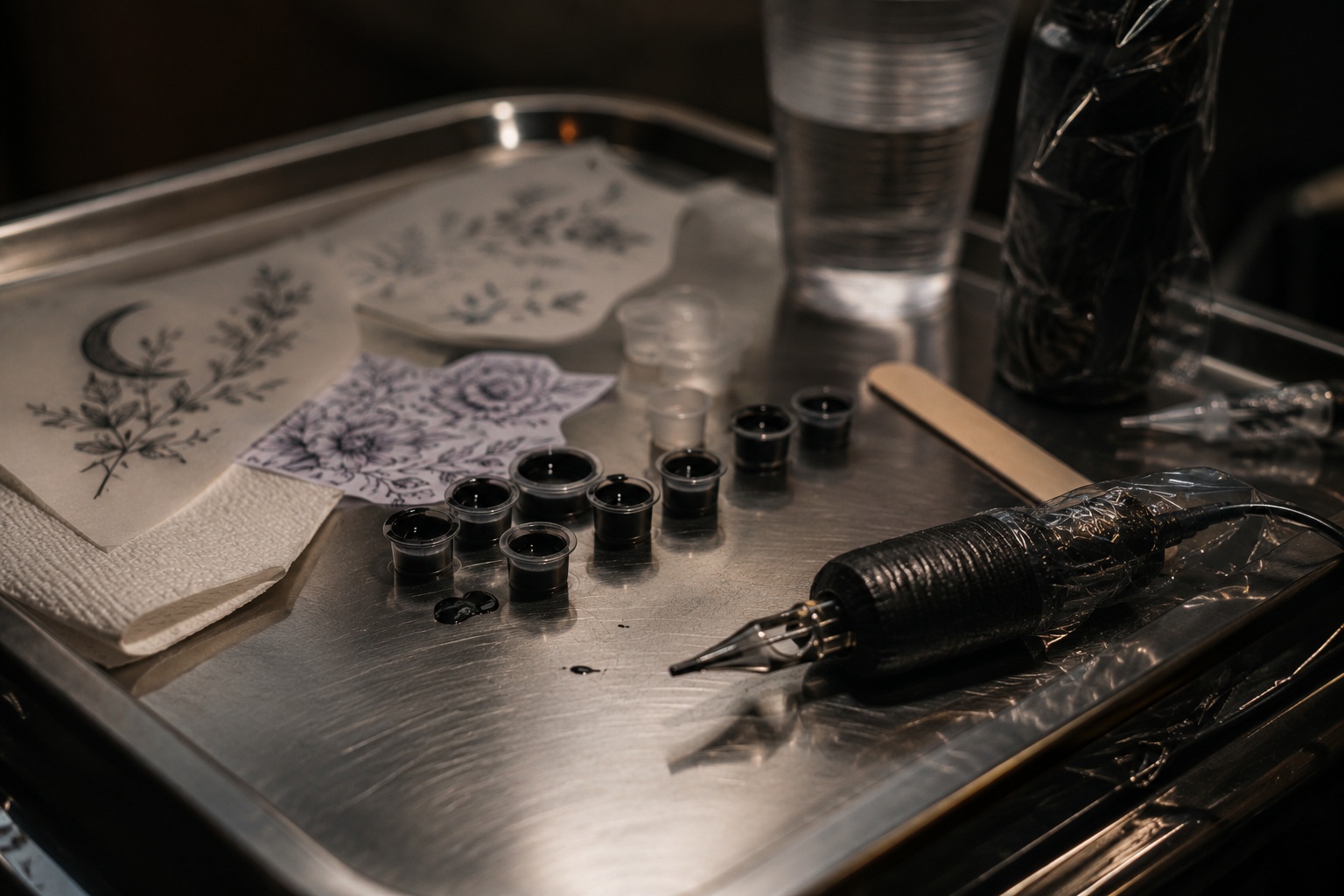
25. Miniature Gothic Herbarium Tattoo
A herbarium-inspired tattoo can depict a pressed plant as though it has been preserved on the page of an old botanical collection. Thin stems, flattened leaves, and understated lettering-like marks can establish the antique mood without requiring actual text.
This concept works especially well for people drawn to dark academia, vintage botanical artwork, and quiet gothic styling.
26. Dark Floral Bouquet With One Hidden Symbol
For a larger piece, build a bouquet from two or three flowers and then incorporate one personal symbol somewhere within the leaves. It might be a crescent, tiny moth, star, small spider, key shape, or another motif that has meaning to you.
Keeping the symbol hidden prevents it from competing with the botanical composition. It also gives the tattoo a private layer of meaning that may not be immediately obvious to other people.
How to Keep a Spooky Botanical Tattoo Elegant
The difference between sophisticated gothic botanical ink and a design that feels like Halloween merchandise usually comes down to editing. You do not need every dark motif you like in one tattoo.
Before finalizing your design, consider these principles:
- Choose one primary botanical element. Give the eye a clear focal point, whether that is a rose, fern, dahlia, branch, or poisonous plant.
- Add only one or two darker details. A tiny moth, spider, crescent, web, or bat can establish the mood.
- Use negative space. Fine-line tattoos often look more refined when every empty area is not filled with shading.
- Follow the anatomy. Stems, vines, and branches look particularly natural when their curves complement the body.
- Avoid excessive seasonal symbolism. If year-round wearability matters, botanical imagery should remain the foundation of the design.
The Spooky Tattoo Mistake That Can Make a Design Feel Costume-y
One of the easiest mistakes is trying to communicate the theme too aggressively. A design containing pumpkins, ghosts, bats, spiderwebs, moons, skulls, candles, and black roses simultaneously leaves little room for interpretation.
Instead, decide what you actually love about spooky aesthetics. Maybe it is the mystery of a moonlit garden. Maybe it is dried autumn vegetation, poisonous plants, gothic romance, or the delicate structure of a spiderweb.
Build the tattoo around that specific idea.
For example, instead of asking for a generic Halloween tattoo, you might request a delicate thorny rose with a nearly hidden spiderweb. That gives the artist a much clearer aesthetic direction while keeping the finished piece sophisticated.
Best Placements for Dark Floral and Botanical Tattoos
Botanical imagery is versatile because stems, branches, leaves, and petals can be reshaped to complement many areas of the body.
Forearm
The forearm provides enough length for stems, ferns, flowers, and narrow bouquets. It is also easy to view yourself, making it appealing for designs with personal symbolism.
Shoulder Blade
The shoulder blade provides a broad canvas for dark floral compositions. Curving branches and asymmetrical bouquets can work particularly well here because the artist has room to create movement.
Ribcage
Long stems and vines can follow the ribs naturally. This placement can feel especially delicate because the design may remain partially concealed depending on clothing.
Ankle and Lower Leg
Small wildflowers, thorn branches, mushrooms, and narrow botanical designs work well around the ankle or vertically along the lower leg.
Upper Arm
The upper arm offers enough space for more detailed botanical illustrations while still allowing the tattoo to be covered relatively easily.
Back of the Arm
A narrow vertical botanical design placed behind the upper arm can be subtle from the front while becoming more visible from the side and back.
How to Design Your First Spooky Botanical Tattoo
If this will be your first tattoo, begin with the mood rather than trying to design every line yourself. A professional tattoo artist can translate your references into artwork that works on actual skin.
- Choose your botanical subject. Start with a rose, fern, mushroom, wildflower, thorn branch, poisonous plant, or another natural element you genuinely like.
- Choose one darker accent. Consider a moth, crescent moon, tiny bat, spider, web, skull detail, or dried botanical treatment.
- Decide how visible you want it. Placement will affect how often you and other people see the tattoo.
- Choose an approximate size. Avoid forcing intricate botanical detail into an area too small to support it clearly.
- Collect references for mood. Botanical illustrations, dried flowers, vintage herbarium pages, and examples of an artist’s healed work can communicate your preferred direction.
- Let the artist adapt the composition. A skilled artist can adjust stems, leaves, and negative space to complement the placement.
Fine-Line Details Versus Darker Shading
Fine-line botanical tattoos are popular because they can feel delicate even when the subject matter is dark. However, fine-line does not necessarily mean every part of the tattoo must use the thinnest possible line.
Small variations in line weight can establish hierarchy. The primary stem or flower might use slightly stronger lines while tiny internal details remain lighter. Selective stippling or restrained shading can add depth without turning the tattoo into a solid black mass.
When evaluating an artist, look at healed examples in addition to fresh photographs. Fresh tattoos can appear exceptionally crisp immediately after the session, while healed work gives you more useful information about how that artist’s linework settles over time.
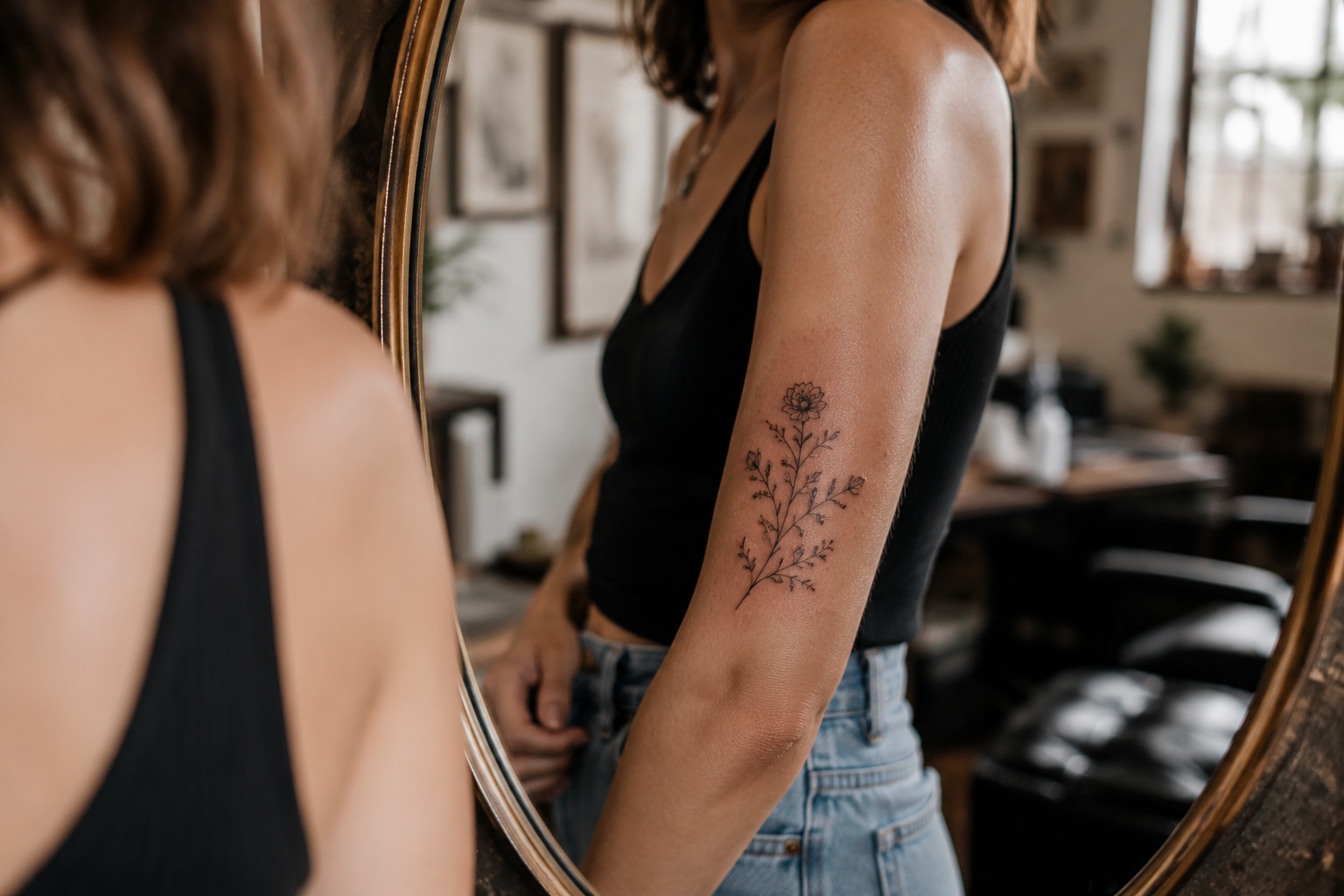
Making a Fall Tattoo Work Beyond October
A good fall-inspired tattoo does not necessarily need to announce the season. Autumn can be represented through atmosphere: dried flowers, seed pods, fading leaves, mushrooms, thorny branches, dark florals, and natural imagery associated with change.
That approach makes the tattoo easier to appreciate in February, May, or July. The design remains botanical first and seasonal second.
Color can also influence this effect. Black and gray designs are naturally adaptable, while a restrained palette can work if you prefer color. The important part is making sure the design reflects your long-term aesthetic rather than only a temporary seasonal trend.
Final Thoughts on Subtle Spooky Botanical Tattoo Ideas
The most compelling subtle spooky botanical tattoo ideas balance darkness with restraint. A thorn, moth, dried flower, poisonous plant, tiny spider, or hidden crescent can establish an entire mood without requiring an obvious Halloween scene.
Start with botanical imagery you would happily wear throughout the year. Then introduce the spooky element carefully. A dark rose can hide a web. A wildflower stem can hold a tiny moth. A fern can grow beside mushrooms. A bouquet can contain a symbol that only you recognize.
That restraint is what makes gothic botanical tattoos so versatile. They can feel romantic, mysterious, slightly eerie, and unmistakably fall-inspired while still looking intentional long after spooky season ends.