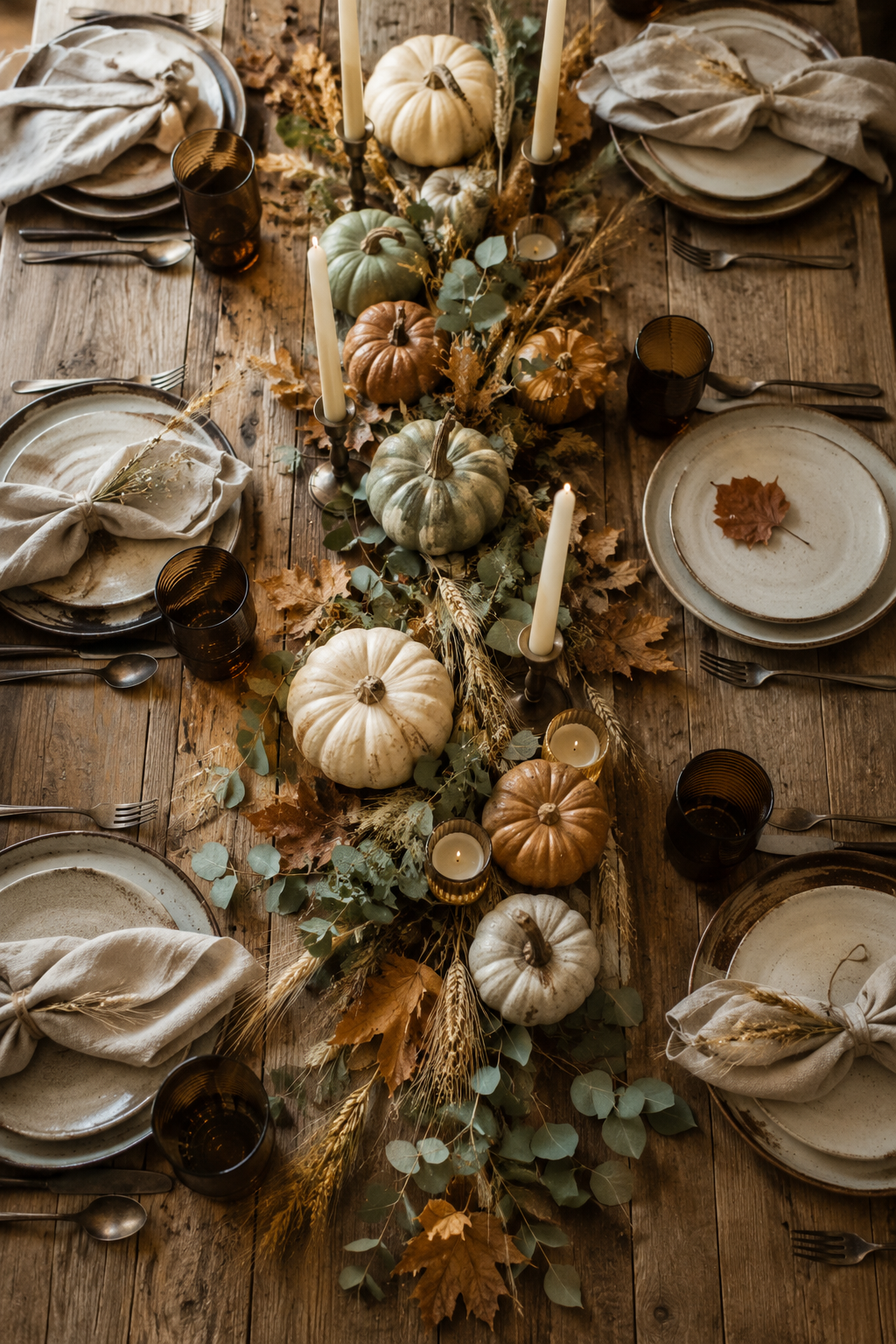
28 Harvest Tablescape Ideas for a Fall Dinner Party on a Budget
A beautiful fall dinner table does not need expensive floral arrangements, designer dinnerware, or an event-planner-sized decorating budget. Some of the most inviting harvest tablescapes are built from simple materials: dried foliage, inexpensive candles, thrifted dishes, seasonal produce, natural linens, and objects you may already have around the house.
The secret is less about how much you spend and more about how you layer color, texture, height, and repetition. A few carefully repeated elements can make an inexpensive table feel intentional rather than improvised.
These harvest tablescape ideas on a budget are designed for real fall entertaining. Whether you are hosting Thanksgiving, a casual Friendsgiving, an October dinner, or a small autumn gathering, these ideas can help you create a warm, elegant table without buying an entirely new collection of seasonal decor.
How to Make a Budget Harvest Tablescape Look Expensive
Before buying anything, decide on a restrained color palette. This is one of the easiest ways to make affordable fall table decor look cohesive. Instead of using every traditional autumn color at once, choose two or three dominant tones and repeat them throughout the table.
Cream, warm brown, muted rust, olive, taupe, and natural wood work especially well together. You can also create a softer look with ivory, beige, faded orange, and dried green foliage.
Next, think in layers. Start with your table or table covering, add dinnerware, introduce a low centerpiece, and finish with smaller details such as napkins, candles, leaves, or place cards.
Most importantly, leave some empty space. A table that is completely covered with decorations can feel cluttered and make serving dinner difficult. An elegant harvest table usually has a clear visual rhythm and enough breathing room for guests to eat comfortably.
1. Use a Bare Wood Table as the Foundation
If you have an attractive wooden dining table, consider skipping the tablecloth entirely. Visible wood grain immediately introduces warmth and natural texture, creating an ideal backdrop for rustic harvest decor.
A bare table also saves money because you do not need to purchase seasonal linens. Add a simple runner down the center if the table needs extra softness.
2. Create a Runner With Small Pumpkins
Instead of buying one large centerpiece, arrange several small pumpkins down the middle of the table. Mini white, pale orange, and muted green pumpkins create a particularly sophisticated look.
Space them loosely rather than arranging them in a perfectly straight line. Filling the gaps with leaves or dried stems creates a natural, gathered-from-the-garden appearance.
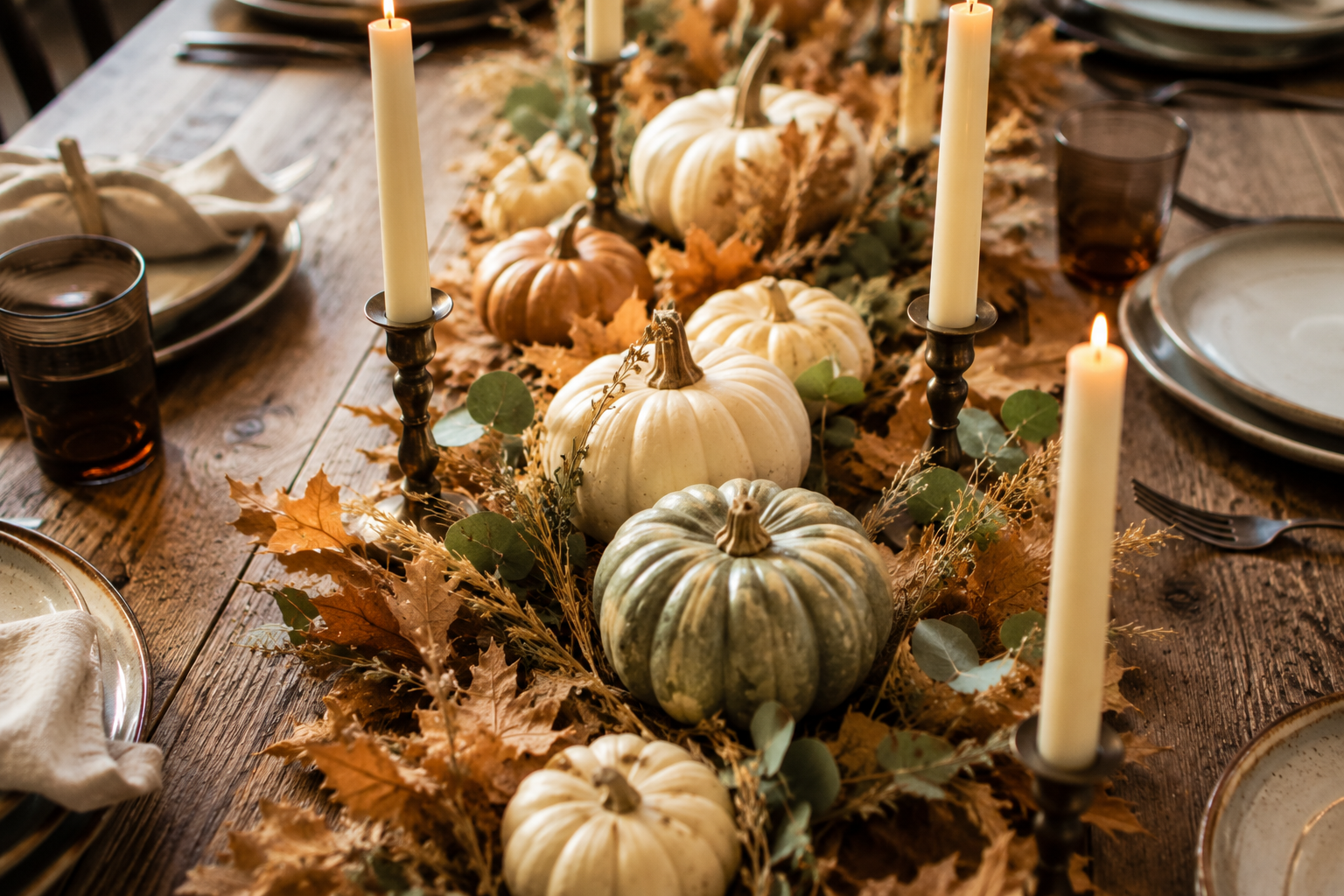
3. Mix Pumpkins With Taper Candles
Candles add height to a low pumpkin arrangement without taking up much table space. Place inexpensive taper candles between small pumpkins to create alternating heights.
Warm ivory, beige, rust, or muted brown candles work beautifully for a fall dinner party. If you already own mismatched candlesticks, use them together rather than purchasing a matching set.
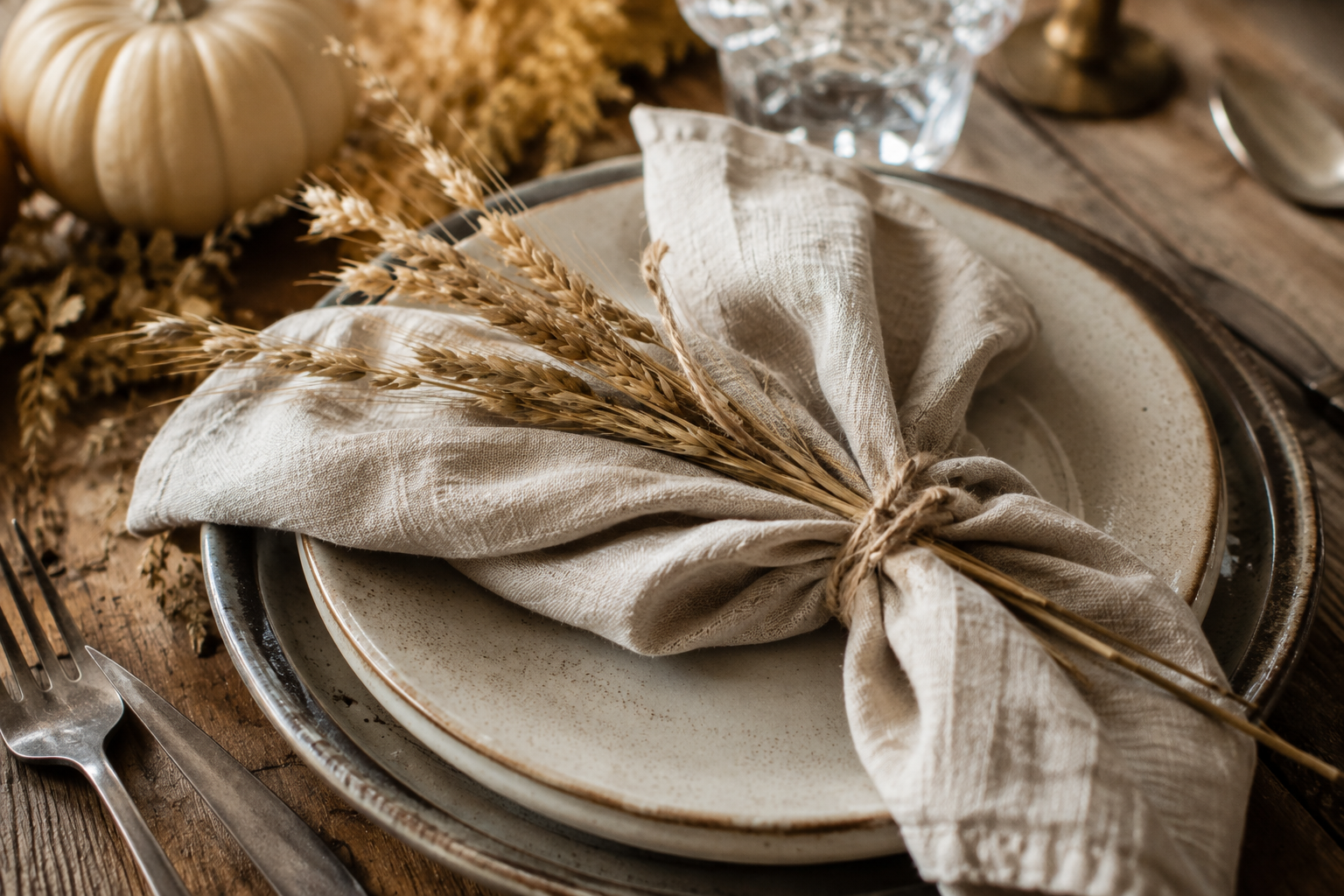
4. Tie Linen Napkins With Dried Wheat
A single dried wheat stem can make an ordinary napkin feel thoughtfully styled. Fold or loosely knot a linen-look napkin and tuck two or three small wheat stems underneath the fold.
You can achieve the same effect with rosemary, dried grass, eucalyptus, or a small autumn leaf. Keeping each place setting simple makes this detail stand out.
5. Use Thrifted Ceramic Plates
Matching dinnerware is not necessary for an attractive harvest table setting. Thrift stores often have individual stoneware and ceramic plates in cream, beige, brown, and muted earthy colors.
Look for pieces that share a similar color family rather than an identical pattern. Slight variations can make the table feel collected and editorial instead of overly coordinated.
6. Layer Dinner and Salad Plates
Layering is an easy way to make inexpensive dishes look more substantial. Place a smaller salad or appetizer plate on top of the dinner plate, even if the two pieces came from different sets.
Neutral colors make mixing easier. Cream over brown stoneware, for example, creates subtle contrast without making the table busy.
7. Turn Brown Kraft Paper Into a Table Runner
A roll of brown kraft paper can become an inexpensive disposable table runner. Its warm neutral color works naturally with pumpkins, greenery, wood, and cream-colored dinnerware.
For an informal dinner, you can even write guests’ names directly on the paper near their place settings. Keep the handwriting simple so the result feels intentional rather than crafty.
8. Decorate With Foraged Autumn Leaves
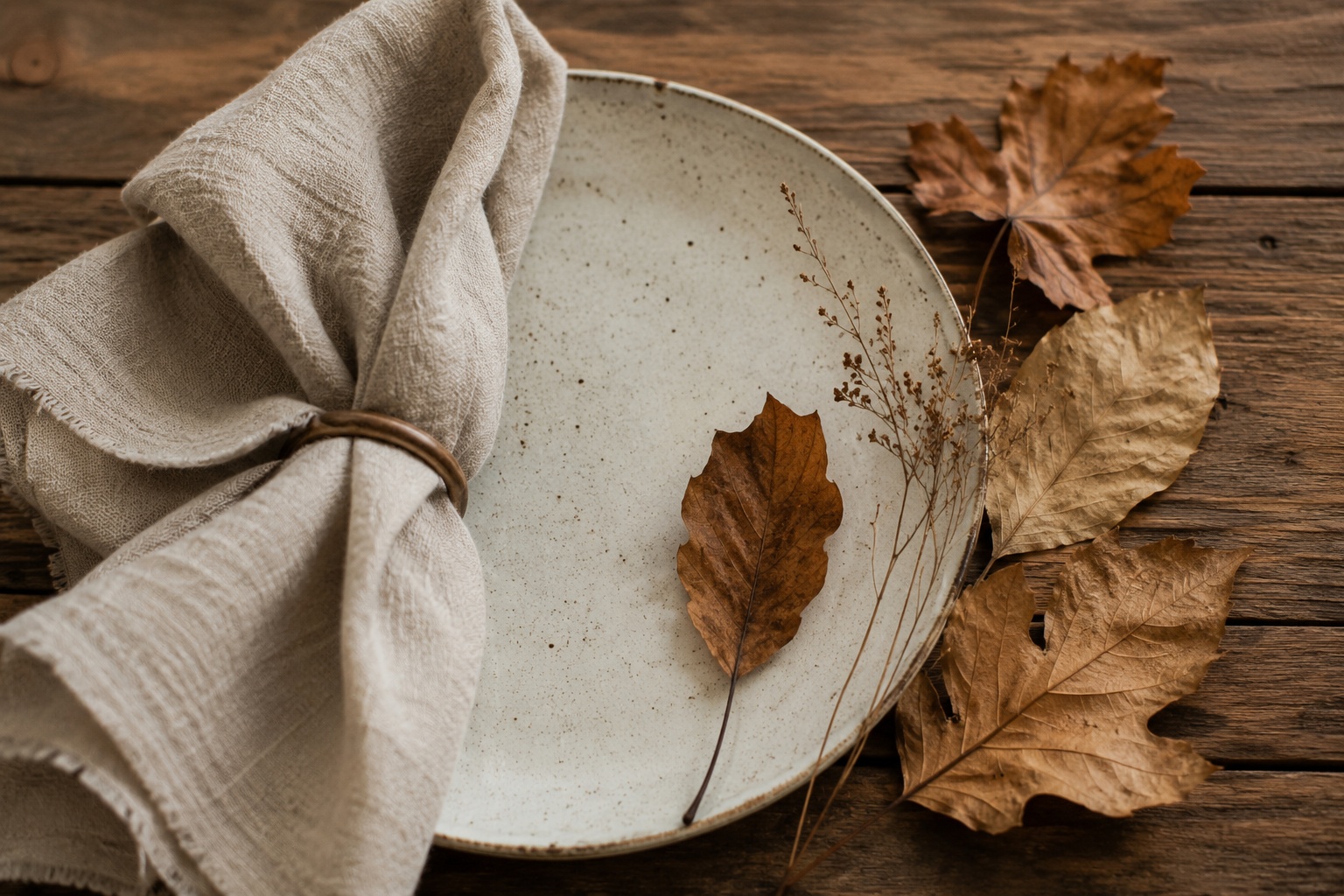
One of the cheapest sources of seasonal color may be right outside. Clean, dry autumn leaves can be scattered sparingly along the center of a table or tucked around pumpkins and candles.
Choose leaves that are dry and intact. Avoid covering the table with them; a handful of carefully placed leaves usually looks more polished than a thick layer.
9. Fill Small Bottles With Dried Stems
Instead of purchasing a large floral arrangement, collect small glass bottles or jars and place one or two dried stems in each. Repeating the bottles along the length of the table creates impact with very little material.
Clear glass works with nearly any color palette, making this an easy arrangement to reuse throughout the year.
10. Make Seasonal Produce Part of the Centerpiece
Apples, pears, figs, squash, and pomegranates can double as decorations before becoming food. Arrange seasonal produce loosely among candles and greenery for a centerpiece that feels abundant without requiring specialty decor.
Choose two or three types of produce rather than mixing too many colors and shapes.
11. Use Pears as Place-Setting Decorations
A pear placed on each plate is an easy way to introduce repetition. Green or golden pears look especially attractive against cream stoneware and natural linen.
You can attach a small paper name tag to the stem if you want assigned seating.
12. Try Apples for a Classic Harvest Look
Apples create a slightly brighter and more traditional fall table. Deep red varieties work well with darker wood, while green apples create a fresher palette with cream and olive tones.
Place one at each setting or arrange several down the center of the table with candles.
13. Add a Simple Cheesecloth Runner
Loose, gauzy fabric adds softness without the formal appearance of a pressed tablecloth. An inexpensive cheesecloth-style runner can be gently gathered through the center of the table.
Do not try to make every fold symmetrical. The relaxed texture is part of the appeal.
14. Use Amber Glass for Warmth
Amber bottles, drinking glasses, or candleholders instantly introduce warm fall color. You only need a few pieces to create the effect.
If you are thrifting for your dinner party, amber glass is worth watching for because individual pieces can look attractive even when they do not match exactly.
15. Bring in Matte Black Accents
A small amount of black can give rustic fall decor a more modern edge. Try black candlesticks, dark flatware, or a few matte black candleholders.
The key is restraint. Against cream linens, wood, pumpkins, and dried foliage, a few dark elements create definition without making the table feel heavy.
16. Create a Neutral Pumpkin Palette
If bright orange does not fit your dining room, build the centerpiece around white, cream, pale green, and soft tan pumpkins.
This understated palette works especially well for an elegant dinner party and allows natural textures to become the main attraction.
17. Use Grocery-Store Eucalyptus Sparingly
You do not need enough greenery to create a full garland. Separate a small bundle of eucalyptus into individual stems and weave them loosely around candles and pumpkins.
Breaking a bundle apart can make it stretch across a surprisingly long table.
18. Make Dried Grasses the Centerpiece
Dried grasses are an excellent alternative to fresh flowers because their muted colors complement autumn decor and they can be reused.
Place a small bundle in a simple ceramic pitcher or thrifted vase. Keep tall arrangements near one end of the table or move them before dinner so guests can see one another comfortably.
19. Use Mismatched Candleholders
Matching candlesticks can be expensive, but mismatched ones often create more character. Combine brass, wood, glass, or ceramic holders while keeping the candles themselves consistent.
Repeating one candle color helps connect the different bases visually.
20. Create Height Without Blocking Conversation
Variation in height makes a tablescape interesting, but large centerpieces can become frustrating during dinner. Use slender taper candles for height and keep pumpkins, foliage, and produce low.
This creates vertical movement while preserving clear sightlines across the table.
21. Use Wooden Cutting Boards as Serving Decor
Wooden boards can become part of the tablescape while also serving a practical purpose. Use them for bread, cheese, appetizers, or desserts.
The wood adds another natural texture and makes the table feel abundant without adding decorations that must be removed when food arrives.
22. Fold Napkins Instead of Buying Napkin Rings
Special seasonal napkin rings are easy to skip. A simple knot, loose fold, or rolled napkin can look just as polished.
Add a dried stem or small leaf if you want a decorative detail. This approach also makes it easier to reuse your napkins for other seasons.
23. Use Printable or Handmade Place Cards
Place cards make even a casual gathering feel intentional. Small pieces of cream cardstock or kraft paper are enough.
Write names with a black pen and place each card on top of a napkin, against a pear, or beside the dinner plate.
24. Repeat One Element at Every Place Setting
Repetition is one of the simplest styling techniques for creating a cohesive table. It might be one wheat stem on every napkin, one pear on every plate, or the same folded napkin at every seat.
This visual consistency can make inexpensive pieces look like part of a deliberate design.
25. Keep the Centerpiece Narrow
A common tablescape mistake is allowing the centerpiece to spread into the space needed for plates, glasses, and serving dishes.
Keep most decorative elements within a narrow strip through the center of the table. On a smaller table, reduce the number of objects rather than squeezing them closer together.
26. Let Candlelight Do the Decorating
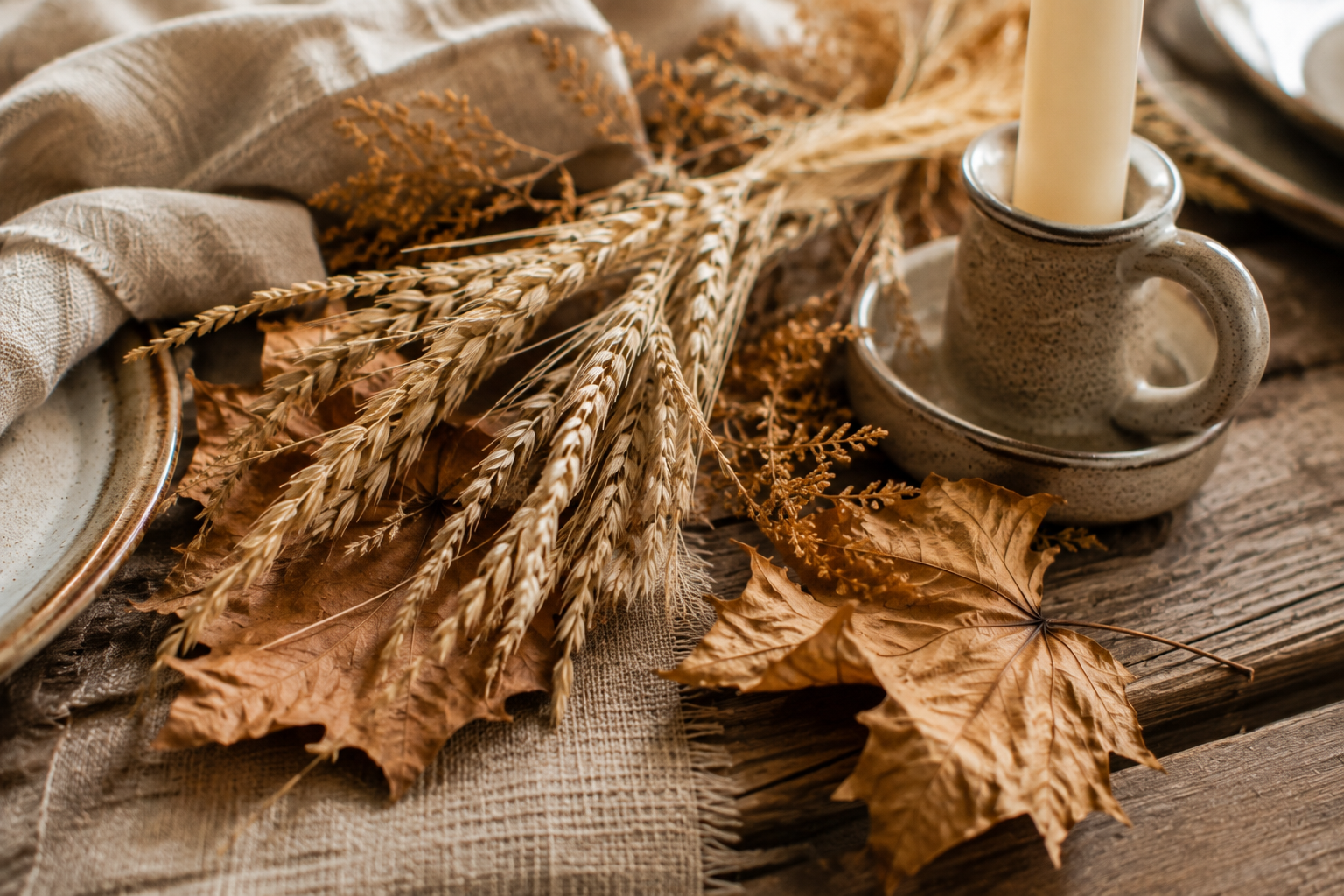
If your dinner begins near sunset, candlelight can provide much of the atmosphere. A few inexpensive taper and votive candles create warmth, movement, and flattering light across even a very simple table.
Use unscented candles around food so fragrance does not compete with dinner.
27. Style a Small Sideboard With Leftover Decor
If you have extra pumpkins, leaves, or candles, avoid forcing all of them onto the dining table. Move the extras to a nearby console, buffet, or sideboard.
This spreads the fall atmosphere through the room while keeping the actual dinner table comfortable and functional.
28. Shop Your Home Before Buying Anything
The most effective budget strategy is also the simplest: start with what you already own.
Gather neutral plates, wooden boards, jars, candleholders, baskets, cloth napkins, vases, and serving pieces in one place. You may discover that you already have most of the foundation for an elegant harvest table.
Only after taking inventory should you decide what is missing. Often, one bundle of dried stems, several mini pumpkins, or a few candles is enough to make existing pieces feel seasonal.
A Simple Step-by-Step Harvest Tablescape Formula
If you are styling a fall table for the first time, you do not need to use all 28 ideas. In fact, choosing fewer elements usually produces a cleaner result.
- Choose your palette. Pick two or three main colors such as cream, brown, and muted orange.
- Set the foundation. Use a bare wood table, neutral tablecloth, kraft paper, or simple fabric runner.
- Add dinnerware. Set out the dishes and glasses before decorating so you know how much space is available.
- Build a low centerpiece. Arrange pumpkins, produce, greenery, or dried foliage through the center.
- Add height. Introduce several taper candles without blocking sightlines.
- Repeat a place-setting detail. Use wheat stems, pears, leaves, or simple place cards.
- Remove something. If the finished table feels crowded, take away a few decorations and restore empty space.
What to Thrift for a Budget Fall Dinner Table
Thrift stores can be especially useful when you are trying to create a layered table without purchasing everything new. Focus on versatile materials and neutral colors rather than objects labeled specifically as fall decor.
- Cream or earthy ceramic plates
- Stoneware bowls
- Brass or wooden candlesticks
- Amber glass bottles
- Clear bud vases
- Neutral cloth napkins
- Wooden cutting and serving boards
- Simple ceramic pitchers
- Woven baskets
- Small serving dishes
Neutral pieces are especially valuable because you can restyle them for winter dinners, spring brunches, summer gatherings, and everyday meals.
What You Can Forage or Repurpose for Free
Before heading to a craft store, look for natural materials that are already available to you. Depending on where you live, dried leaves, branches, grasses, pinecones, and seed heads may provide more interesting texture than packaged seasonal decorations.
Only collect materials where doing so is permitted, and make sure anything brought indoors is clean and completely dry before placing it near dinnerware or food.
You can also repurpose glass jars as bud vases, kraft paper as a runner, leftover fabric as napkins, and wooden kitchen boards as part of the serving arrangement.
How to Avoid a Cluttered Harvest Table
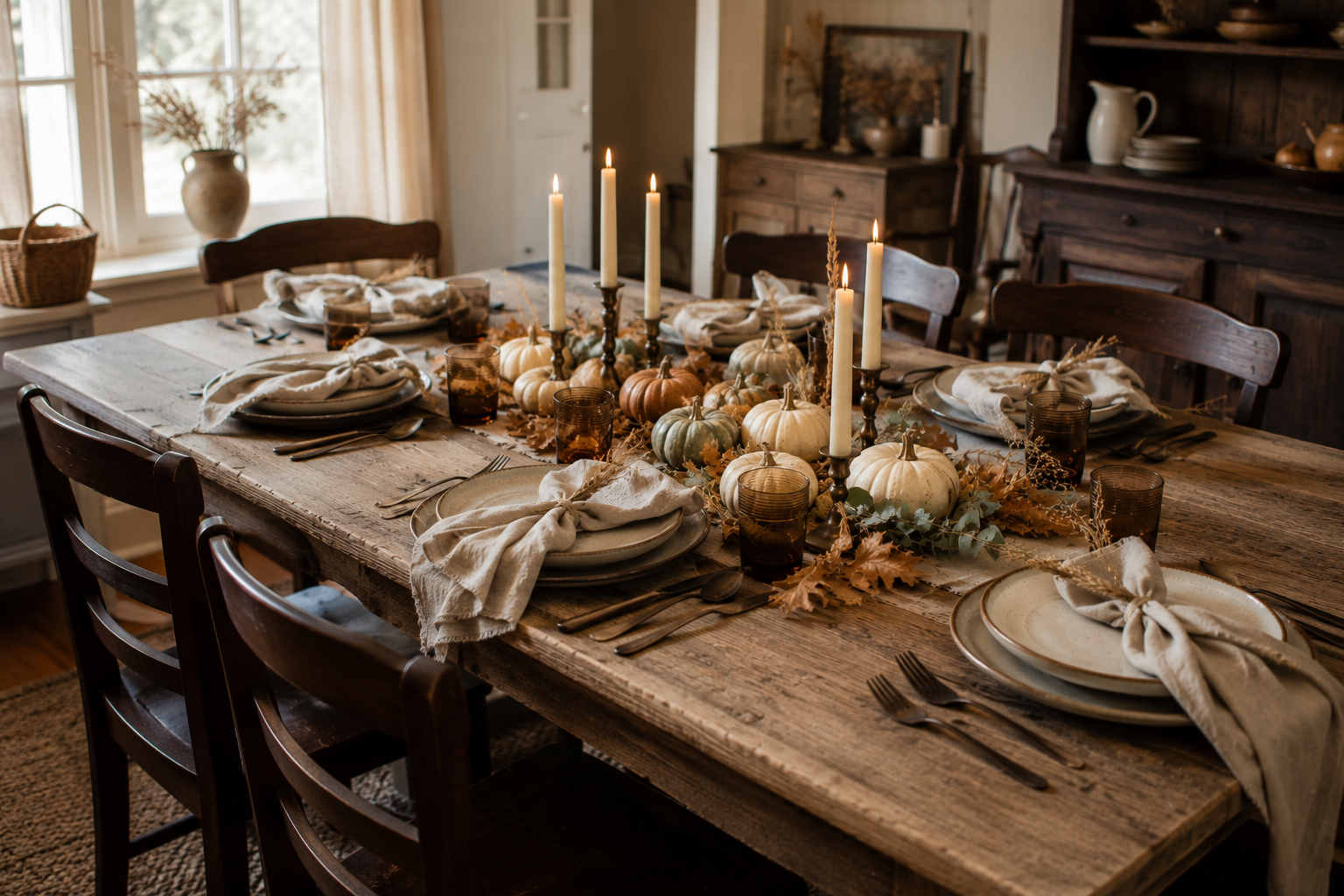
More decorations do not automatically create a better tablescape. One of the easiest mistakes to make with fall styling is combining pumpkins, leaves, flowers, candles, garlands, signs, baskets, and decorative objects all at once.
Instead, choose a few repeating materials. For example, your entire centerpiece could consist of small pumpkins, eucalyptus, and taper candles. That is enough to communicate a clear autumn theme.
Pay attention to practical space as well. Guests need room for glasses, plates, flatware, and their hands. Serving dishes may also need to reach the table.
If your centerpiece looks beautiful in photographs but has to be completely dismantled before dinner begins, simplify it.
How to Make a Small Fall Dinner Table Feel Special
A small table does not require a smaller sense of occasion. In fact, limited space can encourage more intentional decorating.
Use one miniature pumpkin or pear at each setting instead of a large centerpiece. Add two or three slim taper candles down the middle, then tuck a few dried stems between them.
Keep place settings simple and avoid chargers if they make the table feel crowded. A folded cloth napkin on top of each plate creates a finished look without requiring extra surface area.
For a table seating two to four people, even one ceramic vase with several dried stems can provide enough seasonal impact.
Final Tips for an Elegant Fall Table on a Real Budget
The best budget tablescape ideas are usually the ones that do not require storing boxes of highly specific seasonal decorations after the party. Choose pieces that can work beyond fall and use inexpensive natural materials to establish the season.
Start with neutral dishes and linens. Add warmth through wood, candlelight, pumpkins, seasonal produce, and dried foliage. Repeat a few details throughout the table, vary the height gently, and leave enough open space for the meal itself.
Most importantly, style the table for the people who will actually sit around it. A beautiful harvest tablescape should make dinner feel warmer and more inviting, not make guests afraid to move a glass or pass a serving dish.
With a few thrifted pieces, simple seasonal ingredients, and materials gathered from around your home, an elegant fall dinner party table can feel thoughtful, abundant, and genuinely special without requiring a large decorating budget.