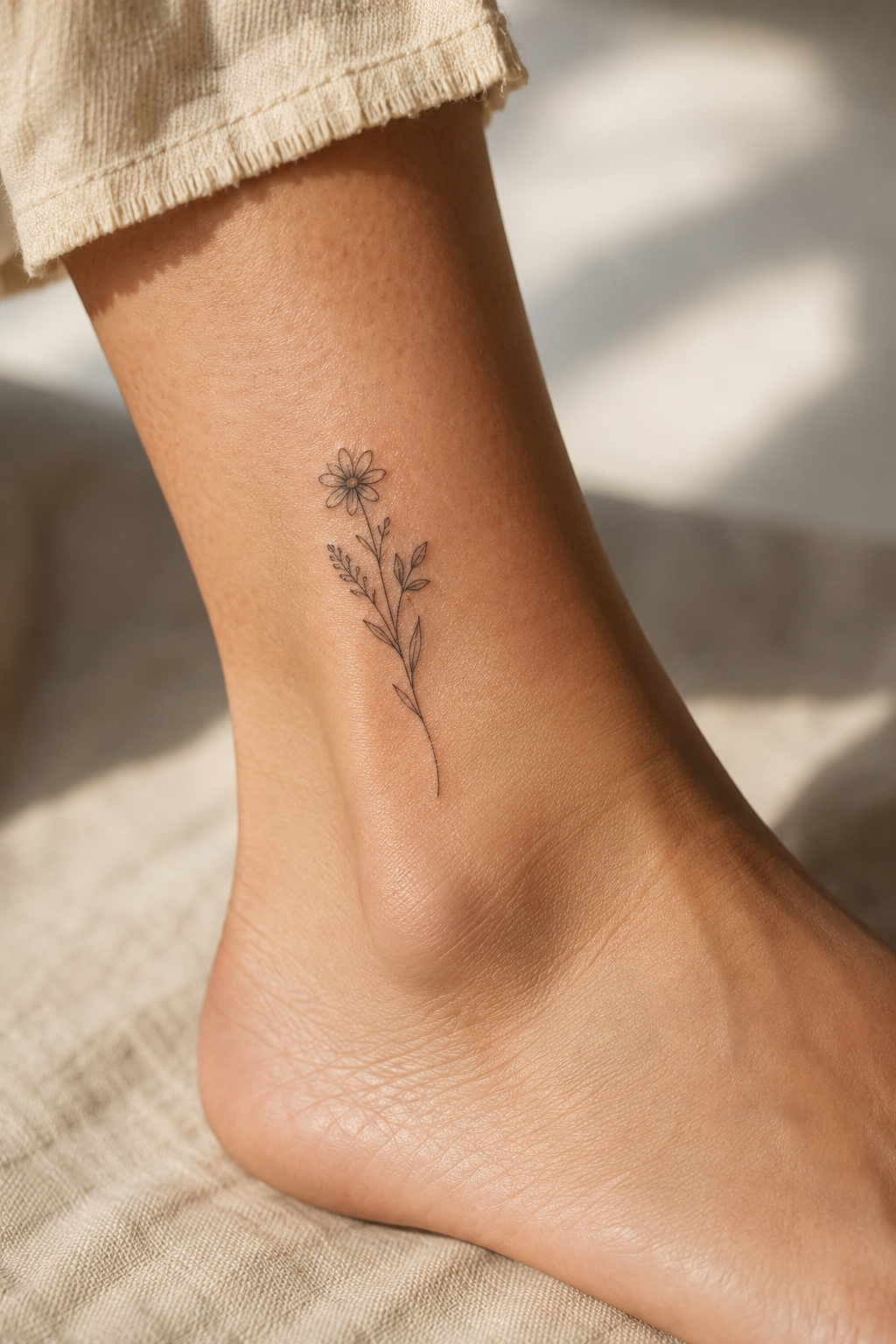
25 Fine-Line Wildflower Tattoos to Save Before Your Next Appointment
Wildflowers have a naturally effortless quality that translates beautifully into fine-line tattoos. Their uneven stems, delicate petals, tiny leaves, and organic shapes work especially well with restrained black linework, making them a strong choice when you want a nature-inspired tattoo that feels subtle rather than heavy.
The best fine-line wildflower tattoo designs are not simply miniature copies of detailed botanical illustrations. A tattoo still has to work on skin. Line spacing, placement, scale, and the amount of detail all influence how clearly the design will read after it heals and as it changes over time.
That makes choosing a wildflower tattoo a balance between beauty and practicality. You can keep the airy botanical look while giving individual petals, stems, and leaves enough breathing room to remain recognizable. You can also choose a placement that complements the direction of the flower instead of forcing the design into an awkward shape.
If you are saving inspiration before your next appointment, these 25 ideas cover everything from tiny single stems to loose bouquets and flowing botanical pieces. Use them as starting points rather than exact templates so your tattoo artist can adapt the concept to your anatomy, preferred scale, and personal style.
What Makes a Fine-Line Wildflower Tattoo Work?
Fine-line tattooing relies on restraint. Instead of using thick outlines, dense shading, or large areas of solid black, the artist creates the image with relatively delicate marks. That can give botanical designs a light, elegant appearance.
However, delicate does not have to mean microscopic. One of the most important considerations when planning a botanical fine line tattoo is leaving enough space between important details.
A wildflower with dozens of tiny overlapping petals may look impressive in a large illustration but become visually crowded when reduced to a very small tattoo. Simplifying the flower can often produce a cleaner result.
Look for designs with:
- Clear negative space between petals and leaves
- Simple, recognizable flower silhouettes
- Intentional rather than excessive detail
- Stems that follow the natural direction of the body
- A size appropriate for the complexity of the design
There is no tattoo technique that can guarantee exactly how a piece will age. Skin, sun exposure, placement, aftercare, individual healing, ink application, and other factors all matter. An experienced tattoo artist can assess whether your preferred design and scale are realistic for the placement you have chosen.
1. Single Daisy Stem
A single daisy is one of the most versatile wildflower tattoo ideas. Keep the stem slightly curved rather than perfectly straight and use a few open petals around a simple center.
This design can work beautifully on the ankle, inner forearm, upper arm, or along the side of the wrist. Giving the petals a little space helps preserve the airy appearance that makes the design attractive in the first place.
2. Tiny Poppy Outline
Poppies have loose, irregular petals that suit fine-line tattooing particularly well. Instead of filling the flower with detailed shading, consider a simple contour drawing with one thin stem and one or two small leaves.
The result feels artistic without requiring a large tattoo. A small poppy can work on the ankle, arm, shoulder, or ribcage.
3. Delicate Lavender Sprig
Lavender creates a naturally vertical tattoo. Its narrow proportions make it useful for areas where a wider flower would feel crowded.
Consider placing a lavender sprig along the forearm, back of the upper arm, ankle, or rib area. Because lavender contains many small buds, avoid compressing every botanical detail into an extremely tiny design. A simplified interpretation can remain more visually readable.
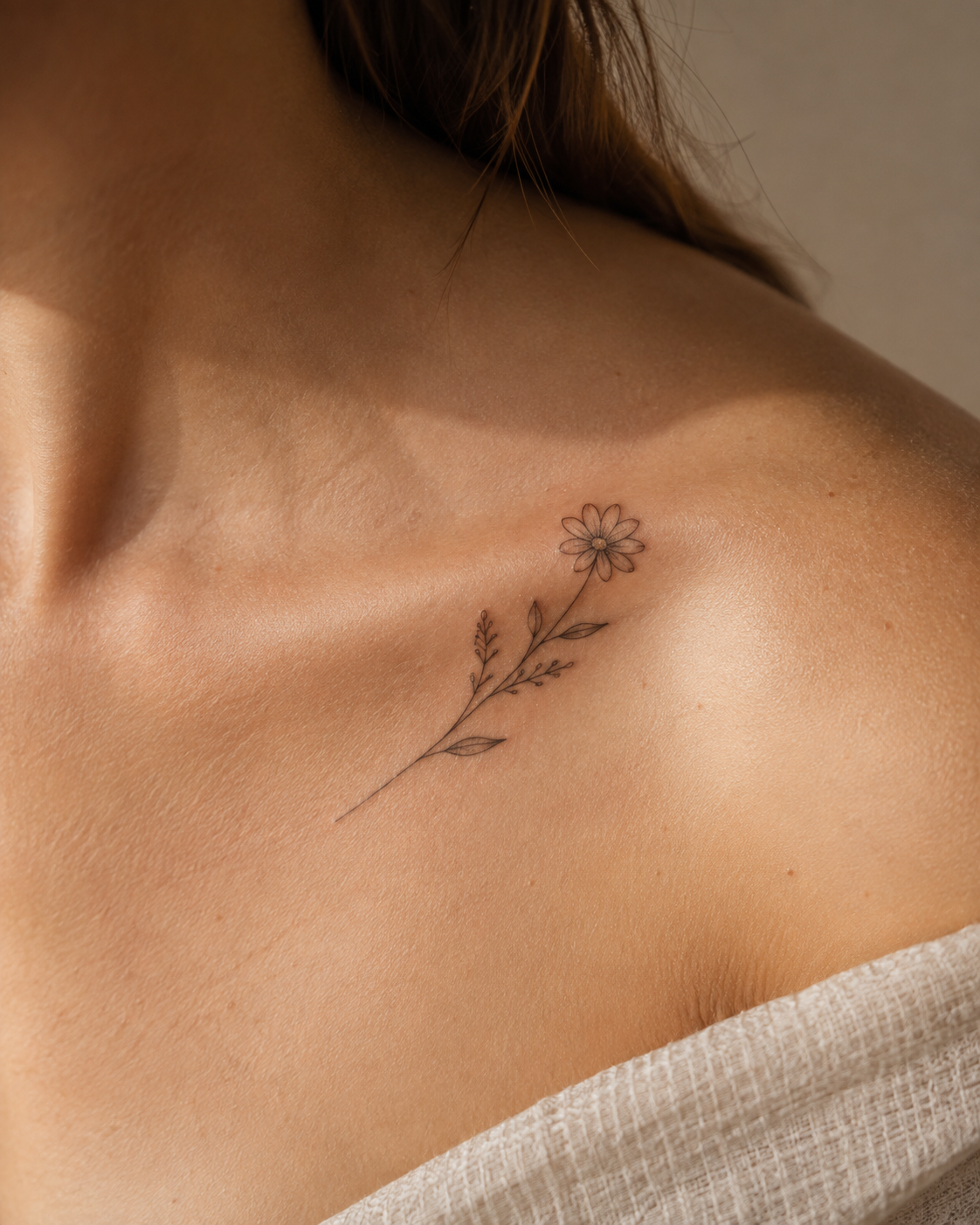
4. Fine-Line Cosmos Flower
Cosmos flowers have a graceful, almost hand-drawn shape. Their broad petals can be represented with a small number of confident lines, while a gently bending stem keeps the tattoo from looking rigid.
A single cosmos bloom looks particularly elegant around the collarbone or upper arm where there is enough room for the flower head to remain open.
5. Forget-Me-Not Cluster
Instead of drawing every flower in a tiny cluster with identical detail, use a few recognizable blooms supported by simple stems and leaves. This creates the impression of a cluster without making the tattoo unnecessarily dense.
A small grouping can sit beautifully near the ankle or inner arm.
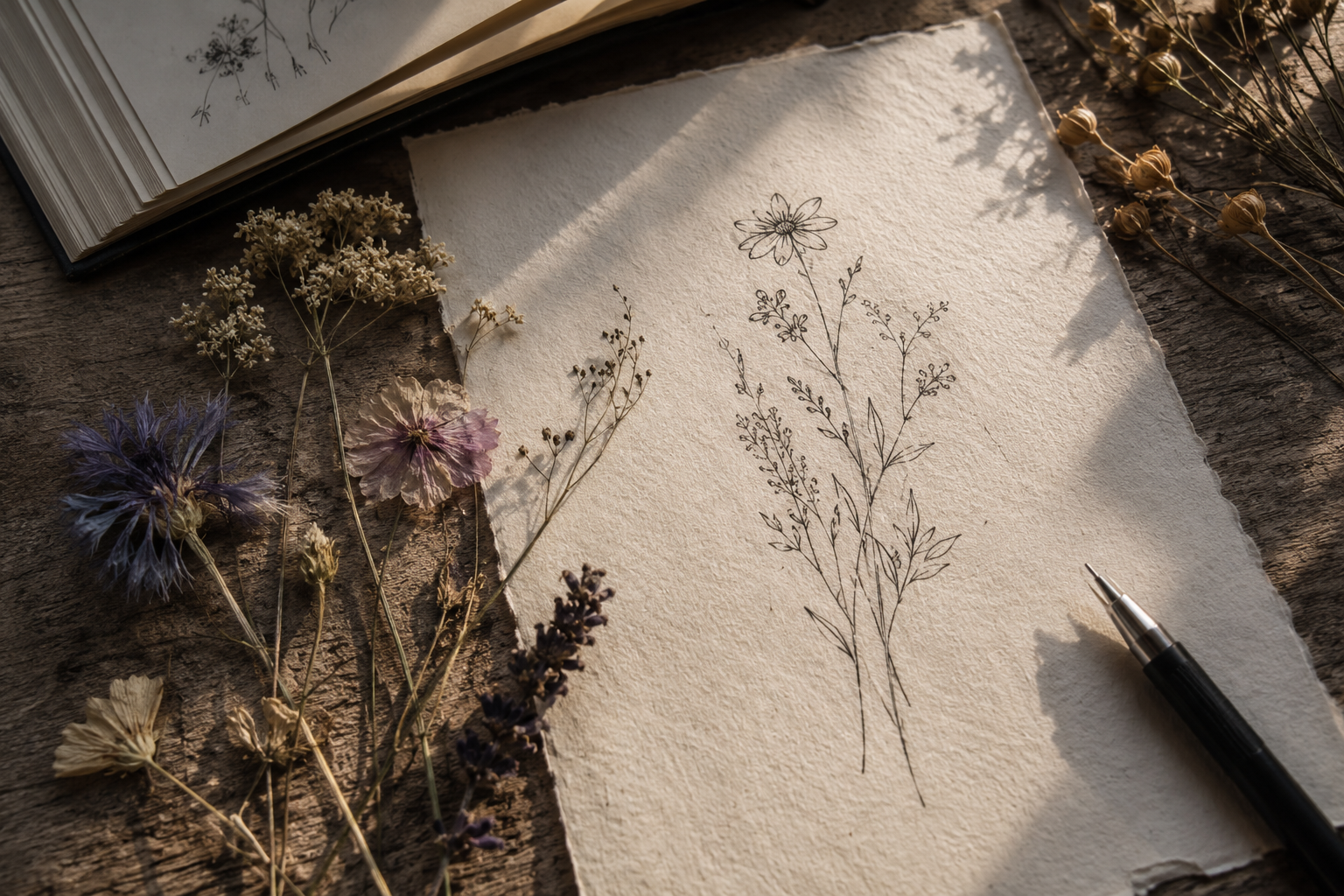
6. Wildflower Ankle Sprig
The ankle is a natural location for a small botanical design because a narrow stem can follow the vertical line above the ankle bone.
Try a stem with two or three different miniature flower shapes rather than a tightly packed bouquet. The variation gives the design a collected-from-a-meadow appearance while preserving negative space.
7. Collarbone Wildflower Stem
A collarbone tattoo works best when the design acknowledges the shape of the body. Instead of placing a perfectly horizontal flower illustration across the chest, allow a delicate stem to follow the collarbone’s natural direction.
A single bloom with several leaves can create a particularly understated result.
8. Minimalist Wildflower Bouquet
A bouquet does not have to contain ten different flowers. For a fine-line version, combine two or three stems with slightly different heights and flower shapes.
Keep the arrangement loose. The small gaps between the stems are part of the design and prevent the bouquet from becoming one dense patch of linework.
9. Tiny Dandelion Tattoo
A simple dandelion can be reduced to a thin stem and an open flower head. If you prefer the seed-head version, keep the number of individual seeds restrained rather than trying to reproduce every tiny detail.
This can create a light design for the wrist, ankle, shoulder, or arm.
10. Fine-Line Bluebell Stem
Bluebells naturally hang from a curved stem, giving them movement even in a small tattoo. Their downward-facing blossoms also make them different from the upright flowers seen in many botanical designs.
A vertical bluebell stem can complement the inner forearm, calf, ankle, or back of the arm.
11. Small Wild Rose
A wild rose can provide the romance of a rose tattoo without the visual weight of a large traditional rose. Use an open flower with only enough interior lines to establish the petal structure.
Pairing it with one small leaf or bud can make the composition feel finished without overcrowding it.
12. Two Intertwined Wildflowers
Two stems gently crossing each other can create a subtle sense of connection. Choose flowers with noticeably different silhouettes so the design remains easy to read.
For example, an open daisy-like flower can be paired with a narrow lavender-inspired stem. The contrast makes the arrangement more interesting while keeping it delicate.
13. Wildflower Wrist Tattoo
For the wrist, consider a small upright stem instead of an extremely detailed bracelet of flowers. A compact vertical design usually gives the petals more room and can be positioned so it does not compete heavily with the wrist crease.
Your artist can stencil several sizes and positions so you can compare them before committing.
14. Behind-the-Arm Botanical Stem
The back of the upper arm offers enough vertical space for a longer botanical composition while remaining relatively discreet from the front.
Try a thin stem with one larger flower, one smaller bud, and several simple leaves. This placement can accommodate a little more scale without making the tattoo feel visually dominant.
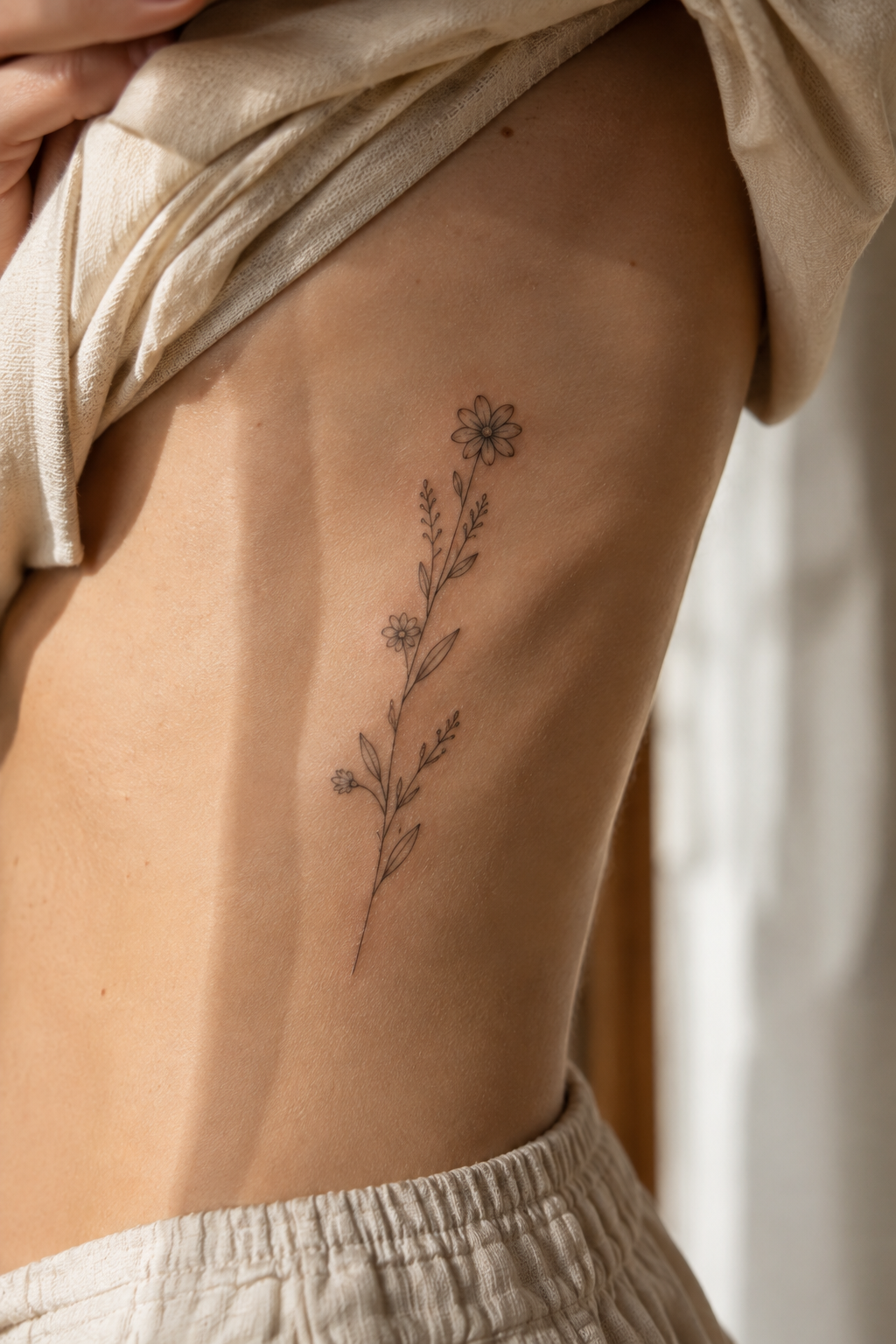
15. Fine-Line Wildflower Rib Tattoo
The ribcage provides space for elongated nature tattoo designs. A gently curved stem can follow the body’s natural line instead of sitting like a rigid botanical diagram.
Because placement and individual sensitivity vary, discuss the practical side of the location with your tattoo artist before choosing it solely for aesthetics.
16. Tiny Aster Tattoo
An aster-inspired design offers a recognizable starburst flower shape. Because it contains numerous narrow petals, the design benefits from being large enough to prevent those lines from becoming unnecessarily crowded.
A simplified flower head on a thin stem can preserve the character of the flower while remaining subtle.
17. Wildflower and Crescent Moon
Botanical elements can be combined with a simple symbolic motif without turning the design into a complicated illustration. A tiny crescent positioned beside or behind a wildflower stem adds a quiet celestial element.
Keep both elements simple so neither competes with the other.
18. Birth-Flower Wildflower Bouquet
A bouquet based on meaningful flowers can make the tattoo feel personal without requiring text, initials, or dates. You might combine birth flowers associated with people, months, or chapters that matter to you.
The finished tattoo does not need to explain that meaning to anyone else. Visually, it can still read as a delicate collection of wildflowers.
19. Fine-Line Flower With Tiny Bee
A tiny bee can introduce movement to a botanical composition. Position it slightly away from the flower rather than squeezing it directly into the petals.
That separation creates useful negative space and allows each element to remain distinct.
20. Wildflower Shoulder Tattoo
The shoulder provides a curved surface that can support a gently spreading botanical design. Instead of placing the stem as if the body were flat paper, consider letting the composition turn subtly with the shoulder.
A loose combination of flowers and leaves can look especially natural here.
21. Miniature Botanical Trio
Three separate miniature stems can provide an alternative to a conventional bouquet. Arrange them with small spaces between each botanical element, almost like three tiny specimens in a field guide.
This idea works well when you like multiple flowers but want to preserve a minimalist aesthetic.
22. Fine-Line Wildflower Forearm Tattoo
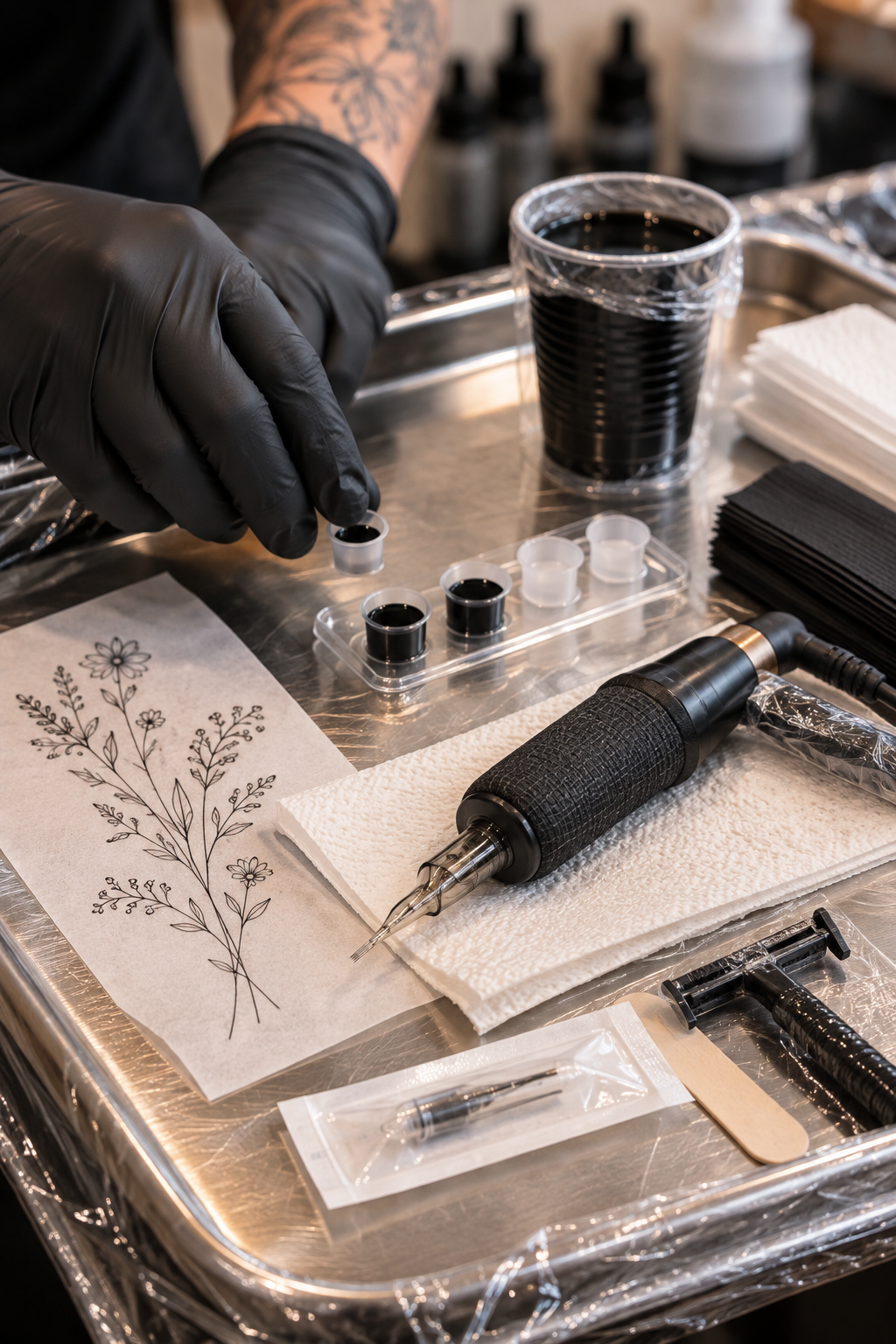
The forearm gives a botanical tattoo room to breathe. A longer stem can run with the length of the arm, allowing individual leaves and petals to remain more open than they might in a tiny wrist design.
Before the appointment begins, look at the stencil with your arm both relaxed and naturally rotated. A design that looks balanced in one position may appear different as the forearm turns.
23. Wildflower With Handwritten Word
If you want to incorporate lettering, keep the relationship between the text and botanical element simple. A short word can sit alongside a stem or connect subtly with the composition.
Very small script can introduce additional fine details, so ask your artist what lettering size is appropriate for long-term readability.
24. Loose Meadow-Inspired Bouquet
A meadow bouquet is intentionally less symmetrical than a formal floral arrangement. Combine stems at different heights and allow the flowers to point in slightly different directions.
The asymmetry is what makes the design feel organic. It can also create a sophisticated larger piece for the forearm, calf, upper arm, or rib area.
25. One-Line-Inspired Wildflower
If you prefer extremely minimal tattoos, consider a wildflower inspired by continuous-line drawing. The artist does not necessarily have to create the entire tattoo with literally one uninterrupted line; the goal is the visual simplicity of that style.
A single flower silhouette, curved stem, and one leaf can communicate the botanical idea with surprisingly little detail.
Best Placements for Fine-Line Wildflower Tattoo Designs
Placement should be considered alongside the design rather than after it. Wildflowers tend to have a directional structure, which means their stems can be used to complement the body’s natural lines.
Popular areas to discuss with your artist include:
- Ankle: Good for narrow stems and small upright compositions.
- Forearm: Provides additional room for petals, leaves, and longer botanical designs.
- Upper arm: Works well for slightly larger bouquets or flowing stems.
- Collarbone: Suits elegant designs that follow the body’s natural curve.
- Shoulder: Allows botanical compositions to move around a curved surface.
- Ribcage: Offers vertical space for elongated floral arrangements.
- Calf: Provides enough room for taller botanical pieces while retaining a narrow overall silhouette.
The smallest possible placement is not automatically the most delicate-looking choice. Sometimes increasing the design by a modest amount gives the flower enough negative space to look cleaner and lighter.
How to Help a Fine-Line Wildflower Tattoo Age Gracefully
Fine-line tattoos are often chosen for their crisp, understated appearance, but tattoos do not remain identical to the moment they are finished. They heal and change with skin over time.
Instead of asking an artist to make every element as tiny as technically possible, focus on creating a design with clear visual structure.
Give the Petals Breathing Room
If individual lines are packed extremely close together, the design may lose some of its visual separation as it changes over time. A flower can still look delicate when its petals are slightly more open.
Avoid Unnecessary Micro-Detail
Ask yourself which lines actually make the flower recognizable. Tiny veins inside every leaf or numerous marks inside a miniature flower center may not be essential.
Simplification is not the same as making a tattoo generic. A skilled artist can capture the character of a particular flower using a surprisingly restrained set of lines.
Choose Scale Before Chasing Tiny
If your reference contains several flowers, leaves, crossing stems, and detailed petals, give the composition enough space to support those elements. If you want a truly tiny tattoo, simplify the design accordingly.
Think About Sun Exposure
UV exposure can affect tattoos over time. Once the tattoo has fully healed, following appropriate sun-protection practices can help protect both tattooed and untattooed skin. Follow your artist’s instructions during the healing period rather than applying products simply because they are part of your normal routine.
Follow Professional Aftercare Instructions
Your artist should provide aftercare guidance based on the tattoo and their professional protocol. Follow those instructions carefully and contact the studio if you are uncertain about the healing process.
The Wildflower Tattoo Mistake Worth Avoiding
One common planning mistake is choosing a highly detailed botanical reference and then asking for it to be reproduced at an extremely small scale.
A photograph of a flower can contain hundreds of visual details. A tattoo does not need all of them.
When preparing references, identify what you actually love about the image. It might be the irregular petals, the curve of the stem, the open composition, or the way several different flowers form a loose bouquet.
Give that information to your tattoo artist and allow the design to be translated into tattoo-friendly linework.
It is also useful to compare the stencil from normal viewing distance rather than inspecting it only from a few inches away. A tattoo lives on your body, not on a zoomed-in screen.
How to Design Your First Wildflower Tattoo
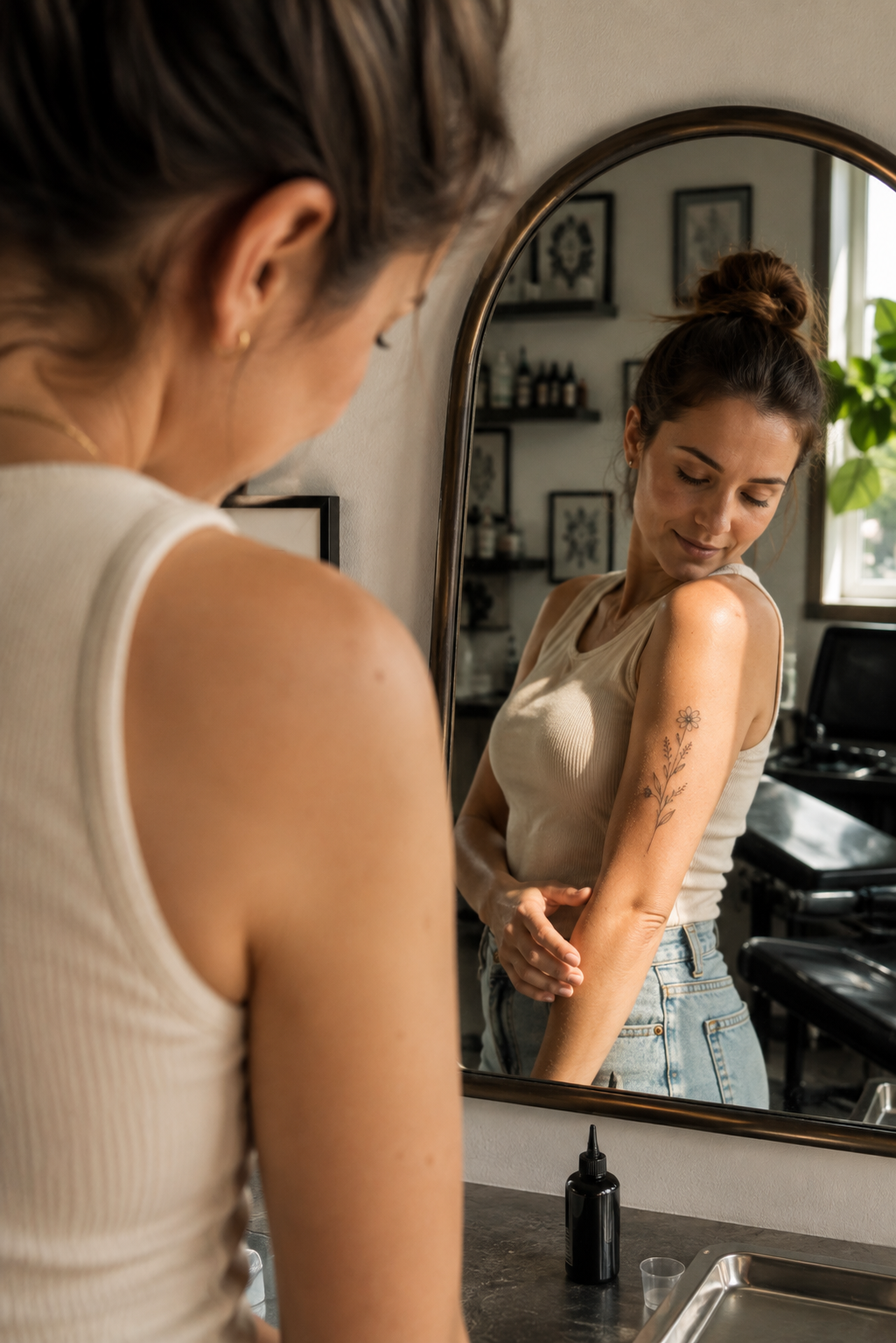
You do not need to arrive at your appointment with a finished illustration. In fact, references plus clear preferences can be more useful than trying to design every line yourself.
- Choose the botanical direction. Decide whether you prefer one flower, a sprig, a bouquet, or a meadow-inspired composition.
- Pick one or two favorite flowers. Consider their visual shapes as well as any meaning they hold for you.
- Choose a general placement. Think about visibility, available space, and how the stem could follow your anatomy.
- Save several references. Include photographs of real flowers as well as tattoos that demonstrate the line weight and overall mood you like.
- Identify what you do not want. For example, you may prefer no shading, no heavy outlines, no dense leaves, or no symmetrical bouquet.
- Let the artist recommend scale. If the original idea is too detailed for your preferred size, consider simplifying the composition or making it slightly larger.
- Review the stencil carefully. Check its orientation, spacing, position, and appearance from multiple angles before tattooing begins.
What to Save for Your Tattoo Consultation
A useful inspiration folder should communicate a direction rather than demand an exact copy of somebody else’s tattoo.
Save a mixture of:
- Real wildflower photographs
- Botanical drawings with the amount of detail you prefer
- Examples of line weight you like
- Placement references on similar areas of the body
- Bouquet shapes and stem arrangements
- Examples showing how much negative space you prefer
You can also make a short note explaining what attracts you to each reference. One image may have your ideal placement while another has the flower shape you want. A third might demonstrate the open, minimal linework you prefer.
This gives your artist more useful creative information than asking them to reproduce one Pinterest image exactly.
Choosing a Wildflower Design You’ll Still Love Later
Trends can introduce you to an aesthetic, but your final tattoo should make sense for your own style. If you consistently prefer minimal jewelry, neutral clothing, delicate illustration, and subtle details, a restrained single-stem tattoo may feel more natural than a dense bouquet.
If you love expressive botanical artwork, a larger meadow-inspired composition might be a better fit while still using fine lines.
There is also no requirement that a wildflower tattoo carry an elaborate symbolic meaning. You can choose a flower because it reminds you of a place, because it represents someone important, or simply because you love its shape.
The strongest fine-line wildflower tattoo designs combine an appealing botanical concept with thoughtful scale, enough negative space, and placement that complements the body. Whether you save a tiny ankle daisy, an elegant collarbone stem, or a loose forearm bouquet, treat the reference as the beginning of the design process.
Bring your favorite ideas to an experienced tattoo artist, discuss how much detail will realistically suit your preferred size, and be willing to adjust the composition when necessary. A little restraint can make a wildflower tattoo feel more refined, more readable, and beautifully suited to the subtle nature-inspired look you wanted in the first place.