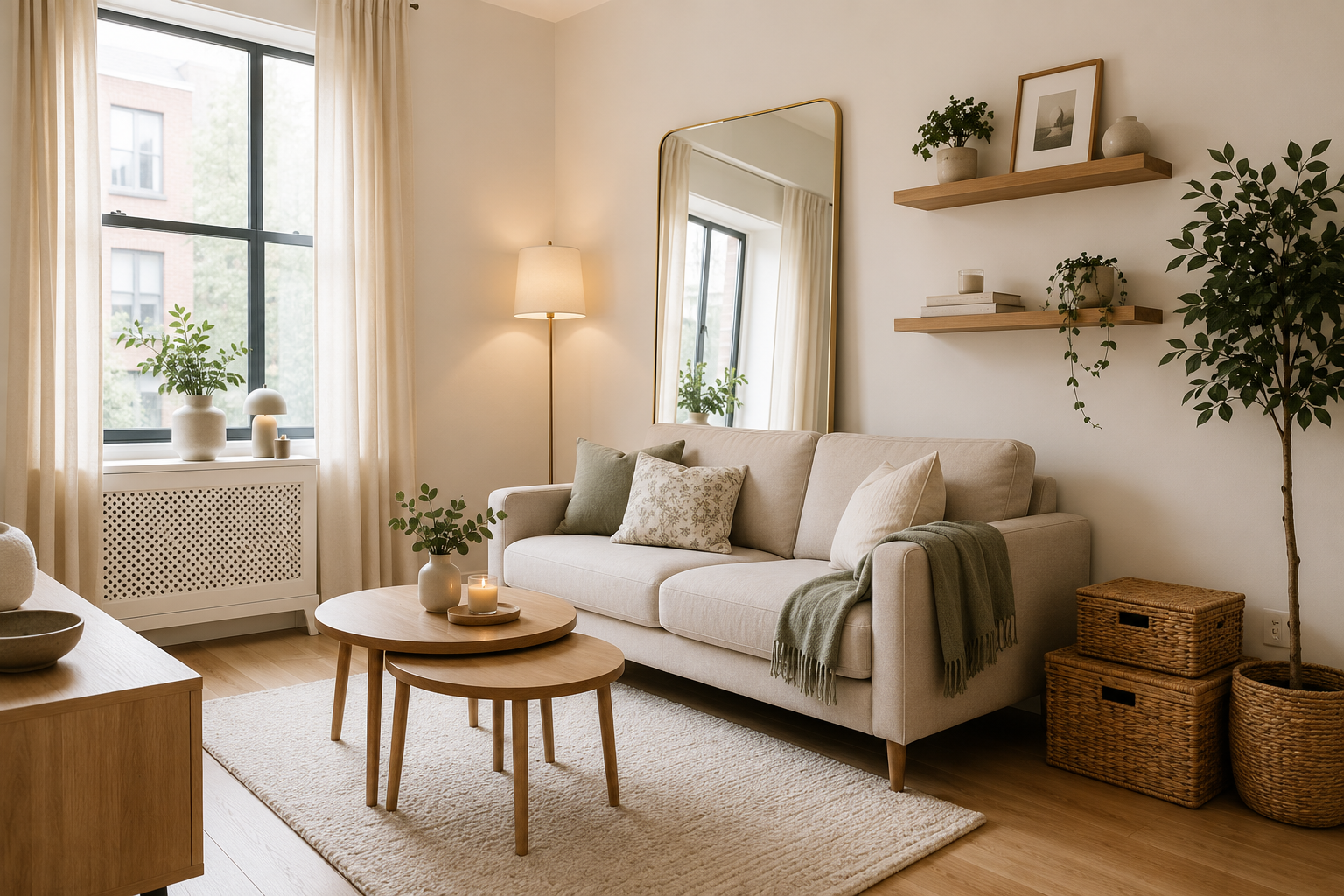
Small Apartment Decor Ideas That Make Every Inch Work Harder
Decorating a small apartment is not about squeezing as many things as possible into a limited floor plan. It is about choosing furniture, storage, colors, and decorative details that help the space feel useful, comfortable, and visually open.
Whether you live in a compact studio, a one-bedroom rental, or an apartment with an awkward layout, the right decorating choices can make a noticeable difference. A room can feel larger when the walkways are clear, the walls are used strategically, and every piece of furniture has a clear purpose.
The best small apartment decor ideas also reflect the realities of renting. You may not be able to paint every wall, replace built-in fixtures, or make permanent structural changes. Fortunately, removable products, flexible furniture, thoughtful storage, and carefully placed decor can transform a rental without risking your security deposit.
These 13 ideas will help you maximize overlooked corners, organize everyday belongings, and create an apartment that feels stylish rather than cramped.
1. Divide the Apartment Into Clear Zones
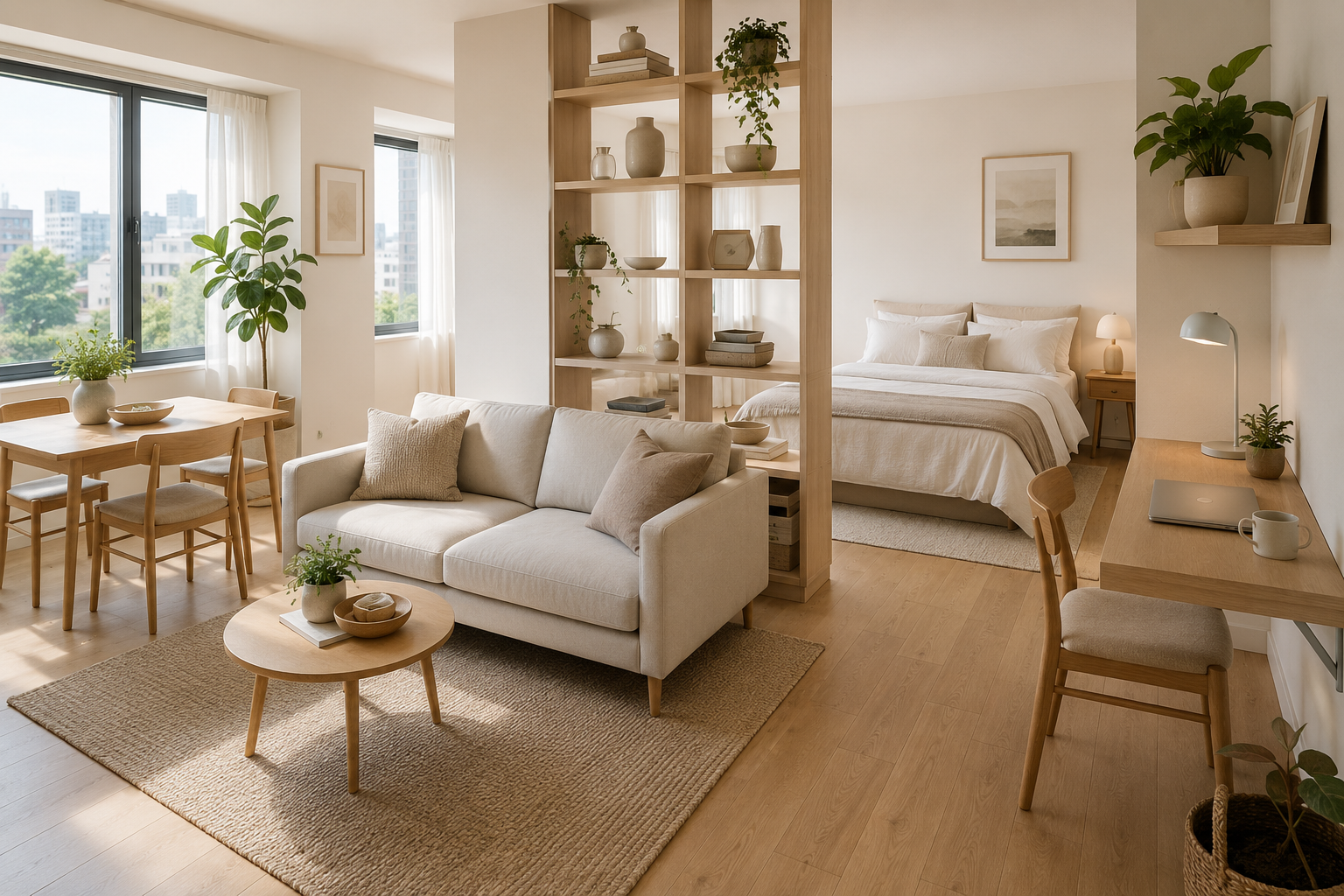
Open layouts can feel larger than rooms divided by solid walls, but they can also become visually confusing. When the living area, dining area, workspace, and entryway blend together, the apartment may look cluttered even when it is reasonably organized.
Create distinct zones by giving each part of the apartment a specific function. A small area rug can define the living room, while a narrow table and pendant-style plug-in light can create a dining corner. A compact desk placed against one wall can establish a workspace without taking over the room.
You can also use open shelving, a folding screen, curtains, or the back of a sofa to create subtle boundaries. Avoid heavy dividers that block natural light. The goal is to create visual organization while preserving an open feeling.
- Place a rug under the main seating area.
- Use furniture placement to separate living and dining zones.
- Create an entryway with hooks, a mirror, and a narrow shelf.
- Keep each zone limited to items that support its purpose.
2. Use Vertical Space Instead of Filling the Floor
When floor space is limited, walls become valuable decorating and storage surfaces. Tall bookcases, wall-mounted shelves, peg rails, and over-the-door organizers let you store belongings without making walking areas narrower.
Look for unused vertical areas above desks, toilets, sofas, dressers, and kitchen counters. A pair of floating shelves can hold books, framed art, plants, or attractive storage boxes. In the kitchen, a wall-mounted rail can keep frequently used utensils within reach.
Choose vertical storage that looks intentional instead of covering every available wall. Leave some open space around shelves and artwork so the room still has visual breathing room.
For renter-friendly installation, consider removable hooks, tension-mounted systems, leaning ladder shelves, and furniture that can be secured with minimal wall damage. Always follow the product’s weight limits and installation instructions.
3. Choose Furniture That Serves More Than One Purpose
Multifunctional furniture is one of the most useful investments for a small apartment. A single piece that provides seating, storage, and another practical function reduces the number of items competing for space.
Consider an ottoman that opens for blanket storage, a coffee table with drawers, or a bench that can be used for seating and shoe storage. A drop-leaf table can function as a dining table, desk, or food preparation surface and fold down when it is not needed.
Sleeper sofas and daybeds are practical for apartments without a guest room. Nesting tables can be separated when guests visit and stacked together afterward. A storage bed can provide space for seasonal clothing, linens, and luggage.
Before purchasing multifunctional furniture, measure the apartment carefully. Make sure doors, drawers, and folding sections can open fully without blocking a walkway.
4. Build the Room Around a Light, Cohesive Color Palette
Light colors reflect more light and can help a compact apartment feel airy. Soft white, warm beige, pale gray, muted green, and gentle cream are practical base colors for walls, curtains, rugs, and large furniture pieces.
A small apartment does not need to be completely neutral. Add depth through smaller accents such as pillows, artwork, throws, decorative bowls, and planters. Repeating two or three accent colors throughout the apartment creates continuity and prevents the rooms from feeling disconnected.
Dark colors can still work in a small space when used strategically. A deep navy chair, charcoal side table, or dark green cushion can add contrast without making the entire room feel heavy.
If your rental walls cannot be painted, bring in your color palette through removable wallpaper, large-scale artwork, textiles, and furniture. A coordinated palette helps even inexpensive pieces look more polished.
5. Position Mirrors to Reflect Light and Open Views
Mirrors are a classic small-space decorating tool because they reflect both natural and artificial light. They can also create the impression that a room continues beyond its actual boundaries.
Place a large mirror across from or near a window to distribute daylight through the room. A tall floor mirror can make a low ceiling feel higher, while a horizontal mirror above a sofa or console can make a narrow wall appear wider.
Pay attention to what the mirror reflects. A mirror that faces a bright window, attractive artwork, or an organized section of the apartment will improve the room. One that reflects a cluttered counter or crowded storage area may make the apartment feel busier.
Renters can use lightweight mirrors with appropriate removable mounting products or choose a leaning mirror that does not require permanent installation.
6. Hang Curtains Higher and Wider Than the Window
Window treatments can change the apparent proportions of a room. Hanging curtain rods close to the ceiling draws the eye upward and makes the walls feel taller. Extending the rod beyond each side of the window allows the curtains to sit outside the glass when open, which makes the window appear wider.
Choose curtains that reach close to the floor for a clean, elongated look. Lightweight linen-style panels, cotton curtains, or sheer fabrics can soften the apartment without blocking too much daylight.
If privacy is a concern, combine sheer panels with roller shades or blinds. In a rental where drilling is restricted, tension rods and no-drill curtain rod brackets may provide a temporary alternative.
Avoid curtains that are too short or excessively bulky. Heavy fabric gathered around a small window can reduce light and make the wall feel crowded.
7. Add Hidden Storage Wherever Clutter Naturally Collects
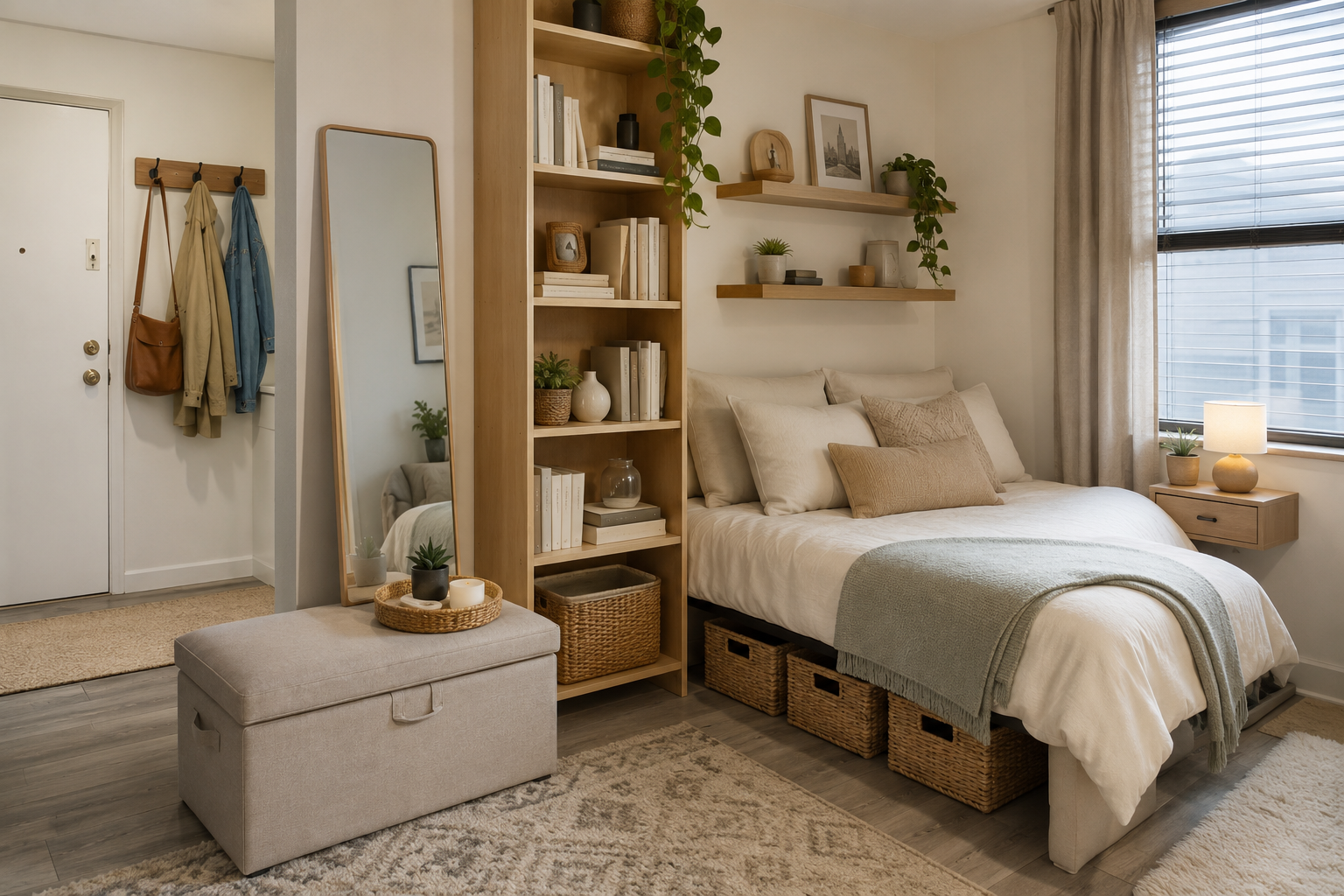
Even a well-decorated apartment can feel cramped when everyday belongings remain visible. Identify the places where clutter tends to accumulate, such as the entryway, coffee table, kitchen counter, bathroom vanity, and side of the bed.
Then add storage close to those areas. Place a lidded basket near the sofa for throws and charging cables. Use a shallow tray on the coffee table for remotes and small items. Add drawer organizers inside bathroom and kitchen cabinets so products do not spread across the counters.
Under-bed boxes are useful for off-season clothing, extra bedding, shoes, and travel items. Attractive baskets can hide exercise equipment, pet supplies, toys, or paperwork while still contributing to the decor.
The most effective storage system is usually the easiest one to use. If putting an item away requires moving several boxes or opening multiple containers, it will probably end up on a visible surface again.
8. Replace Bulky Pieces With Wall-Mounted Alternatives
Furniture with a large footprint can make a small apartment feel crowded. Wall-mounted alternatives free up floor space and create a lighter visual effect.
A floating desk can replace a traditional office desk. Wall-mounted nightstands can hold a phone, lamp, and book without using valuable space beside the bed. A slim picture ledge can display artwork without the depth of a full bookcase.
In the entryway, use a wall-mounted shelf with hooks instead of a large console table. In the kitchen, a magnetic knife strip or hanging rail can clear tools from the counter. In the bathroom, floating shelves can provide storage above the toilet or beside the mirror.
For rental apartments, search for lightweight or removable versions of these solutions. Freestanding pieces with open bases can create a similar visual effect when wall mounting is not permitted.
9. Use Rugs That Are Large Enough for the Space
It may seem logical to use a tiny rug in a tiny room, but undersized rugs can make the room look fragmented. A rug that connects the main furniture pieces creates a more unified seating area and can make the floor appear more expansive.
In a small living room, choose a rug large enough for at least the front legs of the sofa and chairs to rest on it. In a studio, rugs can help distinguish the sleeping, dining, and living areas without adding walls.
Low-contrast rugs with subtle patterns often work well because they add texture without overwhelming the floor. Stripes can visually lengthen a narrow area, while simple geometric patterns add structure to a neutral room.
Use a rug pad to prevent slipping and protect rental flooring. Always measure the intended area before buying, including the clearance needed for doors and walkways.
10. Layer Lighting Instead of Relying on One Ceiling Fixture
Many rental apartments have a single overhead light that creates harsh shadows and leaves corners feeling dark. Layered lighting makes a small apartment feel warmer, more comfortable, and visually deeper.
Start with general lighting, then add task and accent lighting. A slim floor lamp can brighten a reading corner. A table lamp can soften the living room in the evening. Plug-in wall sconces can provide bedside lighting without taking up nightstand space.
Under-cabinet lights can improve kitchen work areas, while rechargeable lamps are useful for shelves, dining tables, and corners without nearby outlets. Choose bulbs with similar color temperatures so the apartment feels consistent.
Lighting can also highlight vertical surfaces, artwork, or plants, encouraging the eye to move around the room rather than focusing on its limited floor area.
11. Keep Decorative Surfaces Simple and Intentional
Small apartments usually offer fewer visible surfaces, so every tabletop and shelf has a greater visual impact. Filling them with many small objects can make the space feel crowded.
Instead of displaying everything, create a few intentional groupings. A stack of books, a small plant, and a candle can decorate a side table without covering it completely. A tray can organize items on a dresser or coffee table and make the arrangement feel cohesive.
Vary the height and shape of decorative pieces, but keep some empty space around them. This negative space helps each object stand out and makes the apartment easier to clean.
Rotate seasonal decorations rather than displaying them all year. Store extra pieces and refresh the apartment by changing a few accents instead of adding more objects to already full surfaces.
12. Turn Awkward Corners Into Useful Mini Spaces
Small apartments often include narrow corners, shallow alcoves, and unused spaces beside doors or windows. These areas may be too small for standard furniture but can still serve a practical purpose.
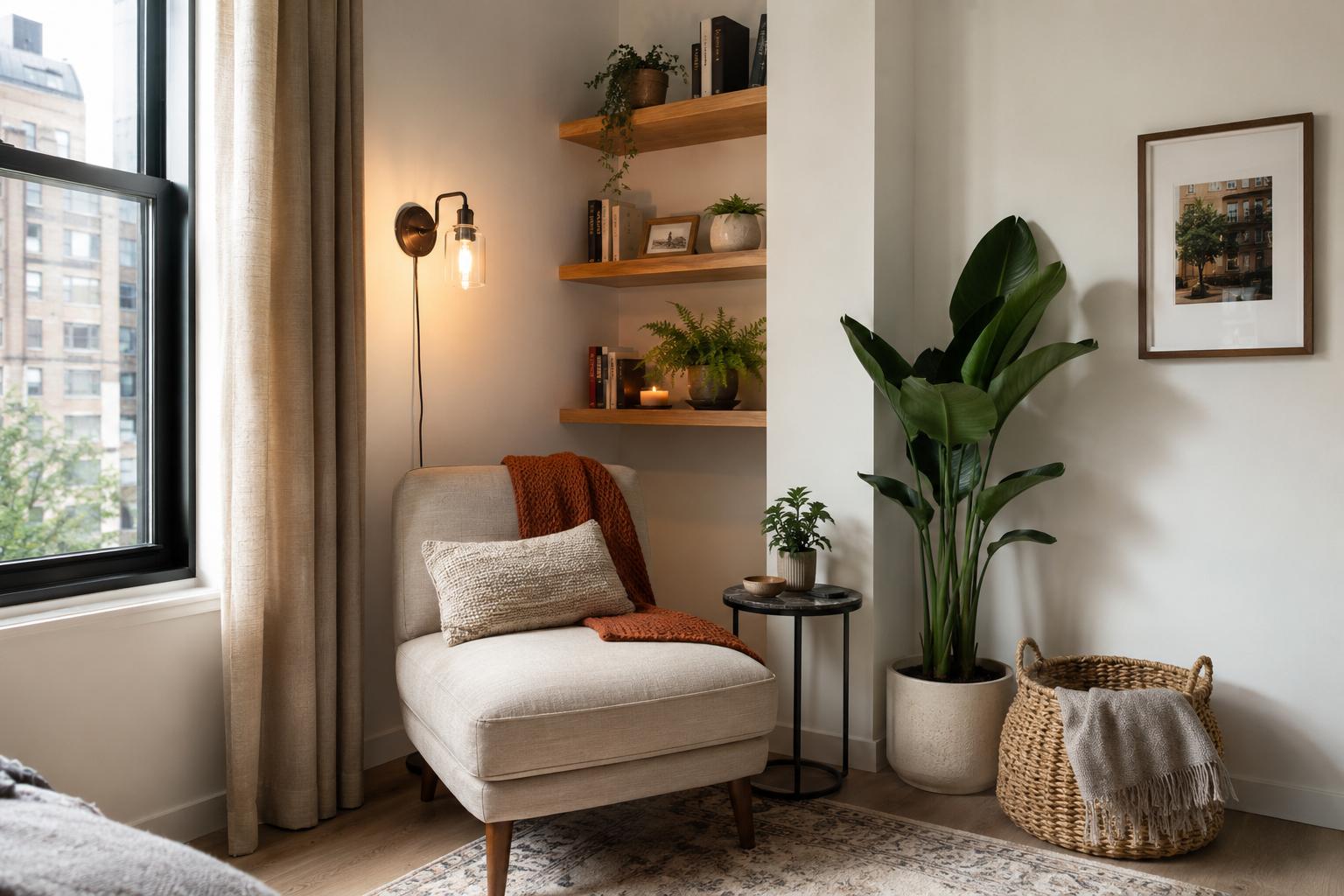
A small corner near a window can become a reading spot with a compact chair and wall-mounted light. A narrow gap beside a cabinet can hold a rolling cart. An empty bedroom corner can accommodate a slim clothing rack, full-length mirror, or plant stand.
Use a triangular shelf or corner bookcase where rectangular furniture would block the walkway. A tiny wall near the entry can become a landing zone with hooks and a narrow ledge for keys.
Before filling an awkward corner, decide what problem it should solve. The best use might be storage, seating, lighting, display, or simply leaving the area open so the room feels less crowded.
13. Add Personality With Renter-Friendly Decor
A small apartment should still feel personal. The key is to choose decorative updates that create impact without requiring permanent renovations or consuming valuable floor space.
Removable wallpaper can create a feature wall behind the bed, desk, or dining table. Peel-and-stick tiles can update a kitchen backsplash when allowed by the lease. Large framed prints, fabric wall hangings, and lightweight gallery walls can bring color and character to plain walls.
Change basic cabinet hardware if your landlord permits it, but store the original pieces so they can be reinstalled before moving. Decorative contact paper can refresh certain shelves or furniture surfaces, although it should always be tested in an inconspicuous area first.
Textiles are another easy way to personalize a rental. Curtains, bedding, pillows, rugs, and throws can introduce your preferred colors and patterns without permanent changes.
Choose a few meaningful items rather than decorating every available area. A focused collection of art, books, photographs, or handmade pieces will feel more intentional and less cluttered.
How to Make a Small Apartment Feel Bigger
Decor alone cannot change the apartment’s square footage, but it can improve how the space looks and functions. The most effective small-space improvements usually create clearer sightlines, better lighting, and fewer visual interruptions.
- Keep walkways open: Avoid placing furniture where it interrupts the natural route between doors and rooms.
- Show some of the floor: Furniture with visible legs creates a lighter appearance than pieces that sit directly on the floor.
- Limit visual clutter: Store small items together and leave some shelves and surfaces partially empty.
- Repeat colors and materials: A consistent palette makes separate areas feel connected.
- Use appropriately scaled furniture: Choose pieces that support your daily needs without dominating the room.
- Improve the lighting: Bright corners and evenly distributed light make the apartment feel more open.
- Decorate upward: Tall curtains, vertical artwork, and high shelves draw attention to the full height of the room.
Small Apartment Decorating Mistakes to Avoid
One common mistake is buying furniture without measuring the apartment first. A sofa, bed, or dining table may fit technically but still block doors, reduce walkway space, or overpower the room. Record the dimensions of the room, doorways, elevators, and staircases before ordering large pieces.
Another mistake is using too many tiny furniture items. Several small tables, stools, organizers, and shelves can create more visual clutter than one carefully selected storage piece.
Avoid pushing every item against the walls automatically. In some layouts, floating a sofa slightly away from the wall or placing a narrow table behind it can improve the room’s flow and define separate zones.
Do not cover every wall with shelves, artwork, or storage. Vertical space is useful, but leaving some areas open helps the apartment feel balanced.
Finally, avoid designing the apartment only for appearance. Your home should support your daily routines. Prioritize comfortable seating, accessible storage, practical lighting, and furniture that fits the way you actually live.
Create a Small Apartment That Feels Comfortable and Complete
The most successful small apartment decor ideas combine style with function. Rather than trying to hide the apartment’s size, focus on making each part of the layout useful and visually connected.
Start with the areas that cause the most frustration. You might need better entryway storage, a more defined workspace, improved lighting, or furniture that serves multiple purposes. Solving one practical problem at a time will make the apartment feel more comfortable without requiring a complete makeover.
Use the walls thoughtfully, keep major walkways open, and choose decor that adds personality without creating unnecessary clutter. With the right balance of storage, lighting, scale, and renter-friendly details, even the smallest apartment can feel organized, stylish, and welcoming.