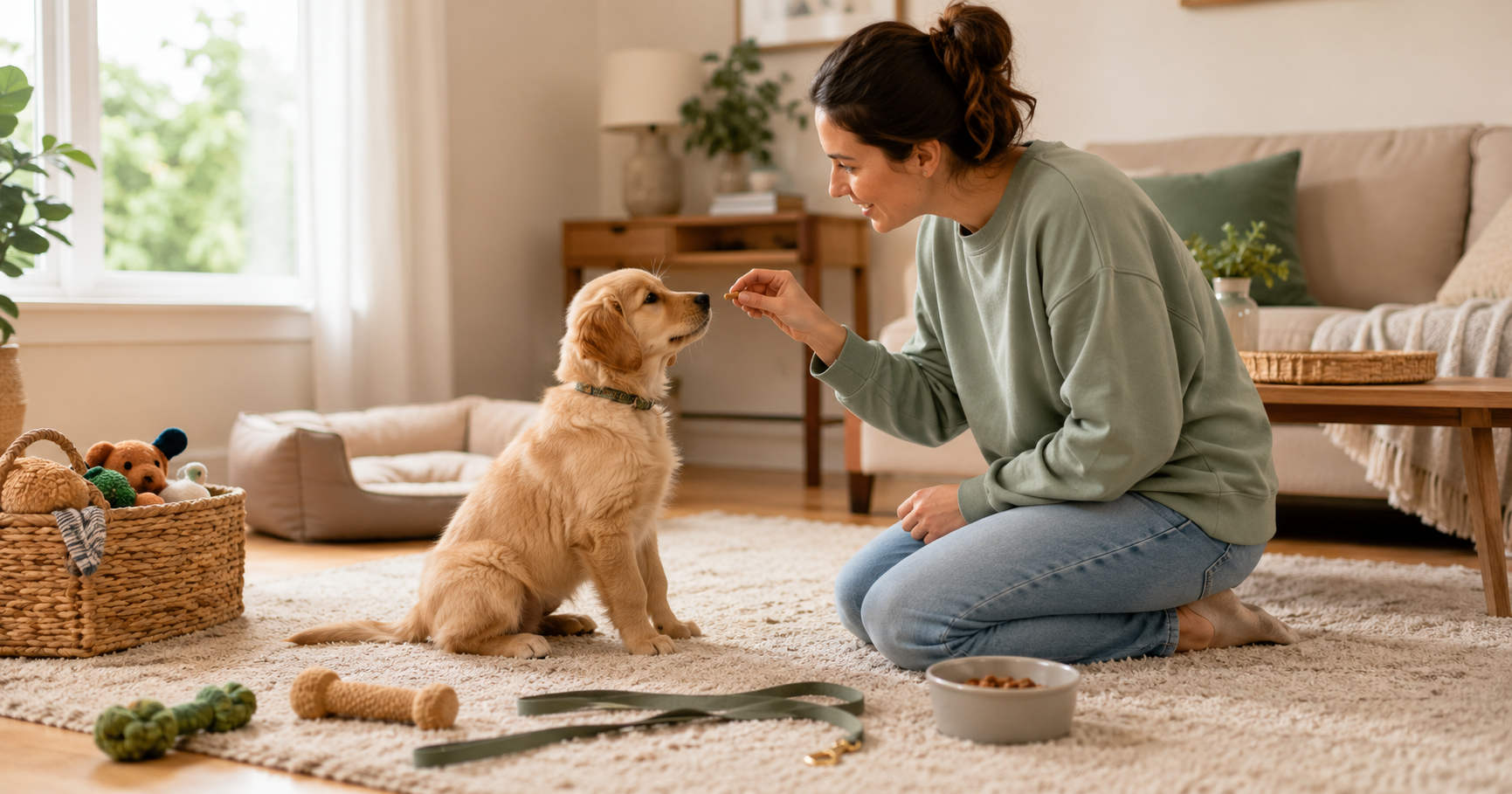
Start Your Puppy Training Journey With Realistic Expectations
Bringing home a puppy is exciting, but it can also feel overwhelming. One minute your puppy is sleeping peacefully, and the next they are chewing a shoe, having an accident, or ignoring the name you carefully chose. Puppies are learning how the human world works, and nearly every behavior you want must be taught through repetition, patience, and clear routines.
The best puppy training tips for beginners are not complicated tricks. They are simple habits that help your puppy understand what earns rewards, where to go to the bathroom, how to settle, and how to feel safe around everyday people, sounds, and places. Training works best when it becomes part of daily life instead of one long lesson at the end of the day.
Use the following foundational tips to build good communication from the beginning.
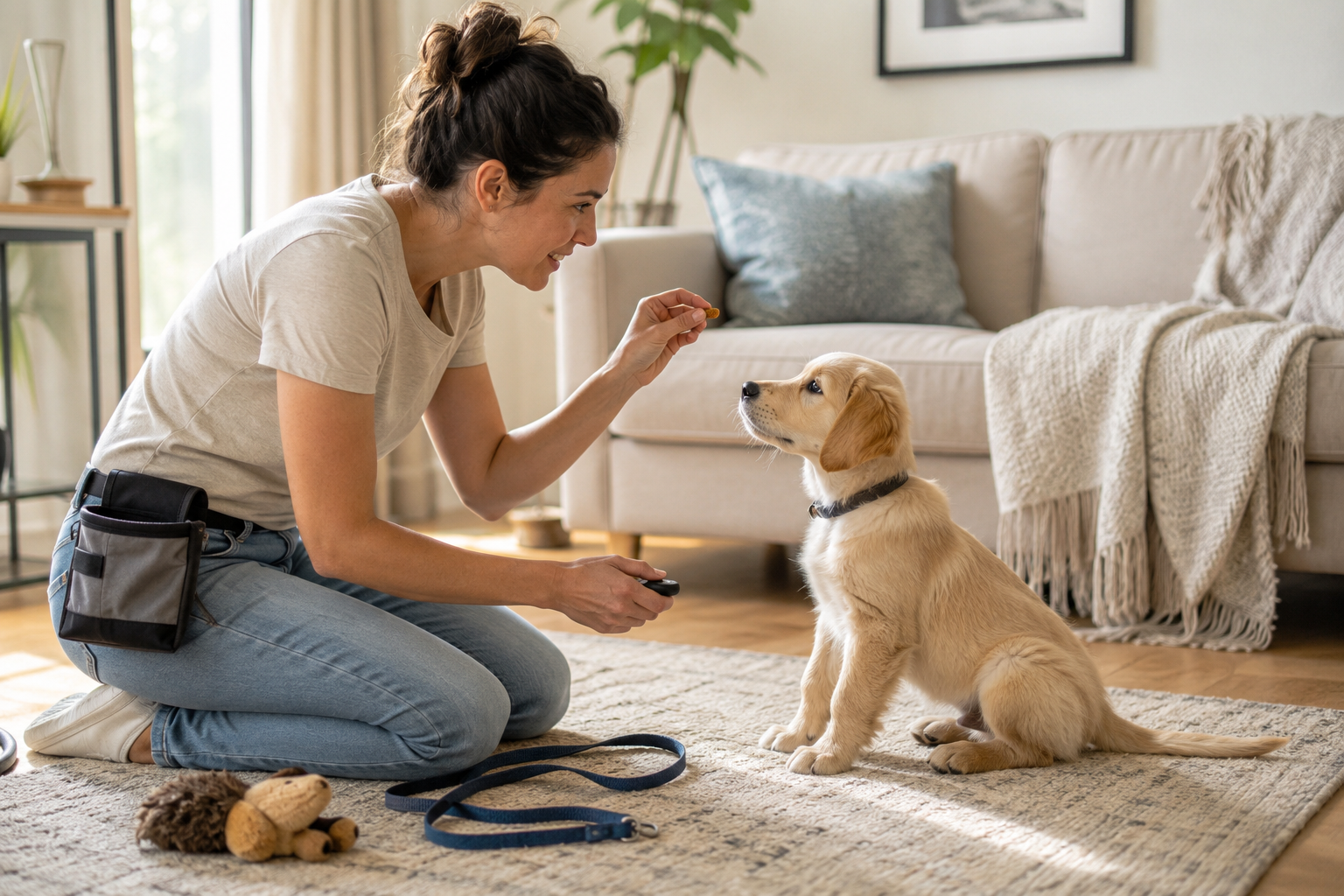
1. Start Training as Soon as Your Puppy Comes Home
You do not need to wait until your puppy is older to begin training. The first day at home is already teaching your puppy what is allowed, what gets attention, and what happens next. Early lessons should be gentle and practical rather than demanding.
Begin with a few essentials: responding to their name, following you for a treat, sitting before meals, resting in a designated area, and going outside for bathroom breaks. Keep expectations age-appropriate. A young puppy may only focus for a few seconds before becoming distracted.
Think of early training as introducing patterns. When the same cue leads to the same action and reward, your puppy starts to understand the routine.
2. Keep Training Sessions Short and Frequent
Puppies learn better from several short sessions than from one long lesson. Aim for one to five minutes at a time, depending on your puppy’s age, energy, and interest. Stop while the puppy is still engaged rather than waiting until they become frustrated or restless.
You can fit training into moments that already happen throughout the day. Practice a sit before putting down the food bowl, reward eye contact before opening the door, or ask for a simple touch cue before play begins. These tiny lessons teach your puppy that listening is useful.
- Practice one skill at a time.
- Use five to ten small treats per session.
- Train in a quiet room before adding distractions.
- End with an easy success.
- Give your puppy time to rest afterward.
Frequent repetition builds reliability without making training feel like a chore for either of you.
3. Use Positive Reinforcement Consistently
Positive reinforcement means rewarding behaviors you want to see again. The reward can be a small treat, praise, a toy, access to the yard, or a chance to greet someone. Food is especially useful because it is quick and easy to deliver at the moment your puppy succeeds.
Reward the behavior immediately. If your puppy sits and receives the treat several seconds later, they may connect the reward with standing up, barking, or looking away instead. A marker word such as yes can help. Say it the instant the correct behavior happens, then give the reward.
Avoid relying on yelling, intimidation, or physical corrections. Harsh responses can create fear without teaching the puppy what to do instead. Clear redirection is more useful. For example, trade a stolen sock for a toy, then reward the puppy for choosing the toy.
4. Teach Your Puppy Their Name First
Your puppy’s name should predict something positive and encourage them to look toward you. This skill supports recall, leash walking, and nearly every future cue.
- Stand near your puppy in a quiet room.
- Say the name once in a cheerful voice.
- When the puppy looks at you, mark the moment and give a treat.
- Pause, move slightly, and repeat.
Do not repeat the name rapidly if your puppy does not respond. Instead, make a light sound, step backward, or move the treat near your face. Reward the moment attention returns. Also avoid using the puppy’s name mainly when you are upset. You want the name to feel safe and worth responding to.
5. Build a Predictable Potty Training Schedule
Potty training becomes easier when you prevent accidents instead of waiting to correct them. Young puppies need frequent bathroom opportunities because they have limited bladder control. Take your puppy to the same outdoor area after waking, eating, drinking, playing, training, and before bedtime.
Use a simple cue such as go potty, then stand quietly and give your puppy time to sniff. The moment they finish, praise and reward them before returning indoors.
Supervise closely indoors. Watch for circling, sniffing, wandering away, sudden restlessness, or heading toward a previously soiled area. If an accident happens, clean it thoroughly and adjust the schedule. Punishing a puppy after the fact will not teach the correct location and may make them afraid to eliminate in front of you.
6. Use a Crate or Safe Area as a Positive Space
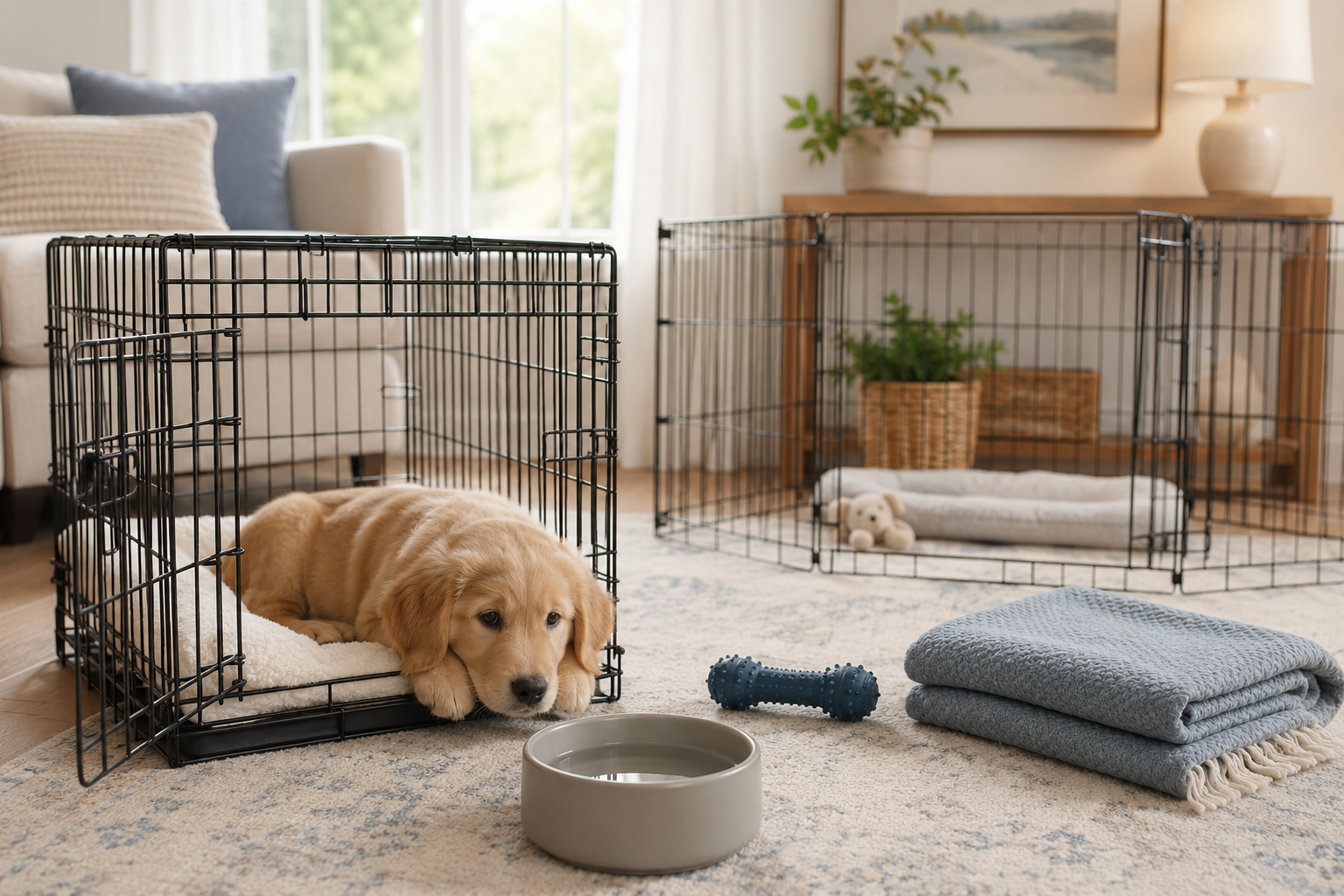
A crate, exercise pen, or puppy-proofed room can support house training, rest, and household safety. It should never be used as a place of anger or isolation for long periods. The goal is to create a comfortable area where your puppy can relax without getting into trouble.
Introduce the space gradually. Toss treats inside, serve meals near or in it, and leave the door open while your puppy explores. Add a safe bed or mat and an appropriate chew. Close the door for only a few seconds at first, then open it before the puppy becomes distressed.
Build duration slowly and provide a bathroom break before confinement. A calm safe area can also prevent overtired biting and zooming.
7. Prevent Biting by Redirecting and Managing Excitement
Mouthing is normal puppy behavior, especially during play and teething, but puppies still need to learn that human skin and clothing are not chew toys. Keep appropriate toys within reach and redirect your puppy before biting escalates.
When teeth touch skin, calmly pause the interaction. Offer a toy and resume play when the puppy engages with it. If the puppy continues biting, step away briefly or guide them to a calm activity such as chewing or resting. Avoid waving your hands, pushing the puppy, or turning biting into a chase game.
Notice when biting is worst. Many puppies become mouthier when they are tired, hungry, overstimulated, or in need of a bathroom break. Meeting those needs often reduces the behavior more effectively than repeated verbal corrections.
8. Socialize Your Puppy Carefully and Positively
Socialization is not simply meeting as many dogs and people as possible. It means helping your puppy form safe, positive associations with the sights, sounds, surfaces, handling, and environments they may encounter throughout life.
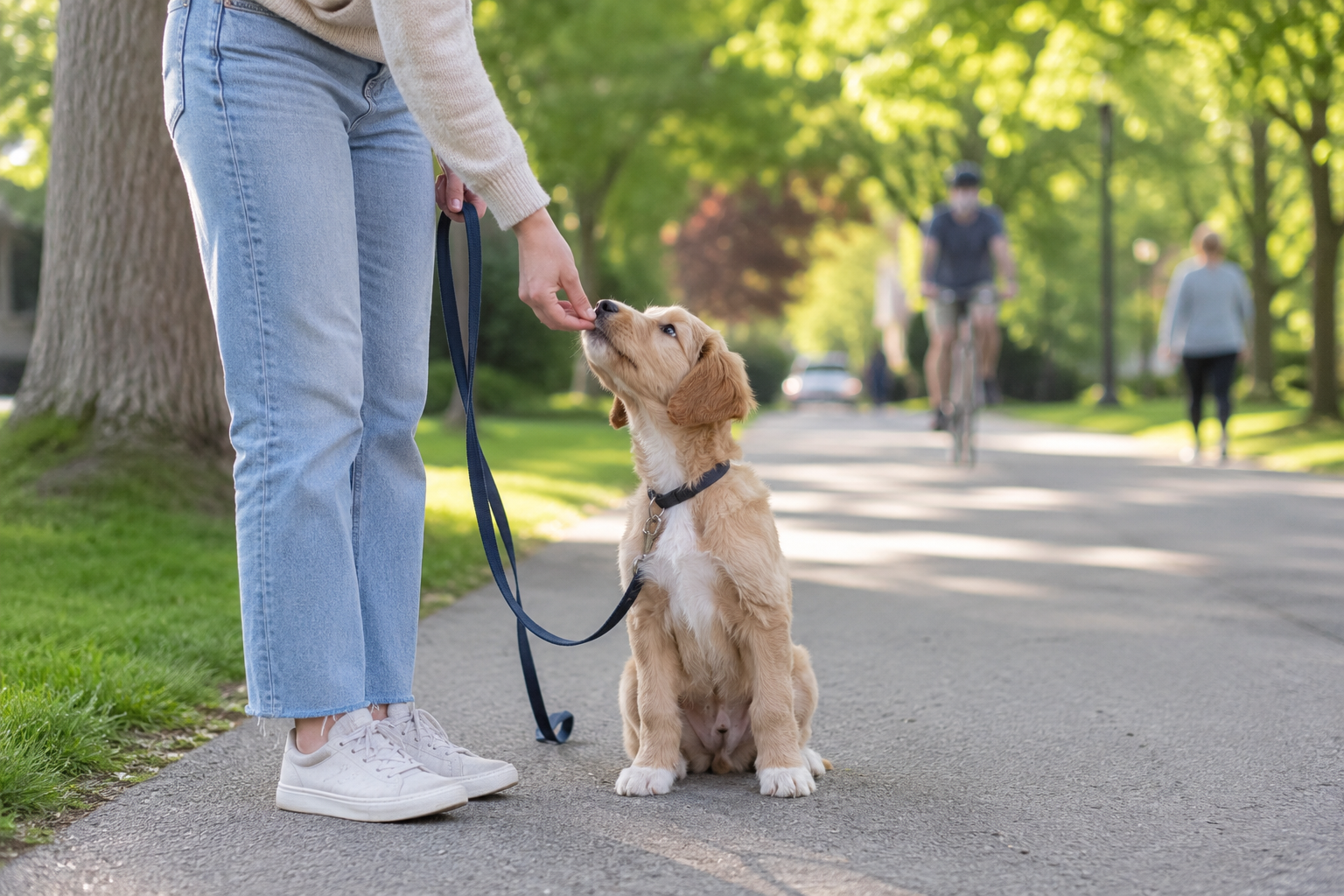
Introduce new experiences at a distance your puppy can handle. Pair calm observation with treats and allow the puppy to choose whether to approach. Useful experiences include people wearing hats, appliances, car rides, grooming, umbrellas, different flooring, traffic sounds, visitors, and appropriate calm dogs.
Do not force greetings or carry a frightened puppy directly toward something scary. Watch body language. A puppy that refuses treats, hides, freezes, trembles, or tries to escape may need more distance and a slower introduction. Ask your veterinarian about safe socialization based on your puppy’s vaccination status and local disease risks.
9. Teach Basic Cues That Make Daily Life Easier
Focus first on cues that improve safety and household routines. Sit is useful, but recall, leave it, drop it, wait, and settling on a mat often have greater everyday value.
- Come: Reward your puppy generously for moving toward you. Never call them only for unpleasant events.
- Leave it: Teach the puppy to move away from something before they pick it up.
- Drop it: Trade an item already in the puppy’s mouth for a treat or better toy.
- Wait: Practice brief pauses before doors, meals, and exiting the car.
- Place or mat: Reward your puppy for lying calmly on a bed or mat.
Practice in low-distraction spaces first. Increase difficulty gradually because a cue learned indoors may feel new outside.
10. Reward Calm Behavior, Not Only Active Commands
Many new owners reward puppies for sitting, coming, and performing tricks but forget to reward quiet behavior. Calmness is a skill. When your puppy lies down on their own, chews an appropriate toy, watches activity without barking, or settles near your feet, quietly place a treat between their paws.
This technique teaches your puppy that relaxation earns good things.
Create a daily rhythm that includes exercise, short training, chewing, sniffing, and sleep. More activity is not always the answer. An overtired puppy may seem hyperactive, so balance stimulation with structured rest.
11. Manage the Environment to Prevent Unwanted Habits
Training is much easier when your home is arranged for success. Puppies repeat behaviors that feel rewarding, including stealing laundry, chewing furniture, digging in plants, and chasing children. Every repetition can make the habit stronger.
Use baby gates, closed doors, a leash indoors when supervised, storage baskets with lids, cord covers, and a puppy-safe area. Keep shoes, medication, trash, children’s toys, and food out of reach. Provide legal chewing options with different textures and rotate them to maintain interest.
Management is not a substitute for teaching, but it gives you time to teach the right behavior. A puppy cannot learn to ignore the trash if they repeatedly get access to exciting leftovers while no one is watching.
12. Be Consistent, Patient, and Willing to Adjust
Everyone in the household should use the same cues and rules. If one person allows jumping while another discourages it, the puppy receives mixed information. Decide in advance which behaviors are allowed, what words you will use, and how you will reward success.
Progress is rarely perfectly linear. A puppy may seem reliable for several days and then have an accident or forget a cue in a new environment. Return to easier practice rather than assuming the puppy is being stubborn.
Keep a simple record of bathroom times, meals, sleep, biting episodes, and training wins during the first few weeks. Patterns often become obvious on paper. You may discover that accidents happen after evening play or that biting increases when naps are skipped.
Seek help early if your puppy shows intense fear, guarding, persistent distress when alone, escalating aggression, or behavior that feels unsafe. A qualified reward-based trainer, veterinary behavior professional, or veterinarian can help you create an appropriate plan.
A Simple Daily Puppy Training Routine
You do not need a complicated schedule. A practical day can include short training moments connected to normal puppy care.
- Morning: Take your puppy outside immediately, reward successful potty behavior, then practice their name and one easy cue before breakfast.
- Midmorning: Offer supervised play, a brief handling exercise, another bathroom break, and a nap in the safe area.
- Afternoon: Practice leash skills or calm observation in a suitable environment, followed by chewing and rest.
- Evening: Use part of dinner for training, reward calm behavior around family activity, and prevent overtired play from becoming rough.
- Bedtime: Keep the final bathroom trip quiet and predictable, then guide your puppy to their sleeping space.
The exact times will vary, but the pattern matters: bathroom break, activity, training, and rest. Repeating this cycle helps your puppy know what to expect.
Common Puppy Training Mistakes to Avoid
Even caring owners can accidentally make training harder. Avoid repeating a cue many times, rewarding after the puppy has moved out of position, giving too much freedom too soon, or expecting reliable behavior around distractions before practicing at home.
Also avoid comparing your puppy to another dog. Age, background, sleep, health, and environment all influence learning. Focus on small improvements, such as one fewer accident, a calmer greeting, or a faster response to their name.
Training should help you and your puppy communicate, not create constant pressure. When a method is not working, simplify the task, improve the reward, reduce distractions, or break the behavior into a smaller step.
Build Good Habits One Small Success at a Time
The most effective puppy training tips for beginners come down to timing, prevention, positive reinforcement, and realistic expectations. Start with the skills that make everyday life safer and easier, then build gradually as your puppy matures.
Celebrate the small wins. A puppy who chooses a toy instead of your sleeve, looks at you when their name is called, or settles quietly for thirty seconds is learning. Repeated consistently, those moments become the foundation for a well-adjusted adult dog.
Stay patient, keep lessons short, and make the correct choice easy to understand. Your puppy does not need a perfect owner. They need a calm, consistent guide who notices progress and keeps showing them what works.