Beginner Crochet Blanket Patterns Can Be Simple and Beautiful
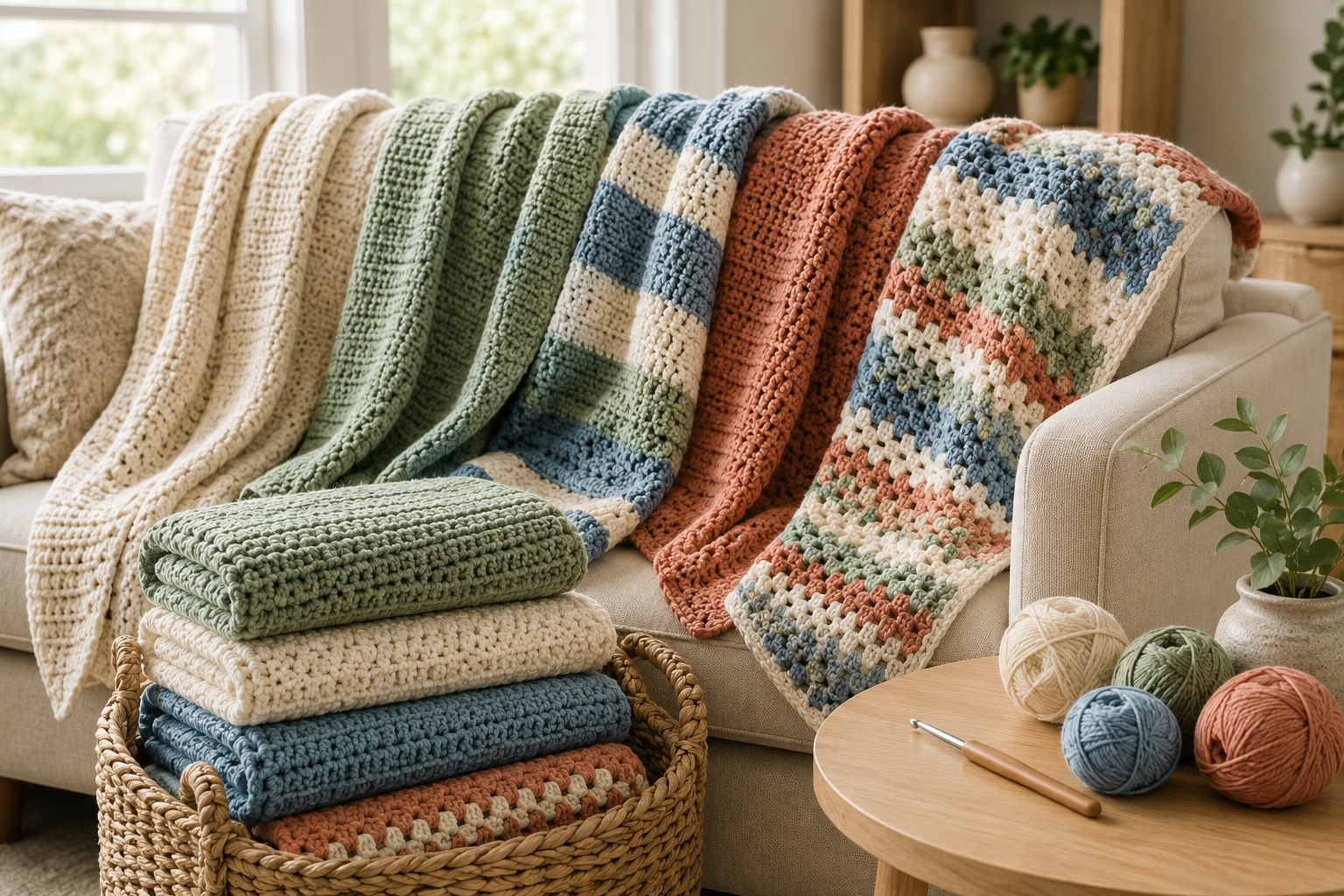
Making your first crochet blanket may seem intimidating, especially when finished blankets online appear to include complicated textures, perfect edges, and carefully planned color combinations. The good news is that many impressive-looking blankets are created with beginner-friendly stitches and simple repeating rows.
You do not need to master dozens of crochet techniques before starting a blanket. A basic understanding of chains, single crochet, half double crochet, and double crochet is enough to make many stylish designs. The key is choosing a pattern with an easy repeat, using yarn that is comfortable to handle, and giving yourself time to develop consistent tension.
The following beginner crochet blanket patterns are designed around straightforward techniques that produce polished results. Some create texture through basic stitch combinations, while others use color placement, thick yarn, or simple striping to make the finished blanket look more detailed than it really is.
What You Need Before Starting Your First Crochet Blanket
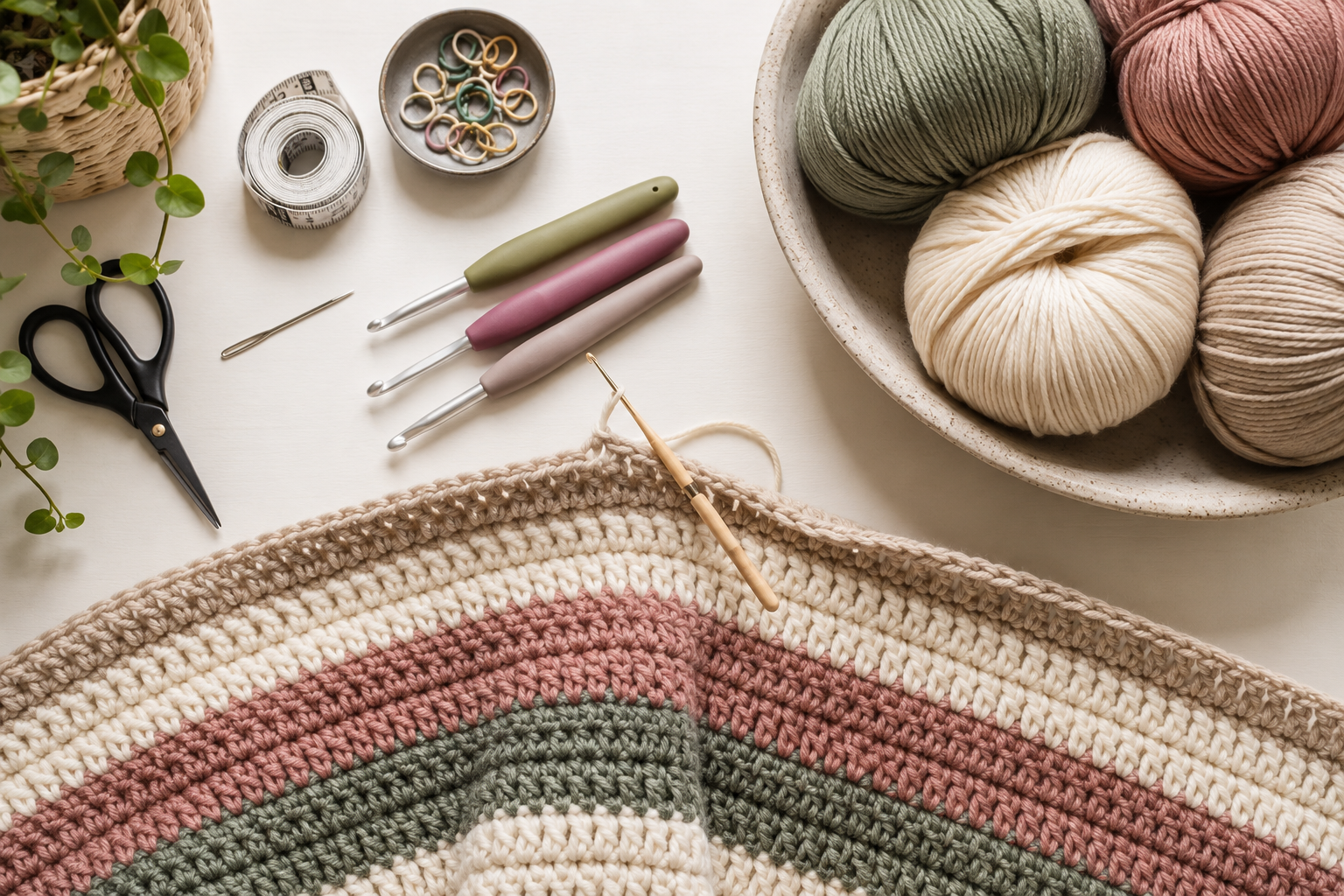
Most beginner blankets require only a few basic supplies. Check the yarn label or individual pattern instructions for the recommended hook size, but remember that comfort and stitch tension also matter.
- Yarn: A smooth medium-weight or bulky yarn is usually easier for beginners than very thin, fuzzy, or textured yarn.
- Crochet hook: Use a hook that matches the yarn label unless the pattern recommends another size.
- Scissors: Choose sharp craft scissors for clean yarn ends.
- Yarn needle: A blunt tapestry needle helps you weave in loose ends.
- Stitch markers: These are helpful for identifying the first and last stitch of each row.
- Measuring tape: Measure the blanket as you work so you can adjust the finished size.
Light-colored yarn is often easier to work with when you are learning because individual stitches are more visible. Dark yarn can make it difficult to see where the hook should be inserted, especially in low lighting.
1. The Classic Single Crochet Blanket
A single crochet blanket is one of the most approachable projects for a new crocheter. It uses the same basic stitch across every row, allowing you to focus on maintaining straight edges and even tension.
Although single crochet is simple, the dense fabric gives the blanket a clean, substantial appearance. It works especially well for baby blankets, lap blankets, pet blankets, and small throws.
Choose a soft medium-weight yarn and work in one solid color for a minimalist look. You can also alternate colors every few rows to create narrow stripes. Using a slightly larger hook than usual can help prevent the fabric from becoming too stiff.
Beginner skill focus: Learning consistent tension and identifying the first and last stitch of each row.
2. Half Double Crochet Ribbed Blanket
Half double crochet is slightly taller than single crochet but still easy to learn. When worked through the back loop of each stitch, it creates raised horizontal ridges that resemble knitted ribbing.
This simple change in hook placement adds noticeable texture without requiring a complicated stitch sequence. The pattern generally consists of repeating the same row until the blanket reaches the desired length.
A ribbed blanket looks especially attractive in warm neutrals, muted greens, soft gray, cream, or dusty blue. The finished fabric is flexible, cozy, and modern enough to complement many decorating styles.
Beginner skill focus: Recognizing the front and back loops of a crochet stitch.
3. Chunky Double Crochet Throw
A chunky double crochet throw is an excellent choice when you want a project that grows quickly. Double crochet stitches are taller than single crochet stitches, and bulky yarn adds even more height to each row.
Because the blanket works up quickly, you can see progress during every crochet session. That visible progress can make it easier to stay motivated through your first large project.
Use a bulky or super bulky yarn with a hook large enough to move smoothly through the stitches. Avoid pulling the yarn too tightly because chunky yarn can create a stiff fabric when the tension is overly firm.
This blanket style looks polished in a single color, but wide color blocks can also create a bold, contemporary effect.
Beginner skill focus: Practicing taller stitches and working with thick yarn.
4. Simple Color-Block Crochet Blanket
A color-block blanket uses large sections of two or more colors instead of frequent yarn changes. This makes it easier than a narrow striped blanket while still producing a visually interesting design.
You can create the entire blanket with single crochet, half double crochet, or double crochet. Work several inches in the first color, switch to the second color, and continue until each section reaches the planned size.
Try combining cream with tan, sage with ivory, pale blue with gray, or terracotta with warm beige. Limiting the palette to two or three coordinated shades helps the blanket look intentional rather than overly busy.
Leave long enough yarn tails when changing colors so they can be woven securely into the finished blanket.
Beginner skill focus: Changing yarn colors and weaving in ends.
5. Linen Stitch Crochet Blanket
The linen stitch, sometimes called the moss stitch, creates a woven appearance using basic single crochet stitches and chain spaces. The finished surface looks detailed, but the repeating stitch sequence is manageable once you understand the placement.
Instead of inserting the hook into every stitch, you work single crochet stitches into chain spaces from the previous row. This produces a flexible fabric with small, evenly spaced openings.
The linen stitch is especially effective when you alternate colors. Even simple yarn changes can create a sophisticated woven pattern. Use a self-striping yarn when you want color variation without manually changing skeins every few rows.
Beginner skill focus: Crocheting into chain spaces and following a short stitch repeat.
6. Modern Wide-Stripe Blanket
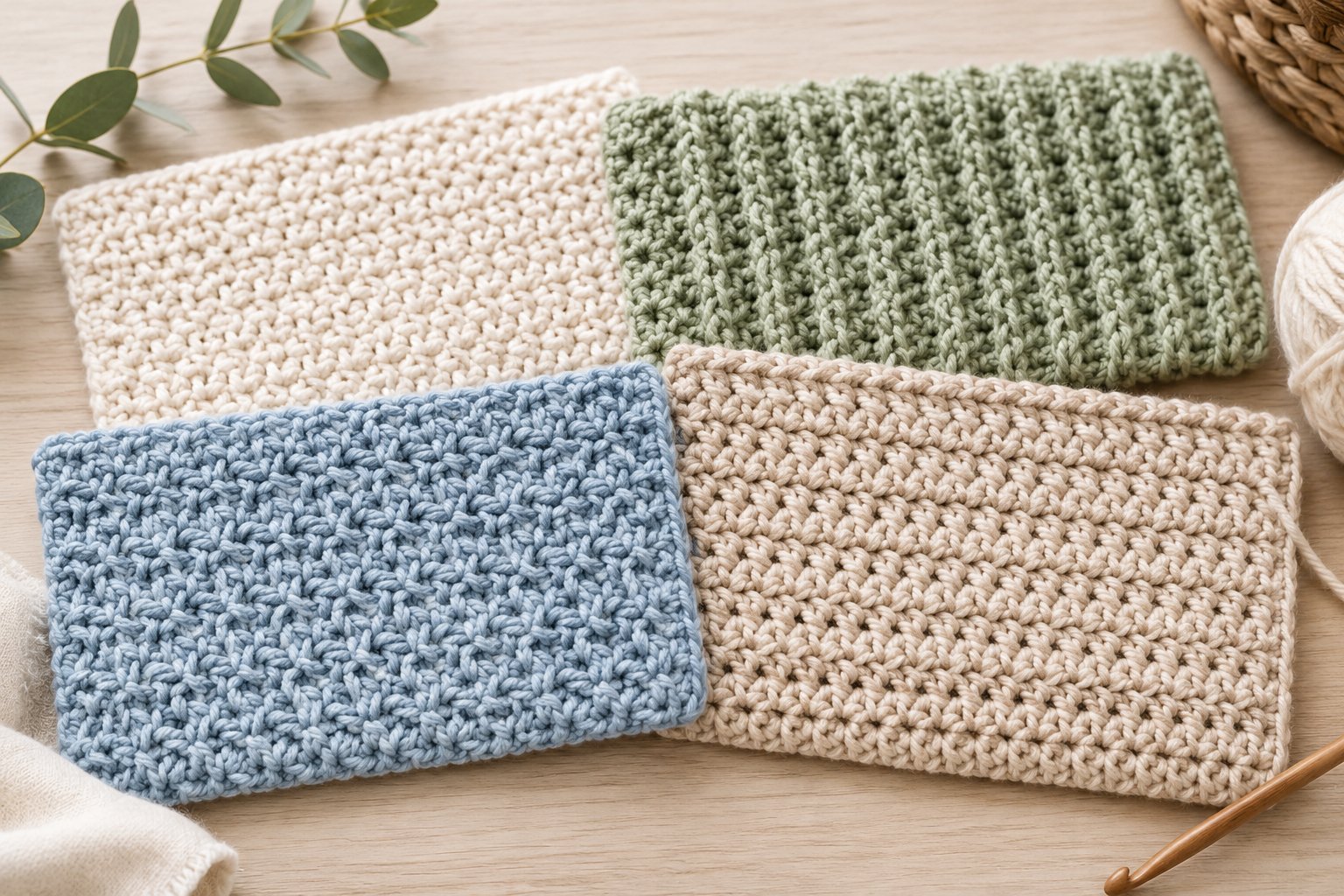
Wide stripes are easier to manage than frequent narrow stripes because they require fewer color changes. They also give a basic blanket a strong visual structure that can make it look professionally designed.
Select three or four colors and repeat them in sections of equal or varied widths. A simple double crochet stitch works well because it allows each stripe to grow quickly.
For a balanced design, choose one light color, one medium shade, and one darker accent. You can repeat the colors in the same order or arrange them asymmetrically for a more modern appearance.
Keep the unused yarn organized while working, and weave in the ends after completing several color sections instead of leaving every end until the final day.
Beginner skill focus: Planning color placement and creating neat yarn changes.
7. Beginner Granny Stripe Blanket
A granny stripe blanket uses small groups of double crochet stitches separated by spaces. It has the familiar look of a traditional granny square, but it is worked back and forth in rows rather than assembled from individual motifs.
The open spaces make it easier to see where each stitch cluster belongs. Once the foundation rows are complete, the pattern becomes rhythmic and repetitive.
Granny stripes are ideal for using multiple colors or leftover yarn. For a less busy design, use only three coordinated colors and repeat them throughout the blanket. A solid neutral border can help unify the finished piece.
Beginner skill focus: Working stitch clusters and maintaining a repeating pattern.
8. Two-Stitch Textured Blanket
You can create an attractive textured blanket by alternating two basic stitches, such as single crochet and double crochet. The difference in stitch height causes the fabric to develop small raised areas without the need for advanced techniques.
One common approach is to work a single crochet stitch into one stitch and a double crochet stitch into the next, repeating across the row. On the following row, the same sequence is repeated according to the pattern instructions.
A solid-colored yarn allows the texture to remain the main feature. Soft cream, oatmeal, charcoal, dusty rose, and muted blue are especially suitable for this understated design.
Beginner skill focus: Alternating stitches while maintaining an accurate stitch count.
9. Corner-to-Corner Style Beginner Blanket
Traditional corner-to-corner crochet can involve increasing and decreasing blocks, but beginner variations use simple diagonal construction and repetitive stitch groups. The blanket begins at one corner, gradually widens, and then narrows toward the opposite corner.
This construction method feels different from working standard horizontal rows, making it an interesting next step after completing a basic scarf or dishcloth.
Use a smooth yarn that makes the blocks easy to identify. Self-striping or gradient yarn can highlight the diagonal direction without requiring frequent color changes.
Carefully count the blocks during the increasing and decreasing sections. Stitch markers can help identify the turning points.
Beginner skill focus: Understanding increases, decreases, and diagonal construction.
10. Simple V-Stitch Crochet Blanket
The V-stitch is usually formed by working two tall stitches into the same space, often with a chain between them. The repeated V shapes create an open, decorative fabric that looks more complex than a basic row of double crochet.
Because the stitches are worked into larger spaces, the hook placement can be easier to see than it is in dense crochet fabric. The open design also makes the blanket lighter and more flexible.
Use a soft medium-weight yarn for a versatile throw. A single color creates subtle elegance, while alternating two colors emphasizes the rows of V-shaped stitches.
This pattern is a good choice for a decorative sofa throw or a lightweight blanket for transitional weather.
Beginner skill focus: Working multiple stitches into the same chain space.
11. Easy Crochet Blanket With a Contrasting Border
A contrasting border can transform the simplest crochet rectangle into a finished-looking blanket. Start by crocheting the main body in single crochet, half double crochet, or double crochet. Once the blanket reaches the desired size, add one or more rounds around the outside edge.
The border can be made in the same yarn or in a contrasting shade. A dark border around a light blanket creates definition, while a cream border can soften a colorful design.
The corners usually require several stitches in the same space so the border can turn without pulling. Follow the border instructions carefully and spread the stitches evenly along the sides.
Beginner skill focus: Crocheting around the edges and creating smooth corners.
How to Choose the Best Yarn for a Beginner Blanket
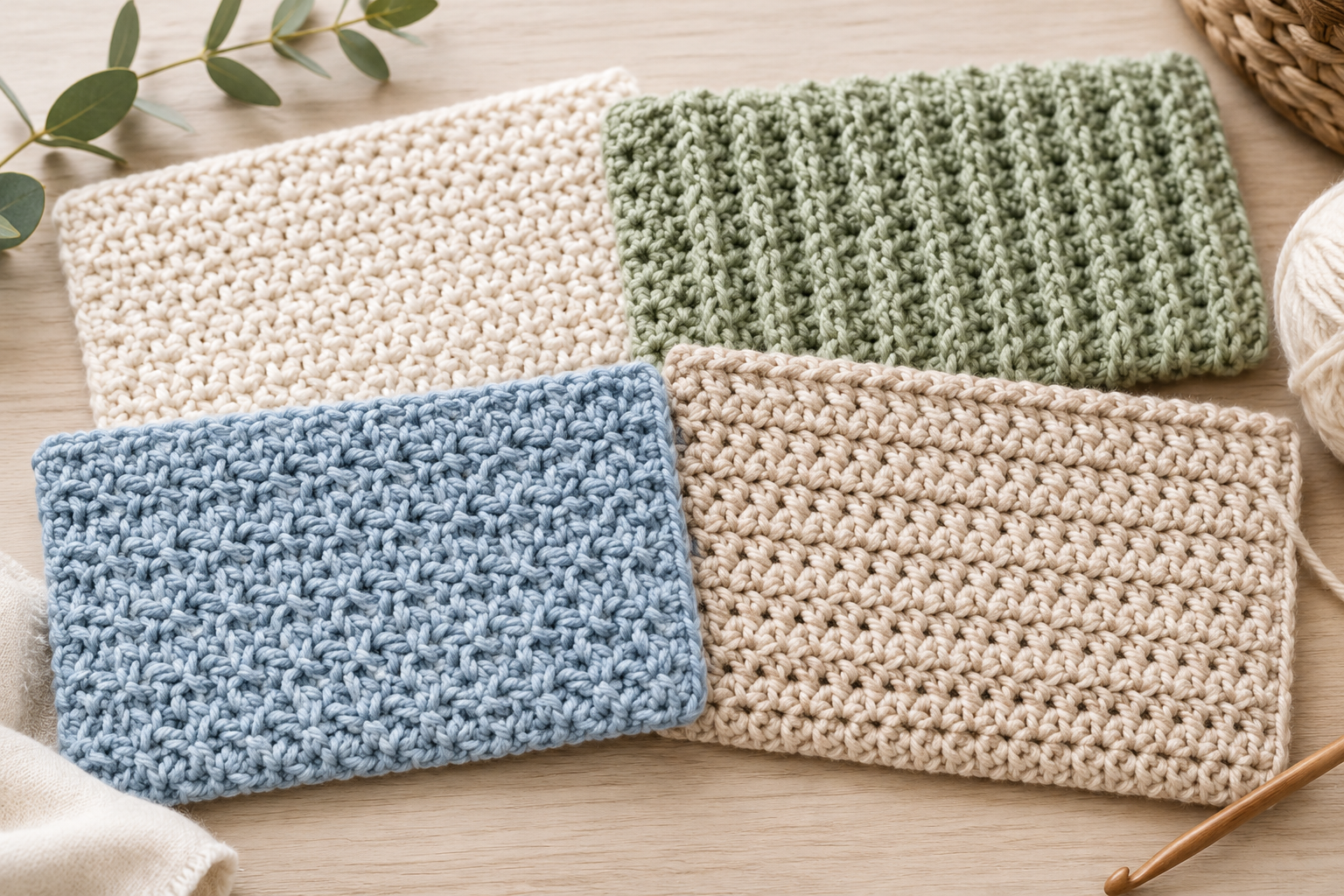
The yarn you choose affects how easy the blanket is to crochet, how it feels, and how much care it requires. For a first blanket, look for yarn that is smooth, soft, and easy to unravel when you need to correct a mistake.
- Acrylic yarn: Affordable, widely available, washable, and offered in many colors.
- Cotton yarn: Breathable and defined, although it may feel heavier and less stretchy.
- Wool blends: Warm and soft, but care instructions may be more demanding.
- Chenille yarn: Plush and cozy, although individual stitches can be difficult to see.
- Bulky yarn: Fast to crochet and ideal for thick throws, but it requires a larger hook.
Buy enough yarn from the same dye lot whenever possible. Yarn colors can vary slightly between manufacturing batches, even when the color name and number are identical.
How Much Yarn Do You Need for a Crochet Blanket?
The required amount depends on the yarn weight, stitch pattern, hook size, and finished dimensions. Dense stitches generally use more yarn than open stitch patterns.
A small baby blanket may require only a few skeins, while a large throw or bed blanket can require significantly more. Check the yardage rather than relying only on the number of skeins because skein sizes vary between brands.
When estimating, purchase a little more yarn than the pattern requires. Having an extra skein is better than discovering that the color is unavailable when only a few rows remain.
Tips for Keeping Your Crochet Blanket Edges Straight
Uneven edges are one of the most common challenges for beginners. They usually happen because the first or last stitch of a row is accidentally skipped or because an extra stitch is added near the turning chain.
- Count the stitches at the end of every row while the blanket is still small.
- Place a stitch marker in the first and last stitch of each row.
- Check whether the turning chain counts as a stitch in the pattern.
- Lay the blanket flat occasionally to identify widening or narrowing early.
- Correct major stitch-count problems before adding many more rows.
Small variations can often be improved with blocking or a border, but consistently counting your stitches will prevent most serious shape problems.
How to Make a Simple Blanket Look More Advanced
You do not need complicated stitches to create a blanket that looks polished. Thoughtful finishing choices can make a basic pattern appear much more refined.
- Use a limited color palette. Two or three coordinated shades usually look more intentional than many unrelated colors.
- Add a border. Even one round of single crochet can create a cleaner edge.
- Weave in ends carefully. Secure each end in more than one direction so it does not work loose.
- Block the blanket. Gentle blocking helps even the stitches and improve the overall shape.
- Choose consistent yarn. Using the same yarn line throughout creates a uniform texture and drape.
- Finish with simple tassels. Tassels can add personality to a plain throw, although they may not be ideal for baby or pet blankets.
Common Beginner Crochet Blanket Mistakes
Most mistakes are part of the learning process and do not mean you need to abandon the project. Recognizing common problems early makes them easier to fix.
Starting with a chain that is too tight: Use a larger hook for the foundation chain or consciously loosen your tension.
Choosing a blanket that is too large: A lap blanket or throw is more manageable than a queen-size blanket for a first project.
Using difficult yarn: Very dark, fuzzy, or thin yarn can hide stitches and slow down your progress.
Skipping stitch counts: Count regularly instead of waiting until the blanket begins to look uneven.
Changing tension: Try to hold the yarn and hook in the same comfortable way during each crochet session.
Leaving all finishing work until the end: Weave in yarn ends periodically so the final finishing stage does not feel overwhelming.
Frequently Asked Questions About Beginner Crochet Blankets
What crochet stitch is easiest for a blanket?
Single crochet, half double crochet, and double crochet are among the easiest blanket stitches. Half double crochet offers a useful balance because it works up faster than single crochet while still creating a warm, substantial fabric.
How big should a beginner crochet blanket be?
A lap blanket or small throw is an achievable first size. It provides enough repetition to build confidence without requiring the time and yarn needed for a full bed blanket.
Should a beginner use chunky yarn?
Chunky yarn can be helpful because the blanket grows quickly and the stitches are large. However, extremely fuzzy chunky yarn may make stitch placement difficult to see. Choose a smooth bulky yarn for the easiest experience.
How long does it take to crochet a beginner blanket?
The time varies according to the blanket size, yarn weight, stitch choice, and the amount of time spent crocheting each day. A chunky lap blanket may be completed relatively quickly, while a large blanket made with dense stitches will take longer.
Do crochet blankets need a border?
A border is optional. It can improve uneven edges, introduce a contrasting color, and make the blanket look more complete. A simple round of single crochet is enough for many beginner designs.
Start With a Blanket Pattern You Will Enjoy Making
Your first crochet blanket does not need to include advanced stitches to feel special. A basic repeat, soft yarn, and thoughtful color palette can produce a blanket that looks detailed and beautifully finished.
Choose a pattern that matches your current skill level and available time. Start with a manageable size, count your stitches regularly, and allow yourself to work slowly while your tension improves.
Whether you choose a chunky double crochet throw, a textured two-stitch blanket, a granny stripe design, or a simple blanket with a contrasting border, the most important step is beginning. Every completed row builds the skills you will use in future crochet projects.