Why Kitchen Organization Makes Your Cooking Space Feel Cleaner
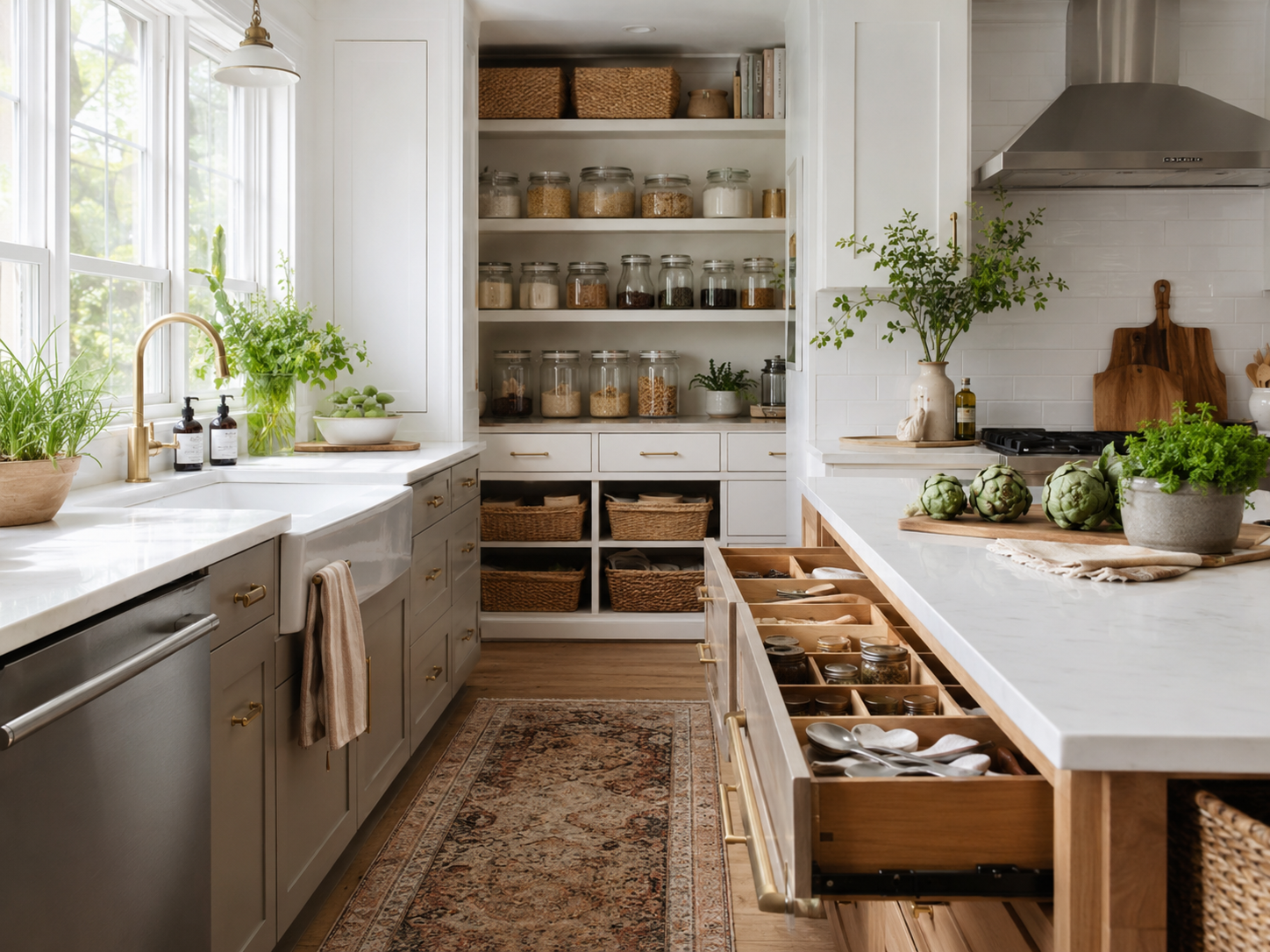
A clean kitchen is not only about wiping the counters or washing the dishes. A kitchen can technically be clean and still feel messy if the cabinets are crowded, the pantry is overflowing, the drawers are hard to open, and everyday items do not have a clear home. That is why smart kitchen organization ideas can make such a big difference.
When your kitchen is organized, cooking feels easier. You can find ingredients faster, put groceries away without stress, and clean up in less time. Even a small kitchen can feel more spacious when the storage is planned well and the counters are not overloaded with items you rarely use.
The best kitchen organization system is not about making your home look perfect for a photo. It is about creating a cooking space that works for your real routine. If you make coffee every morning, your mugs, filters, spoons, and coffee supplies should be easy to reach. If you cook dinner most nights, your cutting boards, pans, spices, oils, and utensils should be stored where you naturally use them.
These kitchen organization ideas are practical, realistic, and easy to adjust for different home sizes. Use them to organize cabinets, drawers, pantry shelves, counters, under-sink storage, and small kitchen spaces so your cooking area feels cleaner, calmer, and more functional.
1. Clear the Counters Before Organizing Anything Else
The fastest way to make a kitchen look cleaner is to reduce visual clutter on the counters. Counters are work surfaces, not long-term storage spaces. When they are covered with appliances, mail, snack bags, dishes, utensils, and random household items, the whole kitchen feels crowded even if everything is technically clean.
Start by removing everything from your counters. Then only put back the items you use every day or almost every day. This may include a coffee maker, toaster, knife block, fruit bowl, or paper towel holder. Everything else should earn its spot.
If you have a small kitchen, be especially selective. A blender you use once a month does not need prime counter space. Store it in a cabinet, pantry shelf, or appliance garage if you have one. The more open counter space you can create, the easier it becomes to prep food, wipe surfaces, and keep the kitchen looking organized.
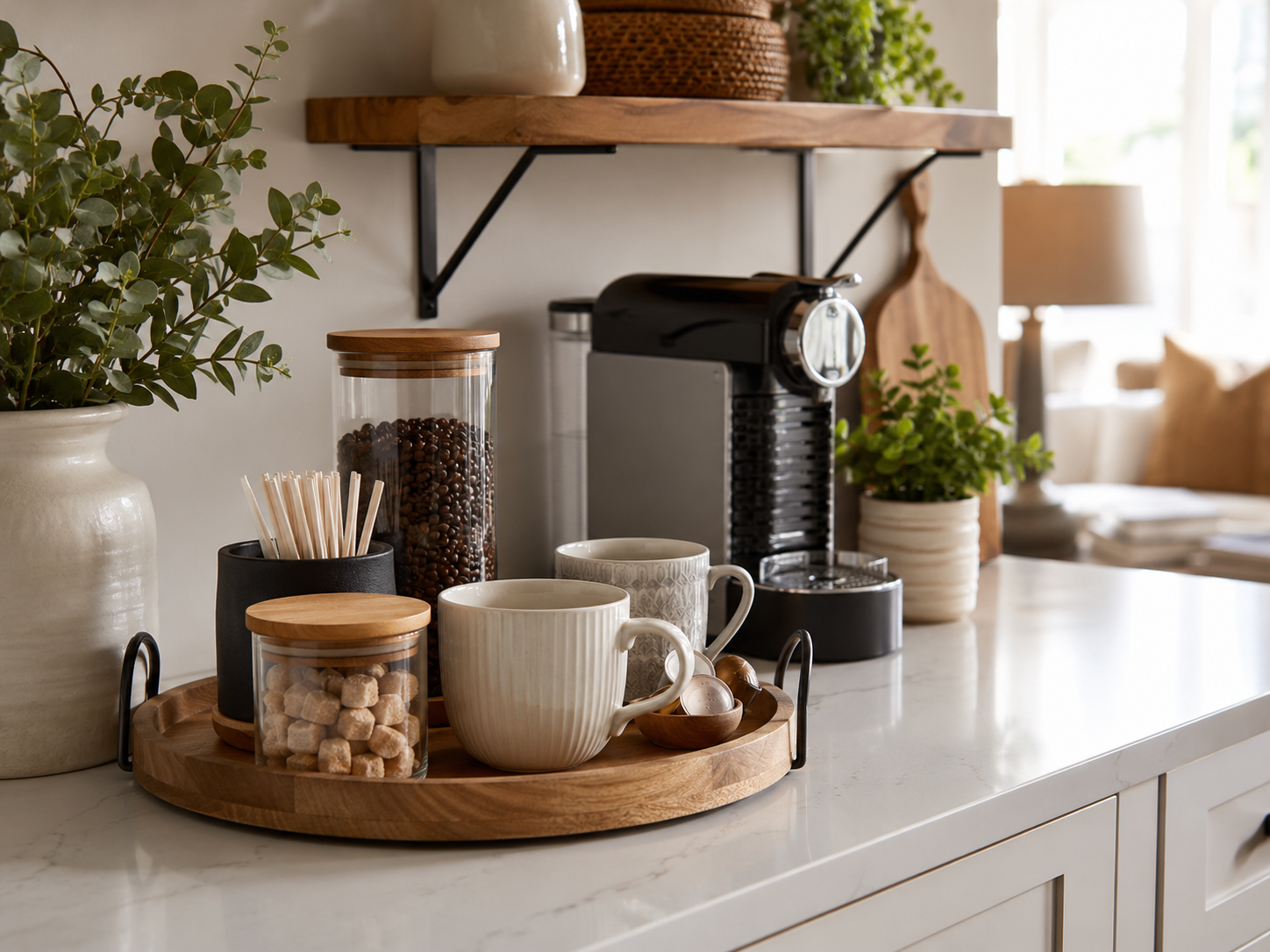
For a more polished look, group necessary counter items on trays. A small tray near the stove can hold olive oil, salt, pepper, and a spoon rest. A tray near the coffee maker can hold sugar, coffee pods, stirrers, and mugs. Grouping items makes them feel intentional instead of scattered.
2. Create Kitchen Zones Based on How You Actually Cook
One of the most useful kitchen organization ideas is to organize by zone. A kitchen zone is simply a section of your kitchen dedicated to a specific task. Instead of storing items wherever they fit, you place them near the area where you use them most.
Common kitchen zones include a prep zone, cooking zone, baking zone, coffee zone, snack zone, cleaning zone, and food storage zone. This method makes your kitchen feel more logical because your supplies support your routine.
For example, your prep zone might include cutting boards, mixing bowls, measuring cups, knives, peelers, and food storage containers. Your cooking zone might include pans, spatulas, cooking oils, spices, pot holders, and frequently used utensils. Your cleaning zone should keep dish soap, scrub brushes, trash bags, and cleaning cloths together.
Think about the way your kitchen flows during a normal day. Where do you unpack groceries? Where do you chop vegetables? Where do you make lunches? Where do kids grab snacks? Once you answer those questions, you can move items into smarter locations.
3. Use Drawer Dividers for Utensils and Small Tools
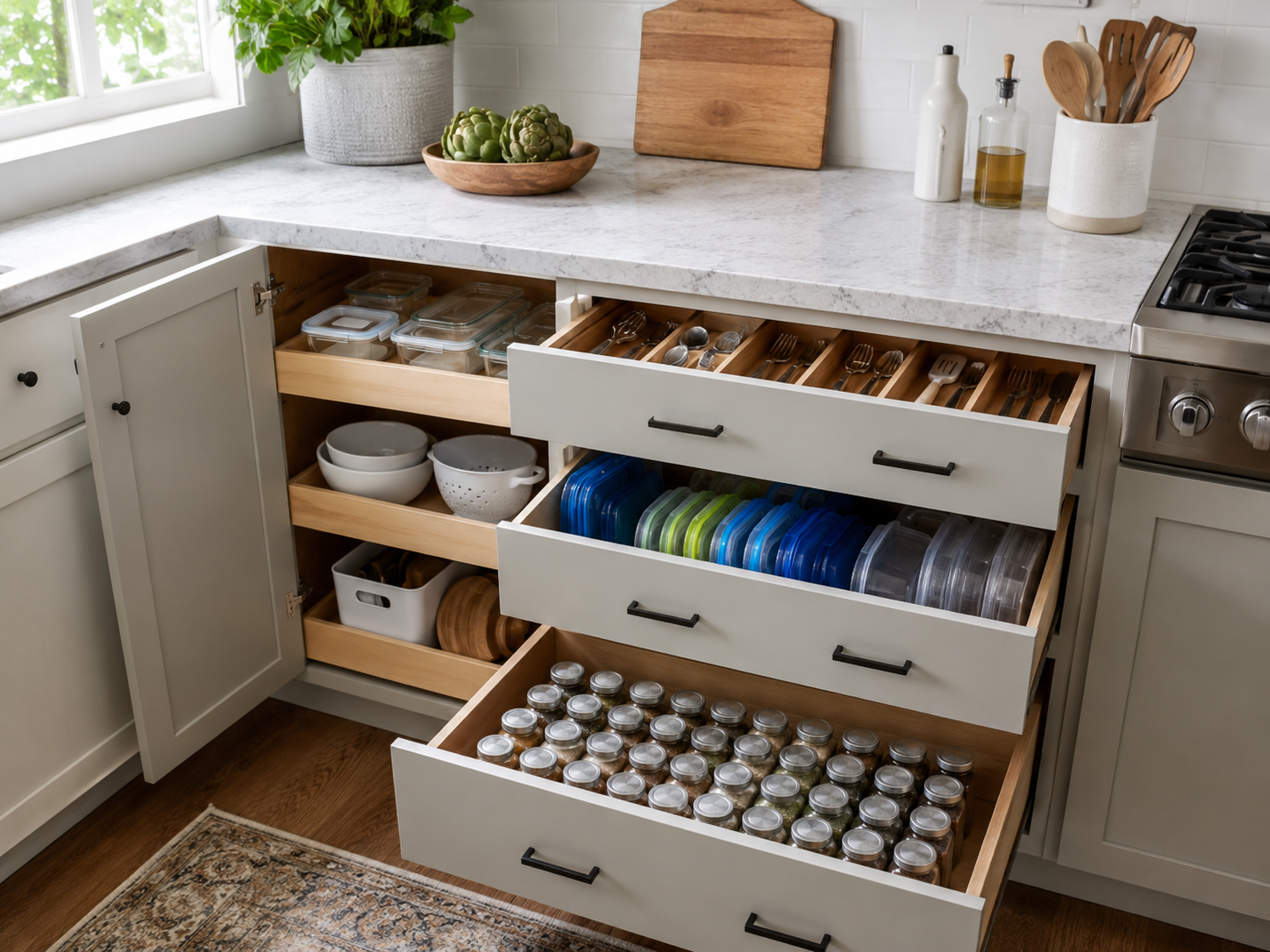
Kitchen drawers can become messy quickly because they hold many small items. Without dividers, spoons, spatulas, measuring cups, peelers, scissors, and bottle openers slide around and pile on top of each other. Drawer dividers instantly make the space easier to use.
Use a basic utensil tray for everyday forks, spoons, and knives. For cooking tools, choose adjustable dividers so you can create sections that fit your exact drawer size. Place the tools you reach for most often toward the front of the drawer and less-used tools toward the back.
If you have a drawer full of random gadgets, this is a good time to edit. Keep the tools you use regularly and remove duplicates or items that only create clutter. Many kitchens have too many spatulas, old measuring spoons, broken clips, or novelty gadgets that never get used.
Drawer organization works best when every item has a simple place to return to. If it takes too much effort to put something away, the drawer will become messy again. Keep the system easy and realistic.
4. Add Clear Bins to Pantry Shelves
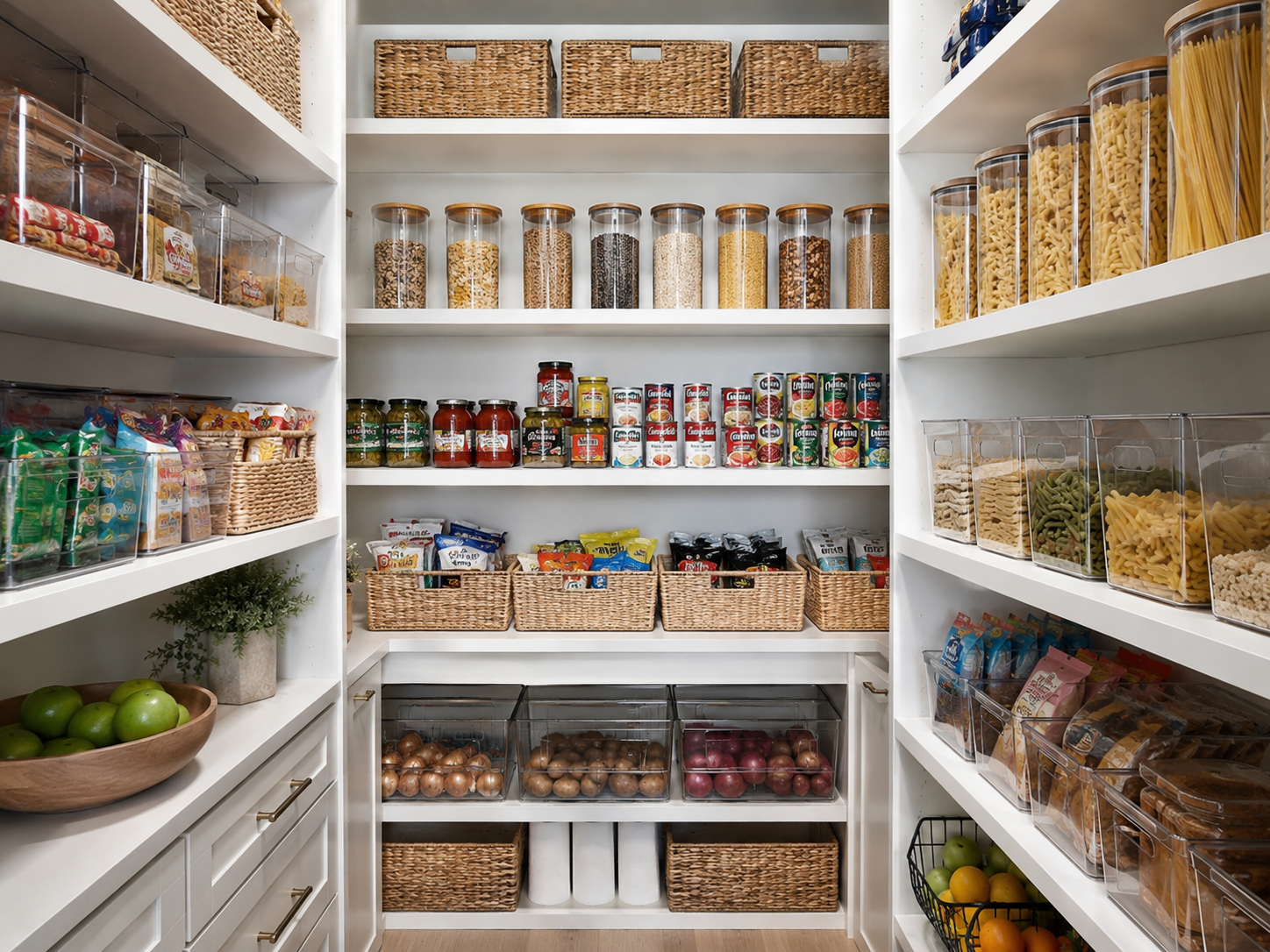
Clear bins are one of the easiest ways to organize a pantry because they keep similar items together while still letting you see what you have. They work well for snacks, baking supplies, breakfast items, pasta, rice packets, seasoning mixes, canned goods, and lunchbox supplies.
Instead of letting boxes and bags spread across multiple shelves, assign each bin a category. You might have one bin for kids’ snacks, one for pasta night, one for baking, one for breakfast, and one for extra condiments. This makes it easier to find ingredients and helps prevent buying duplicates.
Clear bins are especially helpful for deep pantry shelves. Without containers, items get pushed to the back and forgotten. With bins, you can pull out the whole category at once and quickly see what needs to be restocked.
Labels are optional, but they can help everyone in the home keep the pantry organized. Use simple labels such as snacks, breakfast, baking, pasta, rice, canned goods, and lunch supplies. Do not make labels too specific unless your pantry is very large. Broad categories are easier to maintain.
5. Organize Cabinets by Frequency of Use
Cabinet organization becomes much easier when you store items based on how often you use them. Everyday dishes, glasses, mugs, and cooking tools should be easy to reach. Seasonal platters, specialty baking pans, party dishes, and rarely used appliances can go on higher shelves or in less convenient cabinets.
Place your most-used plates and bowls near the dishwasher or dining area if possible. Store mugs close to the coffee station. Keep pots and pans near the stove. Put food storage containers near the prep area or refrigerator. These small placement choices save time every day.
If your cabinets are crowded, remove everything from one cabinet at a time and sort items into three groups: keep, relocate, and donate. This keeps the process manageable and prevents your entire kitchen from turning into a mess while organizing.
Use shelf risers to create extra levels inside cabinets. They are great for plates, bowls, mugs, canned goods, and small pantry items. A riser can double usable space by taking advantage of vertical room that often goes unused.
6. Make the Most of Vertical Space
When a kitchen feels short on storage, the problem is often unused vertical space. Walls, cabinet doors, tall shelves, and the inside of pantry doors can all become useful storage areas.
Install hooks for mugs, measuring spoons, oven mitts, or lightweight utensils. Use a wall-mounted rail for frequently used cooking tools. Add a magnetic knife strip if you want to free up counter or drawer space. Use over-the-door organizers for pantry items, foil, plastic wrap, cutting boards, or cleaning supplies.
Inside cabinets, stackable shelves can help you use the full height of the space. In tall pantry cabinets, tiered organizers make spices, cans, and jars easier to see. For awkward lower cabinets, pull-out shelves or baskets can prevent items from disappearing in the back.
Vertical organization is especially helpful in small kitchens because it keeps storage off the counters. The goal is to use empty space without making the kitchen feel visually crowded.
7. Use Lazy Susans for Corners, Oils, and Condiments
Lazy Susans are simple but effective kitchen organizers. They are especially useful for corners, deep shelves, refrigerator condiments, spices, cooking oils, vinegars, sauces, and small jars. Instead of digging through rows of bottles, you can rotate the tray and see everything.
Use a Lazy Susan near the stove for cooking oils, salt, pepper, garlic powder, and frequently used seasonings. Use one in the pantry for sauces, nut butters, honey, or baking extracts. In the refrigerator, a turntable can keep condiments from getting lost behind larger items.
For best results, avoid overloading the tray. If every item is crammed together, it becomes harder to spin and harder to see what you have. Keep only related items on each turntable.
Lazy Susans also help reduce waste because you are less likely to forget about half-used bottles and jars. When everything is visible, it is easier to use what you already own before buying more.
8. Store Food Containers With Matching Lids
Food storage containers are one of the most common sources of kitchen clutter. Containers without lids, lids without containers, stained plastic, warped pieces, and random takeout containers can quickly take over a cabinet or drawer.
Start by matching every container with a lid. If a piece does not have a match, remove it. Then stack containers by shape and size. Keep lids upright in a divider, small bin, or lid organizer so they are easy to grab.
If your container collection is chaotic, consider simplifying it. A smaller set of matching containers is often easier to manage than a large mix of different brands and sizes. Square and rectangular containers usually stack better than round ones and make better use of cabinet space.
Store food containers near the refrigerator or prep zone so leftovers can be packed quickly. If you pack lunches daily, keep lunch containers, small snack cups, and reusable bags together in one easy-to-reach spot.
9. Create a Simple Spice Organization System
Spices are small, but they can make a kitchen feel messy if they are scattered across cabinets, drawers, and pantry shelves. A simple spice system helps you cook faster and prevents duplicate bottles from piling up.
Choose one main location for spices. This could be a drawer near the stove, a cabinet shelf, a wall rack, or a pull-out spice organizer. The best choice depends on your kitchen layout and how often you cook.
If your spices are in a drawer, lay them flat with labels facing up or use angled spice inserts. If they are in a cabinet, use a tiered shelf so you can see the back row. If you like a clean look, transfer spices into matching jars and label them clearly.
Before organizing, check expiration dates and smell older spices. Many spices lose flavor over time, and keeping old jars only adds clutter. Keep the seasonings you actually use and remove anything that no longer fits your cooking routine.
10. Set Up a Practical Coffee or Drink Station
A coffee or drink station can make mornings smoother and keep related items from spreading around the kitchen. This does not have to be fancy. It simply means placing your coffee maker, mugs, filters, pods, tea bags, sweeteners, and stirrers in one convenient area.
If you have counter space, use a tray to group your daily coffee supplies. Store mugs in the cabinet directly above or on hooks nearby. Keep extra coffee, tea, or hot chocolate in a drawer, bin, or cabinet close to the station.
For small kitchens, a drink station can fit inside a cabinet or on a small rolling cart. The goal is to reduce morning clutter and make the routine easier. When everything has a home, you are less likely to leave sugar packets, spoons, boxes, and mugs scattered across the counter.
This same idea works for smoothie supplies, kids’ water bottles, or lunch drinks. Grouping related items together saves time and keeps the kitchen cleaner.
11. Organize Under the Sink With Bins and a Tension Rod
The cabinet under the kitchen sink often becomes a catchall for cleaning products, trash bags, sponges, dishwasher tablets, and random supplies. Because plumbing takes up space, it can be awkward to organize. Bins and simple dividers make a big difference.
Use one bin for daily cleaning products, one for dishwashing supplies, and one for backup items such as extra sponges or trash bags. A small caddy is useful if you like to carry cleaning supplies to other rooms.
A tension rod can be placed under the sink to hang spray bottles by their triggers. This frees up the bottom of the cabinet and makes bottles easier to see. You can also add adhesive hooks inside the cabinet door for gloves, small brushes, or reusable cleaning cloths.
Be careful not to store too much under the sink. This area should be easy to inspect in case of leaks. Keep it organized, simple, and not overly packed.
12. Use Baskets for Open Shelves and High Cabinets
Baskets are useful for kitchens because they hide visual clutter while keeping items grouped together. They work well on open shelves, above cabinets, pantry shelves, and higher cabinet spaces.
Use baskets for lightweight items such as paper goods, extra dish towels, reusable bags, baking liners, snack packs, seasonal items, or special occasion supplies. On open shelves, choose baskets that match your kitchen style so they look decorative and functional at the same time.
For high cabinets, baskets make it easier to pull down a whole group of items instead of reaching for one thing at a time. Label baskets if they are not transparent, especially if multiple people use the kitchen.
Keep basket categories simple. A basket labeled baking extras is easier to maintain than several tiny categories. The more complicated the system becomes, the harder it is to keep up with daily life.
13. Build a Weekly Reset Routine for Your Kitchen
Organization works best when it is supported by a simple reset routine. Even the best kitchen system can become messy after grocery trips, busy dinners, school lunches, and weekend cooking. A weekly reset helps you maintain the space without starting over every month.
Choose one day each week to do a quick kitchen reset. This can take 20 to 30 minutes if you keep it simple. Clear expired food from the fridge, toss empty boxes from the pantry, wipe shelves if needed, return stray items to their zones, and make a short grocery list based on what is missing.
You can also use this time to reset the counters. Put away appliances that migrated out during the week, return mail and paperwork to another area, and wash or replace dish towels. A reset keeps clutter from becoming overwhelming.
For busy homes, make the system easy for everyone. Use clear bins, broad labels, reachable storage, and simple zones. A kitchen is easier to maintain when every person can understand where things belong.
Extra Tips for Organizing a Small Kitchen
Small kitchens need organization that focuses on function first. Every item should either be used often, stored efficiently, or moved somewhere else. If your kitchen has limited cabinets, avoid keeping rarely used appliances and oversized serving pieces in the main cooking area.
- Use cabinet doors: Add organizers for lids, cutting boards, foil, wraps, or cleaning supplies.
- Choose stackable items: Stackable containers, bowls, and bins help use vertical space.
- Keep counters minimal: The fewer items on the counter, the larger the kitchen feels.
- Use wall storage carefully: Hooks, rails, and shelves can add function without using cabinet space.
- Store by routine: Keep daily-use items close and move occasional items higher or farther away.
A small kitchen does not need to feel cramped. When storage is intentional, even a compact cooking space can feel clean, efficient, and pleasant to use.
Common Kitchen Organization Mistakes to Avoid
One common mistake is buying organizers before decluttering. Containers, bins, and shelves can help, but they will not solve the problem if you are organizing too many items. Always edit first, then choose organizers based on what remains.
Another mistake is creating a system that looks pretty but does not fit your routine. If your family grabs snacks every afternoon, snack storage needs to be easy to access. If you cook with the same five spices every night, those spices should not be hidden on a high shelf.
It is also easy to over-label everything. Labels can be helpful, but too many narrow categories can make the system difficult to maintain. Use simple labels that match how your household naturally thinks about items.
Finally, do not expect your kitchen to stay perfect all the time. Real kitchens are used every day. The goal is not perfection. The goal is a kitchen that is easy to reset, easy to cook in, and easy to enjoy.
Final Thoughts on Kitchen Organization Ideas
Kitchen organization can completely change how your cooking space feels. Clear counters make the room look cleaner. Organized drawers make tools easier to find. Pantry bins prevent food from getting lost. Smart cabinet storage helps you use every inch more efficiently.
You do not have to organize the whole kitchen in one day. Start with the area that bothers you most. That might be the counter, pantry, spice cabinet, utensil drawer, food storage containers, or under-sink cabinet. Once one area works better, it becomes easier to keep going.
The most effective kitchen organization ideas are simple, practical, and easy to maintain. When every item has a clear place and your storage supports your daily routine, your kitchen becomes cleaner, calmer, and much easier to use.