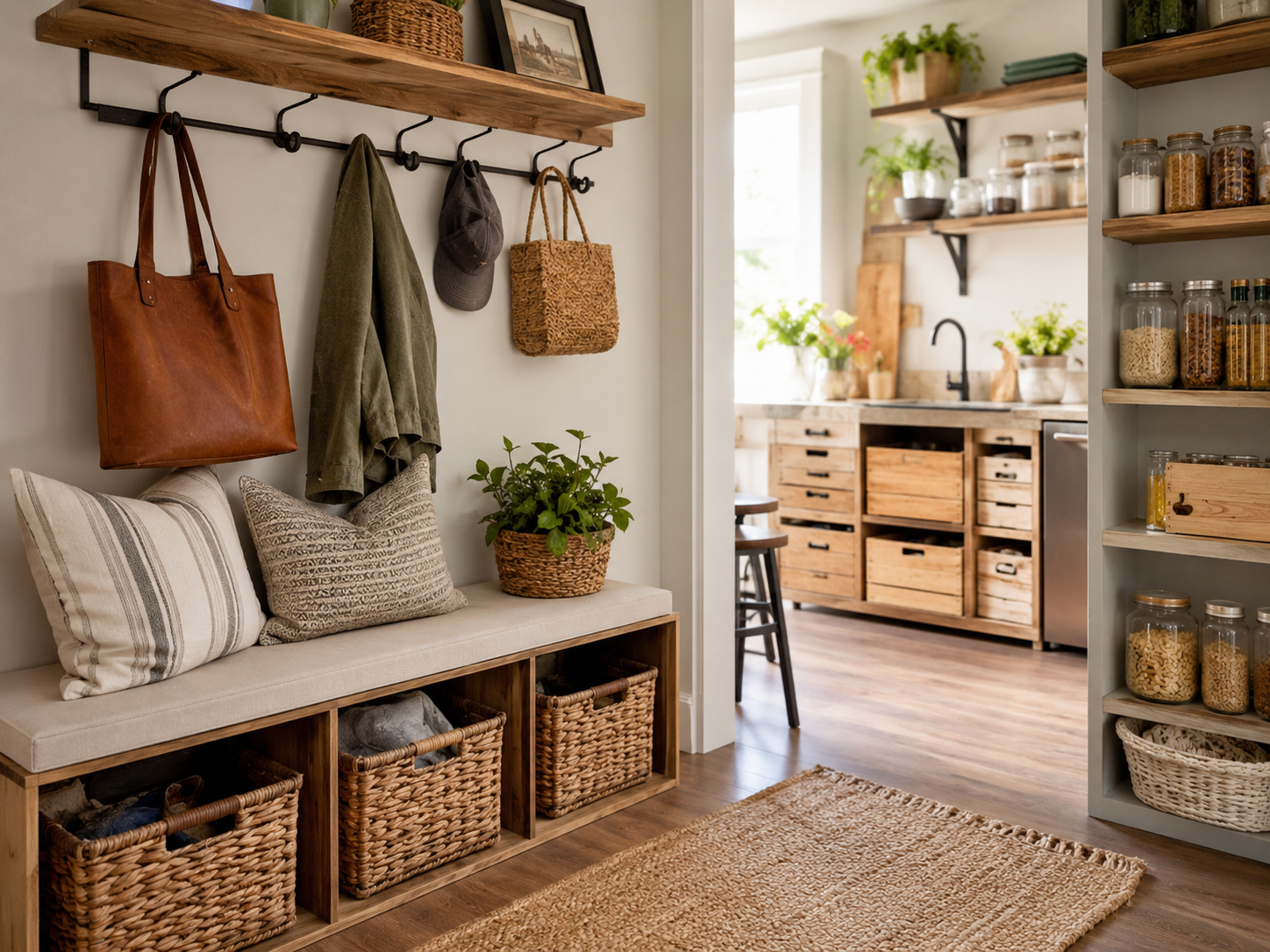
DIY Storage Ideas That Make Home Organization Easier
A more organized home does not always require expensive furniture, custom closets, or a full weekend of complicated projects. Sometimes the best storage solutions are simple DIY upgrades that help everyday items finally have a place to go. Whether you are dealing with a messy entryway, crowded kitchen cabinets, overflowing bathroom shelves, or a bedroom that never feels tidy, a few budget-friendly storage ideas can make a big difference.
The best DIY storage ideas solve real problems. They make things easier to find, easier to put away, and easier to maintain. Instead of buying more bins without a plan, it helps to look at each room and ask what type of clutter builds up there. Shoes by the door, towels in the bathroom, snacks in the pantry, craft supplies on the table, toys in the living room, and paperwork on the counter all need storage that fits the way your household actually lives.
These DIY storage ideas are practical, affordable, and flexible enough for many different home styles. Some can be made with baskets, crates, hooks, jars, shelves, or leftover wood. Others simply use underused spaces more intentionally, such as the back of a door, the side of a cabinet, or the wall above a desk. The goal is not to make your home look perfect. The goal is to create storage that makes your daily routine feel smoother.
1. DIY Entryway Drop Zone
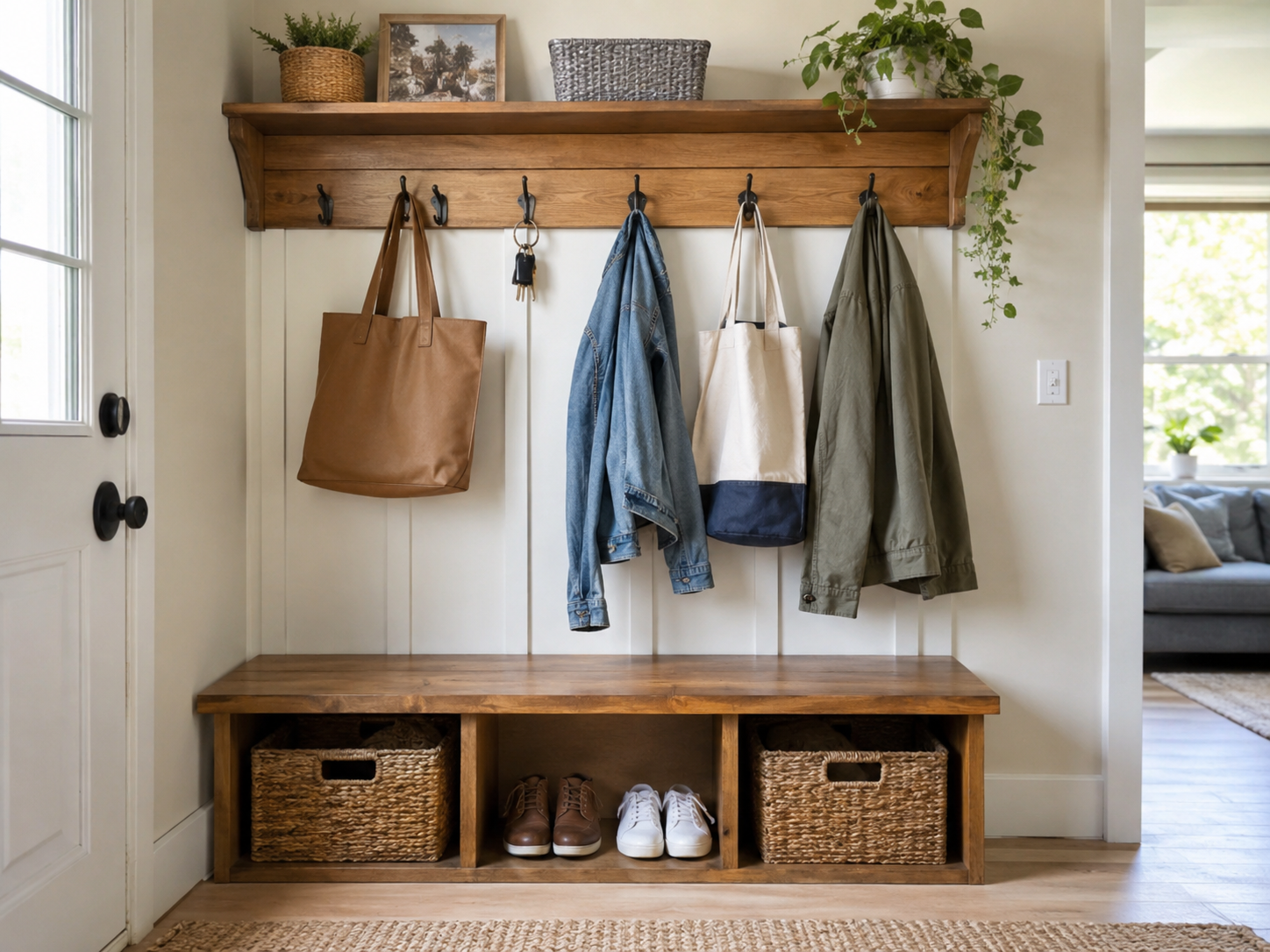
The entryway is one of the easiest places for clutter to collect because it handles so many daily items at once. Shoes, keys, bags, sunglasses, mail, umbrellas, and jackets often land wherever there is an empty surface. A DIY entryway drop zone can help you control that clutter before it spreads into the rest of the house.
Start with a small bench, a narrow console table, or even a simple wall shelf. Add hooks above it for bags, jackets, hats, and reusable totes. Place baskets or crates underneath for shoes, pet leashes, winter accessories, or kids’ school items. If you do not have space for furniture, use a row of wall hooks and a slim shoe rack to create the same effect in a smaller footprint.
For a budget-friendly version, repurpose wooden crates, an old bench, or a thrifted shelf. Paint everything in one color to make the setup look intentional. Label each basket by person or category so everyone knows where their items belong.
Best for: shoes, bags, keys, jackets, pet supplies, and daily grab-and-go items.
2. Crate Storage Shelves for Any Room
Wooden crates are one of the most versatile DIY storage materials because they can work in almost every room. They can be stacked vertically, mounted to the wall, placed under a bench, or arranged as open shelving. Crates are especially helpful when you want storage that feels casual, handmade, and easy to customize.
In a living room, crates can hold books, blankets, board games, magazines, or kids’ toys. In a bedroom, they can become nightstand storage, closet shelves, or a simple display for folded sweaters. In a craft room, crates can organize yarn, fabric, paper, paint, or unfinished projects. You can leave the wood natural, stain it for a rustic look, or paint it to match your decor.
To make crate storage feel more polished, use matching crates and arrange them evenly. Secure stacked crates together with screws or brackets if they will hold heavier items. Add small labels, baskets, or fabric bins inside each crate if you want a cleaner appearance.
Budget tip: Look for unfinished crates at craft stores, hardware stores, thrift shops, or marketplace listings. You can often create a custom shelf for much less than buying a new storage unit.
3. Mason Jar Storage for Small Items
Small items are often the reason a space feels messy, even when the room is mostly clean. Cotton swabs, hair ties, buttons, nails, screws, pencils, makeup brushes, craft supplies, and pantry ingredients all become easier to manage when they are grouped into clear containers. Mason jars are perfect for this because they are affordable, reusable, and easy to label.
Use jars in the bathroom to store cotton rounds, bath salts, floss picks, makeup sponges, or hair accessories. In a craft room, use them for beads, buttons, paintbrushes, ribbons, paper clips, and markers. In a kitchen or pantry, jars can hold dry goods like rice, pasta, oats, coffee, tea bags, or baking supplies.
If counter space is limited, consider mounting jar lids underneath a shelf. The jar screws into the lid, creating hanging storage that keeps small supplies visible but out of the way. This works especially well in craft rooms, laundry rooms, garages, and small kitchens.
Best for: tiny items that get lost in drawers or clutter up counters.
4. DIY Pegboard Organizer
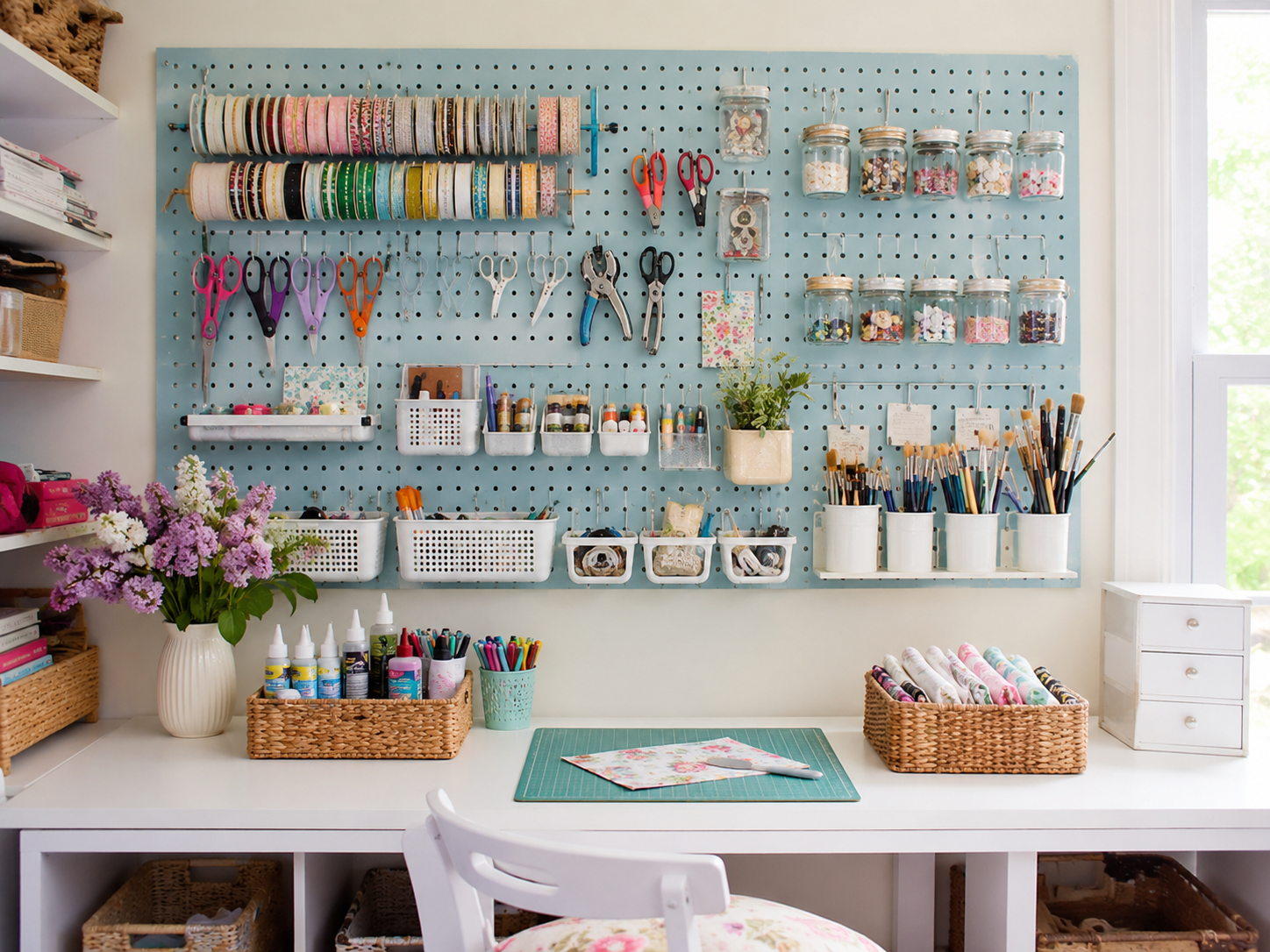
A pegboard is one of the smartest DIY storage ideas because it uses vertical wall space instead of taking up valuable floor space. It is also easy to change as your storage needs change. You can move hooks, baskets, shelves, and holders around without rebuilding the whole system.
Pegboards work well in craft rooms, home offices, garages, kitchens, laundry rooms, and kids’ homework stations. Use one to hang scissors, measuring tape, tools, ribbon, paintbrushes, cooking utensils, cleaning brushes, or small baskets of supplies. You can also add a small shelf to hold jars, plants, notebooks, or decorative items.
For a more stylish look, paint the pegboard before hanging it. White, black, sage green, soft blue, or warm beige can help it blend into your home decor. Add matching hooks and baskets so the organizer feels clean and intentional instead of busy.
Organization tip: Keep the items you use most often in the easiest-to-reach spots. Store less-used items higher or lower on the board.
5. Under-Bed Storage Drawers
The space under the bed is often wasted, but it can be a great place for hidden storage. DIY under-bed drawers are useful for bedrooms, guest rooms, kids’ rooms, dorm rooms, and small apartments where closet space is limited.
You can create under-bed storage using shallow wooden boxes, old dresser drawers, rolling bins, or baskets that fit beneath the bed frame. Add small caster wheels to make the drawers easier to pull out. If you are using old drawers, refresh them with paint, stain, peel-and-stick wallpaper, or new handles.
Under-bed storage works best for items you do not need every day. Store seasonal clothing, extra bedding, shoes, gift wrap, keepsakes, kids’ toys, or craft materials. Use zippered fabric bags inside the drawers if you want extra protection from dust.
Best for: bedrooms with small closets, shared bedrooms, guest rooms, and seasonal storage.
6. DIY Bathroom Basket Wall
Bathrooms can become cluttered quickly because they need to store many small items in a limited space. Towels, toiletries, hair products, skincare, cleaning supplies, and extra toilet paper all need a practical place to go. A DIY bathroom basket wall adds storage without taking up floor space.
Choose lightweight baskets that can be attached to the wall with sturdy hooks, screws, or brackets. Use them above the toilet, beside the vanity, near the bathtub, or on an empty wall. Roll towels and place them inside one basket. Use another for washcloths, hair tools, lotions, or extra bath products.
Wire baskets create a clean modern look, while woven baskets add warmth and texture. If you want the baskets to look more organized, choose the same color and size for all of them. Add small labels for guest towels, skincare, hair products, or cleaning supplies.
Small bathroom tip: Use vertical storage first. Walls, doors, and the space above the toilet can hold more than you think.
7. Pantry Storage with Labeled Containers
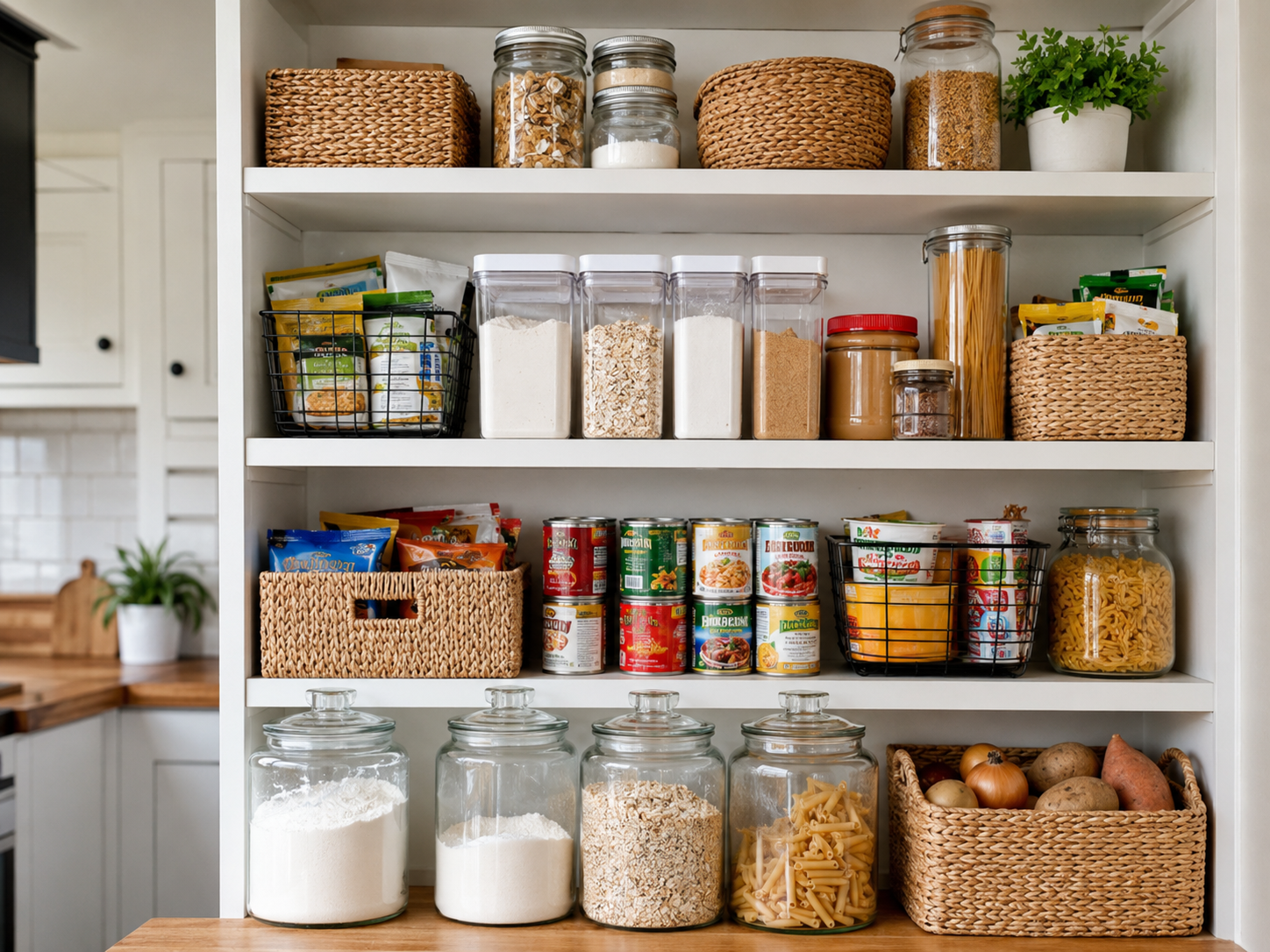
A messy pantry can make cooking feel harder than it needs to be. When food packaging is stacked, hidden, or half-open, it becomes easy to buy duplicates or forget what you already have. DIY pantry storage does not have to be expensive. A few containers, baskets, and labels can make the space much easier to use.
Start by grouping similar items together. Keep baking supplies in one zone, snacks in another, breakfast items together, canned goods in rows, and dinner staples in one easy-to-reach area. Use baskets for packets, snack bags, seasoning mixes, or small items that fall over easily. Use clear containers for flour, sugar, pasta, cereal, rice, oats, or dry beans.
Labels are what make this system easier to maintain. You can use printed labels, chalkboard labels, masking tape, or simple handwritten tags. The labels do not need to be fancy. They just need to tell everyone where things go.
Budget tip: You do not need to buy every container at once. Start with the messiest shelf and build your system slowly.
8. DIY Closet Divider System
Closets often become messy because they are expected to hold too many different categories without enough structure. A DIY closet divider system can make clothes, accessories, shoes, and seasonal items much easier to manage.
Start by dividing the closet into zones. Use one area for hanging clothes, one for folded items, one for shoes, and one for accessories. Add shelf dividers to keep sweaters, jeans, or bags from falling into each other. Use small bins for scarves, belts, hats, socks, workout gear, or seasonal accessories.
If you have a child’s closet, create dividers by size, season, or school-day outfits. If you have a small closet, use hanging organizers, over-the-door storage, and stackable bins to create more usable space.
You can make your own closet dividers from cardboard, wood scraps, plastic tags, or printable labels. The key is to create clear categories so the closet does not turn into one large pile.
Best for: bedrooms, kids’ rooms, linen closets, coat closets, and shared closets.
9. Rolling Cart Storage Station
A rolling cart is a flexible storage solution because it can move wherever you need it. This makes it perfect for homes where one space has to serve multiple purposes. You can turn a basic cart into a craft station, homework station, coffee bar, cleaning caddy, bathroom organizer, baby care cart, or bedside storage piece.
For a DIY touch, customize the cart with labels, small baskets, hooks, cups, or removable containers. A craft cart might hold markers, scissors, glue, stickers, paper, yarn, and paint. A cleaning cart could hold sprays, cloths, gloves, brushes, and trash bags. A bathroom cart might store skincare, towels, hair tools, and extra toiletries.
The biggest advantage of a rolling cart is that it keeps related items together. Instead of storing supplies in several different drawers or cabinets, everything has one portable home.
Organization tip: Do not overfill the cart. Leave enough space so items are easy to remove and put back.
10. DIY Over-the-Door Organizer
Doors are often overlooked when planning storage, but they can hold a surprising amount. An over-the-door organizer is especially useful in small homes, apartments, bathrooms, bedrooms, laundry rooms, and closets.
You can use a fabric pocket organizer, wire rack, hanging basket system, or DIY hooks and rails. In a bathroom, store hair tools, toiletries, cleaning products, or extra washcloths. In a pantry, use the door for spices, snacks, foil, plastic bags, or small pantry items. In a bedroom closet, store shoes, belts, scarves, jewelry, or accessories.
If you want to make a DIY version, attach small baskets or fabric pockets to a sturdy hanging panel. You can also use adhesive hooks for lightweight items. Just make sure the door can close properly once the organizer is installed.
Best for: small spaces where every inch needs to work harder.
11. Storage Bench with Hidden Compartments
A storage bench is one of the most useful DIY storage projects because it adds both seating and hidden organization. It works beautifully in entryways, bedrooms, mudrooms, playrooms, breakfast nooks, and living rooms.
You can build a simple bench from wood, repurpose a low bookcase, or upgrade an old trunk with a cushion on top. Add baskets underneath or create a hinged top for hidden storage. In an entryway, a bench can hold shoes, backpacks, umbrellas, and seasonal accessories. In a bedroom, it can store extra blankets, pillows, or off-season clothes. In a playroom, it can hide toys while still giving kids a place to sit.
To make the bench look finished, add a cushion, throw pillows, or a stained wood top. Keep the storage categories simple so the bench does not become a hidden junk drawer.
Best for: homes that need storage but do not have room for extra cabinets.
12. DIY Wall-Mounted Shelf Storage
Wall-mounted shelves are a classic storage solution because they turn empty walls into useful space. They are especially helpful in rooms where floor space is limited. A few simple shelves can organize books, plants, towels, dishes, office supplies, craft materials, or decorative baskets.
Floating shelves create a clean modern look, while bracket shelves are sturdy and easy to install. For a budget-friendly project, use pine boards, reclaimed wood, or leftover lumber. Paint or stain the shelves to match the room. Add baskets, jars, or trays to keep smaller items from looking cluttered.
In a kitchen, shelves can hold mugs, spices, jars, cookbooks, or serving pieces. In a bathroom, they can store towels, candles, and toiletries. In a home office, they can hold paperwork, notebooks, supplies, and small bins. In a laundry room, shelves can organize detergent, dryer balls, stain removers, and cleaning cloths.
Design tip: Mix practical storage with a few decorative pieces so open shelving looks styled instead of crowded.
How to Choose the Right DIY Storage Project
Before starting a storage project, think about the problem you actually need to solve. A beautiful shelf will not help if your issue is that shoes are always piled near the door. A basket system will not help if you never label it or choose categories that make sense. The right storage project should fit your space, your budget, and your routine.
Use these questions to decide which idea to try first:
- Where does clutter build up the fastest? Start with the area that causes the most daily frustration.
- What items need a home? Group items by category before buying or building storage.
- How often do you use these items? Daily items should be easy to reach. Seasonal items can be stored higher, lower, or hidden away.
- Do you need open or closed storage? Open storage is easy to access, while closed storage hides visual clutter.
- Can your family maintain the system? Simple storage is usually easier to keep organized than a complicated setup.
It is usually better to start with one small project instead of trying to organize the entire home in one day. Choose one room, one shelf, one closet, or one messy corner. Once that space works better, move on to the next area.
Budget-Friendly Supplies for DIY Storage Projects
You do not need expensive materials to create useful storage. Many DIY organization projects can be made with affordable supplies from dollar stores, thrift stores, hardware stores, craft stores, or items you already own.
Helpful supplies include:
- Wooden crates
- Mason jars and glass containers
- Woven baskets
- Wire baskets
- Fabric bins
- Peel-and-stick labels
- Hooks and wall rails
- Floating shelves
- Pegboards and pegboard hooks
- Small caster wheels
- Old drawers or boxes
- Stackable bins
- Over-the-door organizers
- Scrap wood or pine boards
Repurposing what you already have is one of the easiest ways to save money. An old drawer can become under-bed storage. A basket can become wall storage. A small bookshelf can become an entryway bench. Glass jars can replace plastic containers. Before buying something new, walk through your home and look for items that can be reused in a smarter way.
Simple Tips to Keep Your Storage System Organized
Creating storage is only the first step. The system also needs to be easy to maintain. If it takes too much effort to put things away, the clutter will slowly return. The best organizing systems are simple, visible, and realistic.
Use labels where possible, especially in shared spaces. Labels help kids, guests, and other family members understand where items belong. Choose containers that fit the items you actually own instead of forcing everything into bins that are too small or too deep. Keep frequently used items at eye level or within easy reach.
Another helpful habit is to leave a little empty space. Storage that is packed completely full is harder to use. When shelves, bins, and drawers have breathing room, it is easier to put things away without rearranging everything.
Finally, review your storage every few months. Your home changes with the seasons, routines, hobbies, and family needs. A system that works in summer may need a small adjustment in winter. A craft cart may become a homework station. A toy bin may become sports gear storage. Good DIY storage is flexible enough to change with your life.
Final Thoughts on DIY Storage Ideas
DIY storage ideas are a simple way to make your home feel cleaner, calmer, and easier to live in without spending a lot of money. From entryway drop zones and crate shelves to pantry containers, pegboards, bathroom baskets, and under-bed drawers, small projects can create noticeable results.
The most effective storage projects are the ones that solve real problems in your daily routine. Start with the clutter spot that bothers you most, choose a project that fits your budget, and keep the system simple enough to maintain. With a few thoughtful changes, you can create a more organized home that feels practical, comfortable, and easier to enjoy.