24 Birth Flower Tattoo Ideas for Every Month
A birth flower tattoo is one of the most personal ways to turn a simple botanical design into something meaningful. Rather than choosing a flower only because it looks beautiful, you can select one connected to your birth month, your family, or a moment in your life that deserves to be remembered.
Birth flower tattoo ideas are especially appealing because they can be delicate without feeling ordinary. A single stem can represent a new beginning, while a small bouquet can tell a story about several important people. The same flower can also look completely different depending on its placement, shading, linework, and composition.
Whether you prefer a tiny wrist tattoo, an elegant collarbone design, or a larger botanical piece along your forearm, there is plenty of room to make your birth flower your own.
In this guide, you will discover 24 birth flower tattoo ideas covering every month of the year. Each month includes two designs, with suggested meanings, placement options, and styling details to help you develop a tattoo that feels personal rather than copied.
Birth flower traditions are not identical everywhere. Some months are associated with more than one flower, and different cultures may attach different meanings to the same bloom. Use these familiar associations as inspiration, then select the flower and interpretation that matter most to you.

January Birth Flower Tattoo Ideas
January is commonly associated with carnations and snowdrops. These flowers offer two distinct botanical styles: carnations feature layered, textured petals, while snowdrops have graceful, hanging blossoms.
1. Fine-Line Carnation Tattoo for January
A delicate carnation is an elegant choice for anyone born in January. Carnations are often associated with affection, admiration, and devotion, making them a thoughtful symbol of love and meaningful relationships.
For a minimalist design, choose a single carnation with a long, gently curved stem. The flower’s distinctive ruffled petals should remain recognizable, even when the artwork is simplified.
Best placement: Inner forearm, upper arm, or outer ankle.
Ask your tattoo artist to create enough separation between the petal lines so the flower remains visually readable. A slightly larger blossom often works better than squeezing every petal into a tiny outline.
2. Delicate Snowdrop Tattoo for Quiet Strength
Snowdrops are frequently linked to hope, renewal, and the transition from winter toward spring. Their small hanging flowers create a naturally graceful design that looks beautiful in fine-line work.
Consider two snowdrop stems leaning gently toward each other, with narrow leaves extending below the blossoms. The composition can symbolize moving forward after a difficult season or appreciating quiet resilience.
Best placement: Wrist, collarbone, or side of the forearm.
This design is particularly suitable for someone who prefers understated tattoo art. A few precise lines can communicate the flower’s shape without additional decorations.
February Birth Flower Tattoo Ideas
February is often represented by violets and primroses. Both flowers work beautifully in small botanical tattoos, although their shapes create different visual impressions.
3. Tiny Violet Tattoo With Meaningful Detail
Violets are traditionally associated with modesty, faithfulness, and affection. Their rounded petals create a soft floral silhouette that can be recognized without extensive shading.
A tiny violet tattoo works well as a single blossom accompanied by two heart-shaped leaves. For additional personality, position the bloom slightly off-center rather than making the composition perfectly symmetrical.
Best placement: Inner wrist, behind the ankle, or upper forearm.
If the tattoo is intended to represent someone special, two blossoms can symbolize a relationship while keeping the overall design compact.
4. Minimal Primrose Tattoo for New Beginnings
Primroses are another familiar February birth flower and are often connected with youth, affection, and the anticipation of spring.
A simple primrose tattoo can feature one open flower surrounded by small leaves. Its broad petals make it a good candidate for a clean outline with limited interior detailing.
Best placement: Shoulder, lower forearm, or above the ankle.
For a personalized variation, arrange two flowers at slightly different angles. This makes the design feel botanical and natural rather than like a repeated decorative symbol.
March Birth Flower Tattoo Ideas
March is strongly associated with daffodils, flowers commonly linked to renewal, optimism, and the arrival of spring. Their trumpet-shaped centers give them a distinctive appearance.
5. Single-Stem Daffodil Tattoo
A single daffodil tattoo is an excellent option if you want a meaningful flower without a complicated composition. Its open petals and prominent center produce a recognizable silhouette.
Choose a long stem with one slightly curved leaf for a clean botanical look. Keeping the flower angled naturally makes the piece feel more like an illustration from a field journal.
Best placement: Inner forearm, calf, or upper arm.
This tattoo can represent personal growth, optimism, or the beginning of a new chapter. Those meanings are especially fitting for someone who wants their ink to mark positive change.
6. Two Daffodils Growing Together
Two daffodils arranged together can represent companionship, shared growth, or an important family relationship.
Instead of placing identical blossoms side by side, use one fully open flower and one partially turned bloom. The variation creates natural movement and makes the design more visually interesting.
Best placement: Outer forearm, shoulder blade, or side of the calf.
Keep the stems close enough to feel connected without merging them into one heavy line. This is a beautiful option for siblings, close friends, or anyone honoring a meaningful bond.

April Birth Flower Tattoo Ideas
April is commonly connected with daisies and sweet peas. Daisies offer simple, cheerful shapes, while sweet peas provide flowing stems and more intricate blossoms.
7. Minimal Daisy Tattoo for April
Daisies are often associated with innocence, sincerity, and fresh beginnings. Their uncomplicated structure makes them especially appealing for fine-line tattoo designs.
A small daisy with evenly spaced petals and a lightly textured center can look attractive on the wrist or forearm. Add a short stem for a botanical appearance, or use the flower head alone for a simpler design.
Best placement: Wrist, ankle, or outer upper arm.
For a tattoo with a personal connection, you could use the daisy to represent a childhood memory, a loved one, or a period of emotional renewal.
8. Flowing Sweet Pea Tattoo
Sweet peas are associated with appreciation, pleasure, and gentle farewells in various floral traditions. Their soft, irregular petals make them suitable for expressive botanical linework.
Design a sweet pea tattoo with two blossoms on a climbing stem. Include one delicate tendril to capture the plant’s naturally flowing character.
Best placement: Collarbone, forearm, or shoulder.
Because sweet peas have intricate flower shapes, a medium-size piece gives the artist more freedom to preserve their distinctive botanical details.
May Birth Flower Tattoo Ideas
May is commonly associated with lily of the valley and hawthorn. These flowers are well suited to people who prefer graceful, symbolic designs.
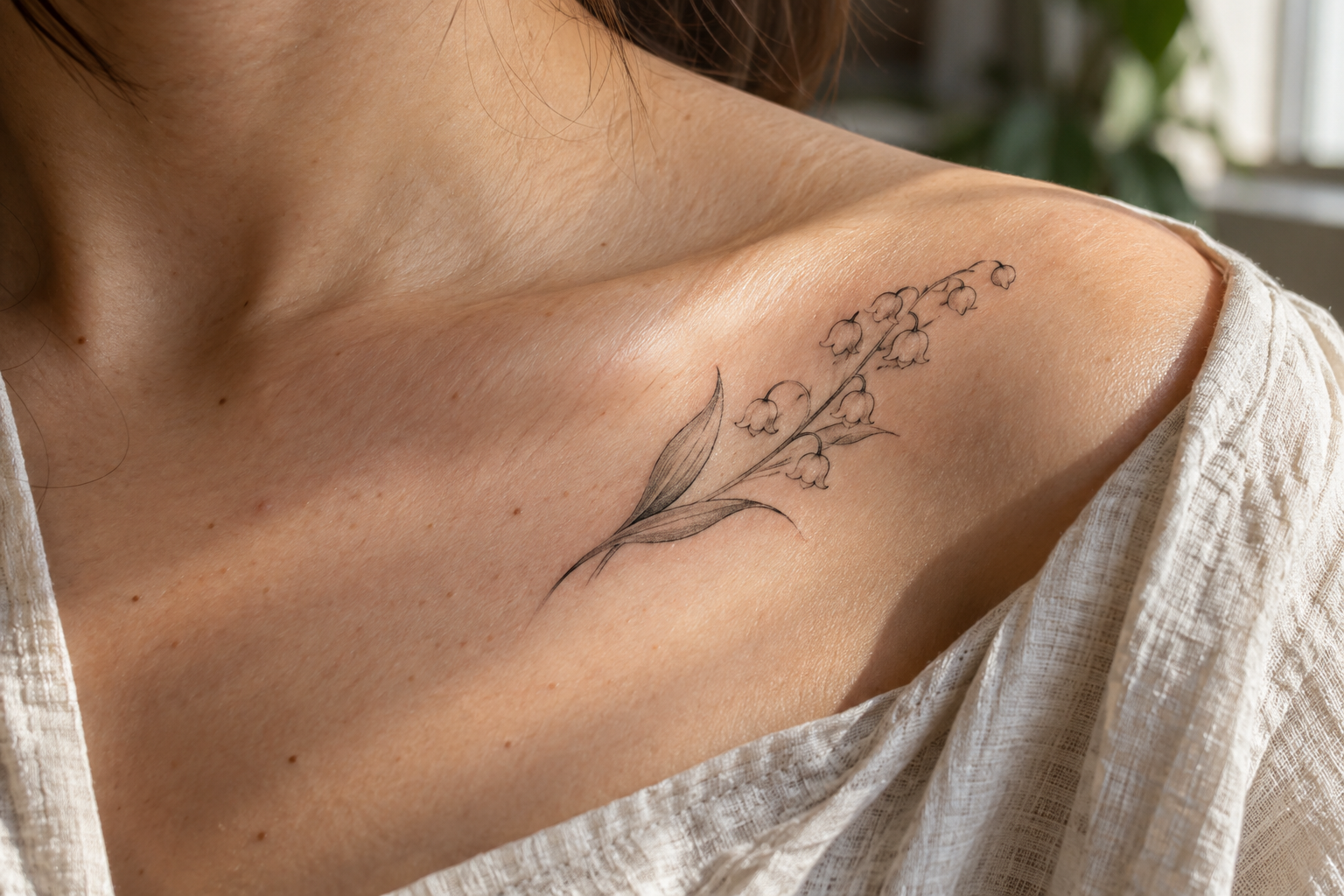
9. Lily of the Valley Fine-Line Tattoo
Lily of the valley is often connected with happiness, sweetness, and renewal. Its tiny bell-shaped blossoms create one of the most recognizable silhouettes among traditional birth flowers.
A beautiful design features a slender arching stem with several small bells and two long leaves emerging from the base.
Best placement: Inner forearm, collarbone, or side of the upper arm.
The main challenge is preserving the distinction between individual bell flowers. Avoid making the tattoo so small that the blossoms become crowded. A carefully simplified arrangement generally communicates the flower more clearly.
10. Hawthorn Blossom Tattoo With Soft Branches
Hawthorn blossoms are associated in some traditions with hope and protection. Their small flowers grow in clusters, creating a delicate botanical composition.
For a fine-line tattoo, choose a short branch with three open blossoms, a few buds, and carefully shaped leaves.
Best placement: Upper forearm, shoulder blade, or outer thigh.
The branch can be arranged diagonally to create a sense of movement. This approach works particularly well when you want the tattoo to follow the natural contour of your body.
June Birth Flower Tattoo Ideas
June has two especially recognizable birth flowers: roses and honeysuckles. Roses offer classic symbolism, while honeysuckles provide a more unusual botanical shape.
11. Fine-Line Rose Tattoo for June
Roses are traditionally associated with love, affection, and beauty, although their meanings vary depending on color and cultural context.
For a refined birth flower tattoo, consider a small rose with a partially open bloom, a single curved stem, and two pointed leaves.
Best placement: Forearm, shoulder, or upper thigh.
A rose needs thoughtful line spacing. Instead of trying to reproduce every overlapping petal, ask your artist to emphasize the most important curves that identify the flower.
A small rose can feel classic rather than elaborate when its silhouette is clean and the surrounding skin is left open.
12. Honeysuckle Vine Tattoo
Honeysuckle flowers are often associated with affection and enduring connections. Their tubular blossoms and trailing stems make them particularly appealing for flowing tattoo compositions.
Try a slender honeysuckle vine with two flowers opening in opposite directions. A few leaves can balance the design without making it overly decorative.
Best placement: Collarbone, outer forearm, or side of the calf.
This design works beautifully for anyone who likes botanical tattoos that follow the body’s contours rather than sitting within a rigid shape.
July Birth Flower Tattoo Ideas
July is traditionally associated with larkspur and water lilies. One grows in tall flower spikes, while the other produces broad blossoms that rest above water.
13. Vertical Larkspur Tattoo
Larkspur is often linked with positivity, openness, and heartfelt affection. Its tall clusters of blossoms make it an excellent subject for a narrow vertical tattoo.
Choose one flowering stalk with several distinct blooms arranged at different heights. Keep the lower leaves understated so the flower spike remains the focus.
Best placement: Forearm, calf, or upper arm.
A vertical layout can visually complement the length of the arm. For additional meaning, select a particular blossom arrangement or a personal number of flowers rather than adding unnecessary symbols.
14. Water Lily Tattoo for Peace and Reflection
Water lilies are associated with beauty, renewal, and calm in various symbolic traditions. Their layered petals create a graceful image that can work in fine-line or softly shaded tattoo styles.
A single open water lily with two simplified leaves is an elegant choice. You can include a subtle curved line beneath the bloom to suggest the water’s surface.
Best placement: Shoulder, upper forearm, or thigh.
Keep the flower large enough for the overlapping petals to remain distinct. A restrained composition often feels more timeless than one filled with decorative water droplets and background patterns.
August Birth Flower Tattoo Ideas
August is commonly associated with gladiolus and poppies. These flowers are visually different, offering both structured and delicate tattoo possibilities.
15. Elegant Gladiolus Stem Tattoo
Gladiolus flowers are often associated with strength of character, sincerity, and remembrance. Their tall stems and multiple blossoms make them suitable for an elongated botanical tattoo.
A fine-line gladiolus design can feature three open blooms and one developing bud. The gradual change in flower size gives the piece a natural sense of growth.
Best placement: Outer forearm, calf, or upper arm.
This is an especially meaningful option if you want a flower that represents perseverance or personal determination.
16. Minimal Poppy Tattoo for Remembrance
Poppies can carry meanings associated with remembrance, consolation, and rest, depending on the cultural tradition and flower variety.
Choose a lightly curved poppy stem with one open blossom and a small bud. Use a few lines to suggest the soft folds of the petals without crowding the design.
Best placement: Inner forearm, ankle, or shoulder blade.
If remembrance is central to the tattoo’s meaning, consider incorporating a discreet initial or significant date nearby. Keep lettering large enough to remain readable and allow it to complement the flower rather than compete with it.
September Birth Flower Tattoo Ideas
September is associated with asters and morning glories. These flowers offer very different possibilities for anyone interested in a meaningful floral tattoo.
17. Fine-Line Aster Tattoo
Asters are often associated with affection, wisdom, and patience. Their many narrow petals create a beautiful, star-like flower shape.
For an understated tattoo, use one aster bloom with a carefully defined center and a small pair of leaves.
Best placement: Wrist, forearm, or upper shoulder.
Because asters have numerous petals, the artist may need to reduce the amount of detail for smaller placements. The important feature is the overall flower silhouette, not the exact number of individual lines.
18. Morning Glory Vine Tattoo
Morning glories are sometimes associated with affection, renewal, and the passing nature of time. Their trumpet-shaped flowers and climbing vines create elegant movement.
A design featuring two open morning glories connected by a curling stem can look delicate without being overly simple.
Best placement: Forearm, collarbone, or side of the shoulder.
Allow the vine to follow a gentle curve. This gives the tattoo a naturally flowing appearance and helps distinguish it from a flat decorative illustration.
October Birth Flower Tattoo Ideas
October is commonly represented by marigolds and cosmos. Marigolds are known for densely layered flowers, while cosmos have lighter petals and an airy appearance.
19. Botanical Marigold Tattoo
Marigolds have different meanings across cultures, including remembrance, celebration, warmth, and devotion. Their layered petals create a flower that feels rich in texture.
For a tattoo, consider a single marigold bloom with a narrow stem and a few divided leaves.
Best placement: Upper forearm, outer calf, or shoulder.
Marigolds have complex petal arrangements, so avoid placing too much fine detail in a very small area. A simplified botanical outline can preserve the distinctive rounded silhouette.
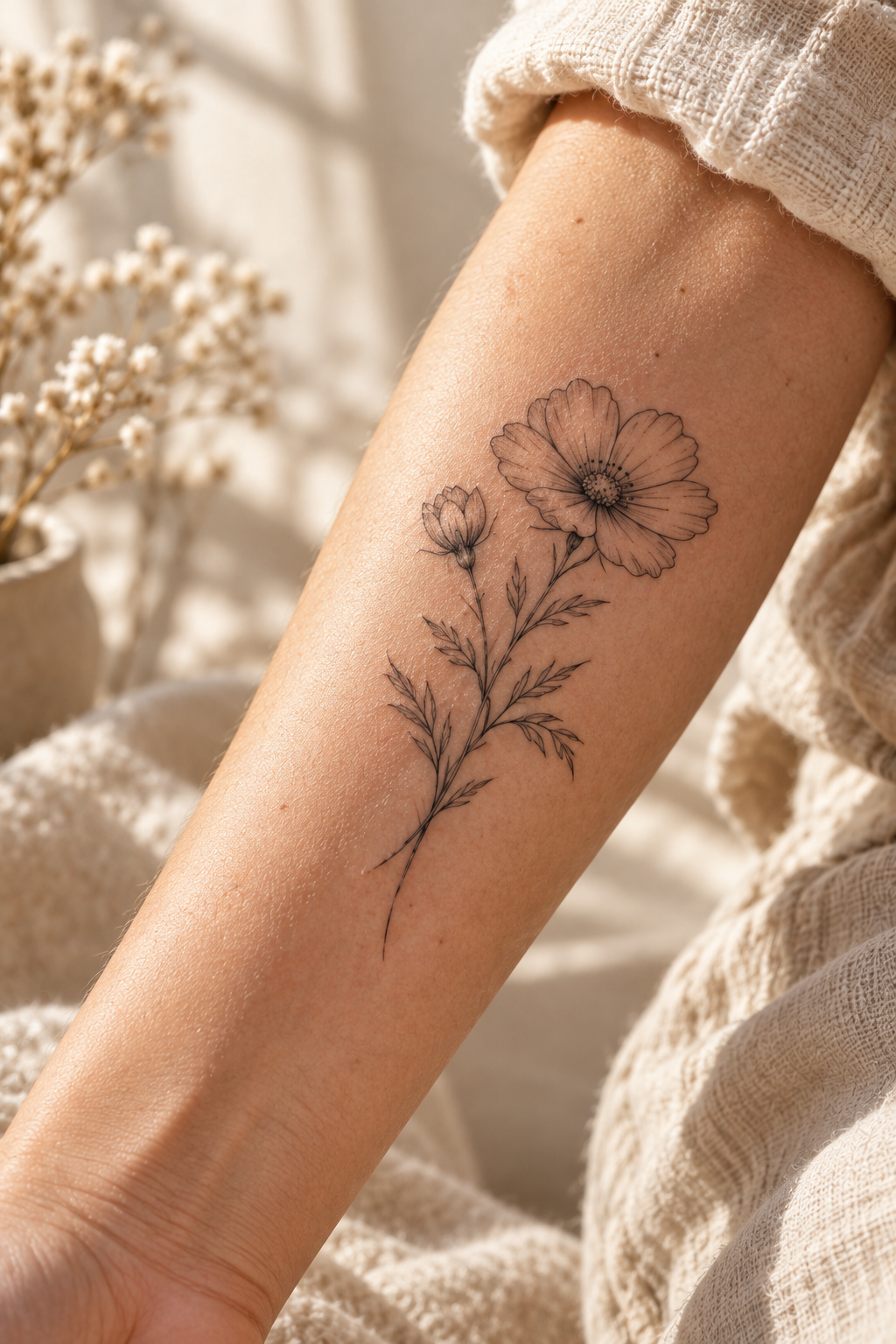
20. Delicate Cosmos Tattoo for October
Cosmos flowers are often associated with harmony, beauty, and balance. Their open petals and slender stems make them particularly suitable for fine-line work.
Choose a single cosmos blossom with an angled stem and one small bud. For a more decorative composition, include a second flower facing in a different direction.
Best placement: Wrist, collarbone, or inner forearm.
This tattoo is a lovely choice for someone who prefers light, airy botanical artwork. The simplicity of the flower leaves plenty of negative space and prevents the design from feeling visually heavy.
November Birth Flower Tattoo Ideas
November is most often associated with chrysanthemums. Their layered petals provide many opportunities for expressive floral tattoos.
21. Fine-Line Chrysanthemum Tattoo
Chrysanthemums can symbolize longevity, joy, friendship, or remembrance, depending on cultural context. Their full, rounded blossoms make them striking tattoo subjects.
A refined design features one chrysanthemum with a defined central structure, gently spreading petals, and a short stem.
Best placement: Outer forearm, upper arm, or shoulder blade.
Rather than adding extremely fine lines to every petal, focus on creating a clear arrangement of overlapping layers. The flower should still look recognizable when viewed from a normal distance.
22. Chrysanthemum Bud and Bloom Tattoo
A chrysanthemum paired with a small unopened bud can create a personal design connected to growth, change, or different stages of life.
Position the open flower above a curved stem and place the bud slightly lower. A small leaf can connect the two elements visually.
Best placement: Forearm, calf, or outer thigh.
This composition is particularly attractive for a medium-size tattoo because it allows each flower to maintain its own structure while creating a balanced vertical design.
December Birth Flower Tattoo Ideas
December is commonly linked to narcissus and holly. These plants provide two distinctive approaches to end-of-year birth month tattoos.
23. Elegant Narcissus Birth Flower Tattoo
Narcissus flowers are often associated with renewal, hope, and reflection. Their central cups and surrounding petals create a recognizable botanical shape.
For a delicate tattoo, choose a single narcissus with a narrow stem and one long leaf. Angle the flower slightly to avoid an overly rigid composition.
Best placement: Inner forearm, shoulder, or upper arm.
Make sure the artist preserves the distinction between the central cup and outer petals. This helps keep the flower identifiable instead of turning it into a generic six-petal blossom.
24. Minimal Holly Branch Tattoo
Holly is often associated with protection, endurance, and seasonal traditions. Its pointed leaves and berries create a distinctive design that does not require a large amount of space.
Choose a short holly branch with three recognizable leaves and a small cluster of berries. Fine black outlines can preserve the botanical detail without relying on color.
Best placement: Wrist, ankle, outer forearm, or shoulder.
A holly tattoo is especially suitable for someone who appreciates December’s seasonal character but wants an understated design that works throughout the year.
How to Choose the Right Birth Flower for Your Tattoo
The most important decision is not necessarily where the tattoo will go. It is choosing the flower you genuinely want to wear.
While birth flower charts are useful starting points, they are not universally standardized. Some months have multiple commonly accepted flowers, and individual varieties may differ considerably in their petals, leaves, and overall shape.
For example, a garden rose and a wild rose do not create identical tattoo silhouettes. Similarly, a daisy and an aster can look surprisingly similar when drawn without enough botanical detail.
Before committing to a design, follow these steps:
- Identify your birth month. Research the flowers most commonly associated with that month.
- Compare the available flowers. Look at their natural shapes, petal arrangements, stems, and leaves.
- Select a specific flower or variety. Use clear botanical references instead of relying only on stylized social media drawings.
- Choose your personal interpretation. Decide whether the tattoo represents your birthday, a loved one, a fresh beginning, or another significant meaning.
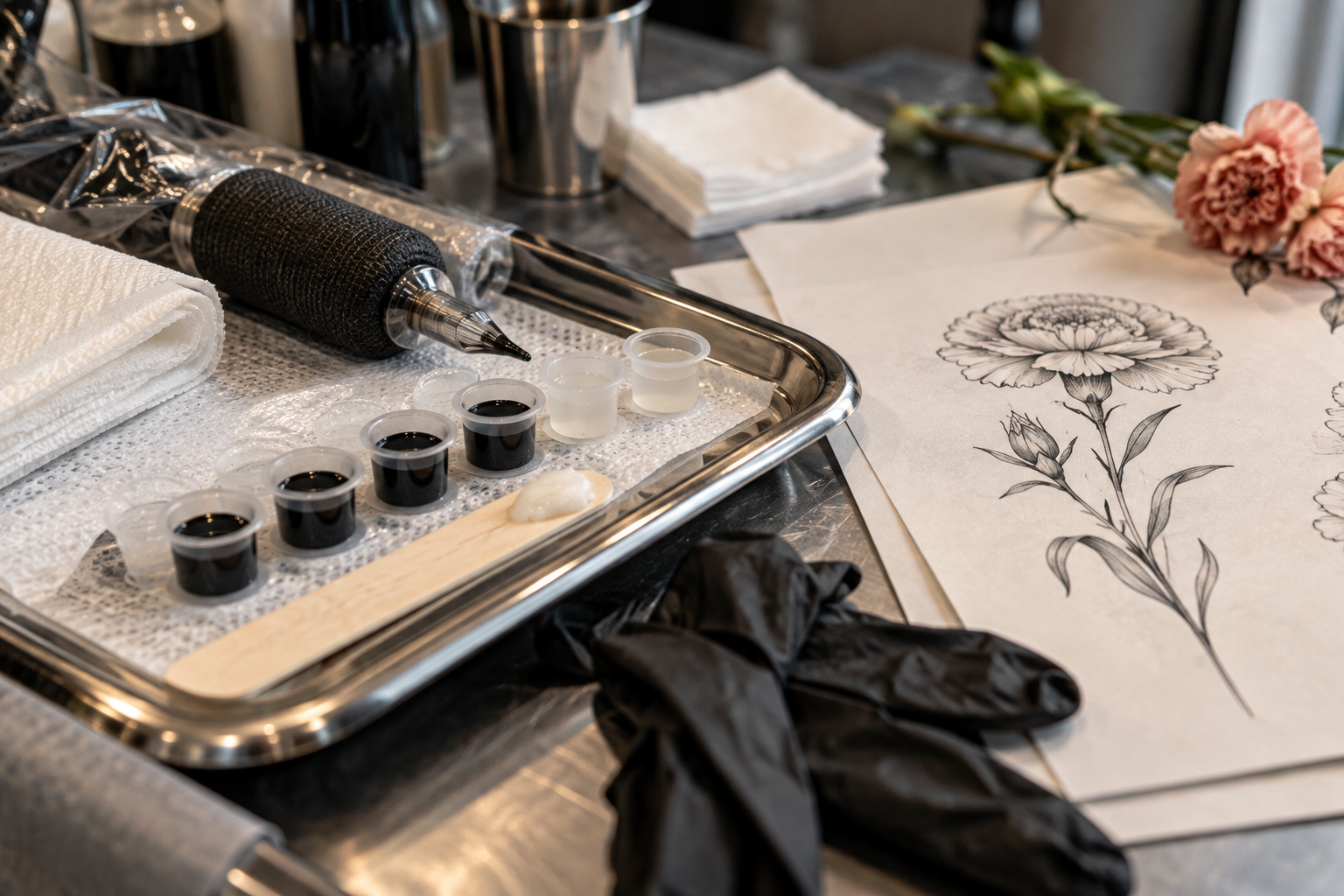
- Discuss the design with an experienced tattoo artist. Ask how the chosen flower can be simplified while preserving its recognizable features.
The mistake to avoid is choosing an attractive flower illustration without checking what flower it actually represents. A design labeled as a particular birth flower online may show a different species or a heavily simplified version.
There is nothing wrong with choosing a different flower if you prefer it. The important thing is making that decision intentionally rather than discovering the mismatch after your tattoo is completed.
Best Placements for Fine-Line Birth Flower Tattoos
Placement affects how a botanical tattoo looks on the body. Flower designs often have natural stems, curved leaves, and asymmetrical blossoms, making them adaptable to many areas.
Wrist
Small single-stem flowers can look beautiful on the wrist. Keep the design simple, with enough space between the blossom and leaves. A wrist tattoo is relatively visible and experiences frequent movement, so discuss placement carefully with your artist.
Inner Forearm
The inner forearm provides room for longer botanical stems, delicate bouquets, and detailed flowers. It is a practical starting point for someone who wants a design that can be appreciated without becoming an oversized statement piece.
Collarbone
A gently curved floral stem can follow the collarbone elegantly. Honeysuckle, sweet pea, lily of the valley, and cosmos designs are especially suitable because their natural shapes can flow horizontally or diagonally.
Upper Arm
The upper arm is useful for medium-size botanical designs, particularly flowers with layered petals. Roses, chrysanthemums, marigolds, and gladiolus can benefit from additional space.
Ankle and Calf
Ankle placements work well for small, simplified designs. The calf offers more room for longer stems and multiple flowers. Consider how footwear and clothing will interact with the area, particularly during the tattoo’s initial aftercare period.
For any placement, ask the artist to test the design at actual size. A botanical drawing that looks beautiful on a large screen may require simplification when reduced to a small tattoo.
How to Make a Birth Flower Tattoo More Personal
A birth month flower already carries a personal connection, but small design choices can make the tattoo even more meaningful.
Combine Flowers From Important Birth Months
One of the most thoughtful approaches is creating a small bouquet using flowers associated with several family members.
For example, a January carnation, June rose, and October cosmos could represent three different people. Arrange the stems together so the bouquet feels cohesive without forcing all flowers to have equal visual weight.
Add a Meaningful Date
A birthday, anniversary, or remembrance date can complement a floral design. Place the date beneath the stem or alongside the flower rather than running tiny lettering through the petals.
Use a readable lettering size and ask your artist to show you how it will appear at the final placement dimensions.
Choose a Hand-Drawn Botanical Style
Some people prefer precise botanical illustrations, while others like looser hand-drawn outlines. Both approaches can work beautifully.
A hand-drawn style allows a flower to feel gentle and imperfect without sacrificing its recognizable features. This is especially appealing for minimalist tattoos with personal symbolism.
Include a Small Initial
A discreet initial near the base of the stem can represent a loved one. The letter does not need to dominate the design.
For a subtle approach, keep the initial separate from the flower’s structural lines so it remains easy to identify.
Fine-Line Versus Detailed Botanical Tattoos
Fine-line tattoos use delicate linework to create a subtle appearance. They are especially popular for single stems, small blossoms, and simple botanical silhouettes.
Detailed botanical tattoos may include additional petal structure, textured leaves, dotwork, and soft black-and-gray shading. This approach can be useful for complex flowers such as chrysanthemums, marigolds, and carnations.
The best option depends on the flower, the tattoo’s size, and your preferred aesthetic.
- Fine-line outlines: Good for simple stems, clean silhouettes, and restrained floral artwork.
- Botanical illustration: Useful when identifying details such as leaf shape, flower centers, and petal structure matter.
- Soft black-and-gray shading: Adds dimension to layered blossoms without introducing a full color palette.
- Small bouquets: Allow several birth flowers to represent multiple people or meaningful dates.
Extremely small details can become harder to distinguish as tattoos age. This is why thoughtful spacing and appropriate sizing matter. No style or technique guarantees a particular long-term appearance, and results vary with skin, placement, application, and aftercare.
How to Plan Your First Birth Flower Tattoo Step by Step
You do not need an elaborate design process to create a personal birth flower tattoo. Starting with a clear reference and a realistic idea of size can make the consultation more productive.
- Choose the flower. Identify the birth month connection and decide which flower you prefer.
- Collect botanical references. Save photographs of the real flower, including its leaves, stem, buds, and blossoms.
- Decide on the style. Choose a minimalist outline, botanical illustration, or softly shaded design.
- Identify potential placements. Consider how the stem will follow your wrist, forearm, shoulder, or other chosen area.
- Set a realistic budget. Request quotes based on the intended size, complexity, and artist’s rates. Small tattoos are not always proportionately inexpensive because studios may have minimum charges.
- Review the artist’s portfolio. Look for botanical work, readable floral shapes, and examples of established tattoos where available.
- Approve the final design. Confirm the flower variety, dimensions, orientation, and placement before tattooing begins.
- Follow professional aftercare instructions. Use the guidance provided by your tattoo artist, and seek qualified medical advice if concerning symptoms develop.
For a beginner-friendly tattoo, consider one flower with a clean stem instead of a large bouquet filled with miniature details. This keeps the visual concept focused and gives the artist more flexibility.
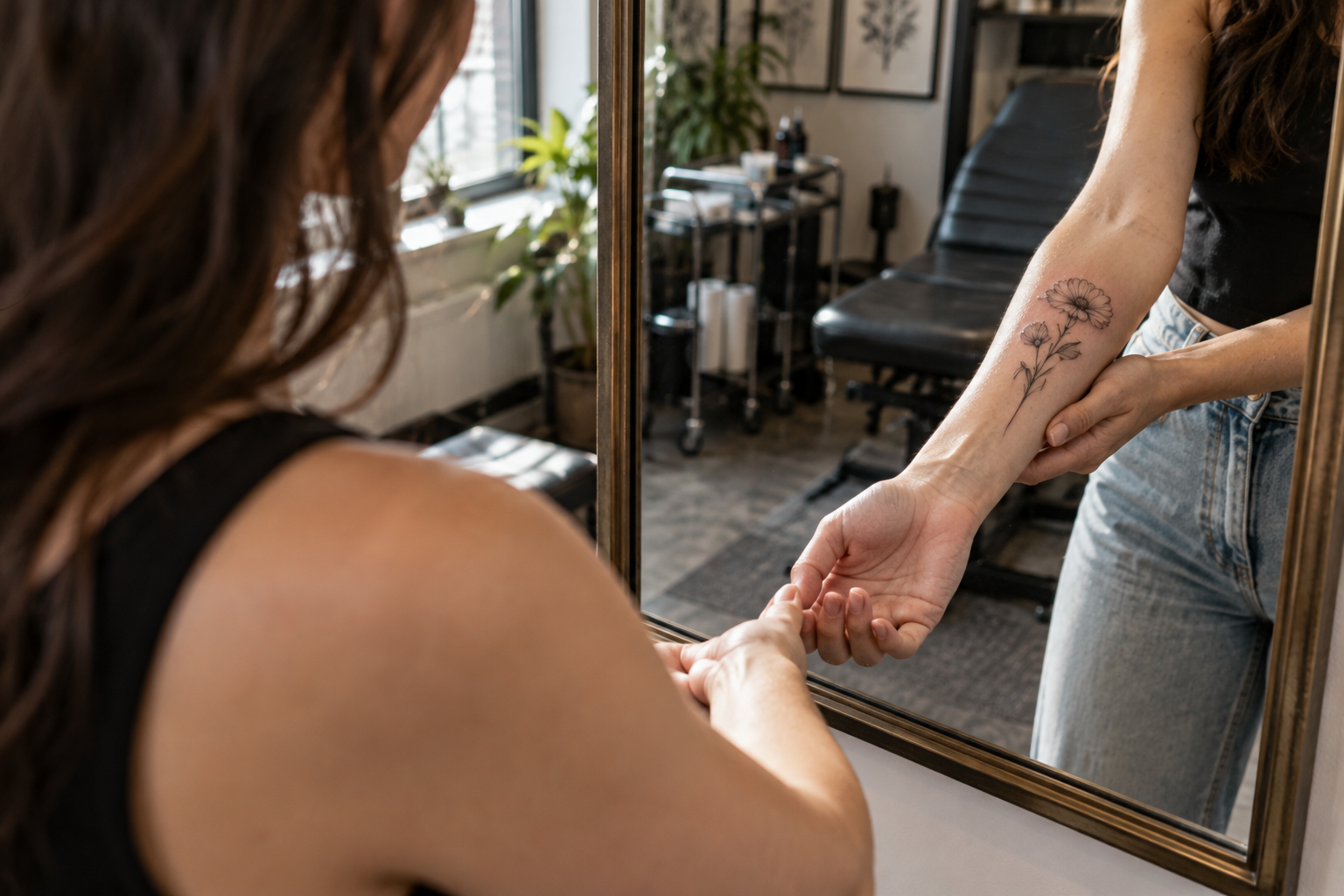
It can also be helpful to photograph a temporary stencil placement from different angles. A design may look balanced while your arm is still but appear different when the arm moves naturally.
Frequently Asked Questions About Birth Flower Tattoos
Can I choose a different birth flower from my month?
Yes. Birth flower traditions vary, and there is no requirement to select only the most popular flower for your month. You may prefer an alternative traditional flower or choose a bloom connected to a personal memory.
Are birth flower tattoos suitable for small placements?
Many are. Simple flowers such as daisies, violets, cosmos, and snowdrops can translate well into compact designs. More detailed flowers may need additional space or a simplified outline.
Can I combine two birth months in one tattoo?
Absolutely. A two-flower bouquet can represent a couple, siblings, a parent and child, or another meaningful relationship. The flowers do not have to match in size, but their stems and visual weight should be arranged thoughtfully.
Do birth flower tattoos need color?
No. Black fine-line tattoos can communicate flower shapes and symbolic meaning without color. Color may be useful if a particular variety matters to you, but clear botanical structure is usually more important for identification.
How do I avoid choosing the wrong birth flower design?
Compare the tattoo reference with photographs of the actual flower. Check the petal structure, leaf shape, and growth pattern. Confirm the selected variety with your artist before approving the stencil.
Final Thoughts on Choosing a Meaningful Birth Flower Tattoo
The most beautiful birth flower tattoos are not necessarily the most elaborate. Sometimes a single stem, a small blossom, or a thoughtfully arranged bouquet communicates more than a complicated design.
These 24 birth flower tattoo ideas offer two starting points for every month of the year, from January carnations and snowdrops to December narcissus and holly.
Choose a flower that feels connected to your story, consider how its natural shape will work on your body, and give your artist enough room to preserve the details that make it recognizable.
Whether the finished tattoo celebrates your own birthday, honors someone you love, or marks an important chapter, the goal is the same: a personal botanical design that you will continue to find meaningful.