
24 Tattoo Ideas for Artists and Musicians That Tell Their Story
Creative work becomes part of the way you see yourself. Whether you spend your evenings behind a guitar, at a piano, mixing tracks, filling sketchbooks, painting canvases, taking photographs, or building illustrations one careful line at a time, your craft can carry memories that go far beyond the finished work. That makes creative identity especially rich territory for a meaningful tattoo.
The best tattoo ideas for artists and musicians do more than announce a profession or hobby. They can represent the first instrument you learned, the materials that shaped your artistic style, a creative breakthrough, the discipline behind your work, or the simple need to keep making things.
You also do not need a large or literal tattoo to communicate that story. A tiny fragment of a guitar string, one expressive brushstroke, a waveform, or an abstract composition can feel more personal than an obvious symbol. The key is choosing an idea connected to your actual creative experience rather than simply picking the first art or music icon you recognize.
Here are 24 artist and musician tattoo ideas designed to help you turn your creative identity into something personal, wearable, and visually interesting.
Musician Tattoo Ideas With a Personal Connection
1. A Note From a Meaningful Melody
A musical note is one of the most recognizable musician tattoo ideas, but it becomes far more interesting when the note has a reason for being there. Instead of choosing a random eighth note, consider a note taken from the opening of a song you performed, composed, or learned during an important period of your life.
Fine-line treatment keeps the design understated. The wrist, inner forearm, ankle, and behind the arm can all work well for a small musical symbol.
2. A Tiny Piece of Sheet Music
Rather than tattooing an entire staff, isolate a very short musical passage. A few notes, rests, and staff lines can create an elegant horizontal composition while maintaining a direct connection to music.
If the passage comes from an existing composition, make sure the notation is accurate before it reaches your skin. Musicians are likely to notice incorrect timing or note placement immediately.
3. Your Instrument in Minimal Linework
A guitar, violin, trumpet, saxophone, cello, or piano does not need to be rendered in elaborate realism. One continuous line can suggest the silhouette of an instrument while keeping the tattoo light and contemporary.
This approach is especially useful if you want your instrument represented without making it the dominant visual element on your arm or body.
4. Guitar String and Fret Detail
Instead of tattooing a complete guitar, zoom in. A few parallel strings crossing a simplified fretboard can create an abstract-looking design that musicians will immediately understand.
This type of creative tattoo design works particularly well on elongated placements such as the inner forearm, upper arm, rib area, or calf.
5. Piano Keys in Fine-Line Style
A small sequence of piano keys can become a clean geometric tattoo. Keeping the design narrow prevents it from looking like a heavy block of black ink.
A pianist could make the idea more personal by representing a specific register, adding a tiny note, or allowing the keys to gradually dissolve into another symbol.
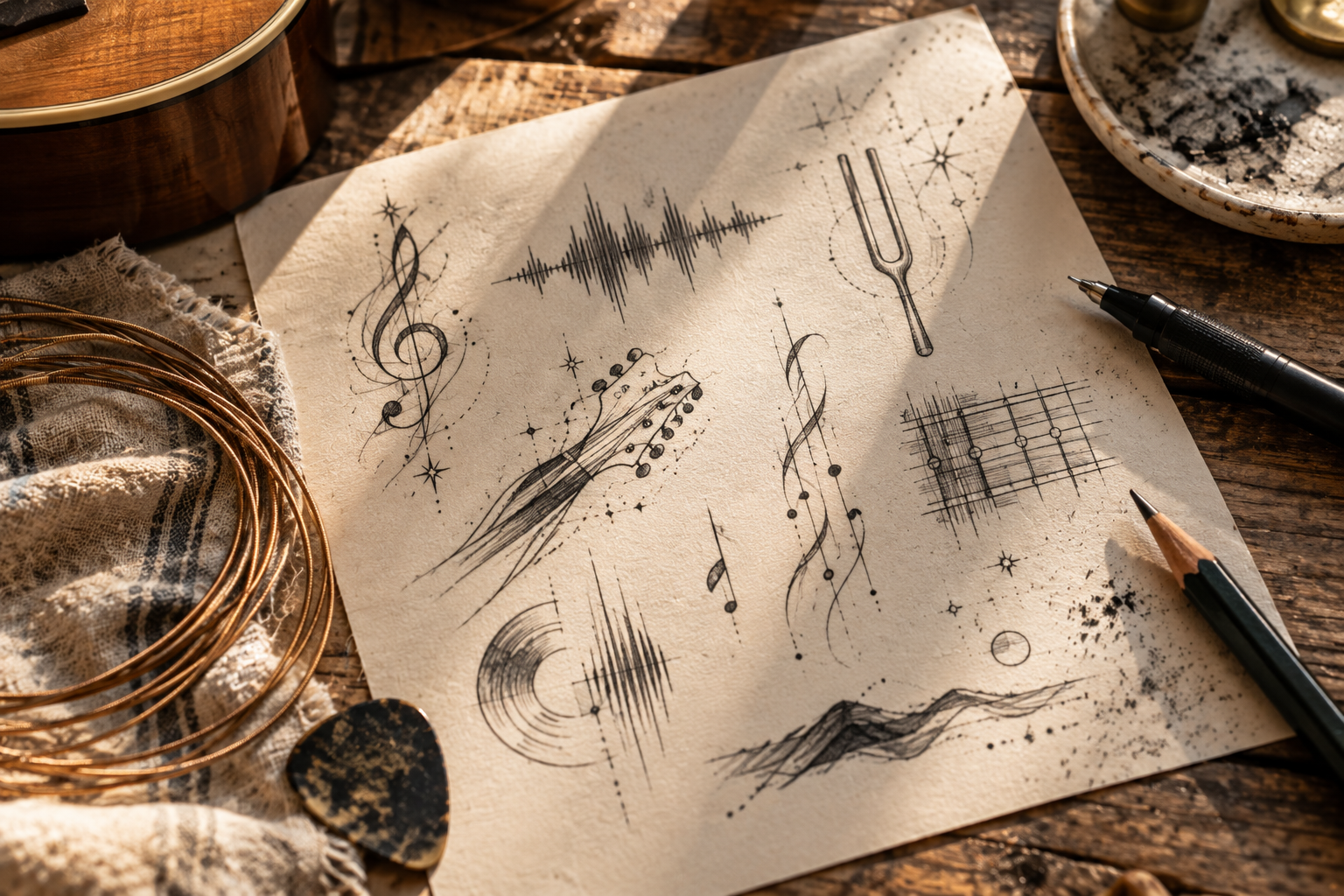
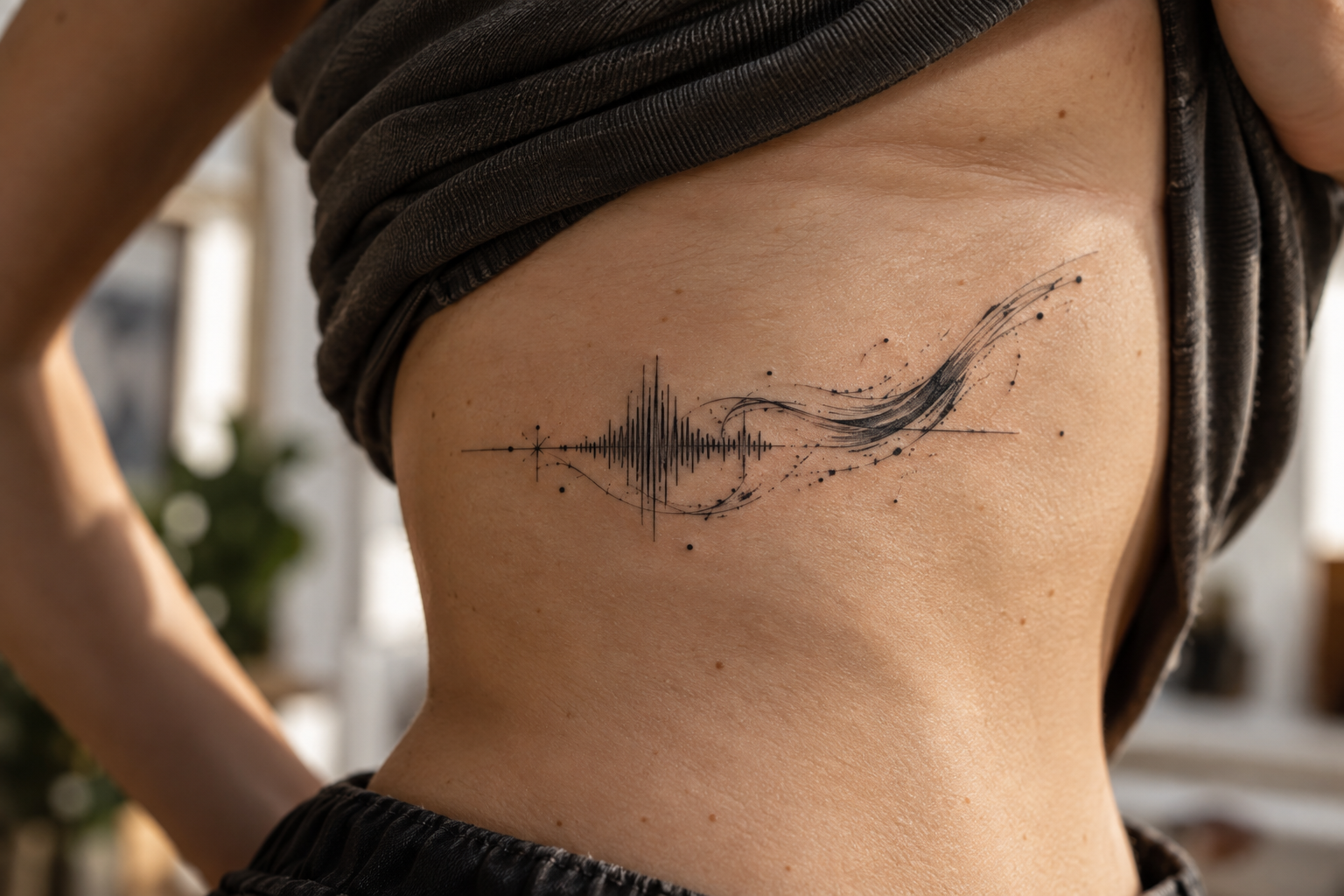
6. A Sound Wave From Your Own Recording
A waveform can turn an actual piece of sound into a visual symbol. It might represent a short recording of your own music, a spoken phrase, a laugh, or another audio moment with genuine significance.
Because waveforms can become visually dense, simplify the design enough that the peaks and valleys remain readable after healing. A horizontal placement along the forearm or upper arm usually gives the pattern room to breathe.
7. A Minimal Microphone
For singers, vocalists, podcasters, producers, and performers, a tiny microphone can represent the moment when a private idea becomes something other people can hear.
Instead of a highly detailed microphone, consider its recognizable outline. A cable can curve naturally with the body or transform into another meaningful element.
8. Headphones With a Personal Detail
Headphones can symbolize listening as much as performing. They are particularly fitting for producers, DJs, sound engineers, composers, and anyone whose creative process begins with careful listening.
A fine-line headphone tattoo can incorporate initials, a tiny waveform, a date, or a cable that forms a subtle symbol.
9. A Tuning Fork
A tuning fork is an understated alternative to the familiar music note. Its simple symmetrical shape works naturally with minimalist tattoo styles and can symbolize finding your frequency, returning to center, or dedicating yourself to sound.
Its narrow silhouette makes it particularly adaptable to the forearm, back of the arm, ankle, or rib area.
10. A Metronome
For a musician, rhythm is not only musical. A metronome can symbolize patience, practice, repetition, timing, and the countless quiet hours behind a performance.
A small outlined metronome can have a vintage feel without becoming overly decorative. You could also set the illustrated tempo marker at a number with personal significance.
11. A Pick, Bow, or Drumstick
Sometimes the smallest piece of equipment tells the clearest story. A guitarist might choose a pick outline, a drummer a pair of crossed sticks, or a violinist the elegant line of a bow.
These objects work especially well as tiny tattoos because their shapes remain recognizable without excessive detail.
12. An Abstract Rhythm Pattern
Your musician tattoo does not have to look musical at first glance. Repeated dots, short lines, negative spaces, and geometric marks can translate rhythm into an abstract composition.
This approach is ideal if you want a tattoo inspired by music without using traditional musical imagery. Work with your artist to develop a pattern based on an actual beat, measure, or recurring musical structure that matters to you.
Artist Tattoo Ideas Inspired by the Creative Process
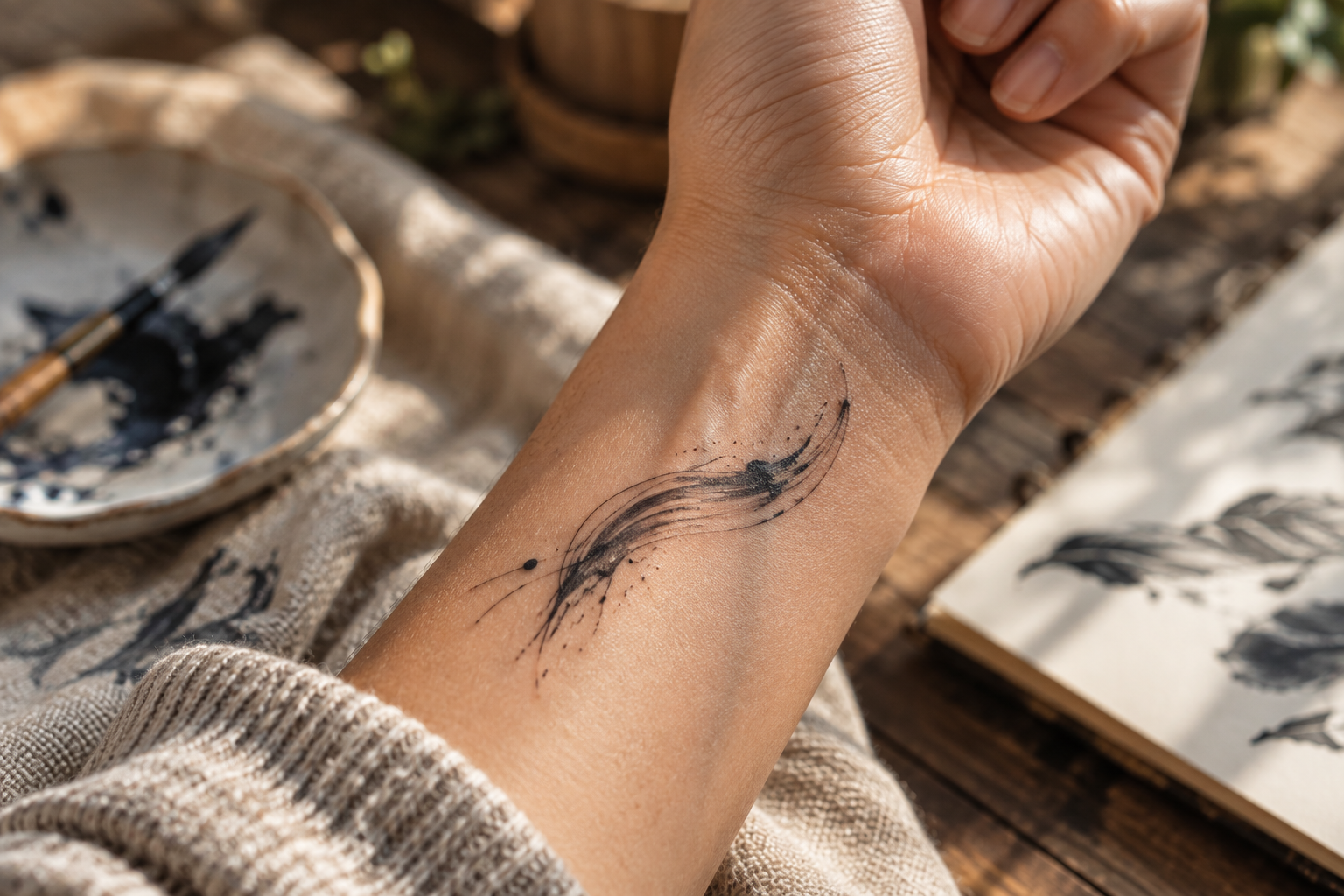
13. A Single Paintbrush Stroke
One expressive brushstroke can communicate movement, experimentation, and the imperfect nature of making art. Rather than reproducing a perfectly smooth digital line, allow the tattoo to retain uneven edges and natural variation.
This is one example of artist tattoo symbolism where the process itself becomes the subject. The mark represents making rather than simply displaying an art-related object.
14. A Fine-Line Paintbrush
A tiny paintbrush is simple, recognizable, and easy to personalize. The bristles can remain clean and minimal or dissolve into small dots, leaves, stars, abstract marks, or another motif connected to your work.
A narrow paintbrush design fits naturally along the wrist, forearm, upper arm, or ankle.
15. A Pencil Worn Down From Use
A sharpened pencil can represent ideas, but a short, heavily used pencil tells a more specific story. It suggests drafts, corrections, repetition, and the hours that happen before anyone sees a finished piece.
Illustrators, architects, designers, writers, and traditional artists can all adapt this concept to their own practice.
16. A Tiny Artist Palette
An artist palette is a classic symbol, but it does not need to look cartoonish. A small fine-line outline with restrained marks representing paint can create a more sophisticated interpretation.
If color is important to your work, carefully chosen small color accents can also make the palette personal. Discuss how colored pigments age on your skin tone before deciding on very tiny color details.
17. An Unfinished Sketch
Finished artwork is usually what the world sees, but artists know how much of the creative process happens in unfinished drawings. A tattoo that intentionally resembles a rough sketch can celebrate experimentation rather than perfection.
Visible construction lines, overlapping marks, and an incomplete contour can become part of the design. It is a strong option for someone who sees creativity as an evolving practice rather than a finished identity.
18. A Frame With Nothing Inside
An empty frame is a subtle conceptual tattoo. It can represent possibility, imagination, a blank canvas, or the idea that the next piece has not been made yet.
The frame can be ornate, geometric, hand-drawn, or extremely minimal. Keeping the interior empty gives the tattoo its meaning and leaves room for personal interpretation.
19. A Tiny Color Swatch or Value Scale
Designers and visual artists often spend enormous amounts of time thinking about color and value. A small sequence of shapes inspired by a color swatch or tonal scale turns that familiar working language into a minimalist tattoo.
For an even subtler version, use simple black linework with different textures instead of multiple colors.
20. A Camera Aperture
For photographers and filmmakers, an aperture symbol can represent observation, perspective, light, and the decision to frame one moment instead of another.
Because aperture blades naturally form a geometric pattern, the symbol translates cleanly into tattoo form. It can stand alone or be combined with a small sun, eye, frame, or landscape line.
21. Registration Marks or Crop Marks
Graphic designers, photographers, printmakers, and editors may appreciate symbols that come directly from production rather than obvious art imagery. Tiny crop marks, registration marks, or alignment symbols can become distinctive minimalist tattoos.
To most people they may look like abstract geometry. To someone who has spent years preparing visual work for print or publication, they can carry a very specific meaning.
22. A Continuous-Line Hand Drawing
The hand is one of the artist’s most important tools. A continuous-line drawing of a hand can represent craftsmanship, practice, touch, and the physical act of creating.
You can make the concept even more personal by having the illustrated hand hold the primary tool of your craft: a pencil, brush, stylus, camera, pick, or instrument bow.
23. Your Own Original Mark
One of the most personal creative tattoos may already exist in your sketchbook. Look through old drawings for a recurring mark, symbol, tiny character, signature shape, or spontaneous doodle that has appeared in your work for years.
Using your own mark means the tattoo does not need to communicate its meaning to everyone else. Its connection to your creative history is enough.
24. Art and Music Combined Into One Symbol
If your creative life crosses disciplines, your tattoo can too. A paintbrush can transition into a waveform. Guitar strings can become sketch lines. A piano key can dissolve into a brushstroke. A microphone cable can form the outline of a pencil.
The goal is not to cram multiple hobbies into one image. Look for a visual connection between the two disciplines and allow that transition to become the concept. A good tattoo artist can help simplify the composition so it remains readable.
How to Make a Creative Tattoo Feel Personal Instead of Generic
A familiar symbol is not automatically a bad tattoo. The problem usually comes from choosing the symbol before deciding what you actually want the tattoo to represent.
Start with the story rather than the icon. Ask yourself what part of your creative identity matters enough to carry permanently.
- Your beginning: the first instrument, drawing tool, camera, song, or medium that made you want to create.
- Your process: practice, repetition, experimentation, mistakes, improvisation, or collaboration.
- Your turning point: a performance, project, creative breakthrough, or period when your work changed direction.
- Your tools: the objects you repeatedly use and associate with making your work.
- Your philosophy: what creativity means to you beyond your profession.
Once you identify the story, look for an object, shape, pattern, or visual fragment that represents it. That sequence usually produces a more personal result than searching for a generic musician tattoo and trying to attach meaning afterward.
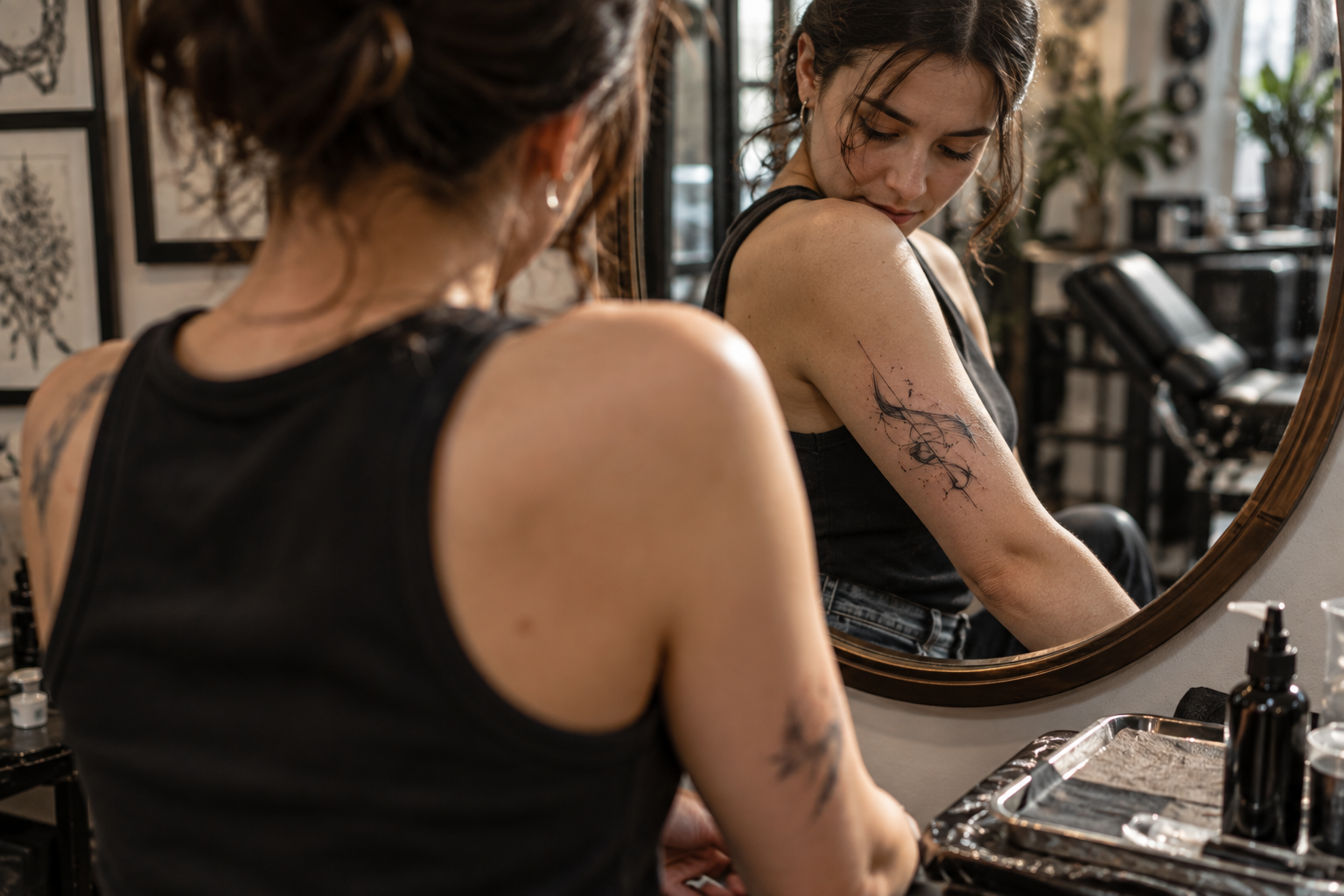
Why You May Want to Skip the Generic Music Note
There is nothing inherently wrong with a music note tattoo. It is popular because it communicates a love of music immediately. But if your goal is to tell your individual story, a completely generic note may not provide enough specificity.
Instead, ask how you could make the musical element yours. Use a note from something you wrote. Reference the first chord you learned. Incorporate the tuning of your instrument. Turn an actual recording into a waveform. Use the shape of your favorite piece of equipment.
The same principle applies to artist tattoos. A standard palette and brush can work beautifully, but your own sketch mark, brushstroke, unfinished drawing, or familiar studio tool may carry considerably more personal history.
Choosing the Right Placement for an Artist or Musician Tattoo
Placement affects both the visual impact of a tattoo and how frequently you will see it. Creative professionals may also want to consider how their work interacts with the tattoo.
The inner forearm is useful for elongated designs such as waveforms, brushes, strings, pencils, and musical notation. It also lets you see the tattoo easily.
The wrist works best for genuinely small, uncomplicated symbols. Tiny picks, notes, crop marks, or minimalist brushstroke designs can fit naturally here without requiring a large composition.
The upper arm provides more space for detailed instruments, abstract combinations, and designs that may eventually become part of a larger collection.
The ribcage gives horizontal or flowing designs room to follow the body. Sheet music, abstract lines, brushstrokes, and longer creative symbols can work well here, although the area is often considered more intense to tattoo than fleshier placements.
The ankle and lower leg can suit small vertical symbols such as a tuning fork, brush, pencil, microphone, or minimal instrument silhouette.
Hands and fingers may seem especially appropriate for someone whose hands are central to their craft, but these areas experience substantial movement, washing, friction, and exposure. Very fine details can require particular consideration there, so discuss longevity and maintenance with an experienced tattoo artist before committing.
How to Design Your Creative Tattoo Step by Step
- Write down the story first. Describe what you want the tattoo to represent without thinking about how it should look.
- List five symbols connected to that story. Include tools, materials, sounds, shapes, places, and small details from your creative practice.
- Remove the obvious choices if they feel impersonal. You do not have to avoid recognizable imagery, but there should be a reason you are choosing it.
- Choose the level of visibility. Decide whether you want a quiet personal tattoo or something that clearly communicates your creative identity.
- Match the concept to a placement. Long designs need different spaces than compact symbols.
- Collect references instead of asking for a direct copy. Bring examples of line weight, composition, texture, and mood to your tattoo artist.
- Allow the tattoo artist to simplify it. A design that looks beautiful on paper may need adjustments to work effectively on skin.
If you create visual art yourself, bringing your own sketch can be a meaningful starting point. It does not necessarily need to become the final stencil exactly as drawn. A tattoo artist can preserve the character of your mark while adapting line spacing, scale, and detail for the body.
Fine-Line or Detailed: Which Style Works Better?
Fine-line tattoos are especially appealing for creative themes because they can resemble pencil drawings, technical marks, notation, and delicate sketches. They also make small symbols feel restrained rather than heavy.
However, extremely tiny details are not always the best choice simply because a tattoo looks delicate on a screen. Instruments with many strings, complex sheet music, elaborate camera mechanisms, or dense illustrations may need more space to remain readable.
If you prefer a small tattoo, simplify the concept rather than shrinking every detail. One section of a guitar may work better than a miniature full instrument. Three carefully spaced notes may be clearer than an entire tiny musical passage. A single expressive line can communicate a brushstroke without recreating every bristle.
Ask your tattoo artist how the line weight, spacing, and size are expected to settle as the tattoo heals and ages.
Build the Tattoo Around Your Story, Not Someone Else’s
The strongest tattoo ideas for artists and musicians are rarely the most complicated ones. They are the designs with enough personal context that a small symbol can carry a much larger story.
Your tattoo might be a waveform nobody recognizes, three notes from a melody you wrote years ago, the outline of a battered guitar pick, a mark from an old sketchbook, an unfinished drawing, or a brushstroke inspired by the way you naturally paint. It does not need to explain your entire creative identity to a stranger.
Use these 24 ideas as starting points rather than finished templates. Save the concepts that connect with your own process, then identify the details that make them specifically yours. Bring those ideas to a professional tattoo artist and work together on the scale, placement, line weight, and composition.
Your creative work already tells part of your story. A thoughtfully designed tattoo can become another piece of it.