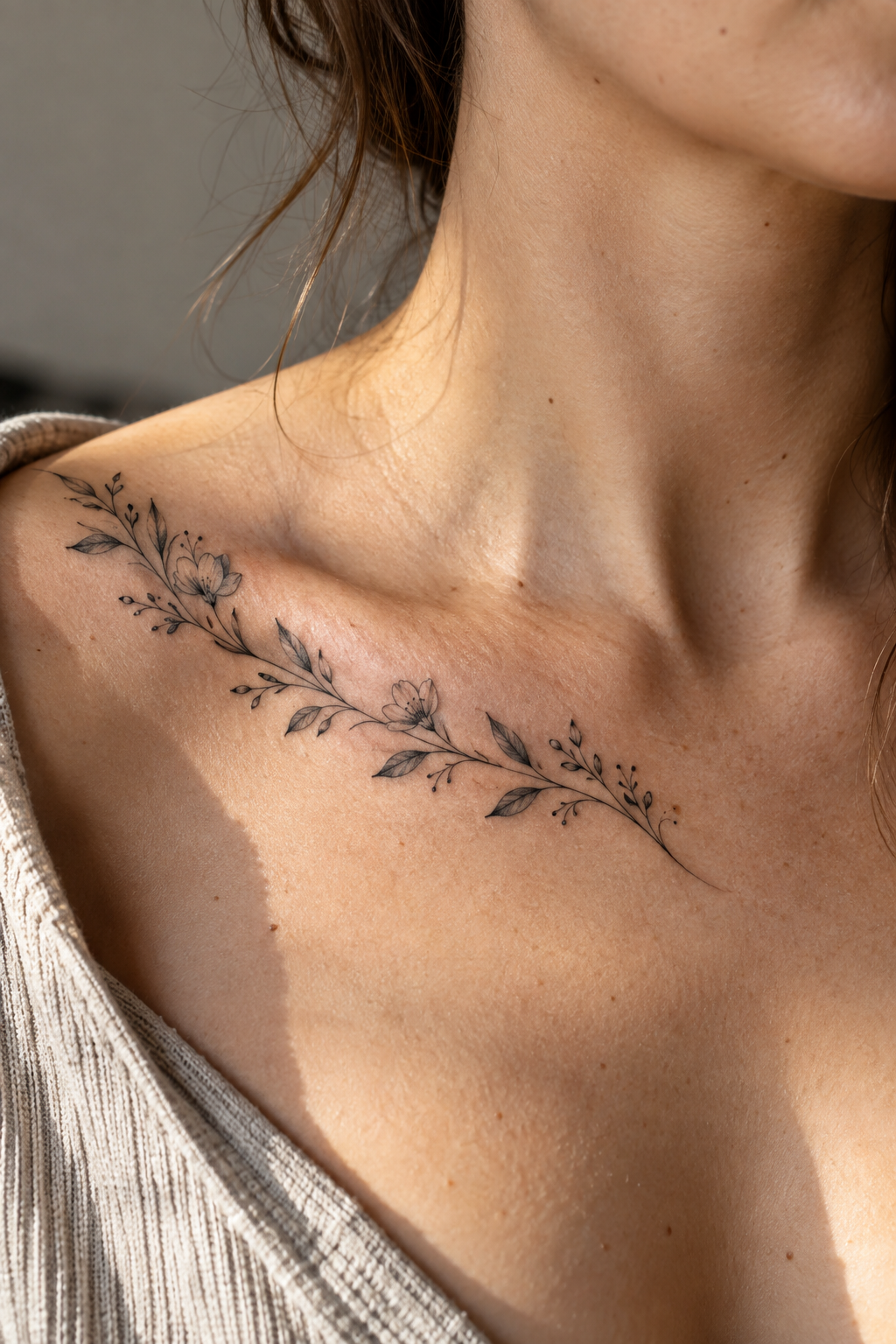
Why Collarbone Tattoo Placement Matters So Much
Collarbone tattoos have a natural advantage that many other placements do not: the body has already created the line for you. Instead of placing a design on a relatively flat area and asking it to create its own visual direction, a collarbone tattoo can follow the clavicle, sit just beneath it, rise toward the shoulder, or extend inward toward the chest.
That makes the area especially appealing for fine-line florals, delicate lettering, botanical designs, ornamental details, and small symbolic tattoos. The right placement can look as though the tattoo was designed specifically for the person’s frame rather than simply positioned on available skin.
Choosing between different collarbone tattoo placement ideas, however, requires more than finding a design you like. You also need to consider how the tattoo interacts with bone, softer skin, clothing, movement, symmetry, and your preferred level of visibility.
A design that looks beautiful centered on paper may work better slightly off-center on the body. A straight phrase may need a subtle curve. A botanical stem may look more natural when its leaves change direction as it approaches the shoulder.
This guide covers 22 collarbone tattoo ideas along with practical placement considerations to help you decide what will work with your own proportions.
Should a Collarbone Tattoo Follow the Bone?
It can, but it does not have to sit directly on top of the clavicle. In fact, many successful designs use the collarbone as a visual guide rather than treating it as a rigid line that must be traced exactly.
A tattoo positioned slightly below the bone can still echo its shape while giving the artist a somewhat softer area to work with. A design placed above the collarbone can create a lighter, more visible effect near the base of the neck. Other pieces begin near the center of the chest and gradually follow the clavicle outward.
When comparing placements, consider these four general approaches:
- Directly along the bone: creates a strong relationship between the tattoo and your natural anatomy.
- Just below the collarbone: offers a softer interpretation while still following the frame.
- Above the collarbone: makes small designs more noticeable around open necklines.
- Extending toward the shoulder: works particularly well for florals, vines, branches, and longer ornamental pieces.
The best option depends on your design and anatomy. Rather than forcing a sketch into an exact location, ask your tattoo artist to test the stencil in several nearby positions before committing.
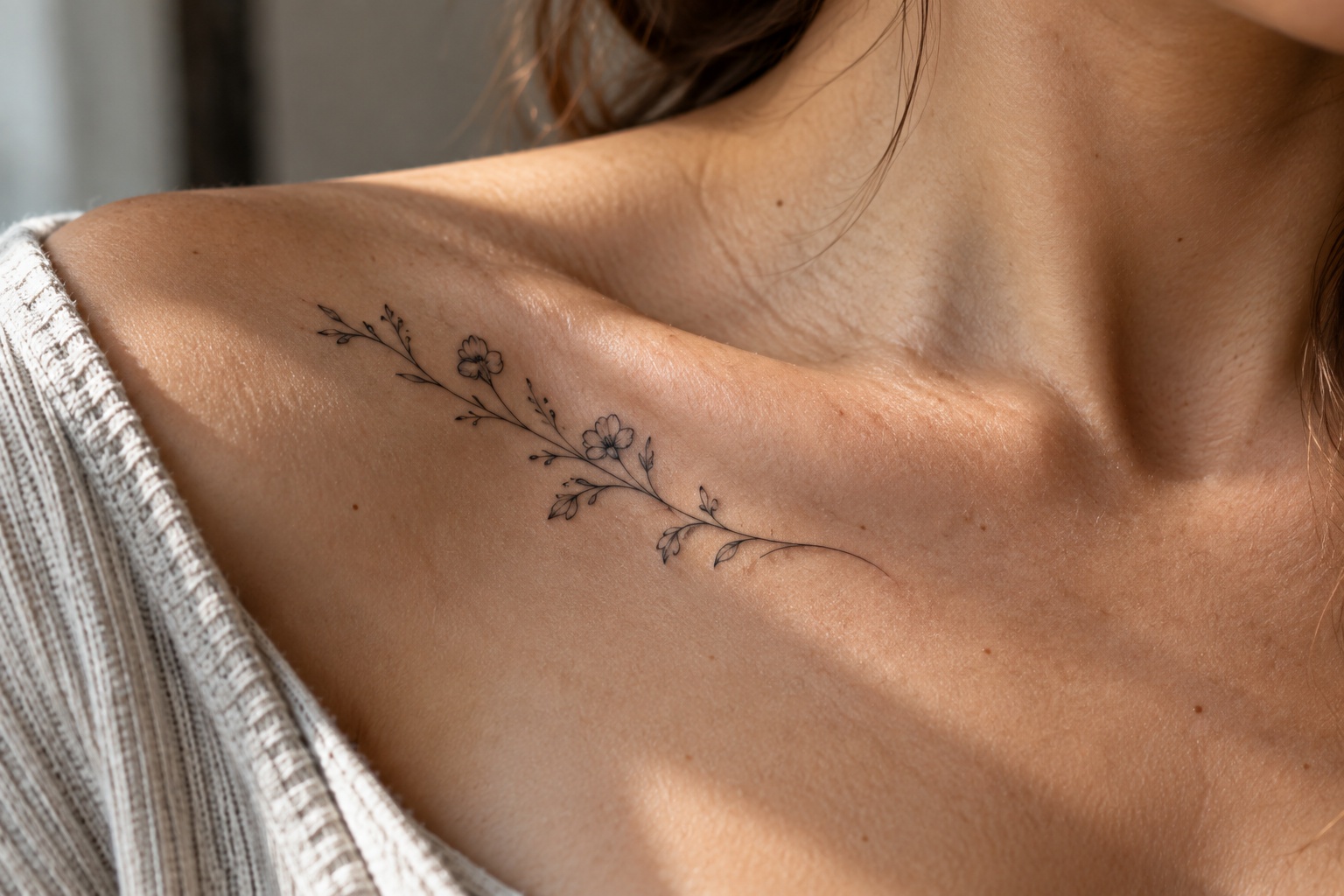
Visibility: How Easy Is a Collarbone Tattoo to Show or Hide?
One reason collarbone placement is so popular is its adjustable visibility. Unlike a hand or finger tattoo that is difficult to conceal, a collarbone piece can change dramatically depending on what you wear.
Crew-neck shirts may hide most designs placed directly beneath the collarbone. Scoop necks, tank tops, off-the-shoulder tops, open shirts, and lower necklines can reveal considerably more of the area.
If controlling visibility is important to you, test the placement while wearing several styles of clothing you use regularly. A difference of only an inch can determine whether a tattoo remains covered by an everyday shirt or appears above the neckline.
For a more discreet result, consider a small design closer to the shoulder or slightly below the bone. If you want the tattoo to become part of your visible neckline, a design positioned directly along or just above the clavicle may be more appropriate.
22 Collarbone Tattoo Placement Ideas That Follow Your Frame
1. Fine-Line Wildflower Stem
A slender wildflower stem is almost made for collarbone placement. Position the stem along the clavicle and allow small leaves or flowers to extend above and below it. Keeping the line slightly organic instead of perfectly straight helps the tattoo respond naturally to the body’s contours.
2. Delicate Botanical Branch
A botanical branch can begin near the upper chest and gradually move outward toward the shoulder. This creates visual movement without requiring a large tattoo. Sparse leaves keep the design airy and allow the natural collarbone line to remain visible.
3. Tiny Script Phrase
Short script can work beautifully just beneath the collarbone. The key is leaving enough breathing room between letters. Extremely small, tightly packed cursive may sacrifice readability over time, so discuss practical lettering size and spacing with your artist.
4. Single Fine-Line Word
A single meaningful word creates a quieter alternative to a full quote. It can sit horizontally beneath the clavicle or follow a gentle upward angle toward the shoulder. Simple lettering often works better here than elaborate calligraphy because the placement itself already provides visual interest.
5. Minimal Crescent Moon
A tiny crescent can sit near the outer collarbone without needing to trace the entire bone. This is useful if you like the area but prefer a compact tattoo rather than a long horizontal piece.
6. Small Star Cluster
Instead of arranging several stars in a straight row, allow them to scatter gently along the collarbone. Slight differences in size and spacing can create a softer composition while maintaining the elongated direction of the placement.
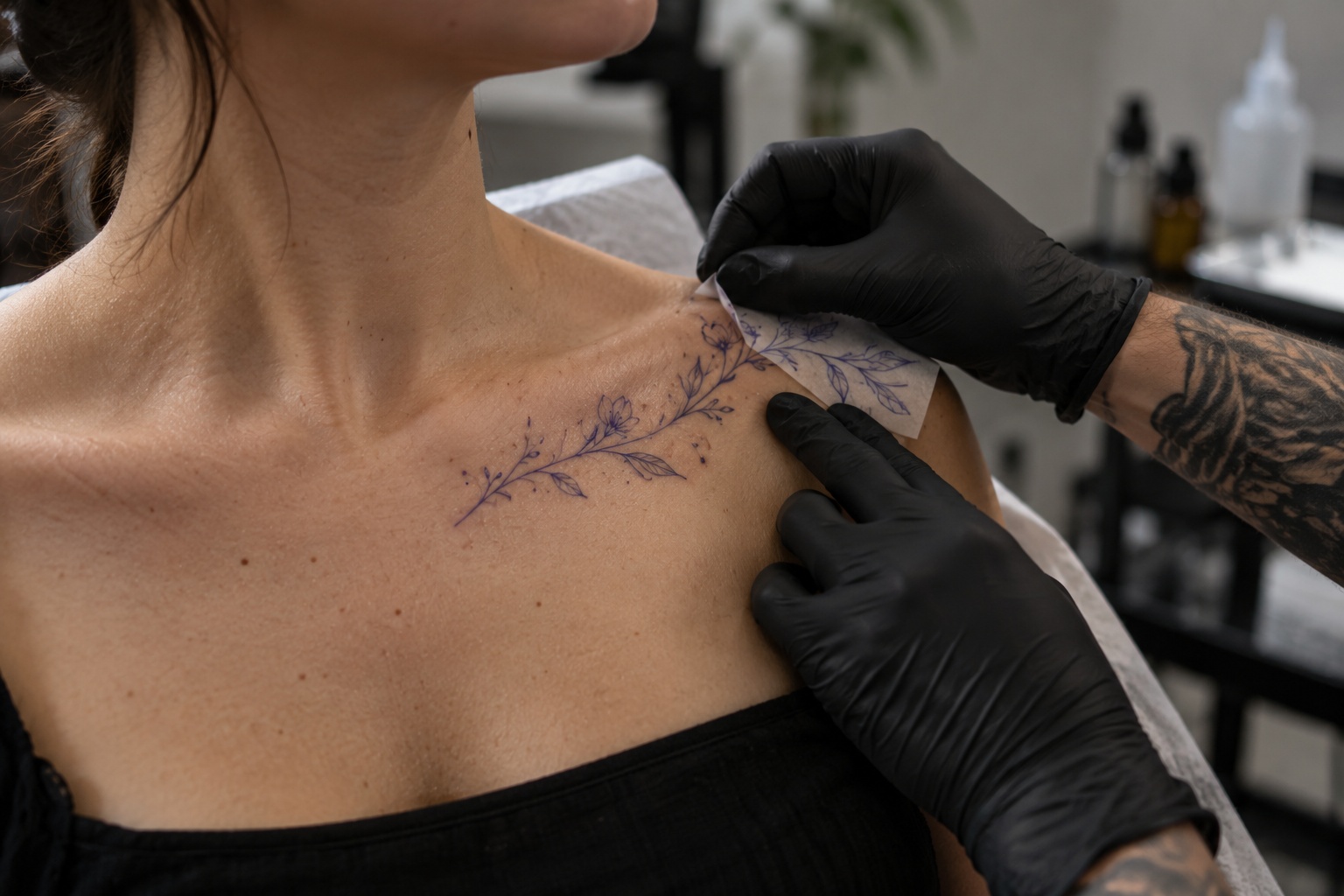
7. Fine-Line Vine
A narrow vine can follow the clavicle almost exactly. Small leaves provide enough detail to make the design interesting without turning it into a heavy chest piece. A vine can also transition naturally toward the shoulder if you want the option to extend the tattoo later.
8. Lavender Sprig
Lavender works well as a delicate collarbone tattoo because its narrow shape complements the bone. A single sprig can angle outward, while two smaller sprigs can create a subtle mirrored composition.
9. Birth Flower
A birth flower adds personal symbolism without requiring obvious lettering or dates. For collarbone placement, consider using the flower’s stem to establish direction and allowing the bloom to sit closer to the shoulder or center of the chest.
10. Tiny Butterfly
A small butterfly can work at the outer end of the clavicle where the chest transitions toward the shoulder. Rather than centering it in the middle of the collarbone, this offset position can make the tattoo feel more naturally integrated into the body.
11. Minimal Moth
For a slightly moodier look, a fine-line moth can sit below or above the collarbone. A smaller moth works as a standalone symbol, while botanical details can be added around it if you want a subtle dark-nature composition.
12. Constellation Design
Constellations naturally suit an elongated area. Small stars and fine connecting lines can stretch along the collarbone without creating the visual weight of a solid design. Placement can be adjusted to suit the length and orientation of the chosen constellation.
13. Tiny Heart Outline
A miniature heart is an understated option for someone who wants the collarbone location without a large tattoo. Place it near the outer clavicle, close to the shoulder, or just beneath the bone for a design that can disappear easily under many necklines.
14. Delicate Snake
A very fine snake can use the collarbone’s curve instead of fighting it. A restrained S-shaped body can follow the bone while the head and tail subtly change direction. This works particularly well when the design remains narrow rather than becoming a wide chest composition.
15. Olive Branch
The long, balanced structure of an olive branch suits this area exceptionally well. A branch can sit directly beneath the clavicle with leaves alternating on either side, producing enough detail to be recognizable while preserving a fine-line appearance.
16. Small Fern
A fern can angle outward toward the shoulder, with its leaflets naturally emphasizing direction. It is an especially useful option if you want botanical imagery that feels structured but less floral.
17. Minimal Wave
A single flowing wave or abstract line can echo the body’s contour without literally tracing the collarbone. This type of design works well for people who prefer minimalist tattoos with personal symbolism rather than detailed illustration.
18. Roman Numerals
Roman numerals can mark a meaningful date while maintaining a clean graphic appearance. They can be positioned beneath the collarbone in a short horizontal arrangement. Keep the final size readable rather than shrinking a long date into an extremely narrow space.
19. Coordinates
Coordinates offer another understated way to reference a meaningful location. Because they form a relatively long line of characters, they can naturally complement the horizontal shape of the clavicle. Your artist can adjust spacing so the numbers do not feel crowded.
20. Fine-Line Ornamental Detail
Ornamental linework can create an elegant transition between the collarbone and upper chest. Instead of a large symmetrical chest tattoo, consider one narrow ornamental motif that follows one side of the body. This preserves negative space and keeps the piece delicate.
21. Mirrored Collarbone Botanicals
If you prefer symmetry, matching botanical pieces can follow both collarbones. They do not necessarily need to be identical. Mirroring their approximate length, visual weight, and direction can create balance while allowing small differences in individual leaves or flowers.
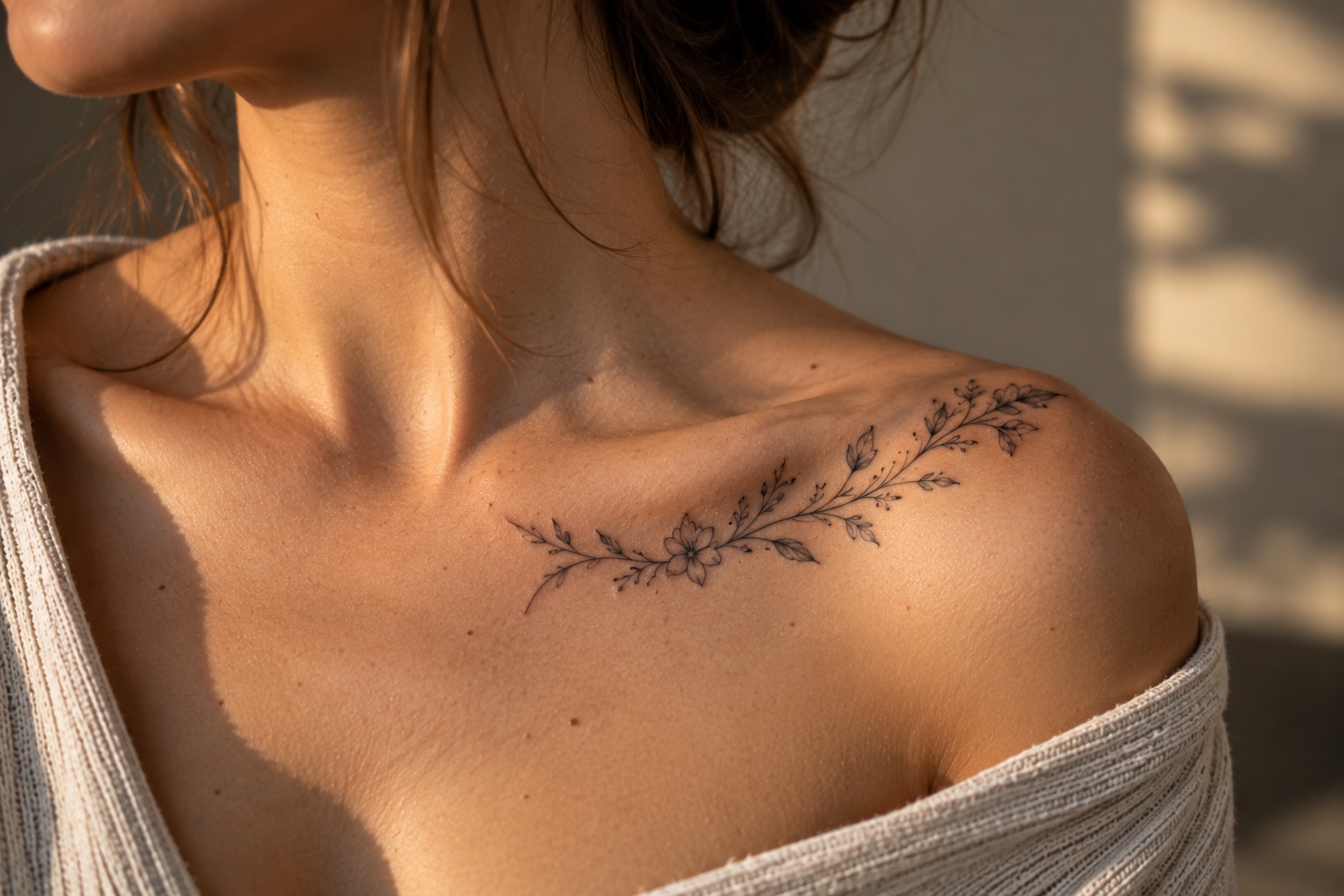
22. Shoulder-to-Collarbone Floral
A longer floral design can begin near the shoulder and move inward along the clavicle. This placement works well when you want more visual impact than a tiny collarbone tattoo but do not want a conventional central chest piece. Flowers can become smaller as the design approaches the center, creating a natural taper.
Collarbone Tattoo Pain: What to Expect
Pain is subjective, but the collarbone is commonly considered a sensitive tattoo location because there is relatively little cushioning between the skin and bone in some parts of the area. The sensation can also feel different as the artist moves between the bony clavicle and softer surrounding tissue.
Design complexity matters too. A small fine-line symbol requires a very different session from a long botanical piece with repeated linework and shading. If pain is one of your main concerns, do not evaluate placement independently from tattoo size and complexity.
Discuss the expected session length with your artist before the appointment. It is more useful to understand what your specific piece involves than to rely on a universal pain score.
Bone Versus Skin: The Placement Detail People Miss
One of the most important decisions is whether the tattoo should sit directly over the most prominent part of the clavicle or use the surrounding skin.
A stencil that looks straight while you are standing still can appear different when your shoulders move. This is why experienced placement usually involves looking at the design from multiple angles rather than treating the upper chest like a flat sheet of paper.
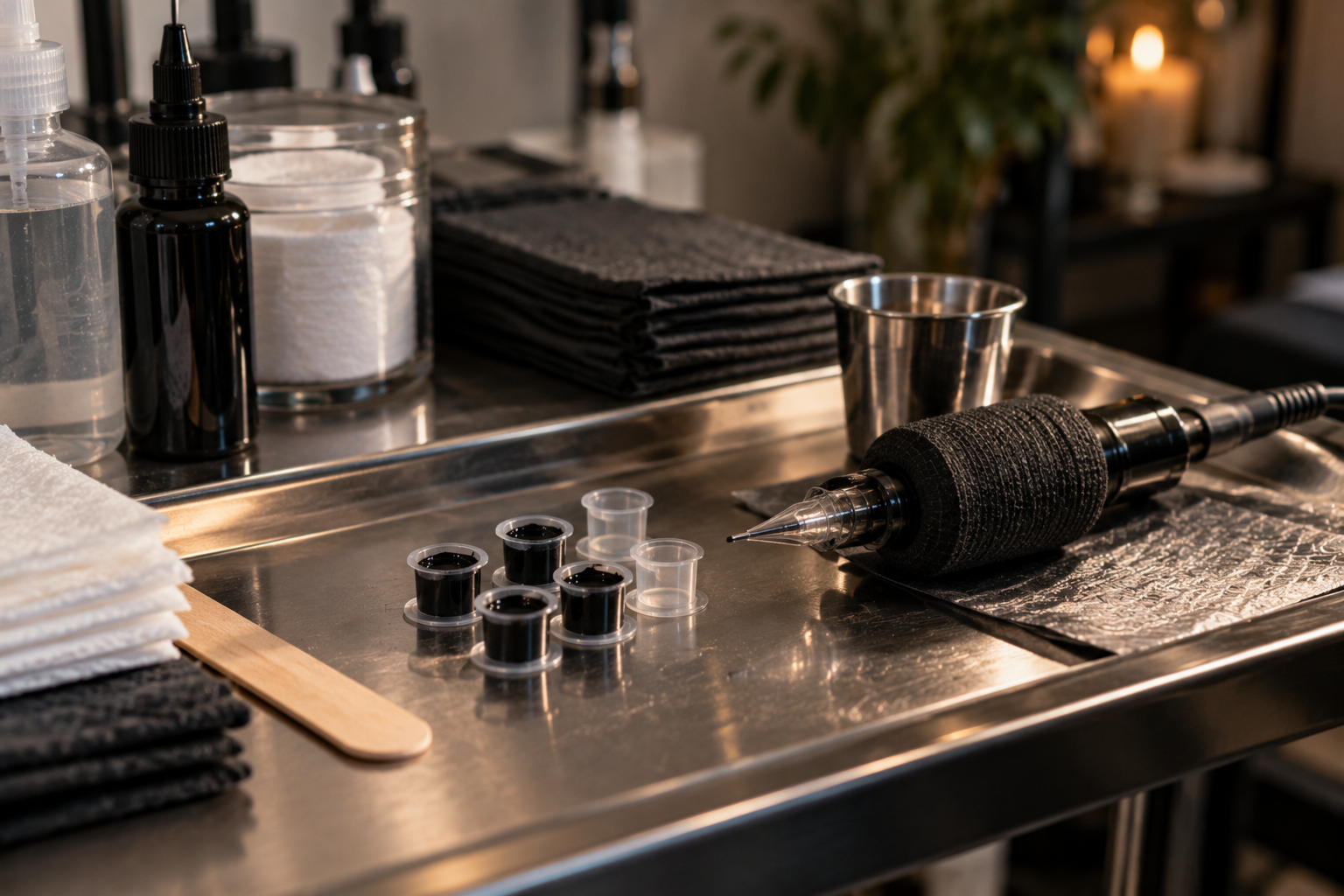
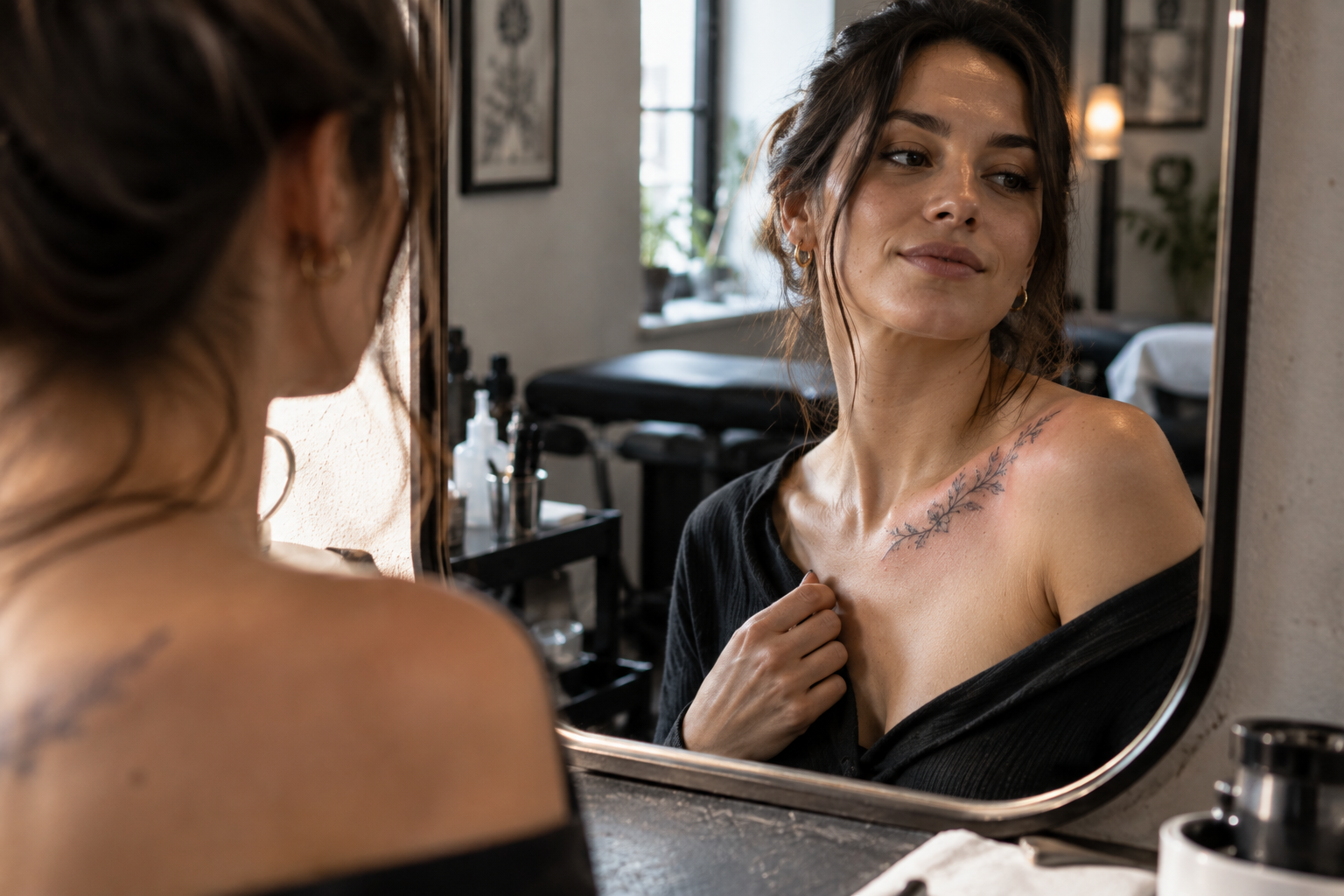
Before the tattoo begins, examine the stencil with your shoulders relaxed. Then move naturally, turn slightly, and look at the placement in a mirror from farther away.
For longer designs, pay particular attention to the endpoints. A floral stem that begins perfectly near the center may finish too high on the shoulder if its angle does not account for your frame.
How to Choose the Right Size
Small does not automatically mean delicate, and delicate does not automatically mean microscopic. Fine-line tattoos still need enough space for individual elements to remain distinct.
Before choosing the smallest possible stencil, consider:
- How much detail the design contains.
- Whether lettering needs to remain readable.
- How individual leaves, petals, or ornamental lines are separated.
- Whether the tattoo is intended to be noticeable from conversational distance.
- How much empty skin you want around the design.
A slightly larger botanical piece with generous spacing can sometimes look more delicate than a tiny version where every detail has been compressed together.
How Collarbone Tattoos Work With Different Necklines
Clothing should be part of your placement decision, especially if visibility matters for work or personal preference.
A tattoo placed closer to the neck may appear above more shirts. One positioned farther toward the shoulder may show primarily in tanks, wide necklines, or off-the-shoulder clothing. Designs immediately below the clavicle are often easier to cover than pieces extending upward toward the neck.
You can use this intentionally. If you want a tattoo that appears only occasionally, bring one or two commonly worn tops to your stencil appointment. If you want the tattoo to frame open necklines, test how the stencil interacts with those clothing lines before approving the final location.
One Collarbone or Both?
A single-sided tattoo tends to feel lighter and more asymmetrical. It works particularly well for branches, individual flowers, script, butterflies, moths, and other designs with a clear directional flow.
Matching both collarbones creates a stronger composition and can begin to feel more like intentional chest tattoo placement. Botanical and ornamental designs are particularly suited to this approach.
There is no requirement to complete both sides at once. If you are uncertain about symmetry, starting with one side gives you time to see how the placement works with your clothing and overall tattoo collection.
How to Prepare for Your Collarbone Tattoo Appointment
A little preparation makes stencil placement easier and helps you evaluate the design more clearly.
- Choose practical clothing. Wear something that allows the artist to reach the upper chest and shoulder without constantly shifting fabric over the stencil.
- Bring reference images for direction. Use them to communicate scale, line weight, spacing, and general composition rather than asking for another artist’s tattoo to be duplicated.
- Decide your visibility preference. Know whether you want the design visible in ordinary shirts or primarily with open necklines.
- Allow time for stencil adjustments. Do not feel pressured to approve the first position simply because it is already applied.
- Look from a distance. A close mirror is useful for detail, but stepping back helps you judge how the tattoo relates to your entire frame.
What to Check Before Approving the Stencil
The stencil stage is where small placement changes can make the biggest difference. Once the tattoo begins, those adjustments are no longer simple.
Stand naturally rather than pulling your shoulders back to create a particular pose. Look at the design straight on and at an angle. Check whether a long tattoo follows your collarbone or unintentionally cuts across it. For lettering, confirm that the baseline feels appropriate for your anatomy.
If your design extends toward the shoulder, move your arm gently and see how the endpoint responds. A tattoo does not have to remain visually identical through every movement, but its resting position should feel intentional.
Ask for a repositioning if something feels slightly wrong. Moving a stencil a small distance is a normal part of finding a placement that works.
Healing and Aftercare Considerations
Follow the aftercare instructions provided by your tattoo artist because methods can vary depending on the tattoo, dressing, and individual circumstances.
For collarbone tattoos, clothing deserves extra attention. Tight straps, rough seams, jewelry, or garments repeatedly rubbing across the fresh tattoo can be irritating during early healing. Choose clean, comfortable clothing that minimizes unnecessary friction around the area.
Do not judge the final appearance during the earliest healing stages. Temporary redness, dryness, peeling, and changes in surface appearance can affect how the linework looks while the skin is recovering.
Once healed, protecting exposed tattoos from excessive sun exposure is also relevant because collarbone pieces can receive significant sunlight when worn with open necklines.
How to Make a Delicate Collarbone Tattoo Feel Intentional
The strongest collarbone designs usually have a clear relationship with the body. That does not mean every tattoo needs to trace the bone perfectly. It means the size, direction, spacing, and visual weight should look considered.
For botanical tattoos, use stems and branches to create movement. For script, pay attention to the baseline and spacing. For small symbols, decide whether the outer collarbone, central area, or space just beneath the bone gives the symbol enough room to stand on its own.
Negative space is particularly valuable in this location. You do not need to fill every inch between the neck and shoulder. Leaving open skin around fine-line work can make the design appear more refined and preserve the shape of your natural frame.
Final Thoughts on Collarbone Tattoo Placement Ideas
The best collarbone tattoo placement ideas do more than occupy an attractive part of the body. They use the clavicle’s existing shape as part of the composition.
A fine-line flower can sweep toward the shoulder. A short phrase can rest beneath the bone. A tiny moth, crescent, heart, or butterfly can create a subtle focal point without covering the entire area. Longer vines and ornamental designs can turn the collarbone into a guide for a more expressive piece.
Before booking, think about how visible you want the tattoo to be, how much detail the design needs, and whether you prefer one-sided or symmetrical placement. At the appointment, give the stencil stage the attention it deserves. Check the design while standing naturally, view it from several angles, and consider how it interacts with your usual necklines.
A collarbone tattoo does not need to be large to have presence. When the placement works with your anatomy rather than against it, even a restrained fine-line design can feel deliberate, balanced, and uniquely suited to your frame.