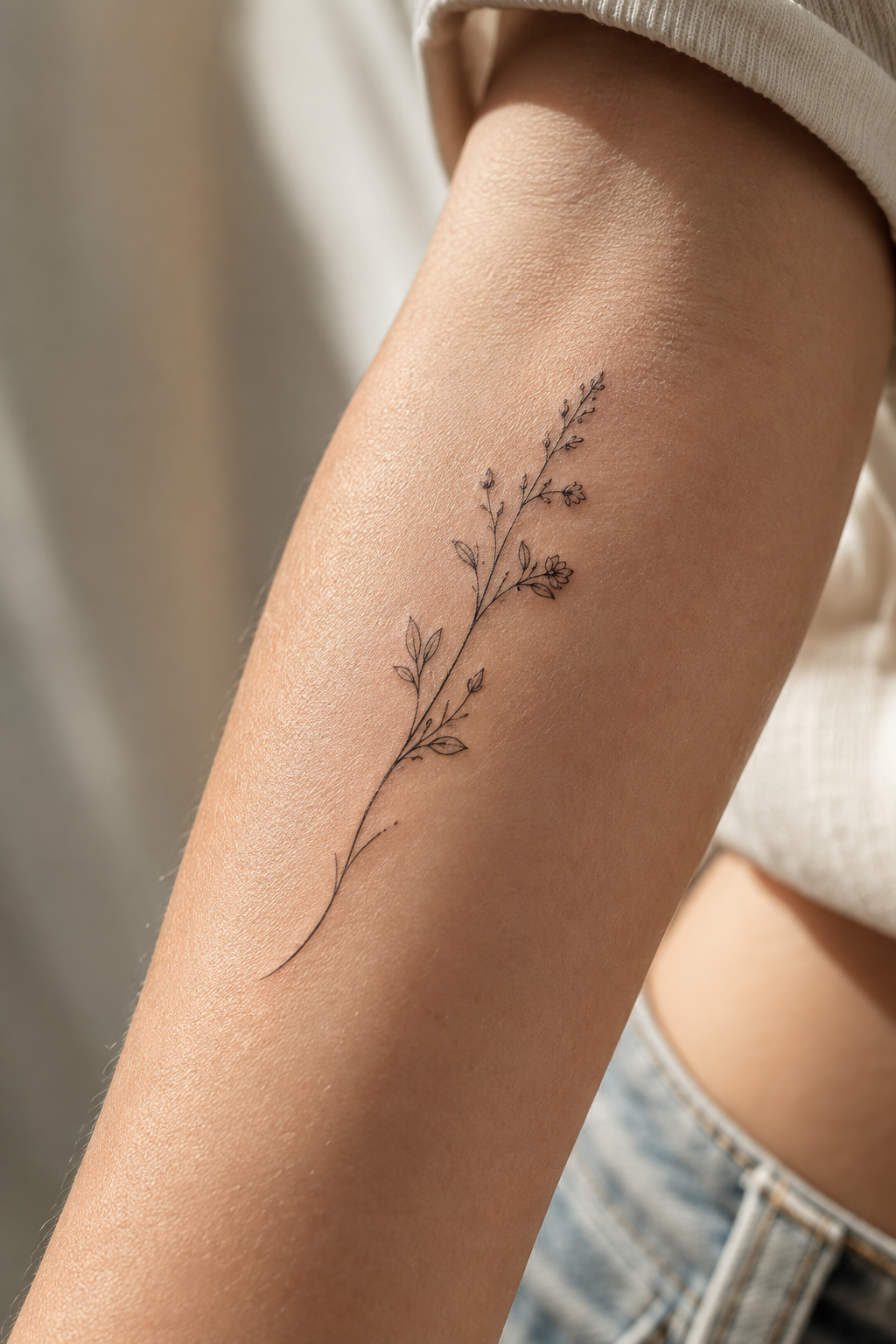
Why Fine-Line Minimalist Tattoo Ideas Look So Polished
Fine-line tattoos prove that a design does not need to be large, dark, or complicated to make an impact. A few carefully placed lines can create a tattoo that feels sophisticated, personal, and surprisingly luxurious. The best fine-line minimalist tattoo ideas have enough detail to look intentional while still leaving plenty of open skin around the design.
That balance is what separates a refined minimalist tattoo from one that simply looks unfinished. Delicate botanical stems, miniature celestial symbols, abstract curves, tiny architectural details, and carefully drawn animals can all create beautiful results when the composition is clean and the placement is considered.
Fine-line work can also be appealing if you are getting your first tattoo. Many designs fit comfortably on the wrist, ankle, forearm, shoulder, ribs, or behind the arm, allowing you to choose something subtle without sacrificing style.
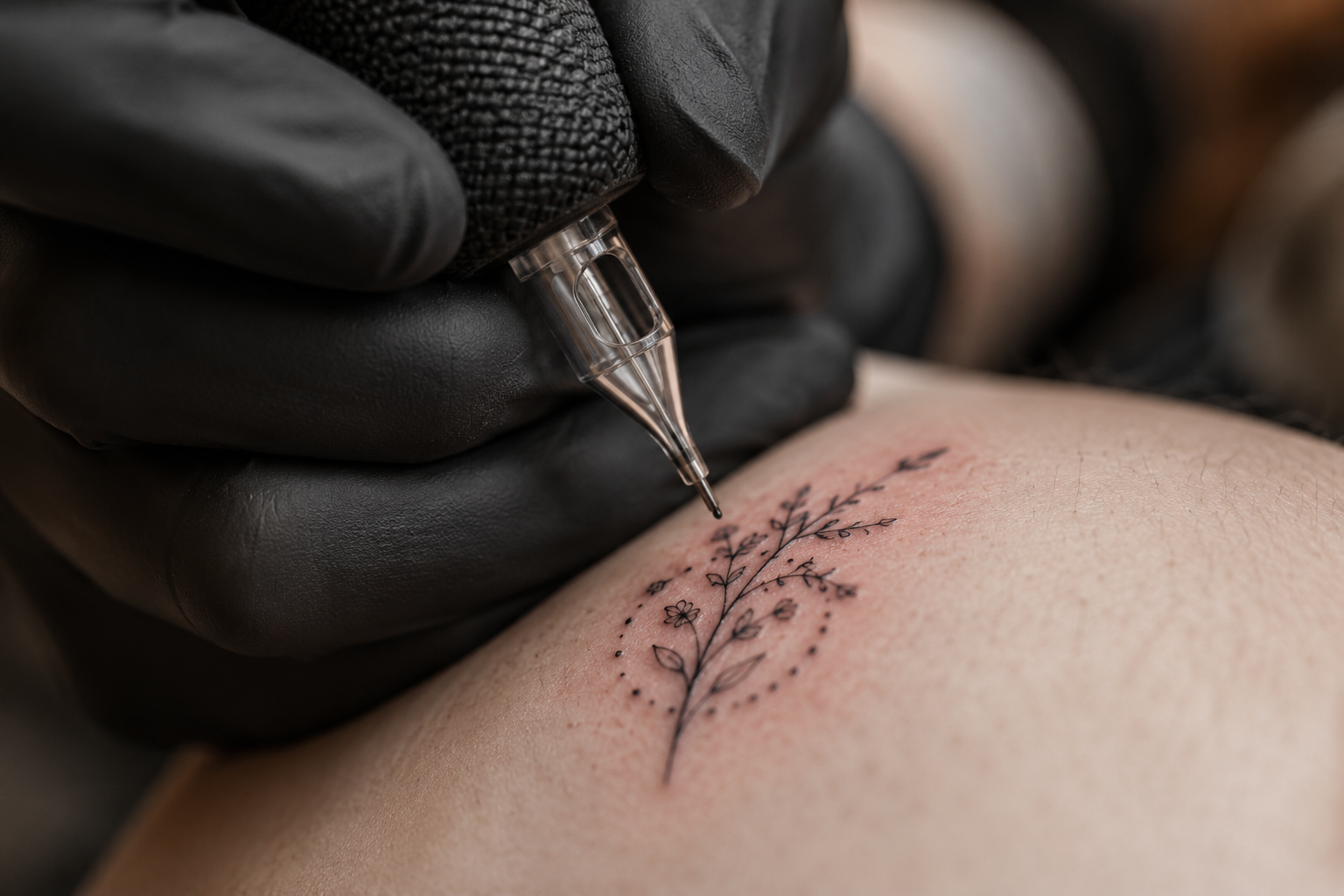
Before choosing a design, remember that extremely tiny details can change as a tattoo ages. An experienced artist can help determine how much spacing and line weight a design needs to remain readable after healing. With that in mind, here are 37 fine-line tattoo ideas worth saving for your next appointment.
37 Fine-Line Tattoo Ideas That Look Expensive
1. Single-Stem Botanical Tattoo
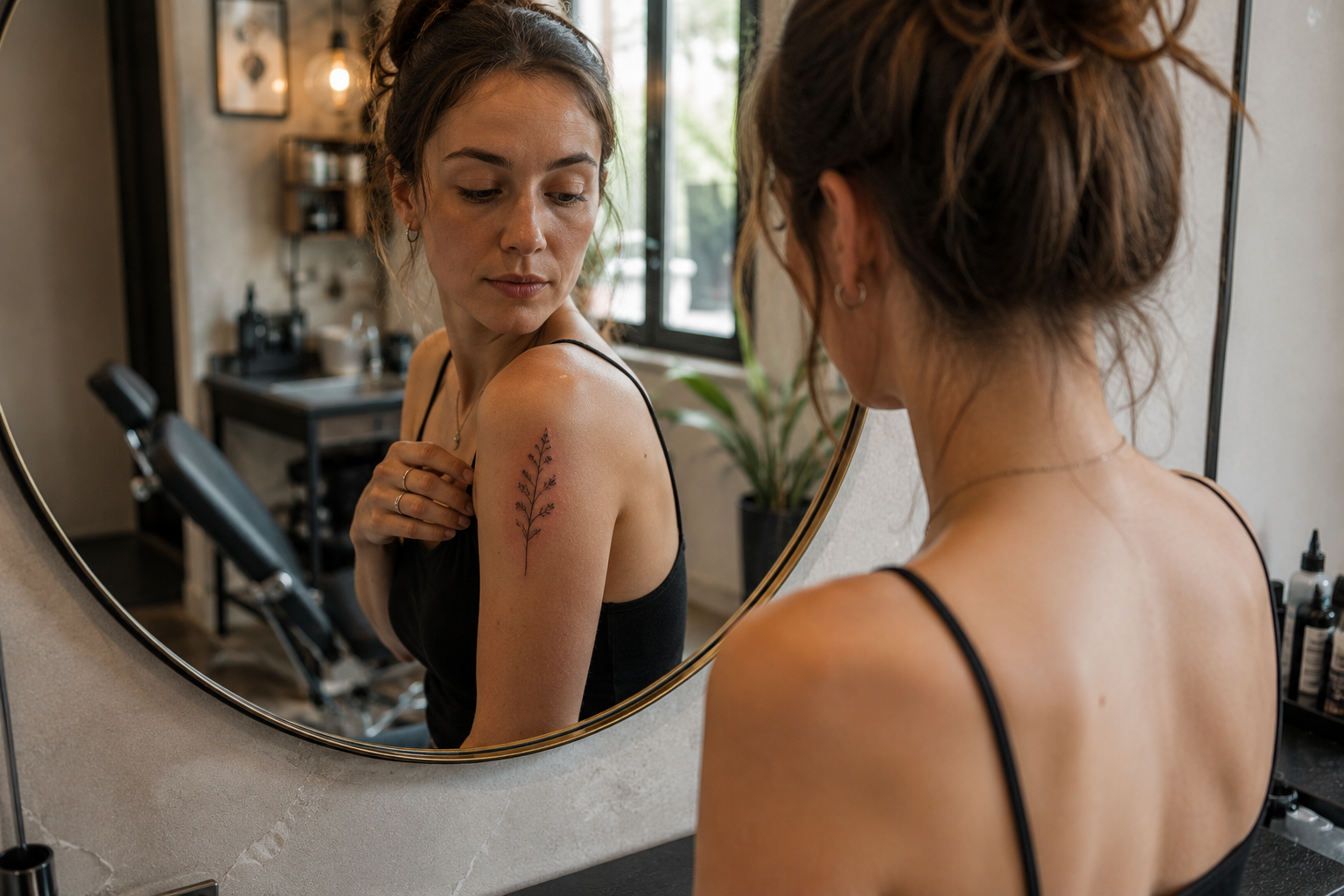
A slender botanical stem is one of the most timeless fine-line designs. Choose a simple branch with two or three leaves rather than an elaborate bouquet. The negative space between the leaves keeps the design light and elegant. This style works especially well along the inner forearm, ankle, ribs, or back of the upper arm.
2. Tiny Olive Branch
An olive branch naturally suits fine-line work because its narrow leaves create movement without requiring heavy shading. A slightly curved branch can follow the shape of the wrist or ankle for a tattoo that feels integrated with the body rather than placed randomly on the skin.
3. Delicate Wildflower
A tiny wildflower can have more personality than a perfectly symmetrical floral design. Look for an artist who can simplify the petals while preserving enough space between the lines. A small daisy, poppy, or meadow flower can look especially beautiful on the forearm or shoulder.
4. Fine-Line Rose
A rose does not have to be bold or traditional. A minimalist version uses a handful of precise curves to suggest overlapping petals. Skip dense shading if you want the design to remain airy. A single rosebud with a thin stem can create an understated alternative to a full floral piece.
5. Lavender Sprig
Lavender translates beautifully into delicate ink. Its long shape makes it useful for narrow placements such as the side of the forearm, ankle, ribs, or upper arm. Keeping the flower buds slightly separated prevents the design from becoming visually crowded.
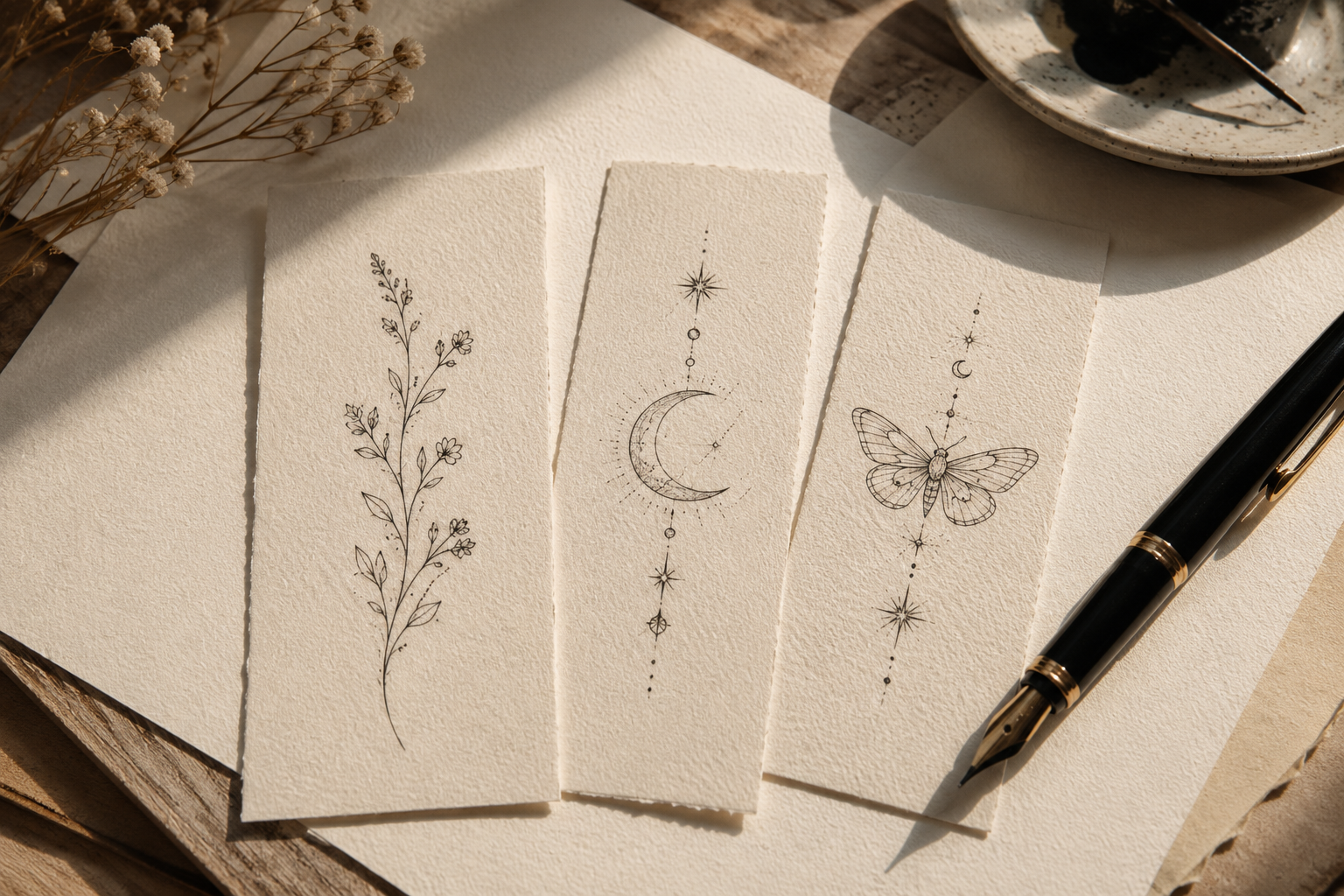
6. Tiny Crescent Moon
A clean crescent moon is ideal if you like celestial imagery but want something subtle. A simple outline can stand alone, while one tiny star nearby adds interest without overwhelming the design. This is a versatile option for the wrist, ankle, shoulder, or behind the arm.
7. Moon and Single Star
Pairing a narrow crescent with one small star creates an intentional composition while maintaining the minimalist aesthetic. Instead of filling every available space with dots and sparkles, let the open skin become part of the design.
8. Minimal Sunburst
A miniature sunburst can feel surprisingly sophisticated when the rays are evenly spaced and carefully executed. Consider a simple central circle surrounded by short lines. The result is graphic enough to be noticeable but delicate enough for a small placement.
9. Tiny North Star
A four-point or eight-point North Star creates a crisp geometric tattoo with very little ink. It is an excellent choice if you prefer symbolism that is not immediately obvious. A precise, symmetrical design can look especially polished on the forearm or shoulder.
10. Minimal Constellation
Instead of recreating an entire night sky, select one constellation and reduce it to its essential stars and connecting lines. Allowing generous spacing between the elements gives this minimalist tattoo design a clean, contemporary finish.
11. Fine-Line Butterfly
Butterflies remain popular because they can be interpreted in countless ways. For a more elevated look, choose an outline with elongated wings and restrained interior detail. A slightly asymmetrical position can make the butterfly appear as though it has just landed.
12. Miniature Moth
A moth offers a moodier alternative to a butterfly while still working beautifully in fine-line ink. Keep the wings recognizable but avoid packing too many patterns into a tiny design. A slightly larger version can accommodate botanical or celestial details inside the wings.
13. Tiny Dragonfly
The naturally slender shape of a dragonfly makes it ideal for fine-line tattooing. A narrow body and transparent-looking wings create a delicate silhouette that works well on the forearm, ankle, shoulder blade, or back of the arm.
14. Minimal Hummingbird
A hummingbird can be simplified into a graceful outline that captures the movement of its wings without heavy shading. Positioning the bird at a slight angle creates a more dynamic design. Give the wings enough room so the individual lines remain distinct.
15. One-Line Cat
For a pet-inspired tattoo that still feels modern, consider a continuous-line cat silhouette. A curved back, small ears, and sweeping tail can communicate the subject with surprisingly few marks. This approach is especially attractive for people who prefer abstract designs.
16. Tiny Paw Outline
A small paw can be meaningful without becoming overly detailed. A clean outline or simplified set of pads often looks more sophisticated than trying to reproduce every feature of a paw print in a very small area.
17. Fine-Line Snake
A slender snake can follow the natural curves of the body beautifully. Consider a gently winding design rather than a tightly coiled snake if you want to preserve the minimalist aesthetic. The forearm, upper arm, ankle, and ribs all provide enough length for graceful movement.
18. Minimal Koi Fish
A koi fish can be reduced to a flowing outline with a few strategic fin details. The curved silhouette provides movement while remaining delicate. Two small koi arranged in a circular composition can also create an elegant balanced design.
19. Tiny Seashell
A miniature shell is a subtle option for anyone drawn to coastal imagery. Choose a recognizable silhouette with only a few interior ridges. This keeps the tattoo readable while maintaining the clean appearance associated with fine-line work.
20. Minimal Wave
A single curved wave can capture the feeling of the ocean without requiring a literal landscape. It is one of the simplest fine-line minimalist tattoo ideas, but thoughtful line movement can make the result feel artistic rather than generic.
21. Mountain Outline
A miniature mountain range looks best when reduced to a few uneven peaks instead of a complicated landscape. Avoid filling the mountains with tiny trees or dense texture if your goal is an understated tattoo. A clean horizon line can finish the composition.
22. Tiny Pine Tree
A small pine tree has enough structure to remain recognizable with minimal linework. Slight irregularities in the branches can keep the design organic. It can stand alone or become part of a small nature-inspired collection.
23. Fine-Line Fern
A fern has a naturally decorative structure, making it ideal for a longer tattoo. The repeated leaves create detail while the thin central stem keeps everything cohesive. Consider the forearm, calf, ribs, or upper arm if you want enough space for the individual leaves to remain clear.
24. Tiny Sparkle Trio
Three small sparkles arranged at slightly different heights can look more intentional than a single isolated symbol. Vary the size of each sparkle while keeping the same line style. The result is understated, playful, and easy to incorporate around an existing tattoo.
25. Minimal Heart Outline
A tiny heart becomes more refined when the lines are delicate and the placement is carefully considered. An elongated or hand-drawn heart can feel more distinctive than a perfectly symmetrical icon. The wrist, arm, ribs, and ankle are classic options.
26. Tiny Anatomical Heart
If a simple heart feels too predictable, a miniature anatomical interpretation adds detail while maintaining the same symbolism. This design usually benefits from being slightly larger than an icon-sized tattoo so the internal lines have enough breathing room.
27. Fine-Line Bow
A delicate ribbon bow combines softness with graphic simplicity. Long trailing ribbons can give the tattoo an editorial quality. It is a particularly attractive choice for the back of the arm, shoulder, thigh, ankle, or wrist.
28. Minimal Perfume Bottle
A tiny vintage-inspired perfume bottle can feel elegant and unexpected. Use a clean rectangular or oval silhouette with only one or two decorative details. Avoid lettering on an extremely small bottle because tiny text can lose definition as the tattoo ages.
29. Miniature Ornamental Key
A narrow antique-style key creates a sophisticated vertical design. A decorative bow at the top provides visual interest while the shaft remains simple. This idea works particularly well on the forearm or upper arm where the design has room to stretch.
30. Tiny Matchstick
A matchstick is an unconventional minimalist tattoo that can carry personal symbolism without being visually complicated. A single straight line, a small match head, and perhaps a tiny flame are enough to create a recognizable design.
31. Fine-Line Candle
A slim candle with a tiny flame creates a romantic, slightly mystical design. Keep the wax drips minimal and use open space around the flame. This is another vertical tattoo that fits naturally along the forearm or back of the arm.
32. Minimal Wine Glass
A tiny wine glass can become a playful lifestyle-inspired tattoo without looking cartoonish. The secret is keeping the silhouette extremely simple. A graceful stem and slightly imperfect bowl can make the illustration feel hand-drawn and sophisticated.
33. Tiny Coffee Cup
A minimalist coffee cup can be created with only a few curved lines. One small wisp of steam adds movement without adding clutter. It is an easy choice for someone who wants a lighthearted tattoo that still fits a refined aesthetic.
34. Fine-Line Initial
An initial can feel far more elegant than a full name when executed in a restrained type style. Consider a narrow serif letter or a subtle handwritten form. Make sure the letter is large enough that its defining details will remain clear after healing.
35. One-Word Script Tattoo
A meaningful word can create a highly personal tattoo, but readability should take priority over making the lettering microscopic. Choose simple handwriting with enough space between letters. Short words generally work better than long phrases for delicate placements.
36. Abstract Continuous Line
An abstract continuous-line tattoo is perfect if you want something artistic without an obvious symbol. The design might suggest a face, body, flower, or movement through only a few curves. These tattoos look especially sophisticated when the composition is simple and balanced.
37. Tiny Botanical and Moon Combination
For a design that feels more customized, combine two minimalist motifs. A slender crescent moon with a tiny leaf branch creates enough detail to feel unique while remaining visually light. Keep the elements connected or closely grouped so the final piece reads as one intentional design.
How to Make a Fine-Line Tattoo Look More Expensive
The subject of the tattoo matters, but execution and composition matter even more. A simple flower from an experienced fine-line artist can look considerably more refined than an intricate design squeezed into a space that is too small.
- Prioritize clean composition. Avoid adding extra stars, dots, leaves, or decorative lines simply to fill space.
- Leave enough negative space. Open skin helps delicate linework remain visually clear.
- Choose an appropriate scale. Making a detailed design extremely tiny does not automatically make it more elegant.
- Work with the body’s natural lines. Long botanical designs can complement the forearm, while smaller rounded motifs can work beautifully near the wrist or shoulder.
- Keep the style consistent. If you combine several elements, use similar line weights and levels of detail.
Bring reference images to your consultation, but use them as direction rather than asking for an exact copy of someone else’s tattoo. A skilled artist can take the mood, proportions, and elements you like and develop an original design suited to your placement.
Fine-Line Tattoo Placements That Feel Intentional
Placement can completely change the character of a delicate tattoo. A small design on an open area may feel understated, while the same tattoo positioned along a natural body line can appear more editorial and deliberate.
Inner Forearm
The inner forearm provides a relatively flat canvas and enough room for botanical stems, script, animals, and vertical designs. It is also easy to see, making it useful if you want to enjoy your tattoo regularly.
Wrist
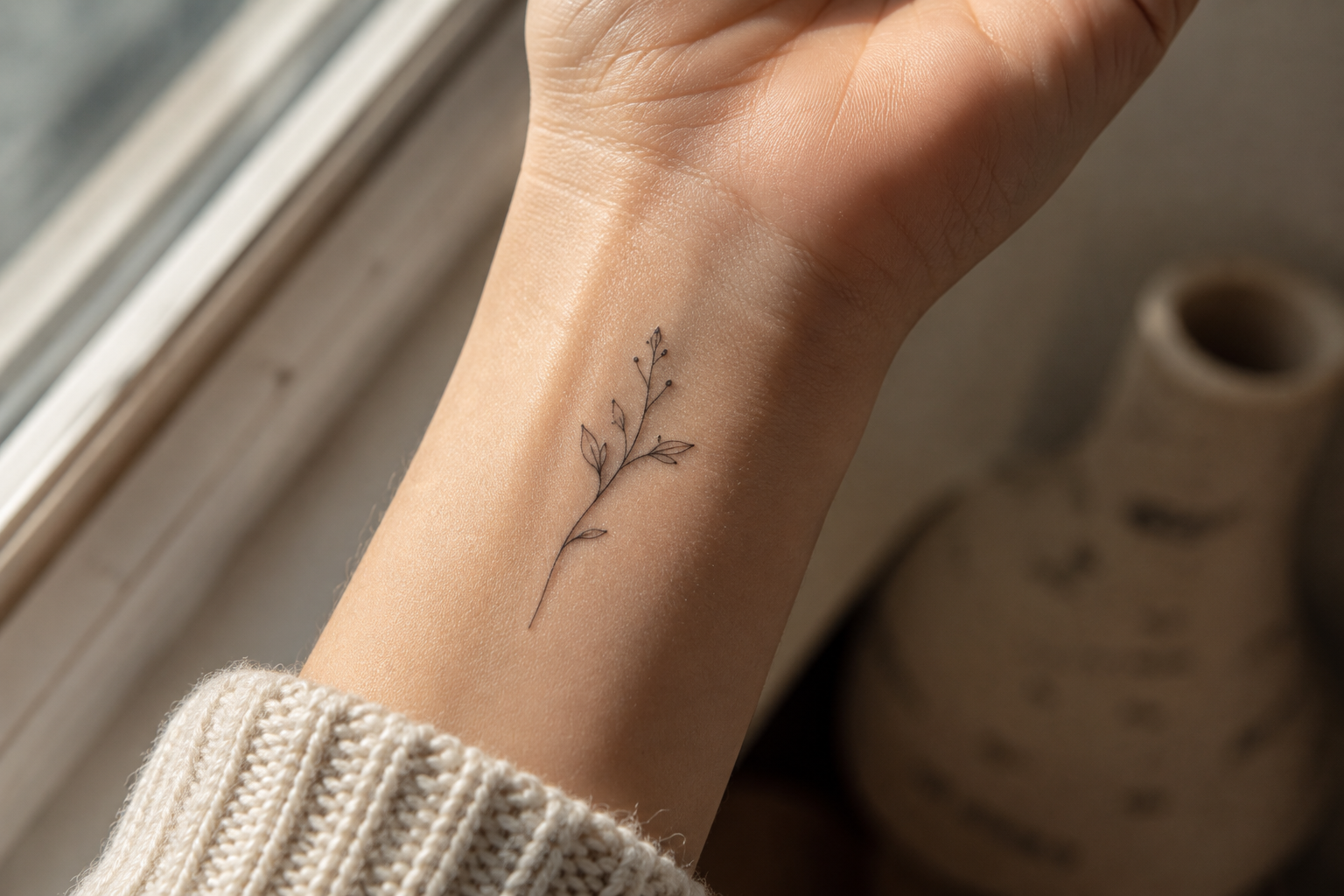
The wrist suits tiny hearts, celestial motifs, short stems, initials, and other simple designs. Because wrists move frequently and receive regular sun exposure, discuss placement and long-term expectations with your tattoo artist.
Back of the Upper Arm
This placement can make even a very simple tattoo feel sophisticated. Vertical flowers, bows, candles, and abstract linework fit naturally here and can be covered easily when desired.
Shoulder and Collarbone
The shoulder provides space for slightly larger minimalist designs, while the collarbone works well with compositions that follow its natural horizontal or diagonal direction. Scale is particularly important around the collarbone because excessively tiny details can disappear visually from a distance.
Ankle
The ankle is a classic choice for subtle ink. Tiny flowers, shells, celestial symbols, and simple animals work well here. Consider how shoes and socks interact with the exact location during the healing period.
Ribs and Side Body
Long botanical designs and simple script can follow the body’s vertical lines beautifully. These areas offer privacy and enough space for a design to breathe, although individual tattoo experiences and sensitivity vary.
Single Needle Tattoo vs. Fine-Line Tattoo: What Is the Difference?
The terms are often used together, but they do not necessarily describe exactly the same thing. Fine-line tattoo generally refers to an aesthetic characterized by thin, delicate linework. A single needle tattoo refers more specifically to a tattooing technique or needle configuration an artist may use to create very precise marks.
Not every fine-line design must be completed entirely with a single needle, and the most appropriate equipment depends on the artist, design, placement, and desired result. Instead of choosing an artist solely because a profile uses the phrase “single needle,” study healed examples of the artist’s work.
Fresh tattoos can look exceptionally crisp in photographs. Healed work gives you a better idea of how an artist’s lines settle into the skin over time. Look for consistent lines, readable details, and designs that still have clear negative space after healing.
The Fine-Line Tattoo Mistake to Avoid
One of the biggest mistakes is assuming that smaller is always better. If you take an intricate drawing and shrink it dramatically, tiny gaps and neighboring lines may become difficult to distinguish as the tattoo settles and ages.
A good artist may recommend increasing the design by a small amount, removing a detail, or widening the space between two lines. Those changes can preserve the minimalist look while giving the design more room to remain legible.
Another mistake is choosing an artist based only on fresh social media photographs. When possible, review healed examples. Fine-line tattooing requires careful decisions about line weight, spacing, depth, and scale, so experience with the specific style matters.
How to Choose Your First Fine-Line Tattoo
If this will be your first tattoo, you do not need to choose the smallest possible design simply because you are new to tattooing. A modestly sized piece with clear lines can be more successful than an extremely tiny design filled with intricate details.
- Choose a general theme. Decide whether you prefer botanical, celestial, animal, ornamental, abstract, or lettering designs.
- Select two or three possible placements. This gives your artist flexibility when considering scale and body movement.
- Collect references for style rather than exact copying. Notice the line weight, amount of negative space, and overall mood you prefer.
- Research artists carefully. Look for portfolios containing both fresh and healed fine-line work.
- Discuss scale before committing. Ask whether the details are appropriately spaced for the size you want.
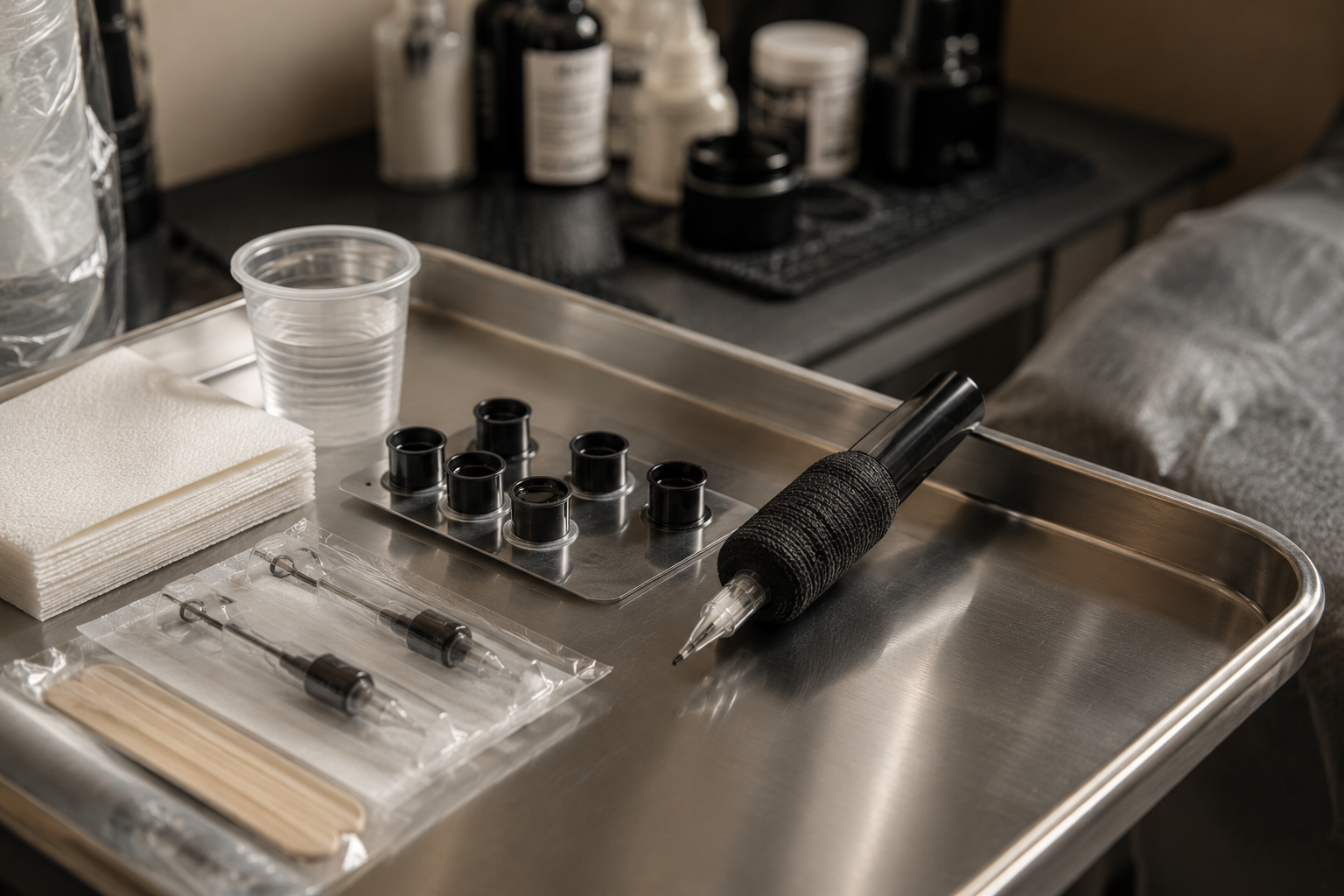
- Understand the full price. Small tattoos may still be subject to a studio minimum because sterile equipment, setup, preparation, and professional time are required regardless of the tattoo’s physical size.
Fine-Line Tattoo Aftercare and Long-Term Appearance
Your tattoo artist should provide aftercare instructions based on the procedure and dressing used. Follow those directions rather than relying on a generic routine from social media. Keep the area clean as instructed, avoid picking at flaking skin or scabs, and do not apply products your artist has told you to avoid.
Protecting healed tattoos from excessive sun exposure is also important for their long-term appearance. Once the tattoo is fully healed, sensible sun protection can help reduce unnecessary fading and preserve contrast.
Fine-line tattoos are still tattoos, and no tattoo remains identical to the moment it was freshly completed. Skin changes, ink settles, and lines can soften over time. Choosing appropriate scale and spacing from the beginning can help a delicate design age more gracefully.
How to Pick the Right Fine-Line Tattoo Artist
A beautiful reference design is only half of the equation. The artist’s technical ability is what turns the idea into a polished tattoo. Search specifically for artists who regularly produce fine-line or minimalist work rather than assuming every tattoo artist specializes in the same techniques.
When reviewing a portfolio, pay attention to more than subject matter. Look closely at line consistency, spacing, symmetry where appropriate, and the clarity of small details. Healed examples are particularly valuable because they show how the work looks after the initial redness and fresh-ink sharpness are gone.
- Look for healed fine-line examples in the artist’s portfolio.
- Check whether small details remain distinct rather than merging together.
- Choose an artist whose existing aesthetic resembles the style you want.
- Ask for professional recommendations on size and placement.
- Do not choose solely on the lowest price.
- Confirm that the studio follows appropriate hygiene and safety practices.
If an artist recommends making a design slightly larger or simplifying a microscopic detail, consider the reasoning carefully. The goal is not merely to create the smallest tattoo possible. The goal is to create delicate artwork that remains visually balanced on your body.
How to Build a Minimalist Tattoo Collection
If you think you may eventually add more tattoos, consider the collection as a whole before filling every small gap. Fine-line tattoos often look particularly sophisticated when there is deliberate breathing room between designs.
You can create cohesion by repeating one visual characteristic. That might be a consistent line weight, similar botanical imagery, a celestial theme, or a collection of tiny objects drawn in the same illustration style.
You do not need to make every tattoo identical. A flower, moth, moon, ornamental key, and handwritten word can still feel connected if their scale and visual weight are complementary.
Spacing also gives you flexibility. Leaving open areas between your first few tattoos makes it easier to add future designs without forcing them into awkward gaps.
Which Fine-Line Minimalist Tattoo Idea Should You Save?
The best fine-line tattoo is not necessarily the most complicated one. Often, the designs that look the most polished use a strong silhouette, thoughtful placement, and just enough detail to make the idea recognizable.
If you love timeless imagery, start with a botanical stem, olive branch, moon, butterfly, or abstract line design. If you want something more personal, consider an initial, meaningful word, pet-inspired outline, constellation, or symbol connected to a place or memory.
Most importantly, give the design enough room to work. A minimalist tattoo should feel intentionally restrained rather than squeezed into an unnecessarily tiny space. The right artist can help refine your reference ideas, recommend an appropriate scale, and adapt the composition to your chosen placement.
Save your favorite fine-line minimalist tattoo ideas, narrow the collection to a few designs you genuinely connect with, and bring those references to an artist whose healed work you trust. That combination of thoughtful design, skilled execution, and realistic expectations is what gives delicate ink its polished, elevated appearance.