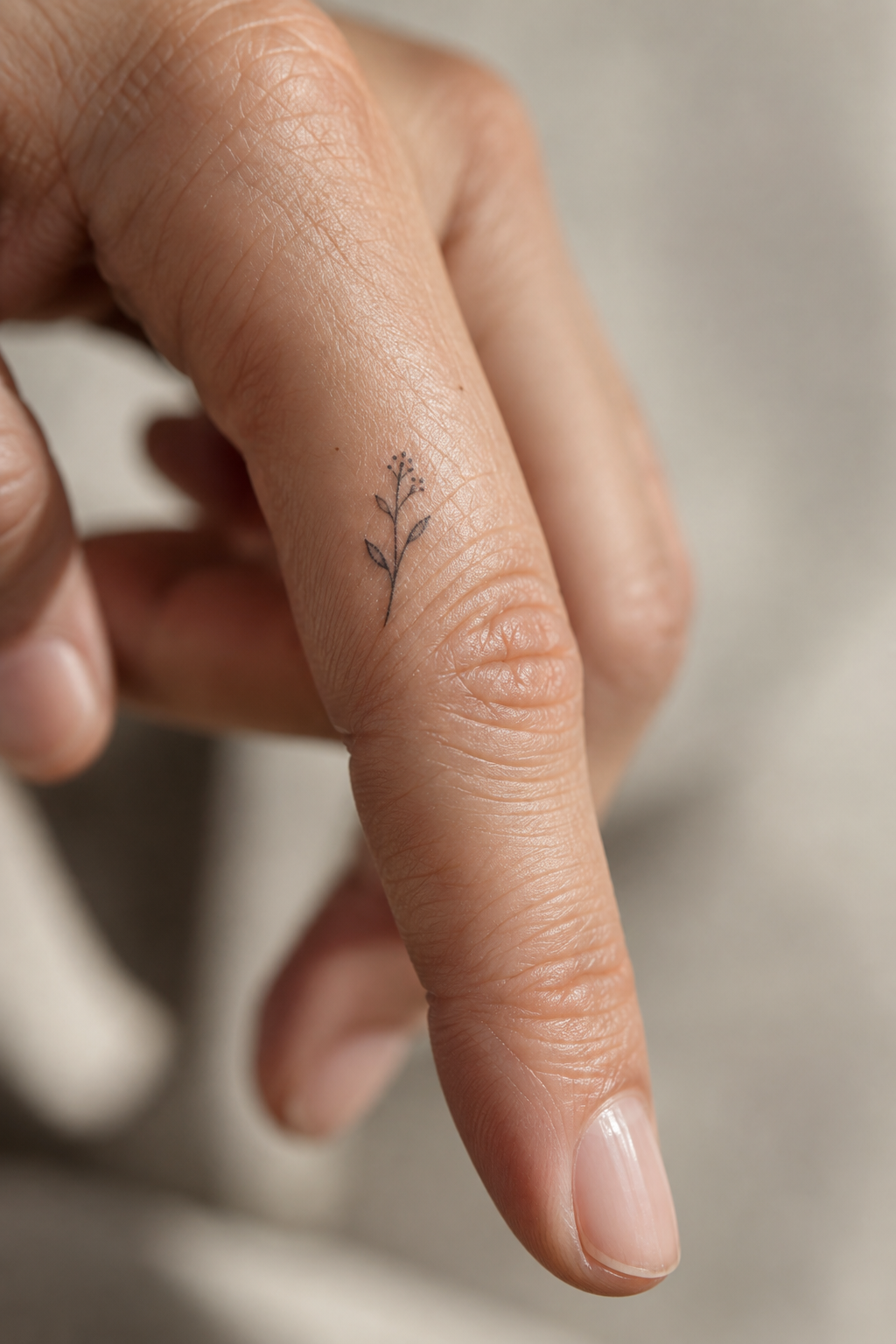
Why Single-Needle Fine-Line Tattoos Look So Delicate
If you love tattoos that feel more like a pencil sketch than traditional bold ink, fine-line single needle tattoo ideas are worth exploring. These designs use extremely restrained linework to create tiny symbols, botanical details, miniature illustrations, lettering, and abstract marks that can look almost weightless against the skin.
The appeal is easy to understand. A barely-there tattoo can add a meaningful detail without visually dominating your wrist, finger, ankle, arm, or other placement. From a distance, some designs are hardly noticeable. Up close, the tiny details become the focus.
However, delicate does not mean maintenance-free. Very small details and extremely thin lines can change as a tattoo heals and ages. Skin moves, stretches, sheds, and responds to sun exposure. Ink can soften or spread slightly over time. A design that looks incredibly intricate on the day it is tattooed therefore needs enough breathing room to remain readable later.
A skilled tattoo artist can help you balance the barely-there aesthetic with realistic long-term expectations. Instead of simply making every element as tiny as possible, the goal is usually to create a design that is small, clean, intentional, and appropriately spaced.
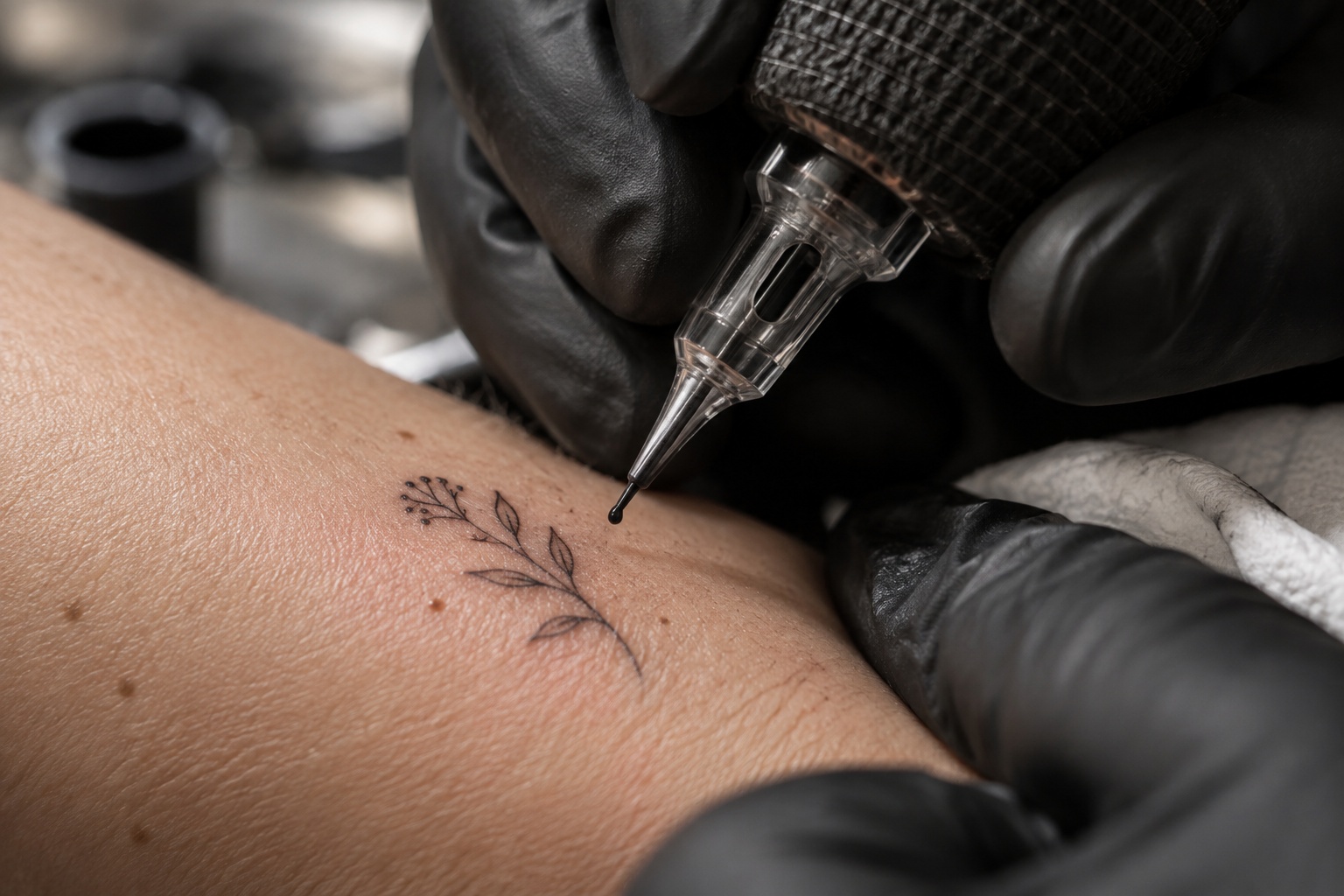
Single Needle vs. Fine Line: What Is the Difference?
Single-needle and fine-line are often used together, but they do not describe exactly the same thing. Fine-line generally refers to the visual style: thin, delicate lines rather than the heavier outlines associated with many traditional tattoo styles.
Single-needle refers more specifically to a tattooing technique that can use a one-needle configuration for extremely precise marks. Not every fine-line tattoo is necessarily produced entirely with one needle, and an artist may choose different needle configurations depending on the design, placement, shading, and desired longevity.
That distinction matters when collecting inspiration. Rather than insisting that every part of a tattoo must be completed with one particular needle configuration, show your artist examples of the finished appearance you want. An experienced fine-line artist can determine which approach is appropriate.
For a barely-there result, focus on visual characteristics such as:
- Thin, controlled outlines
- Generous negative space
- Minimal or very soft shading
- Simple silhouettes
- Small-scale motifs with limited detail
- Clean spacing between individual elements
20 Fine-Line Single Needle Tattoo Ideas
1. Tiny Wildflower Stem
A miniature wildflower is one of the easiest ways to combine fine-line work with an organic shape. Choose a single stem with two or three leaves rather than an elaborate bouquet. The open structure gives the lines room to breathe while maintaining the delicate botanical appearance.
2. Minimal Crescent Moon
A slim crescent moon works beautifully as a barely there tattoo because its silhouette is recognizable without interior detail. Consider the wrist, ankle, upper arm, or another placement where the simple curved shape has enough surrounding negative space.
3. Single-Line Heart
Skip a filled heart and use a tiny open outline instead. A slightly imperfect hand-drawn shape can make the design feel personal rather than overly polished. This idea can also work as a subtle friendship, sibling, relationship, or memorial tattoo.
4. Miniature Spark
A tiny four-point spark is an especially minimal option. It can stand alone or be accompanied by one or two tiny dots. Because the motif is so simple, the tattoo does not depend on complicated miniature details to create visual interest.
5. Delicate Initial
A single initial can carry substantial meaning while occupying very little space. Simple handwritten lettering, restrained serif forms, or clean lowercase characters can all complement fine-line work. Avoid squeezing excessive decorative flourishes into an extremely small letter.
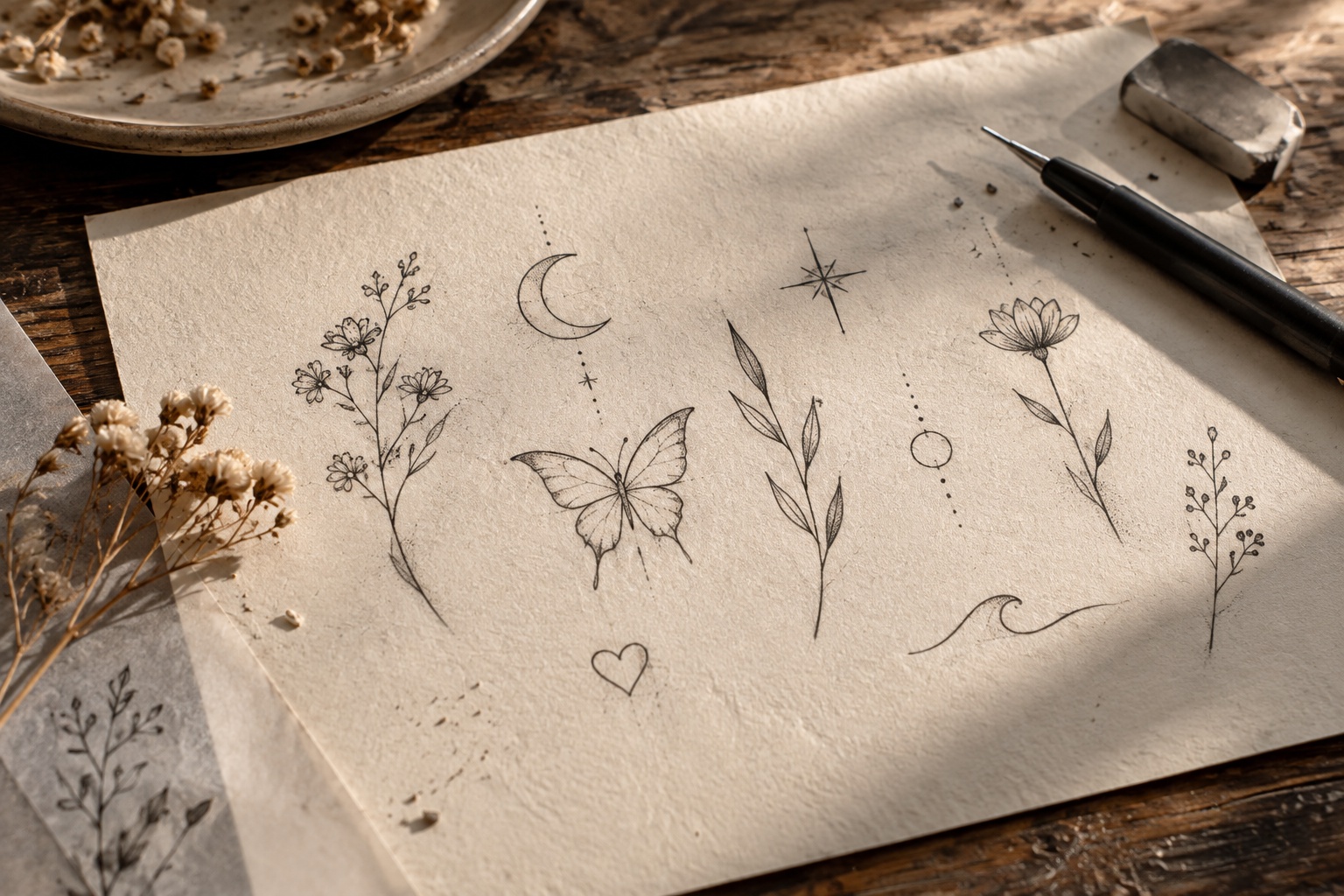
6. Tiny Olive Branch
An olive branch provides a slightly more structured botanical option. A gently curved stem with several narrow leaves creates movement without requiring dense shading. It can follow the natural direction of the wrist, forearm, ankle, or collarbone.
7. Minimal Butterfly Outline
A butterfly does not need detailed wing patterns to be recognizable. A simplified outline using a few carefully positioned lines creates a lighter result. Keeping the wings relatively open also helps preserve the negative space inside the design.
8. Tiny Wave
A small curved wave is ideal for someone who wants a nature-inspired tattoo without a detailed landscape. It may represent the ocean, travel, change, calm, or a personal memory, but it also works simply as an attractive minimalist shape.
9. Fine-Line Star
A tiny outlined star is another design that relies on silhouette instead of internal detail. A single star feels especially subtle, while two or three widely spaced stars can create a small celestial arrangement without making the tattoo visually busy.
10. Mini Birth Flower
A birth flower can make a small botanical tattoo feel more personal. Instead of reproducing every petal and vein, simplify the flower to its most identifiable shapes. A fine stem and restrained flower head can be more effective at miniature scale than an overly detailed botanical illustration.
11. Tiny Abstract Face
Continuous-line faces have an artistic, sketchbook quality that suits fine-line tattoos. At a small scale, reduce the concept to a few essential curves. Eyes, nose, lips, hair, and facial contours do not all need to appear for the image to suggest a face.
12. Minimal Sun
A tiny sun can consist of a clean circle surrounded by a few short rays. Leaving the center unfilled keeps the design visually light. It is a simple option for someone who wants a positive symbol without using lettering or a larger illustration.
13. Fine-Line Bow
A tiny ribbon or bow can feel playful while remaining refined when rendered with restrained linework. Ask for enough separation between the loops, tails, and center knot so the silhouette remains clear rather than becoming a cluster of closely packed lines.
14. Tiny Mountain Outline
Instead of a detailed mountain landscape, try two or three simple peaks. The angular structure contrasts nicely with softer placements such as the inner arm or ankle. It can also represent travel, adventure, a specific place, or simply an appreciation for the outdoors.
15. Small Handwritten Word
A short word can work as a delicate tattoo when the lettering remains readable. Words such as a name, date, place, or private reminder can be more practical at miniature scale than a long quotation. Give letters enough space so loops and strokes do not become crowded as the tattoo ages.
16. Minimal Leaf
One leaf is often enough. A simple outline with a central stem provides the botanical effect without the complexity of a full plant. Consider a slightly elongated shape to create a graceful design that follows the direction of the body.
17. Tiny Dragonfly
A simplified dragonfly can be reduced to a narrow body and four light wings. Avoid packing tiny patterns into the wings if your goal is a barely-there appearance. The recognizable overall silhouette can do most of the visual work.
18. Delicate Coordinates
Coordinates can commemorate a meaningful location without making that meaning immediately obvious to everyone else. Because this design depends on small characters, discuss the minimum practical lettering size and spacing with your artist instead of shrinking a long string of numbers arbitrarily.
19. Tiny Botanical Sprig
A botanical sprig is slightly fuller than a single leaf but still lighter than a bouquet. Choose one slender stem with a few leaves or buds. The design works particularly well when the artist lets the plant’s natural shape determine the composition rather than forcing it into a rigid rectangle.
20. One Meaningful Symbol
Sometimes the strongest delicate tattoo design is the simplest. A tiny circle, abstract mark, zodiac-inspired symbol, minimalist geometric shape, or personally meaningful icon can provide exactly the subtle effect you want. Keeping the composition simple also allows the line quality itself to become the main feature.
Best Placements for a Barely-There Tattoo
Placement affects more than visibility. Different areas experience different amounts of friction, movement, sun exposure, and natural skin change. These factors can influence how a very delicate tattoo looks as it ages.
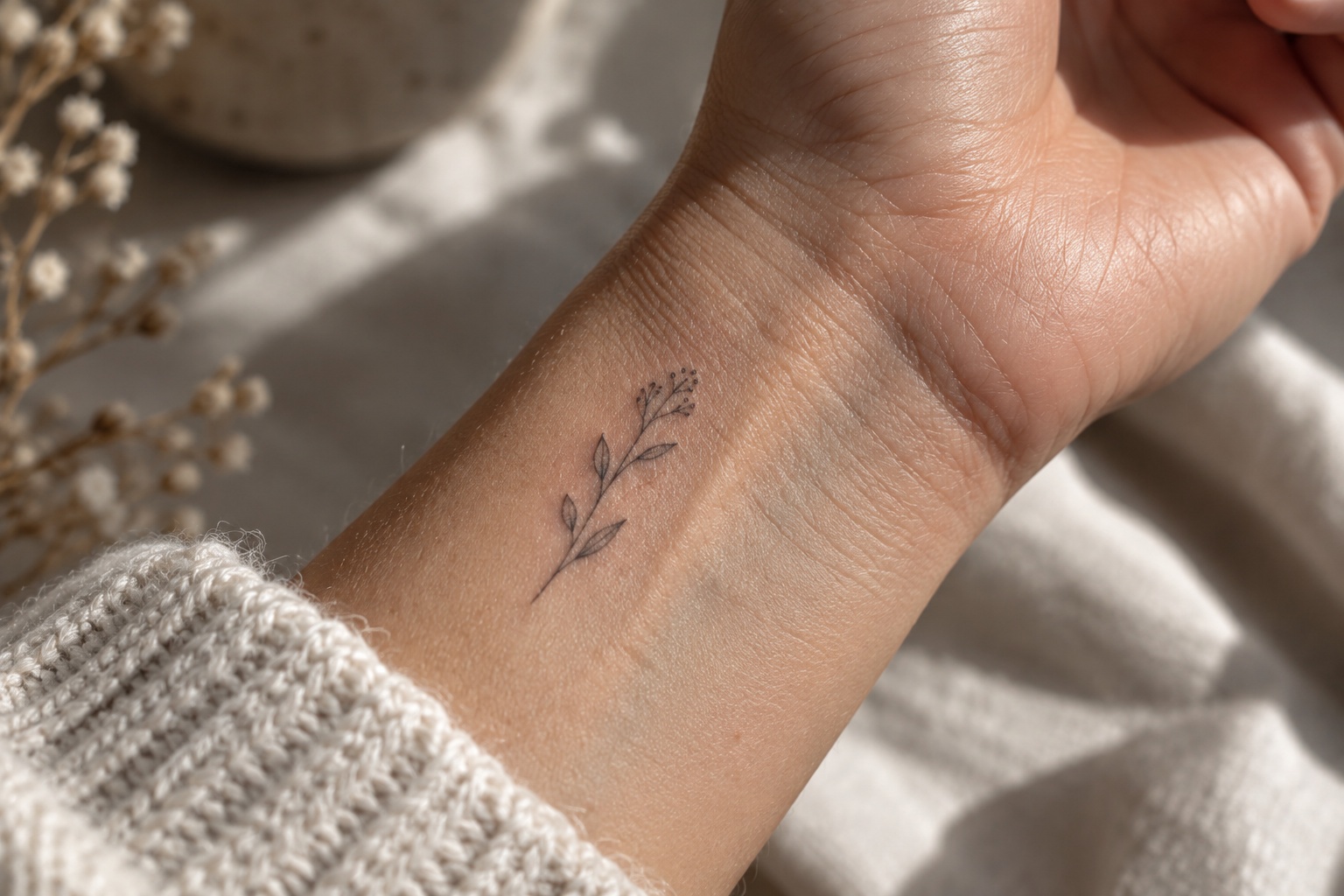
The wrist is popular because a tiny design is easy to see without requiring much space. A botanical stem can follow the arm, while a miniature star, moon, or symbol can sit neatly near the wrist bone.
The forearm provides more room and generally allows an artist to preserve additional negative space. If you love a detailed idea but do not want a large tattoo, slightly increasing the design size on the forearm can sometimes produce a more delicate-looking result than squeezing the same details into a tiny area.
The ankle is another understated option, particularly for botanical, celestial, and abstract designs. Consider where shoes and socks regularly sit when discussing the exact position with your artist.
Finger tattoos are visually striking because the scale is naturally tiny. They are also exposed to frequent washing, movement, friction, and daily wear. If you want a finger tattoo, ask your artist specifically about how their healed work tends to look in that placement and whether the chosen design is suitable.
The upper arm and shoulder offer more protected options for people who want subtle ink without putting it on an area that receives constant hand or clothing friction. Small designs can also be positioned where they disappear beneath a sleeve when desired.
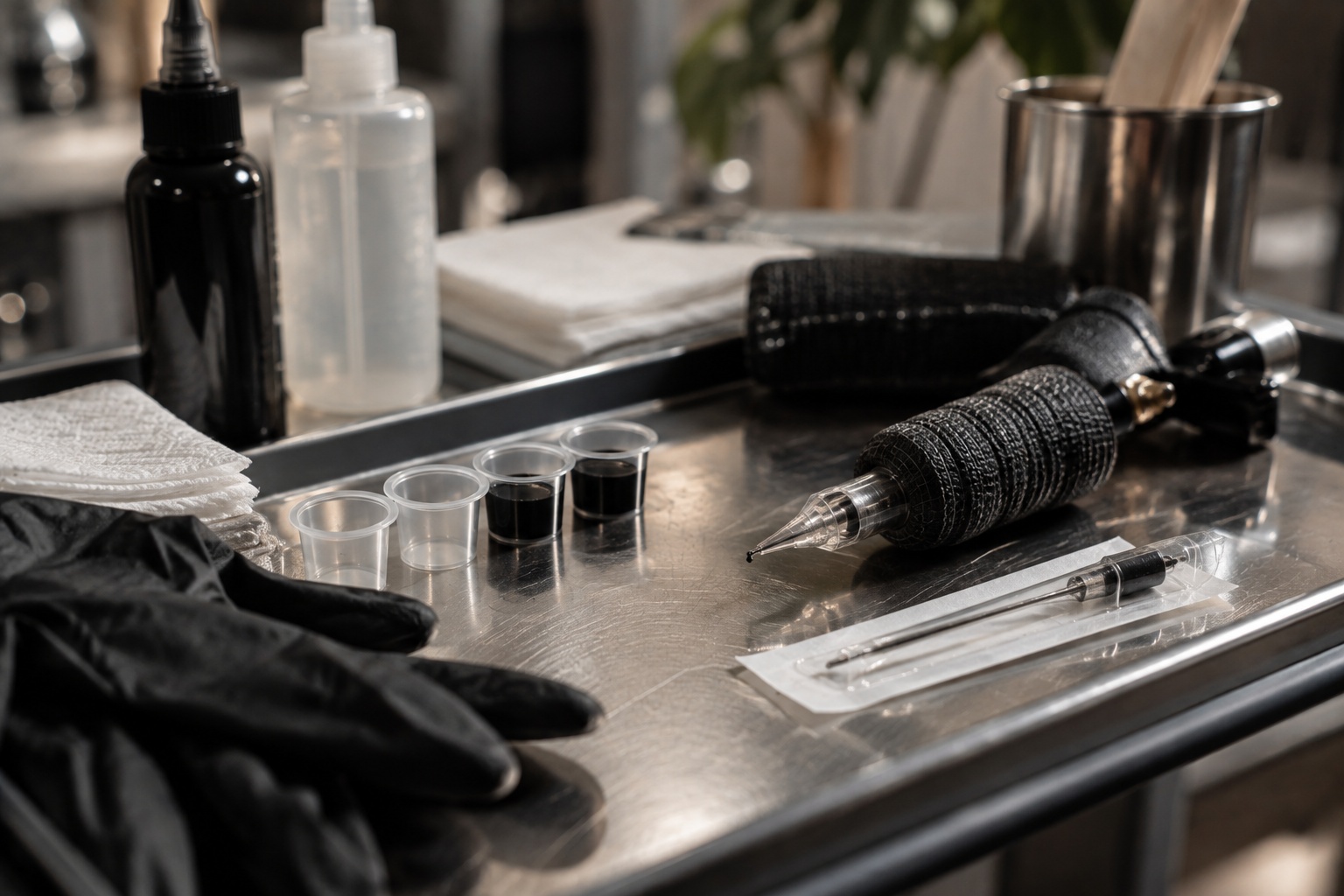
How to Make a Tiny Tattoo Look Delicate Without Making It Too Small
One of the biggest misconceptions about minimalist tattoos is that smaller automatically means more delicate. In reality, a slightly larger design with clean negative space can look lighter than a microscopic design packed with tiny details.
Imagine a miniature flower containing numerous overlapping petals, leaf veins, shading, and a detailed stem. Compressing all of those elements into a very small space creates visual density. Simplifying the flower and allowing slightly more room between its lines can create a much airier result.
When refining your inspiration, try this process:
- Identify the essential shape. Decide which feature makes the motif recognizable.
- Remove unnecessary interior detail. Every tiny decorative line does not need to survive the editing process.
- Preserve negative space. Empty skin is part of the composition.
- Choose placement before final sizing. The body area can affect the practical dimensions.
- Let the artist adjust the design. A few millimeters of additional room can make a significant difference in readability.
Bring references for aesthetic direction rather than expecting an artist to duplicate another person’s tattoo. This gives the artist room to create an original version suited to your anatomy and desired placement.
What to Ask Before Booking a Single-Needle Tattoo
Artist selection is particularly important when you want extremely restrained linework. Look beyond fresh studio photographs and check whether the artist shares examples of healed fine-line work.
Fresh tattoos naturally look darker and sharper immediately after completion. Healed examples give you additional context for how an artist’s technique settles into the skin over time.
Useful questions include:
- Do you regularly create fine-line or single-needle tattoos?
- Can I see examples of your healed work?
- Is my chosen design too detailed for the size I want?
- Would you recommend simplifying or enlarging any elements?
- Is this placement suitable for very delicate linework?
- What aftercare instructions do you recommend for your work?
- What is your policy regarding touch-ups?
A good consultation is not simply about getting approval for the smallest possible version of your reference. It is an opportunity to adapt the concept so it works as an actual tattoo.
The Fading Mistake to Avoid With Delicate Fine-Line Tattoos
The mistake is assuming that an ultra-delicate tattoo can be treated differently from other tattoos once you leave the studio. Proper healing and long-term skin care still matter.
Follow the aftercare directions provided by your tattoo artist. Keep the area clean according to those instructions, avoid picking or scratching healing skin, and do not try to accelerate peeling. Swimming, soaking, and other activities may need to be avoided during the initial healing period according to your artist’s guidance.
Once the tattoo has fully healed, sun exposure is an important long-term consideration. UV exposure can affect tattoo appearance over time, so protecting healed tattooed skin from excessive sun exposure is sensible.
Also remember that a healed tattoo is not a printed image sitting on top of the skin. Some softening with time is normal. The objective should not be to keep the tattoo looking exactly like its first-day photograph forever. Instead, choose a design and artist with the expectation that the tattoo will live and age with your skin.
How to Choose a Design That Can Stay Delicate Long-Term
If longevity matters to you, resist the temptation to judge a tattoo only by how impressive it looks in an extreme close-up immediately after the appointment. Think about the entire composition.
Simple designs generally have fewer elements competing for limited space. A clean crescent, tiny flower, open heart, minimal star, or restrained word can still communicate the barely-there aesthetic without depending on dozens of microscopic lines.
Spacing is equally important. If two tiny lines begin extremely close together, there is less visual margin for natural softening over the years. Giving those lines more breathing room can preserve the overall readability of the motif.
Placement should also be part of the conversation. Areas that receive constant friction or frequent sun exposure may behave differently from more protected areas. Your artist can explain how the specific placement affects the design they recommend.
Most importantly, select an artist because their portfolio demonstrates the style you want. Fine-line tattooing is not simply traditional tattooing made smaller. The balance of line weight, scale, spacing, skin, and composition requires deliberate planning.
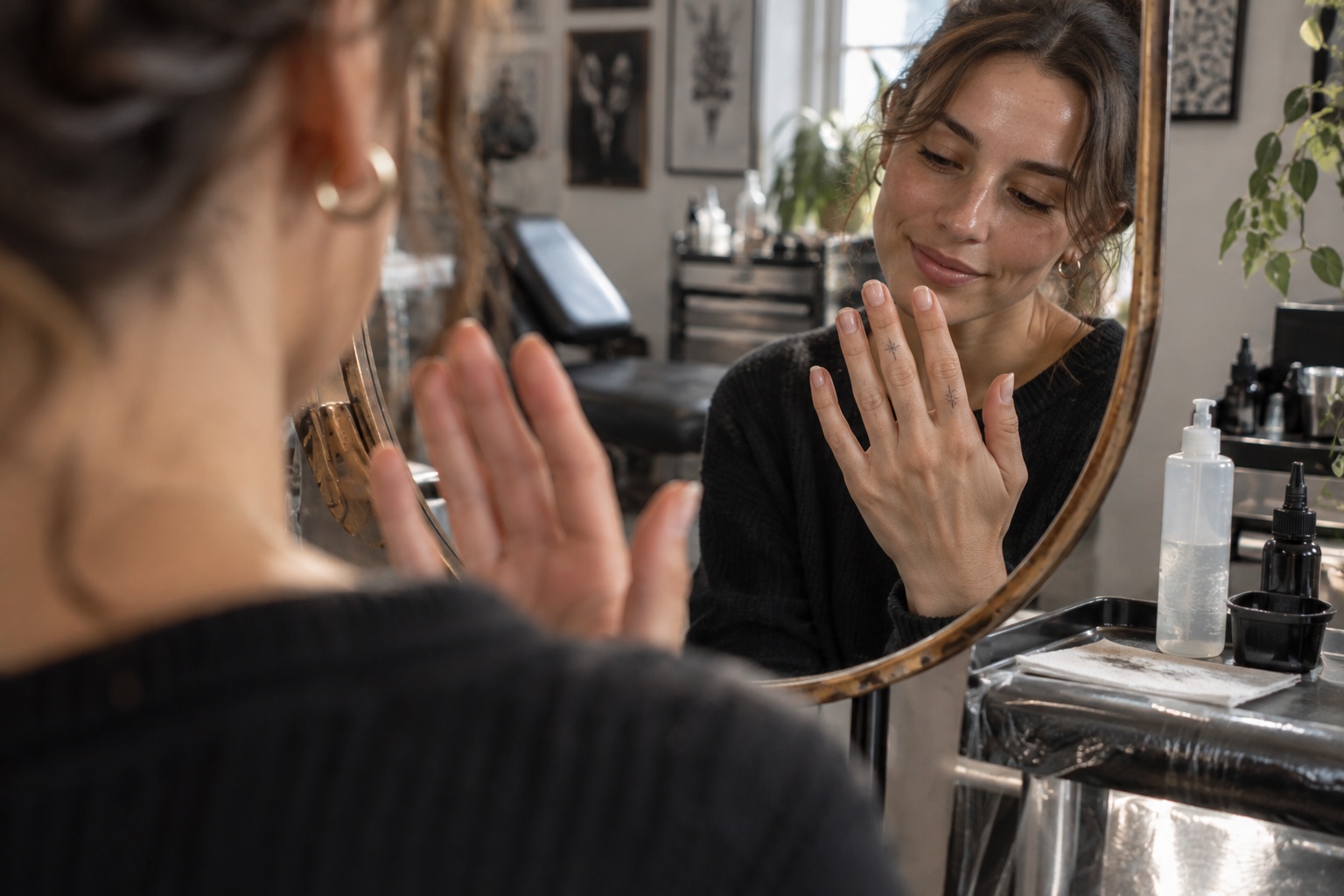
Before Your First Single-Needle Tattoo Appointment
Once you have chosen an artist and design direction, keep the preparation simple. Follow any appointment instructions provided by the studio and arrive with realistic expectations about the consultation process.
Your artist may redraw the reference, remove details, reposition elements, or recommend making the tattoo slightly larger. Those adjustments can be valuable. A design that looks perfect on a phone screen does not automatically translate directly onto moving, three-dimensional skin.
When the stencil is applied, look at it from several angles. Check it while your body is in a natural position rather than judging it only from an extreme close-up. For visible placements, consider how the tattoo interacts with jewelry, sleeves, watches, and the surrounding negative space.
Do not hesitate to request a stencil adjustment before tattooing begins. Moving a design slightly at this stage is much easier than wishing you had changed the placement afterward.
Finding the Right Barely-There Tattoo for You
The best fine-line single needle tattoo ideas do not need to be complicated. A wildflower stem, crescent moon, tiny heart, miniature spark, initial, botanical sprig, or simple abstract symbol can create a striking tattoo precisely because so little ink is involved.
Start by deciding what matters most: symbolism, placement, visibility, or the aesthetic itself. Then choose a concept that can communicate that idea with as few lines as necessary.
If you are drawn to extremely tiny references, bring them to an artist who specializes in delicate work and ask how they would adapt the concept for your skin. Being willing to simplify a detail or increase the size slightly can help maintain the airy appearance you wanted in the first place.
A barely-there tattoo is ultimately about restraint. Clean lines, intentional spacing, a thoughtful placement, and a simple composition can create something subtle enough to disappear at a glance yet detailed enough to reward a closer look.