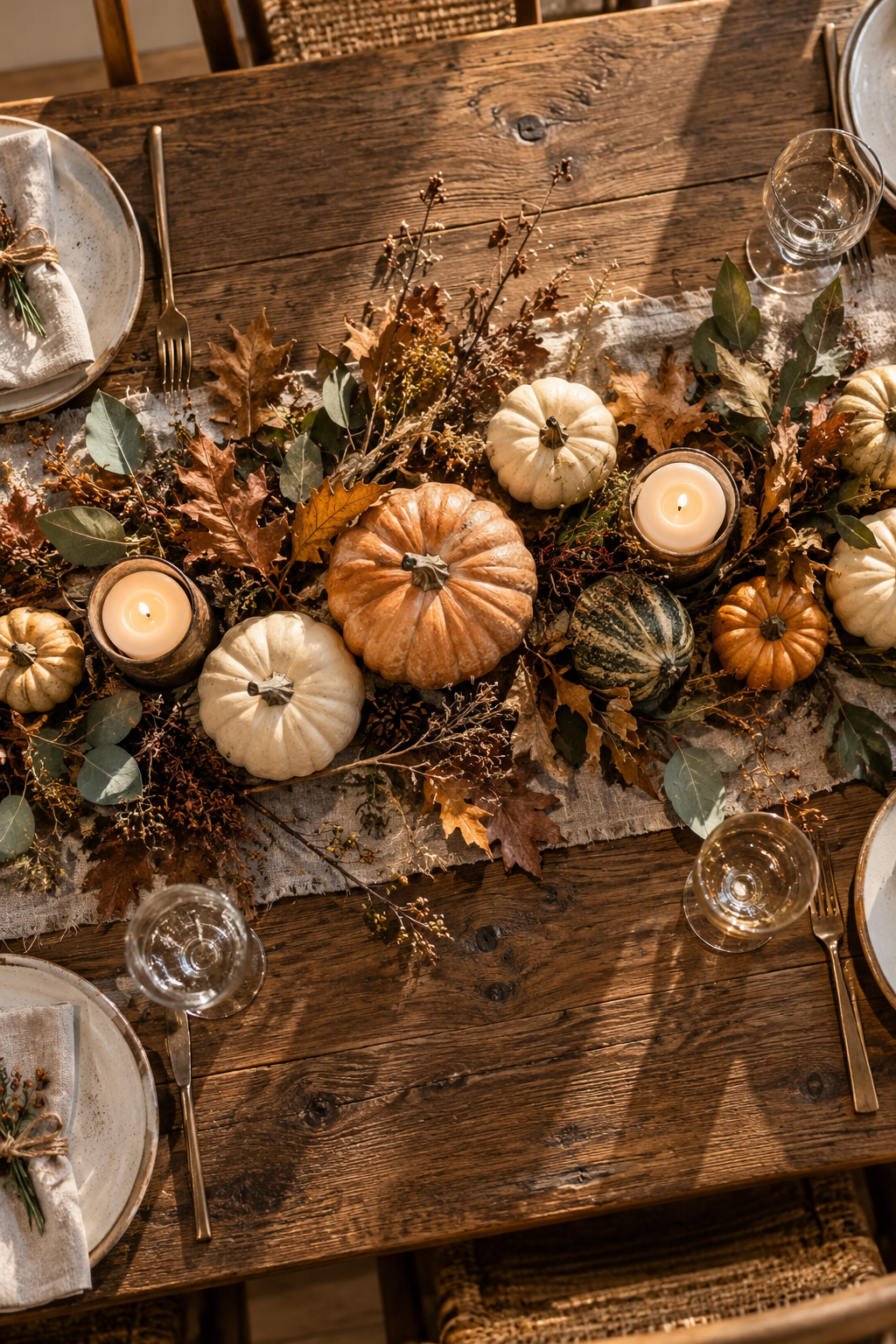
20 DIY Harvest Centerpieces That Take 15 Minutes to Make
A beautiful fall table does not need an elaborate floral arrangement, an expensive trip to the craft store, or an entire afternoon of decorating. Some of the most inviting autumn tables are built from simple materials you may already have: small pumpkins, clipped branches, dried leaves, candles, bowls, jars, and a few pieces gathered from the yard.
If you need a diy harvest table centerpiece before guests arrive, the key is to keep the arrangement low, loose, and uncomplicated. Instead of trying to create one perfect centerpiece, work with natural textures and repeat a few elements down the middle of the table.
The following 20 ideas are designed to take about 15 minutes each once your materials are gathered. They work for casual family dinners, Thanksgiving tables, fall gatherings, or any evening when you want the dining room to feel a little warmer without turning decorating into another project.
What Makes a Quick Harvest Centerpiece Work?
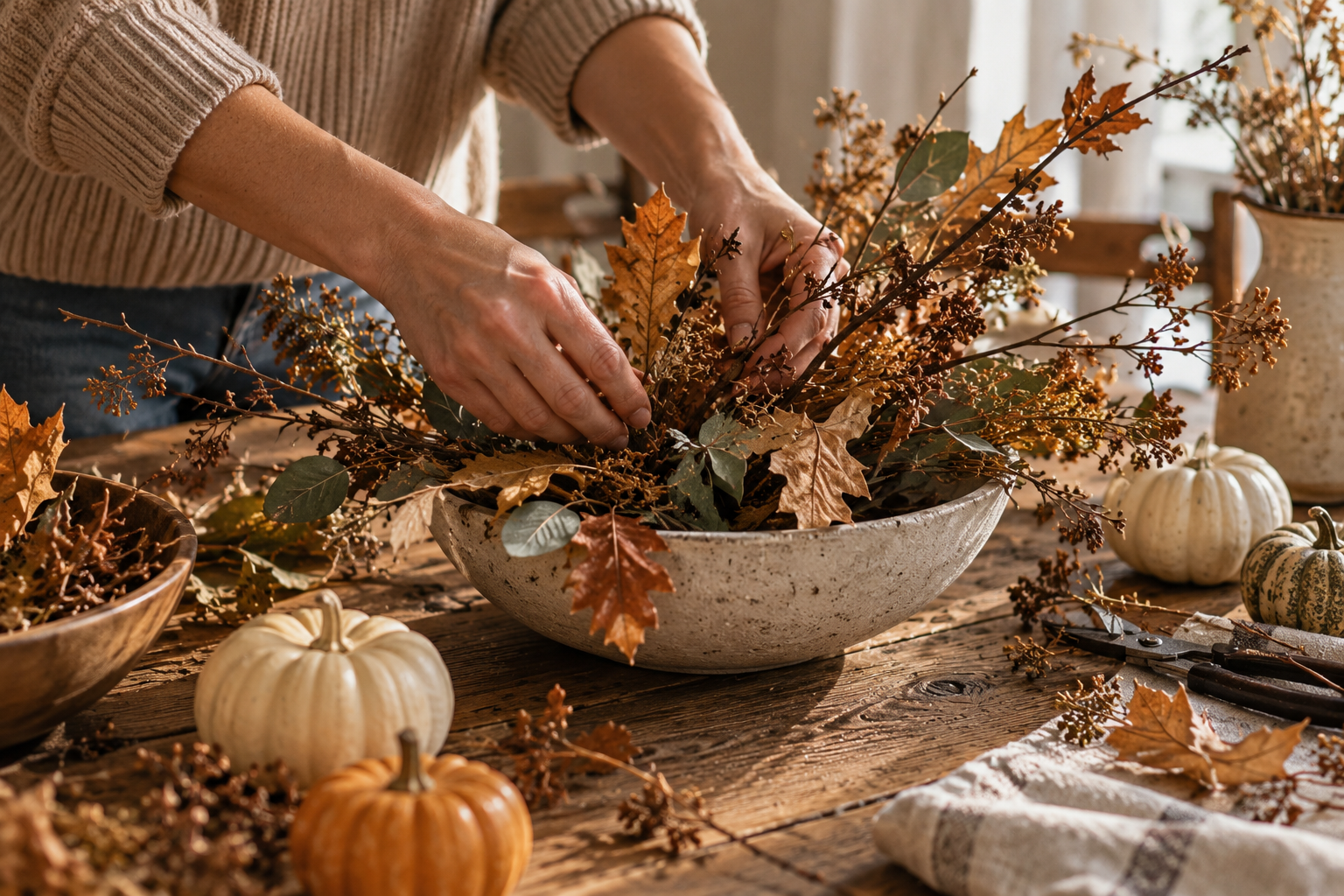
A fast centerpiece is easier to build when you stop thinking of it as a formal floral arrangement. You do not need professional flower-arranging skills. You need a base, one or two seasonal materials, and enough repetition to make the table look intentional.
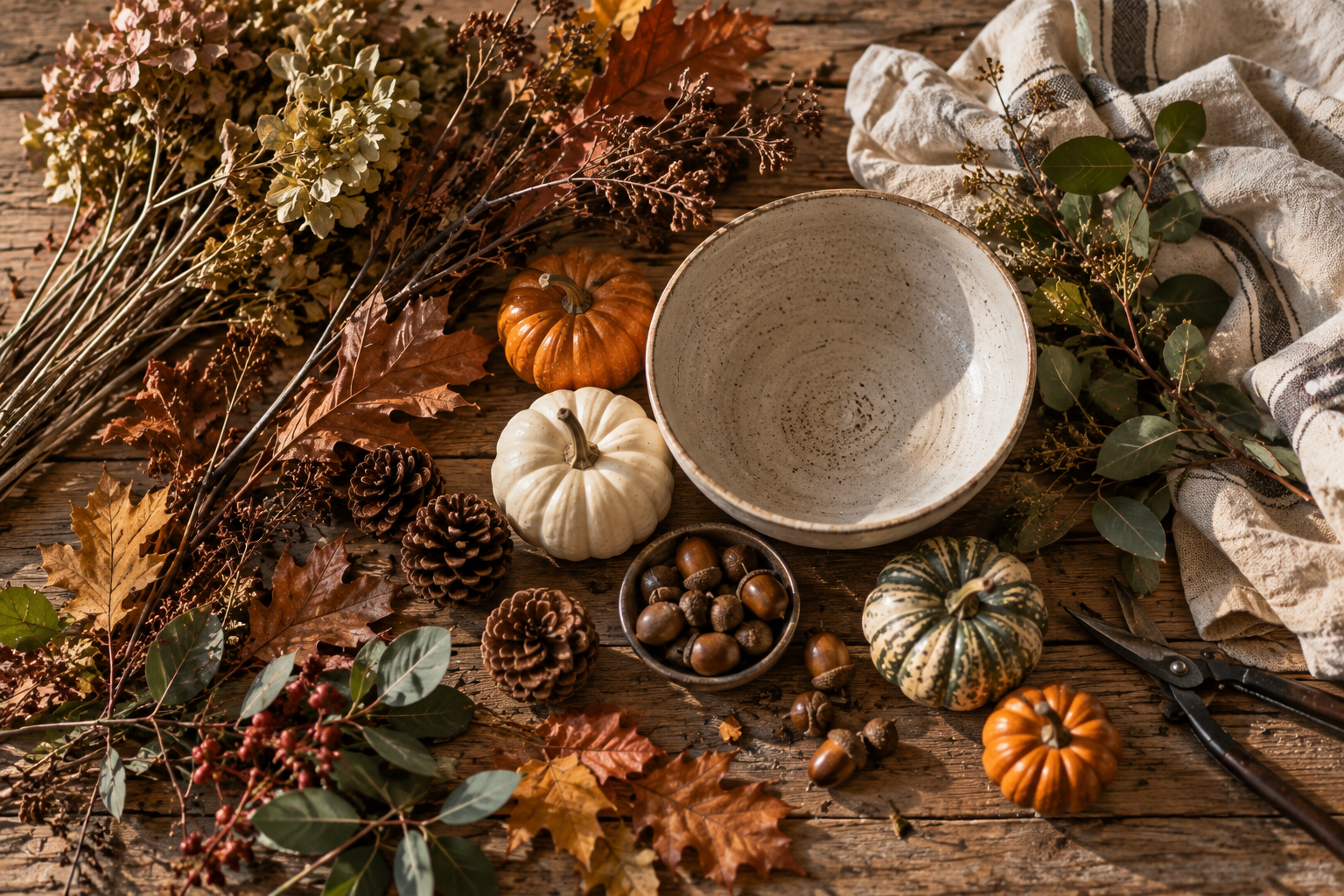
Before you start, look around your kitchen, yard, pantry, and existing fall decor. Useful materials include:
- Small pumpkins and gourds
- Dried or freshly clipped branches
- Autumn leaves
- Pinecones and acorns
- Apples or pears
- Glass jars and bottles
- Wooden bowls and trays
- Matte ceramic bowls or pitchers
- Unscented pillar or taper candles
- Neutral linen napkins or table runners
Choose two or three materials rather than using everything at once. A limited palette makes inexpensive and gathered objects look much more cohesive.
1. Small Pumpkins and Dried Branches
This is one of the simplest fall centerpiece ideas because the ingredients already provide plenty of color and texture. Place three to five small pumpkins along the middle of the table. Tuck short pieces of dried branches between them, allowing the branches to extend naturally rather than arranging them symmetrically.
Use pumpkins in similar muted tones if you want a quieter look. Cream, pale orange, dusty green, and weathered tan work especially well with wood tables and neutral linens.
2. A Low Bowl Filled With Fall Foliage
Grab a shallow ceramic, wooden, or stoneware bowl and fill it loosely with clipped fall foliage. The branches should spread horizontally rather than standing high above the table.
Start with the longest pieces and place them across the bowl. Add shorter branches through the middle. A few imperfect leaves make the arrangement feel more natural, so there is no reason to remove every curled or browned edge.
3. Pumpkins and Candles in a Simple Row
For an easy quick harvest centerpiece, alternate small pumpkins and unscented candles down the center of the table. Keep the spacing relaxed instead of measuring it precisely.
Try three candles with four or five pumpkins for a medium-size dining table. The candlelight gives the arrangement height and warmth while the pumpkins keep the composition grounded.
Always keep flames safely separated from dried leaves, branches, fabric, and other combustible materials.
4. A Wooden Bowl of Apples
Seasonal produce can become table decor in seconds. Fill a wooden bowl with red, green, or softly blushed apples and add two or three leaves around the edges.
Instead of creating a perfectly rounded pile, let a few apples sit at different angles. The variation creates the relaxed abundance associated with a harvest table without requiring additional decorations.
5. Dried Grasses in a Ceramic Pitcher
A pitcher you already own can replace a traditional vase. Add a small handful of dried grasses, wheat-like stems, or delicate branches. Trim the stems so the arrangement stays proportionate to the table.
This works particularly well when the rest of the table is minimal. Add linen napkins and simple dinnerware, and let the natural grasses provide the seasonal detail.
6. A Pumpkin and Eucalyptus Runner
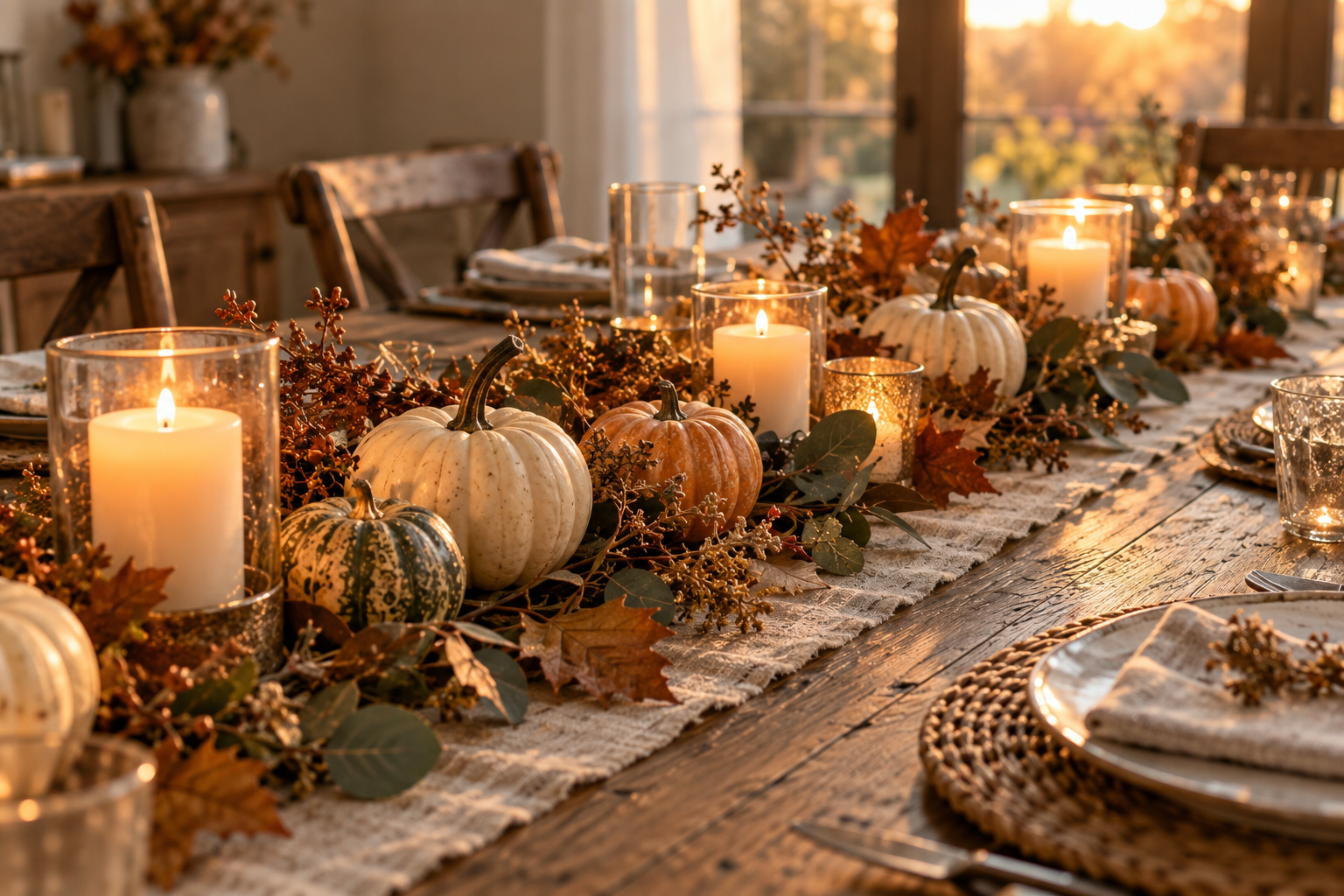
You do not need a fabric runner to create a visual line down the table. Arrange small pumpkins from one end toward the other and weave loose eucalyptus or another flexible leafy stem between them.
Keep the foliage close to the tabletop. The resulting arrangement feels abundant without creating a tall barrier between guests.
7. Mason Jars With Clipped Autumn Branches
Place three simple glass jars along the center of the table and add one or two clipped branches to each. Using fewer stems can actually make the arrangement look more intentional.
Choose branches with interesting shapes rather than trying to find flawless leaves. Vary the height slightly from jar to jar while keeping the overall arrangement low enough for comfortable conversation.
8. Pinecones, Candles, and a Wood Tray
A narrow wooden tray instantly gives loose objects structure. Place two or three candles on the tray, then scatter pinecones around their bases.
Add a few acorns or tiny pumpkins if you have them, but leave visible space between the materials. That negative space prevents a simple diy table centerpiece from looking cluttered.
9. Pears and Dried Leaves
Pears have a soft, sculptural shape that works beautifully with understated harvest decor. Arrange five or seven pears down the table and tuck dried leaves between them.
Green pears create a natural contrast against warm wood, while golden varieties produce a richer autumn palette. Use whichever looks best with your existing dinnerware.
10. One Statement Pumpkin With Branches
If you only have one pumpkin, make it the focal point. Set a medium pumpkin in a low bowl or on a wooden board and arrange clipped branches loosely around the base.
The trick is choosing a pumpkin with enough visual character to stand alone. An unusual stem, natural color variation, or imperfect surface often looks more interesting than a perfectly uniform pumpkin.
11. Mini Pumpkins on a Linen Runner
Spread a neutral linen runner down the table and place miniature pumpkins along it at irregular intervals. You can stop there or add a few leaves for extra texture.
Soft, rumpled linen works especially well because it contrasts with the firm ridges of the pumpkins. Avoid over-styling the fabric. A few natural folds create the relaxed look you want.
12. A Collected Yard-Find Centerpiece
One of the least expensive options begins outside. Gather fallen branches, pinecones, acorns, interesting leaves, or seed pods that are clean and safe to bring indoors.
Place a low bowl in the middle of the table and loosely layer your collected materials inside. Keep the best-looking pieces visible at the top and allow one or two small branches to extend beyond the edge.
Do not bring in unknown berries, fungi, irritating plants, or materials showing mold, insects, or decay.
13. Amber Bottles With Single Stems
Save a few amber glass bottles or use small tinted vases. Put one simple branch or dried stem in each bottle and group three together.
The colored glass creates warmth even before candles are lit. For a longer table, divide five bottles into two loose groups rather than creating one large arrangement in the center.
14. A Cutting Board Harvest Display
A large wooden cutting board can become the foundation for a centerpiece you can move whenever dinner is served. Place two small pumpkins on the board with a short ceramic vase and several pieces of dried foliage.
Let some of the board remain exposed. Visible wood grain adds another texture and keeps the arrangement from looking overloaded.
15. Candles Surrounded by Mini Gourds
Place three unscented candles down the middle of the table and loosely arrange miniature gourds around them. Choose gourds with different shapes but a related color palette.
For a softer aesthetic, combine cream and pale green. For a more traditional harvest table, use orange, yellow, green, and natural brown.
Maintain a generous safety zone around every flame, or use quality flameless candles if you want foliage or other materials positioned nearby.
16. Dried Hydrangeas in a Low Bowl
Dried hydrangeas provide plenty of volume, which means you need very few stems. Place two or three dried flower heads in a low bowl and allow them to rest naturally rather than forcing them upright.
Muted brown, dusty rose, faded green, and parchment-colored blooms fit naturally into a harvest palette. Add one small pumpkin beside the bowl if you want to make the arrangement feel more distinctly autumnal.
17. Pumpkin, Candle, and Leaf Clusters
Instead of building one continuous arrangement, make three small clusters. Each cluster can contain a mini pumpkin, a candle, and one or two autumn leaves.
Place one cluster near each end of the table and another in the center. Repeating the same basic formula makes the tablescape look coordinated while leaving plenty of open space for serving dishes.
18. A Basket Filled With Autumn Produce
A shallow basket filled with apples, pears, mini pumpkins, or small squash creates an instant harvest centerpiece. Line the bottom with a folded neutral napkin if the basket feels too deep.
Use enough produce to create abundance without piling it precariously. Finish with a short dried branch placed diagonally across one side.
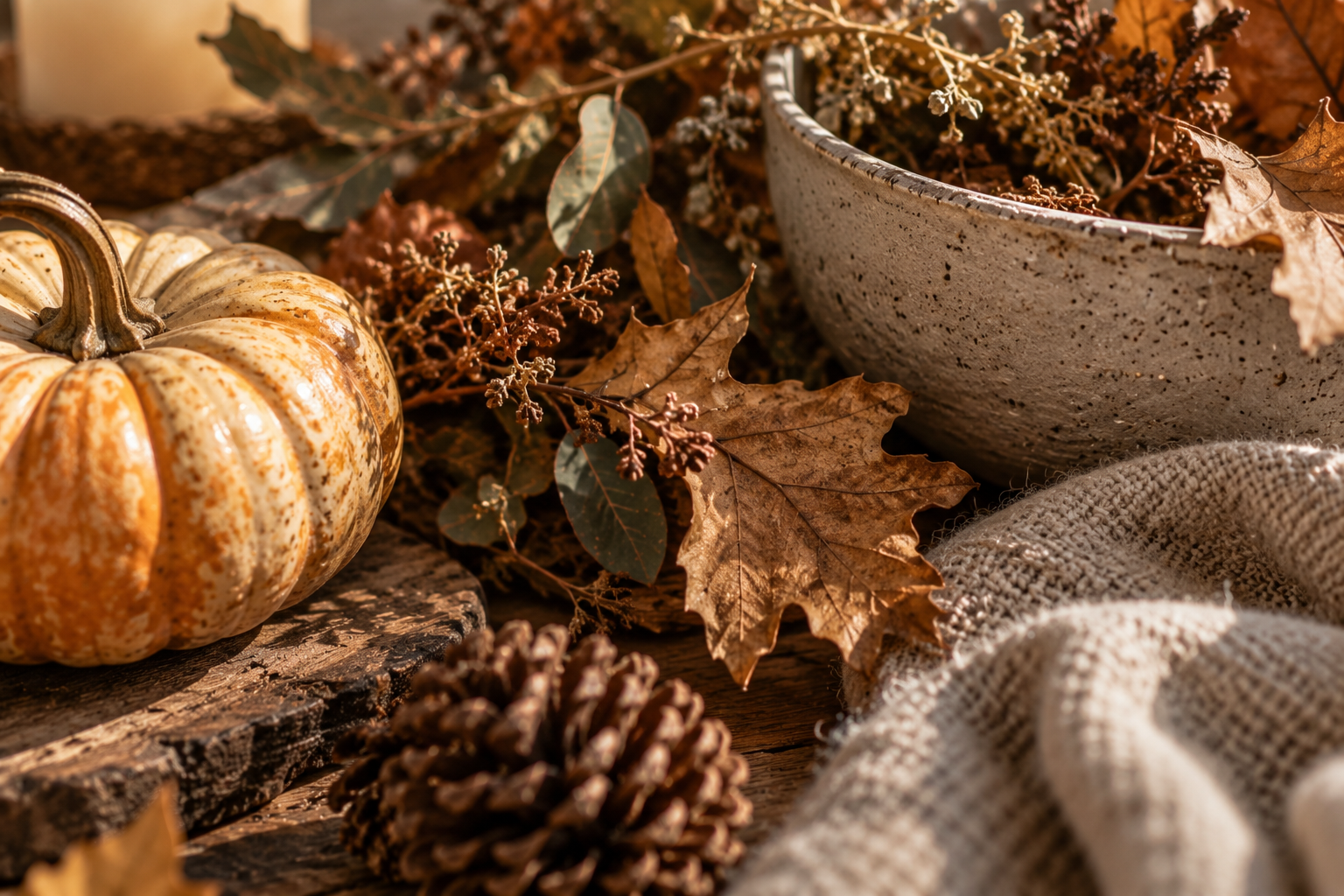
19. A Simple Branch-and-Candle Tablescape
Lay one or two attractive branches lengthwise down the center of the table. Place several candles nearby, making sure there is ample distance between flames and branches.
This idea is especially effective on a bare wood table because the materials share a natural, earthy quality. Add cream dinnerware and simple glassware rather than competing with the centerpiece.
20. The Five-Minute Pantry Harvest Centerpiece
If guests are nearly at the door, use what you have in the kitchen. Put apples or pears into your best bowl, place it in the middle of the table, and add two small candles on either side.
Lay one or two clipped leaves beside the bowl if you have safe foliage available. That is enough. A centerpiece does not need multiple craft supplies to make the dining table feel considered.
How to Build a DIY Harvest Table Centerpiece in 15 Minutes
If you want to create your own arrangement instead of copying one of the ideas exactly, use this simple formula.
- Choose your base. Use a shallow bowl, tray, cutting board, basket, runner, or simply the table itself.
- Pick one hero material. Pumpkins, apples, pears, dried foliage, or candles can provide the main visual theme.
- Add a contrasting texture. Pair smooth pumpkins with dried branches, glossy fruit with weathered wood, or ceramic with soft linen.
- Repeat the main material. Three or five similar objects generally look more deliberate than several unrelated decorations.
- Keep the center low. Sit down and check the arrangement from a guest’s perspective before calling it finished.
This formula also makes it easy to adapt the centerpiece to what you already own. There is no required shopping list.
The Centerpiece Mistake That Can Ruin a Dinner Table
The most common practical mistake is making the centerpiece too tall or visually dense. An arrangement may look impressive when photographed from above but become frustrating when people sit down and cannot comfortably see one another.
Before dinner, sit in a chair at the table and look directly across it. If the main arrangement blocks another guest’s face, lower it, spread it horizontally, or move taller pieces to a console or sideboard.
Low bowls, miniature pumpkins, short candles, fruit, and branches laid lengthwise are particularly useful for dining tables because they create atmosphere without taking over the conversation.
How to Make a Fast Centerpiece Look More Expensive
The difference between a random collection of fall objects and an editorial-looking tablescape is often restraint. You do not necessarily need better materials; you need fewer competing materials.
Try limiting your centerpiece to three dominant colors. Cream pumpkins, brown branches, and warm wood can be enough. Another combination might use green pears, ivory candles, and faded foliage.
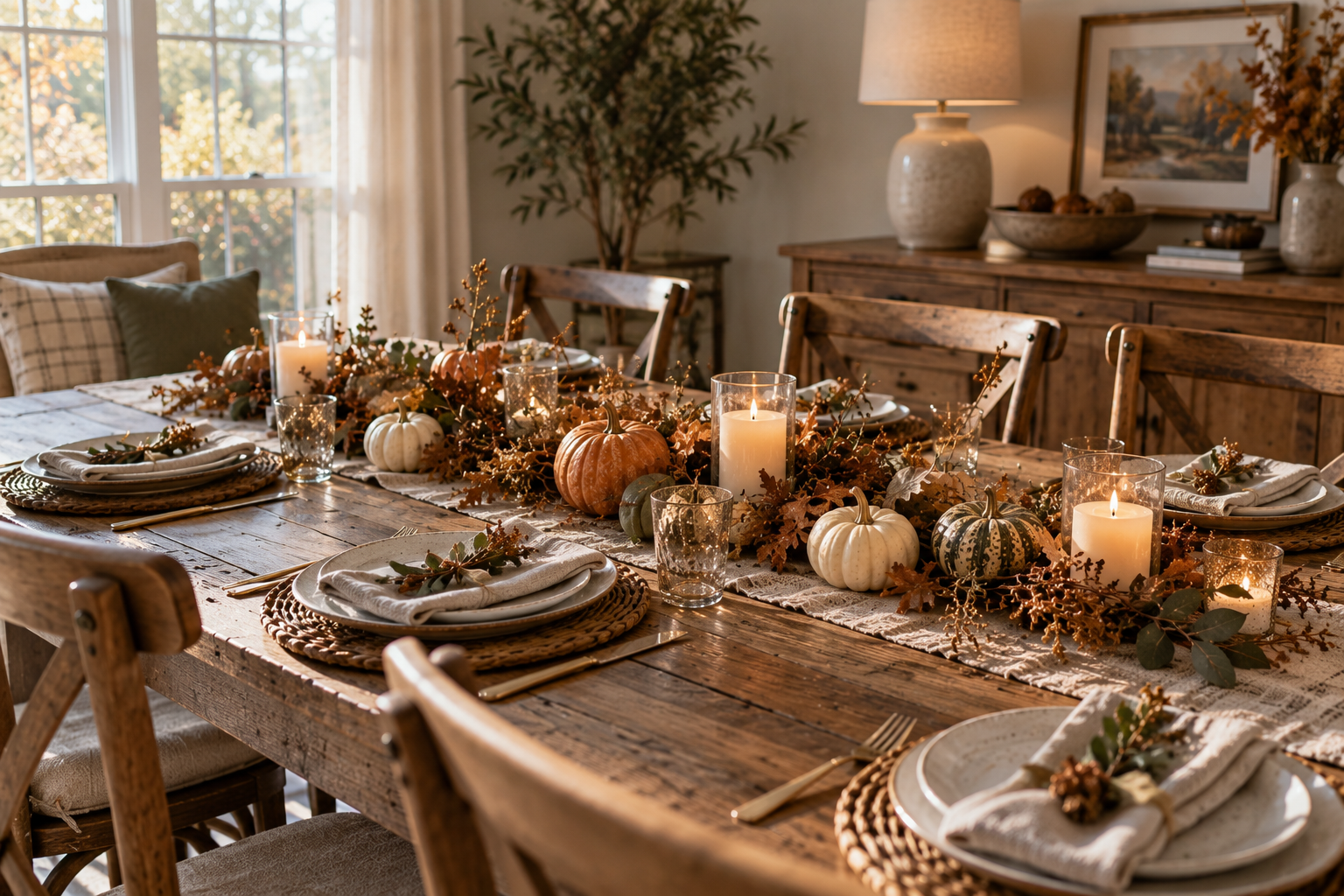
Texture can do more work than color. Weathered wood, matte ceramic, rumpled linen, pumpkin ridges, dried leaves, and clear glass all respond differently to natural light. Combining two or three of these surfaces gives the table depth without requiring excessive decoration.
Finally, repeat elements. If you use one small pumpkin, consider using three. If you use one amber bottle, group it with two more. Repetition turns ordinary objects into a deliberate design choice.
Use What You Already Have Before Buying Fall Decor
A seasonal centerpiece is an ideal place to decorate from your existing collection. A wooden salad bowl, ceramic pitcher, cutting board, glass jar, neutral napkin, or basket can become the base for an arrangement.
Then add seasonal materials rather than purchasing an entirely new centerpiece. Pumpkins and fruit can later be used elsewhere or eaten when appropriate. Yard finds may provide texture at little or no cost. Existing candles can add warmth without introducing another decorative object that needs to be stored after fall.
This approach is particularly helpful if you enjoy changing your table frequently. Instead of storing several finished centerpieces, keep versatile basics and change the natural materials with the season.
Quick Harvest Centerpieces for Small Tables
Small dining tables need even more restraint. Instead of placing a large bowl in the center, use a narrow line of two or three miniature pumpkins, a single short vase, or one compact cluster of fruit and foliage.
Another option is to create the centerpiece on a small tray. When you need extra room for serving dishes, you can lift the entire arrangement away in seconds without dismantling it.
For a round table, concentrate the arrangement in one low central cluster rather than stretching materials toward each place setting. A low ceramic bowl with a few pumpkins and branches can provide enough seasonal character without reducing usable table space.
How to Style the Rest of the Harvest Table
Once the centerpiece is finished, the rest of the table can stay simple. Neutral dinnerware gives natural materials room to stand out. Clear glasses, simple flatware, and linen or cotton napkins provide enough texture without making the setting busy.
If the centerpiece contains several orange elements, you do not need orange napkins, orange plates, and orange glasses as well. Repeating one autumn color once or twice is usually enough.
For evening dinners, use warm candlelight as part of the overall design. During daytime gatherings, position the table where natural window light can emphasize the textures of dried foliage, wood, linen, and seasonal produce.
A Beautiful Fall Table Does Not Need to Take All Afternoon
The best diy harvest table centerpiece is not necessarily the arrangement with the most flowers, pumpkins, or decorations. It is the one that fits your table, works with what you already have, and leaves you enough time to enjoy the gathering.
Start with a low bowl, tray, or runner. Add one seasonal element such as pumpkins, fruit, or dried foliage. Bring in one contrasting texture, then stop before the table feels crowded. In many cases, 15 minutes is more than enough.
Whether you choose a row of mini pumpkins, a bowl of apples, clipped autumn branches, or a few candles surrounded by natural materials, a quick harvest centerpiece can make an ordinary dinner feel warm and seasonal without creating another complicated project.