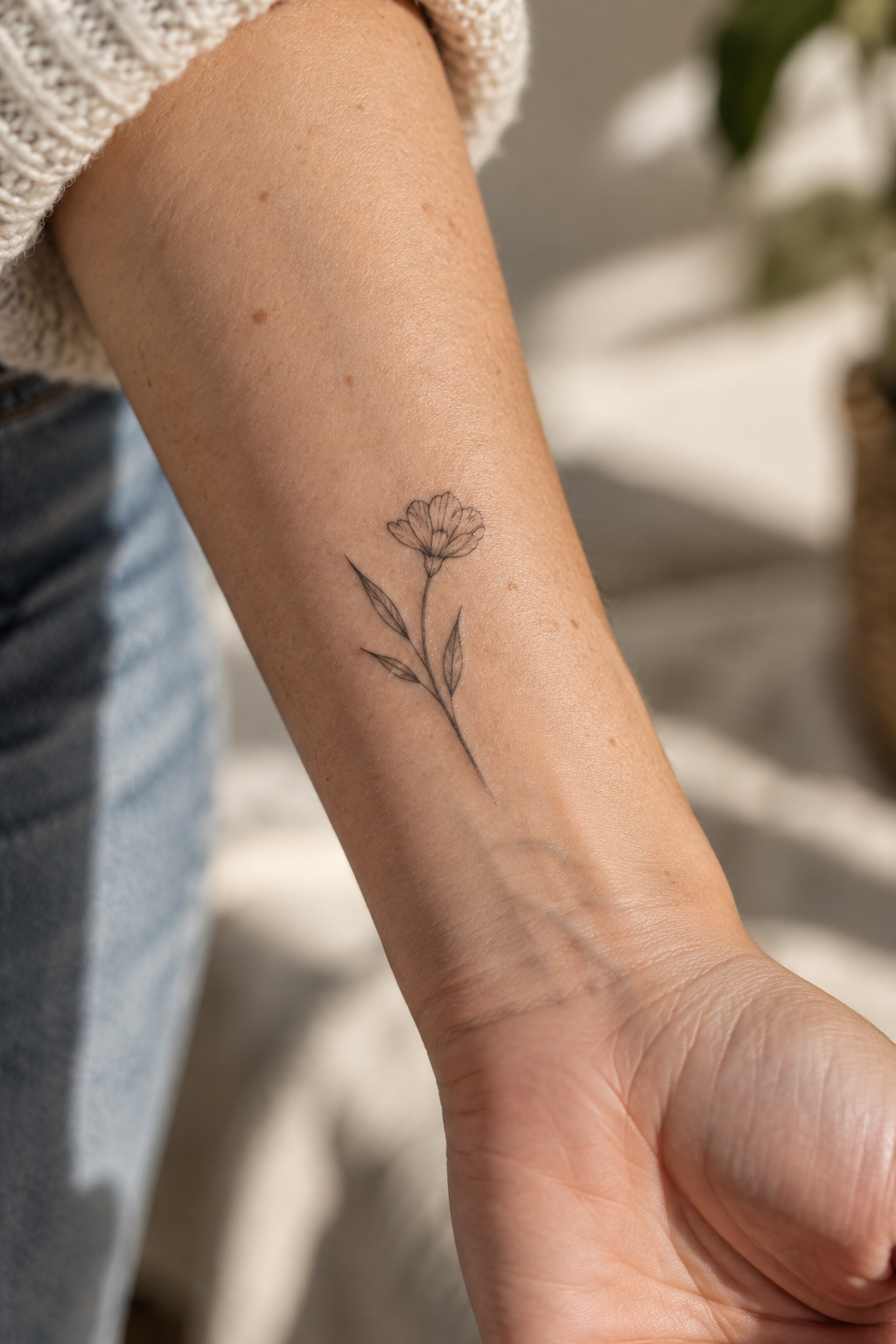
Grief Tattoo Ideas That Feel Like Love, Not Just Loss
Grief can be difficult to put into words. Sometimes the smallest symbol, familiar flower, handwritten line, or meaningful date can express what a long explanation cannot. That is one reason memorial tattoos can feel so personal. They create a permanent reminder of someone important while allowing the meaning to remain as private or visible as you want it to be.
The most meaningful grief and healing tattoo ideas do not necessarily look sad. A memorial tattoo can represent warmth, connection, gratitude, protection, continuity, or a favorite memory instead of focusing directly on death. It might look like a delicate botanical tattoo to everyone else while quietly representing someone you loved.
That subtle approach can also make a design easier to live with over time. Rather than choosing imagery based entirely on the intensity of early grief, you can create something connected to the person’s life, personality, handwriting, favorite place, or the relationship you shared.
If you are searching for a gentle tribute, these 18 ideas offer different ways to turn memory into meaningful ink without making the finished tattoo feel overwhelmingly heavy.
1. A Tiny Flower Connected to Their Memory
A small flower is one of the most versatile memorial tattoo ideas because the symbolism can be deeply personal without being immediately obvious. Instead of choosing a flower simply because it traditionally represents remembrance, think about flowers connected specifically to the person.
Perhaps they grew roses beside their home, always bought tulips in spring, loved wildflowers, or had a favorite houseplant. Even a flower associated with a particular family trip can become meaningful.
A fine-line stem with one or two small leaves can work beautifully on the inner forearm, wrist, ankle, shoulder, or collarbone. Keeping the botanical details simple can also help the design remain delicate rather than turning it into a large memorial piece.
2. Their Actual Handwriting
Few memorial designs are more personal than someone’s handwriting. A short word taken from a birthday card, recipe, old note, letter, or signed photograph can preserve something unmistakably theirs.
You do not need an entire sentence. Words such as love, always, a nickname, or even their signature can carry tremendous meaning.
Bring the clearest original example you can find to your tattoo consultation. A skilled artist can discuss which irregularities should remain so the tattoo still feels authentic while adjusting extremely fine or crowded marks when necessary for tattooing.
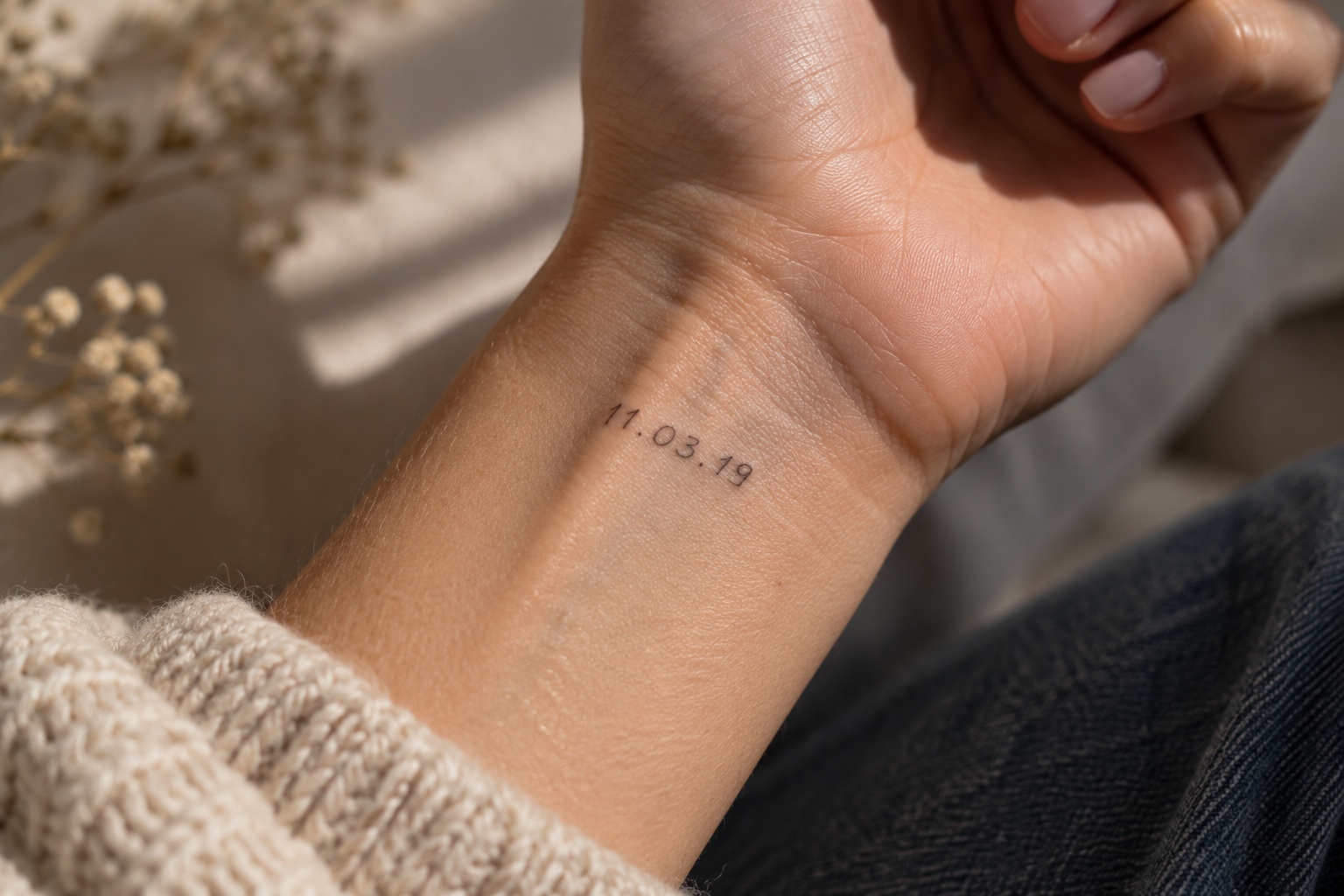
3. A Meaningful Date in Fine-Line Numbers
A date is an especially private loss tattoo design. Other people may see several tiny numbers, while you understand exactly what they represent.
The date does not have to mark a death. Consider a birthday, wedding date, anniversary, the day you met, or another positive moment connected to the person. Choosing a date associated with life rather than loss can shift the emotional emphasis of the tattoo toward remembrance and gratitude.
Simple numerals can sit discreetly on the wrist, arm, ankle, rib area, or near another small symbol.
4. Their Birth Flower
Birth flowers provide an understated way to represent someone without including a name or portrait. They work particularly well for people who already love botanical fine-line tattoos.
A single stem creates a minimal design, while several birth flowers can represent multiple family members in one small bouquet. The concept can also grow later if you decide to add another meaningful botanical element.
Ask your artist to simplify very intricate petals if the tattoo will be especially small. A slightly cleaner composition may preserve the recognizable shape more effectively than squeezing excessive detail into a tiny area.
5. A Small Bird in Flight
A bird can suggest freedom, movement, homecoming, or continuing connection. Because bird imagery already works naturally as tattoo art, it does not have to read immediately as a grief tattoo.
One tiny bird can represent one person. Two birds can symbolize a relationship, while a small group may represent family. A simple silhouette creates a quiet result, while delicate linework can add wings and movement without making the design visually heavy.
Placement can reinforce the feeling. A bird following the curve of the shoulder, forearm, or collarbone naturally creates a sense of motion.
6. A Favorite Tree or Leaf
Memorial symbolism does not need to rely on conventional memorial imagery. Sometimes a leaf from a familiar tree carries more emotional weight than a traditional symbol ever could.
Consider the tree outside a childhood home, a plant from a loved one’s garden, an autumn leaf connected to a favorite season, or a branch from a place where you spent time together.
Leaves also translate beautifully into fine-line designs. Their natural veins and silhouettes provide enough detail to feel organic while remaining subtle.
7. A Tiny Star
A tiny star is one of the simplest examples of healing tattoo symbolism. Depending on your interpretation, it might represent guidance, enduring light, direction, or simply someone whose influence remains present.
The design can be as minimal as a single outlined star. You could also use a small constellation, particularly if a certain night, location, or zodiac connection has personal meaning.
Because stars are familiar tattoo motifs, the memorial significance can remain entirely private unless you choose to explain it.
8. A Familiar Object They Always Used
Think beyond conventional symbols and remember the ordinary things that made the person recognizable to you. Sometimes those details hold the strongest memories.
It could be a tiny coffee cup, gardening tool, sewing needle, book, fishing lure, camera, paintbrush, teacup, musical instrument, or another everyday object.
The strongest version of this idea is usually specific rather than generic. Instead of tattooing any mug, for example, use the recognizable silhouette of the cup they always used. Personal details turn an ordinary object into a quiet memorial.
9. A Minimal Heart With a Personal Detail
A heart is timeless, but adding one personal element can prevent it from feeling generic. A tiny flower could emerge from the outline. Part of the heart could follow a person’s handwriting. A date or initial might sit beside it.
Another option is an imperfect hand-drawn heart copied from an old note or card. Its irregular shape can make it more emotionally significant than a perfectly symmetrical symbol.
If you prefer very subtle tattoos, a miniature outline heart on the inner arm, wrist, ankle, or rib area can be enough.
10. Their Initial Hidden Inside a Botanical Design
If a visible name feels too direct, consider integrating an initial into another design. The letter might follow the curve of a flower stem, hide among leaves, or become part of a small branch.
This creates a tattoo with two levels of meaning. From a distance, it appears to be a delicate botanical piece. Up close, the personal detail becomes visible.
Ask your artist to keep the letter legible without making it the dominant feature. The goal is integration rather than simply placing a large initial beside a flower.
11. A Small Butterfly or Moth
Butterflies are frequently associated with transformation and change, making them a natural choice when exploring grief and healing tattoo ideas. A fine-line butterfly can feel hopeful and light rather than mournful.
A moth offers a quieter, slightly moodier alternative. It can work particularly well if you prefer botanical, celestial, or subtle gothic tattoo aesthetics.
Either design can incorporate a tiny secondary detail such as a flower, star, initial, or date. However, you do not need to add multiple symbols simply to make the tattoo meaningful. One carefully chosen image is often enough.
12. A Sound Wave From Their Voice
If you have a meaningful voice recording, a sound-wave-inspired tattoo can turn something auditory into a visual keepsake. It might reference a short phrase, laugh, greeting, or another recorded moment.
The result can look like an abstract fine-line pattern to anyone unfamiliar with its origin, making this an especially private memorial concept.
Before committing to the design, discuss the amount of fine detail with your tattoo artist. A visually simplified interpretation may work better as a tattoo than trying to reproduce every tiny variation of a complex waveform.
13. A Symbol From a Shared Place
Places often become containers for memory. Instead of tattooing the person directly, you can represent somewhere that reminds you of your relationship.
A tiny mountain outline could reference family trips. A wave might represent summers near the water. A simple house outline could recall a childhood home. Coordinates can identify a meaningful location while keeping the story private.
This approach can make a memorial tattoo feel more like a preserved memory than a traditional symbol of mourning.
14. A Favorite Phrase Reduced to a Few Words
You may remember something the person said repeatedly: advice, a joke, an encouraging phrase, or a simple expression that instantly sounds like them.
Instead of tattooing a long quotation, identify the smallest part that carries the whole memory. Two or three words often create a cleaner tattoo and can still bring the person’s voice immediately to mind.
Typography matters here. Their handwriting can create the most personal result, but a restrained handwritten-style or simple serif treatment can work when no original handwriting is available.
15. A Tiny Sun or Sunrise
Memorial tattoos do not have to center darkness. A sun can represent warmth, life, guidance, or the way someone made a particular period of your life brighter.
A tiny rising sun works especially well for someone who wants the tattoo to acknowledge both grief and continuing forward movement. Fine rays and a simple horizon line can communicate the idea without creating an elaborate scene.
This type of positive symbolism can make a memorial tattoo feel comforting each time you see it.
16. A Delicate Infinity-Inspired Line
An infinity symbol can represent a bond that remains meaningful even after someone is gone. If the standard symbol feels too obvious, it can be reinterpreted more subtly.
A flower stem can curve into a loose infinity shape. A continuous fine line can create an abstract loop. An initial or tiny date can become part of one side.
Keeping the concept organic rather than perfectly geometric often makes the design feel softer and more individual.
17. A Small Piece Inspired by Their Favorite Hobby
Some of the best memorial tattoo ideas celebrate how someone lived. Consider what they loved doing rather than concentrating exclusively on their absence.
A tiny musical note might represent someone who constantly played music. A needle and thread could honor someone who sewed. A miniature book can remember an enthusiastic reader, while a small garden sprig might represent someone happiest among plants.
These tattoos often create positive associations because the image recalls a characteristic, routine, or passion you remember fondly.
18. A Symbol Only You Understand
Your memorial tattoo does not need to make sense to anyone else. In fact, one of the most meaningful choices may be something that would look completely ordinary without the story behind it.
It could be a tiny number, shape, food, household object, doodle, flower, animal, or abstract mark connected to an inside joke or seemingly insignificant memory.
Private symbolism removes the pressure to find a universally recognized representation of grief. Instead, you can choose the image that makes you think immediately of the person. That personal recognition is what gives the tattoo its meaning.
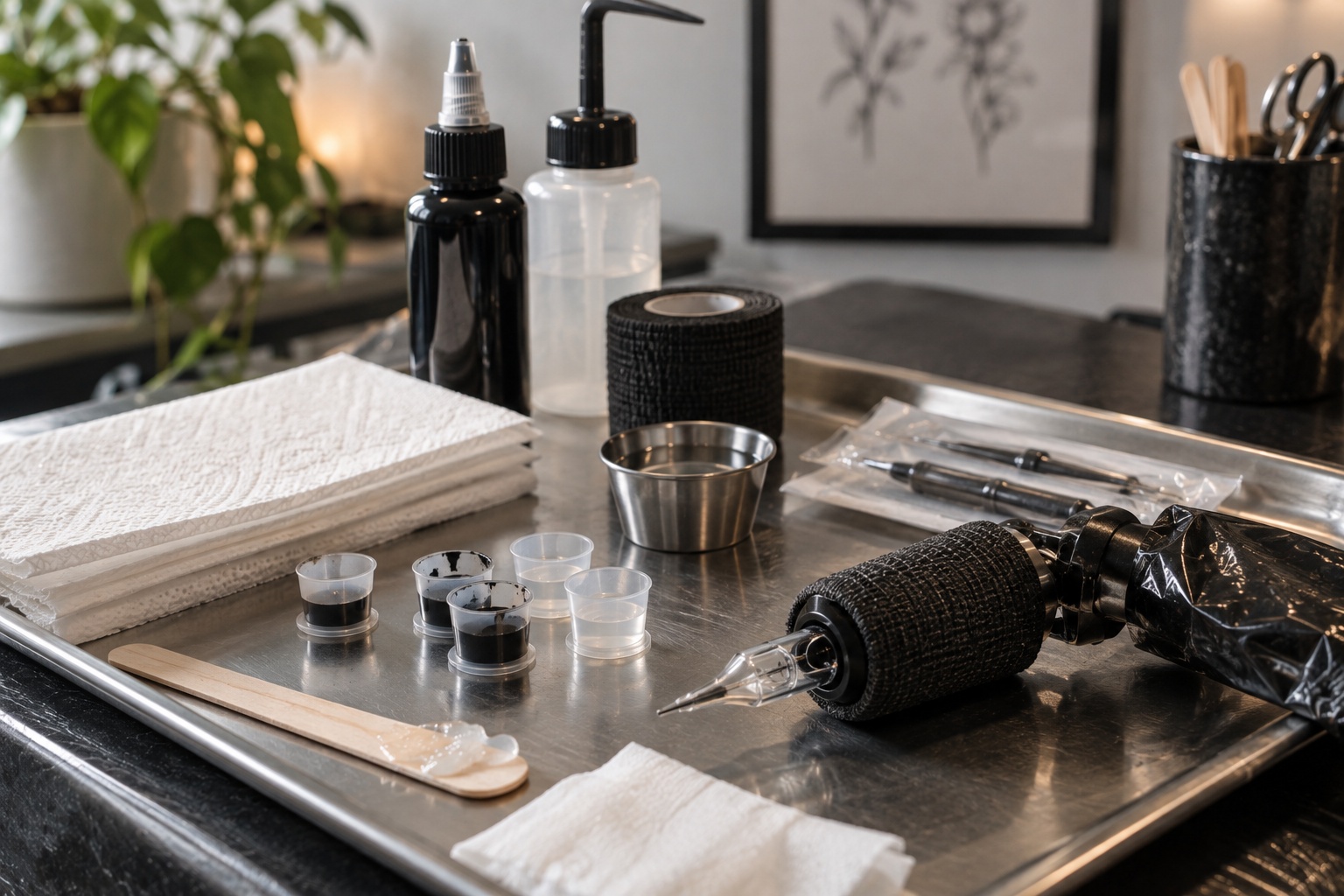
How to Make a Memorial Tattoo Feel Gentle Instead of Heavy
The subject is only part of what determines the emotional tone of a memorial tattoo. Composition, scale, placement, and the number of symbols included can dramatically change how the finished piece feels.
If your goal is a quiet tribute, consider these approaches:
- Start with one meaningful detail. You do not need to represent every aspect of the relationship in one tattoo.
- Choose imagery connected to life. Flowers, hobbies, handwriting, places, and familiar objects can focus the design on memories rather than loss.
- Keep the composition visually breathable. Fine lines and negative space can create a softer appearance.
- Use personal symbolism. The design does not need to be recognizable as a memorial tattoo to other people.
- Choose visibility intentionally. Decide whether you want to see the tattoo every day or prefer a more private placement.
The Memorial Tattoo Mistake to Avoid
One common mistake is trying to fit too much meaning into a small design. A date, name, flower, bird, heart, quotation, halo, and several other symbols may all be individually meaningful, but combining everything can make a small tattoo visually crowded.
More symbolism does not automatically create more emotional significance.
Instead, identify the one detail that most strongly reminds you of the person. If their handwriting already makes the design unmistakably personal, you may not need additional imagery. If their favorite flower says everything you want the tattoo to say, allow the flower to stand on its own.
This is especially important for very small fine-line tattoos. Giving the individual lines enough space can produce a cleaner composition than forcing numerous tiny details into the same area.
How to Design Your Memorial Tattoo Step by Step
You do not need to arrive at a tattoo appointment with a finished drawing. A collection of meaningful references is often more useful because your artist can translate the concept into a tattooable composition.
- Write down the memories you want the tattoo to represent. Focus on specific details, objects, phrases, places, flowers, and routines.
- Choose the emotional tone. Decide whether you want the piece to feel peaceful, warm, botanical, minimal, hopeful, private, or slightly more traditional.
- Select one primary symbol. Give the design a clear visual focus.
- Add a secondary detail only if necessary. An initial, date, or tiny botanical element may strengthen the story without overwhelming it.
- Consider placement and visibility. Think about whether seeing the tattoo frequently would feel comforting or whether you would prefer a private placement.
- Collect original references. Bring handwriting, photographs, flower references, objects, or other material that can make the design specific.
- Let your artist adapt the concept. A tattoo artist can recommend adjustments to scale, line spacing, placement, and detail for the skin and location you choose.
Choosing a Placement for a Grief and Healing Tattoo
Placement can be emotional as well as aesthetic. Some people want their memorial tattoo somewhere they can easily look at it, while others prefer knowing the design is there without seeing it constantly.
Inner Forearm
The inner forearm provides enough room for handwriting, flowers, small objects, dates, and other delicate designs. It is also easy for the wearer to see, which can make it appealing when the tattoo is intended as a regular reminder.
Wrist
The wrist suits tiny dates, initials, hearts, stars, and minimal symbols. Because space is limited, designs usually benefit from simplicity rather than extremely intricate detail.
Collarbone
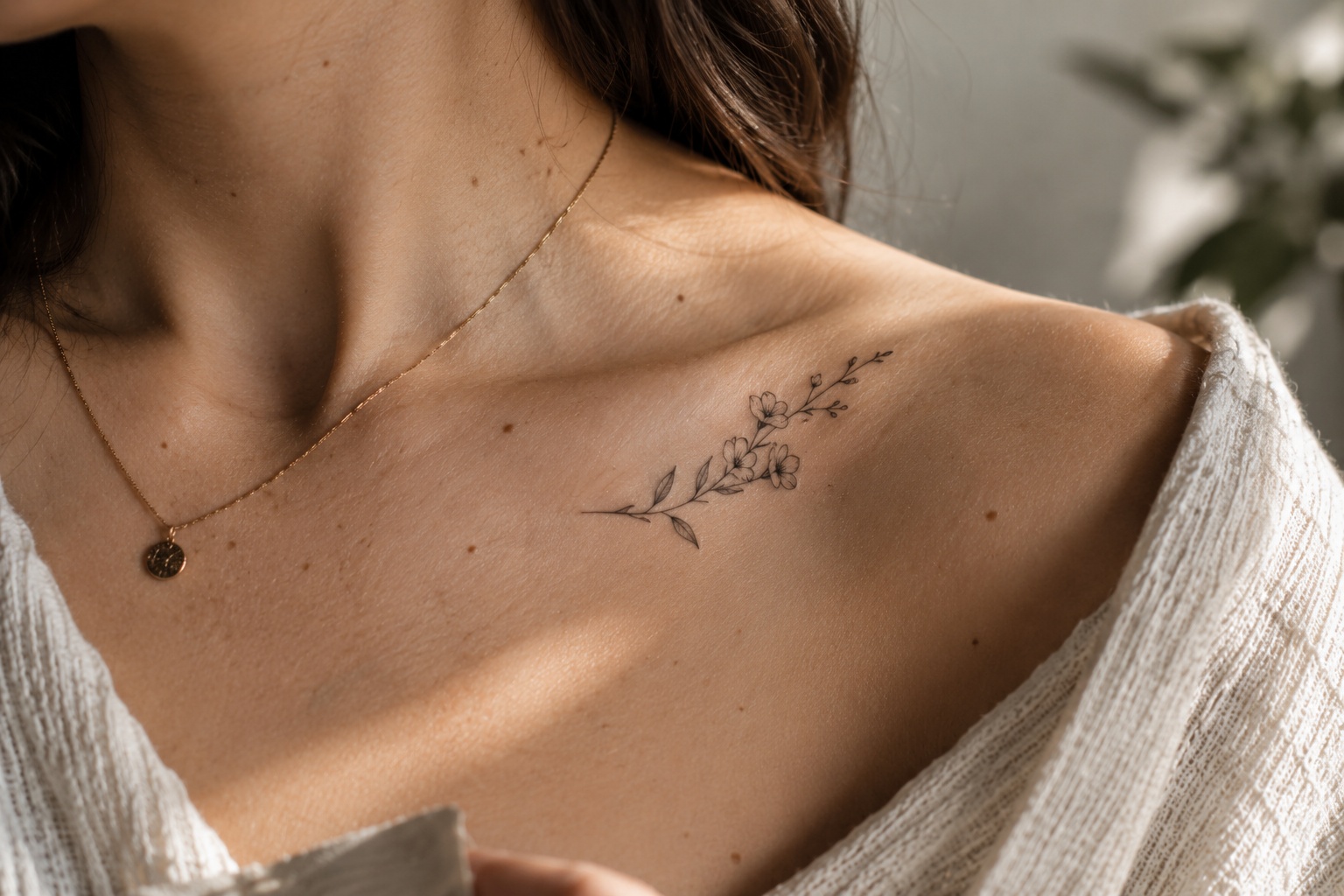
A fine-line flower, phrase, or small symbolic design can follow the natural line of the collarbone. This placement can feel delicate while remaining easy to cover with many clothing styles.
Rib Area
The rib area offers greater privacy and works particularly well for handwriting, botanical stems, dates, and personal symbols. Its natural curves can also complement flowing designs.
Ankle
The ankle is a classic location for a small flower, bird, star, initial, or other compact memorial design. It can remain subtle while still being visible when you choose.

Questions to Consider Before Your Appointment
A memorial tattoo can carry more emotional weight than an ordinary aesthetic choice, so there is no need to rush the design process. Before booking, consider what you want the tattoo to communicate to you several years from now.
- Does this symbol remind me of the person’s life or primarily of losing them?
- Would I prefer the meaning to be obvious or private?
- Do I have original handwriting, photographs, or other references that could make the design more personal?
- Would I rather see the tattoo frequently or place it somewhere more discreet?
- Am I choosing this imagery because it matters to me or because it is traditionally associated with memorial tattoos?
- Could the design be simplified while preserving its most important meaning?
There is no universal timeline for deciding on a memorial tattoo. Giving yourself room to revise the idea can help separate the enduring symbolism from details you may only feel strongly about in a particular moment.
A Memorial Tattoo Can Celebrate What Remains
The gentlest grief tattoos often focus less on representing death and more on preserving connection. A flower from someone’s garden, a line of handwriting, a tiny symbol from a shared place, or an ordinary object they loved can hold a story far larger than the tattoo itself.
That is what makes grief and healing tattoo ideas so personal. The design does not have to announce loss. It can represent affection, gratitude, memory, humor, warmth, or something only you recognize.
Start with the detail that makes you remember the person as they lived. Then simplify the idea until the tattoo contains only what matters. Whether you choose a delicate botanical stem, a handwritten word, a tiny date, or a private symbol no one else understands, the result can become a quiet way to carry a meaningful connection forward.