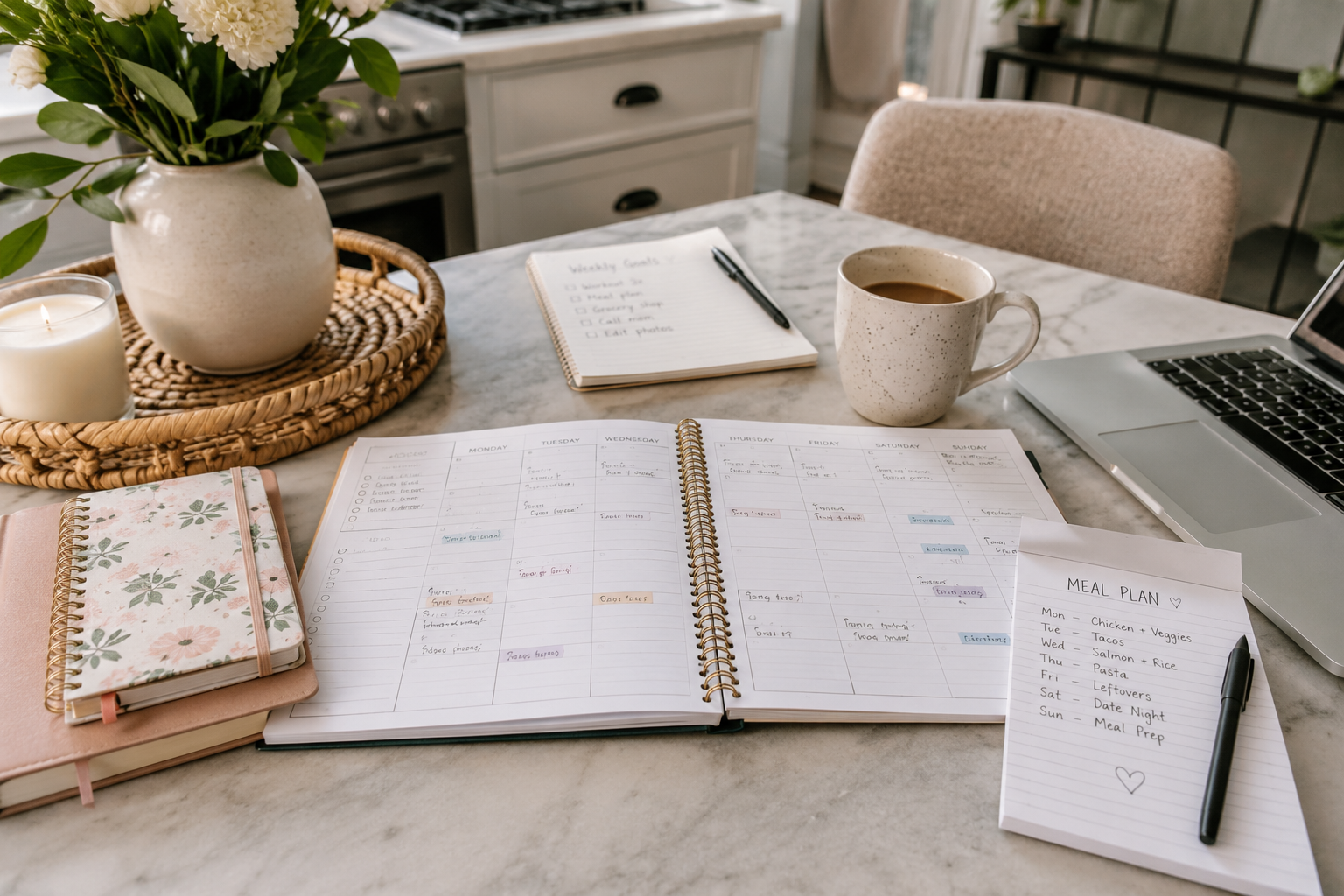
Why Weekly Planning Makes Everyday Life Feel Easier
If your week often feels rushed, scattered, or harder than it needs to be, a simple weekly planning routine can make a big difference. You do not need a color-coded planner, a complicated productivity system, or a perfectly quiet Sunday afternoon to get organized. What you do need is a realistic way to look ahead, decide what matters most, and set up your week so daily decisions feel easier.
That is where weekly planning ideas come in. A good weekly plan helps you see appointments before they sneak up on you, avoid the last-minute dinner scramble, remember the errands you keep pushing off, and create a little more breathing room in your routine. Instead of waking up every day wondering what needs your attention first, you already have a roadmap.
The best part is that weekly planning does not have to feel strict or overwhelming. In fact, the most helpful weekly routines are usually simple. They help you manage your time, energy, home tasks, and priorities without turning your life into a giant checklist. A strong weekly plan gives you structure, but it should still leave room for real life.
In this post, you will find 10 weekly planning ideas that can help your life feel more organized. These are practical habits you can mix and match based on your schedule, whether you are planning for work, family life, school, home responsibilities, or all of the above. If you want to plan your week without feeling overwhelmed, start here.
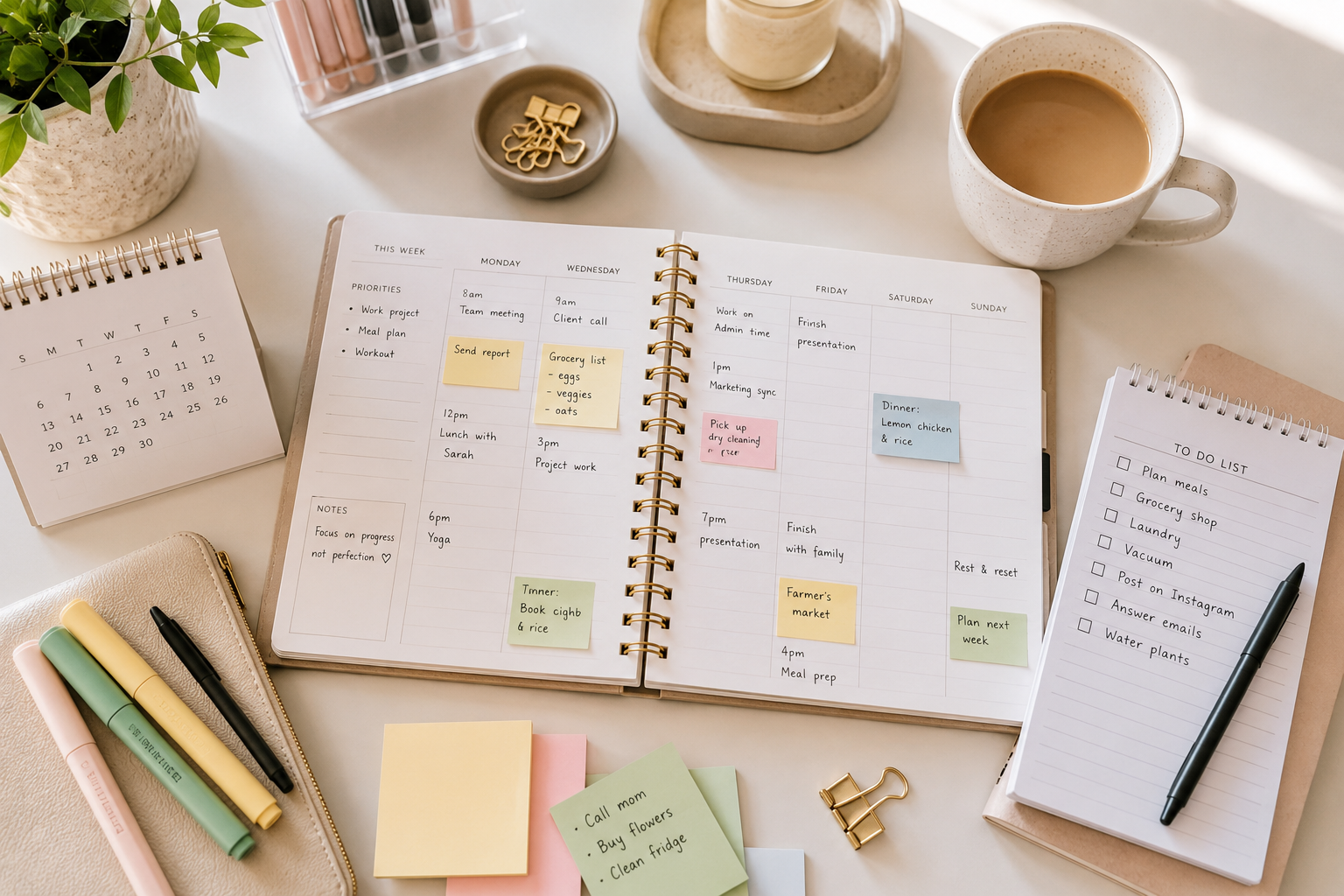
1. Start With a Weekly Reset Before You Make Your Plan
One of the easiest ways to make weekly planning feel useful instead of chaotic is to begin with a quick weekly reset. A weekly reset is simply a short routine that helps you clear visual clutter, review what happened last week, and get your mind ready for the next one.
This does not need to be a long Sunday ritual unless you want it to be. Even 20 to 30 minutes can help. The point is to create a calm starting point before you begin filling in your schedule or writing your to-do list.
A simple weekly reset might include:
- Clearing papers, receipts, and random clutter from your kitchen counter or desk
- Putting laundry away so it does not carry into the next week
- Checking your bag, work items, or school supplies
- Throwing out old food from the fridge
- Reviewing unfinished tasks from the previous week
- Opening your planner, calendar, or notes app and starting fresh
This habit matters because it gives you a cleaner mental picture of what needs attention. When you jump into planning without resetting first, it is easy to forget loose ends, overbook yourself, or feel like your week is already messy before it starts.
If you want your weekly planning routine to stick, pair it with something pleasant. Make coffee, play music, light a candle, or sit down in the same quiet spot each week. A repeatable routine helps weekly planning feel less like a chore and more like a reset button.
2. Check Your Calendar First, Then Build Your Week Around It
Before you write a single to-do list item, open your calendar. This step sounds obvious, but it is one of the most important weekly planning ideas if you want your plan to be realistic. Your calendar tells you where your time is already committed, which means it should shape the rest of your week.
Look at the next seven days and note:
- Appointments and meetings
- School events, deadlines, or activities
- Work shifts or project due dates
- Social plans and family commitments
- Travel time and commute-heavy days
- Any days that are naturally busier than others
Once you see the shape of your week, you can plan more intentionally. If Tuesday already includes two appointments and a late meeting, that may not be the best day to schedule a major grocery run, deep clean the bathroom, and answer every email. If Thursday is light, that might be the better day for errands or focused work.
Think of your calendar as the framework for the week. Your to-do list should fit inside that framework, not compete with it. This one shift can help you stop making unrealistic plans that leave you feeling behind by Wednesday.
If you use both a digital calendar and a paper planner, keep them connected. You might store appointments in your phone and then write a simple weekly overview in a notebook or planner. The system does not matter as much as making sure you can see your week clearly in one place.
3. Choose Your Top 3 Priorities for the Week
A long weekly to-do list can look productive, but it can also make your week feel heavy before it even starts. One of the most useful weekly planning habits is choosing just three main priorities for the week. These are the tasks, projects, or responsibilities that matter most right now.
Your weekly priorities could be work-related, home-related, or personal. For example:
- Finish a work presentation by Thursday
- Book a doctor appointment and handle insurance paperwork
- Prep simple lunches for the week
- Declutter the entryway and organize shoes and bags
- Complete one school assignment early
- Start a workout routine with three planned sessions
Picking three priorities does not mean you will only do three things all week. It simply helps you identify what needs the most attention so those tasks do not get buried under small, less important items. When everything feels equally urgent, it becomes harder to make progress on anything meaningful.
A helpful way to choose your top three is to ask:
- What would make this week feel successful by Friday?
- What task has the biggest payoff if I handle it now?
- What keeps getting pushed to next week?
- What would reduce stress if I took care of it early?
Write your top three priorities where you will actually see them. That might be the first page of your planner, a sticky note on your desk, or the notes app on your phone. When your week gets busy, these priorities help you refocus instead of reacting to whatever feels loudest in the moment.
4. Give Every Day a Loose Theme to Make Decisions Easier
If you struggle with mental clutter, daily themes can be a surprisingly helpful way to organize your week. A themed week does not mean every hour is scheduled. It just means each day has a general purpose, so you are not trying to do everything every day.
For example, your weekly rhythm might look like this:
- Monday: Admin tasks, email catch-up, and calendar planning
- Tuesday: Focus work or project day
- Wednesday: Grocery shopping and meal prep
- Thursday: Errands and appointments
- Friday: House reset, budgeting, and unfinished tasks
- Saturday: Family plans, social plans, or bigger home projects
- Sunday: Weekly reset and planning routine
This approach works because it reduces decision fatigue. Instead of wondering every day when you are supposed to fit in errands, meal planning, admin work, and cleaning, you already have a rough structure. You can still move things around when needed, but you are not starting from zero.
Daily themes are especially useful for busy households, remote workers, parents, students, or anyone juggling multiple types of responsibilities. The goal is not to create rigid rules. The goal is to make recurring tasks easier to place.
If a full themed week feels too structured, try assigning themes to only two or three days. Even something as simple as “Wednesday is errands day” or “Sunday is planning and prep day” can help your week feel more organized.
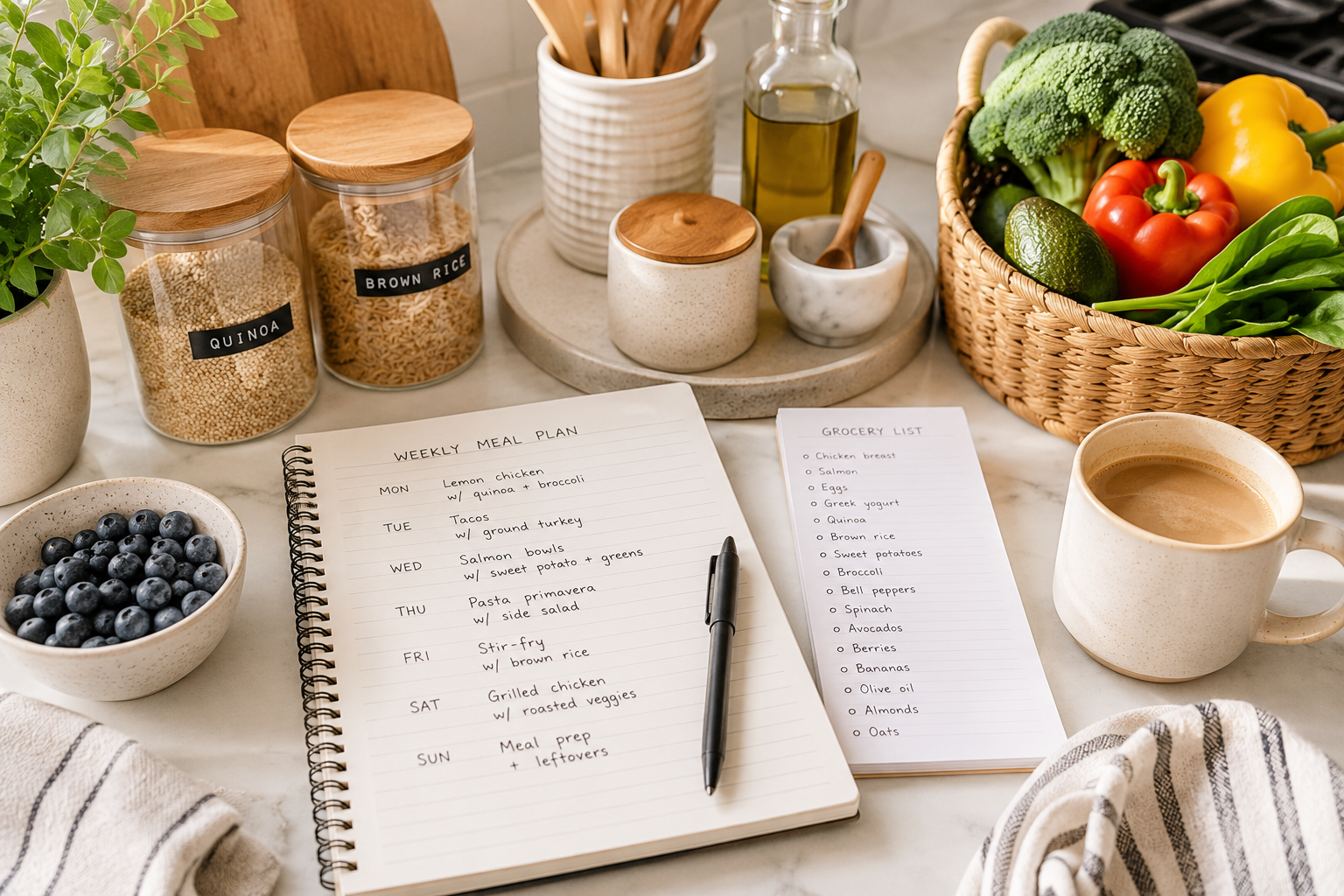
5. Make a Weekly Meal Plan Before the Week Gets Busy
One of the most practical weekly planning ideas is also one of the most underrated: make a simple meal plan. You do not need to prep every meal in advance or cook from scratch every night. You just need a basic plan for what you are going to eat, what ingredients you need, and which nights need easier options.
Meal planning reduces last-minute stress in a big way. It can save money, cut down on food waste, and help you avoid the nightly “what are we making for dinner” question when everyone is already tired.
Start by looking at your week and asking:
- Which nights are busiest?
- Which nights have time for actual cooking?
- What leftovers can be reused for lunch?
- What ingredients do I already have at home?
Then create a simple plan. It might look like this:
- Monday: Sheet pan chicken and vegetables
- Tuesday: Tacos with prepped toppings
- Wednesday: Pasta and salad
- Thursday: Leftovers or freezer meal
- Friday: Homemade pizza or takeout night
You can also plan breakfasts, lunches, and snacks if that makes your weekdays easier. The goal is not perfection. The goal is to remove unnecessary stress from the middle of the week.
Once your meals are planned, build your grocery list around them. This small planning step helps the rest of your week run more smoothly because food is one of those everyday decisions that affects everything else, including time, budget, and energy.
6. Create a Weekly To-Do List and a Daily To-Do List
One reason weekly planning sometimes fails is that everything gets dumped into one giant list. A long list can help you remember things, but it does not always help you act on them. A better approach is to create two layers: a weekly to-do list and a smaller daily list.
Your weekly to-do list holds everything that needs to happen sometime during the week. This can include:
- Pay the electric bill
- Pick up dry cleaning
- Email the teacher back
- Return a package
- Refill prescriptions
- Clean out the car
Your daily to-do list is where you choose what you will actually tackle today. This list should be short enough to feel doable. For most people, that means a few important tasks rather than 18 random items.
When building your daily list, try this structure:
- 1 must-do task
- 2 to 3 important tasks
- 1 quick life admin task
- Optional extras if time allows
This keeps your daily plan focused without making you feel like you are constantly failing to “finish the list.” It also lets you use your weekly list as a holding place for tasks that matter but do not need attention today.
If you like paper planning, keep your weekly list on one page and your daily list on another. If you prefer digital planning, use a notes app or task app with separate sections. The format is flexible. What matters is giving your brain a place to store everything while still making daily action feel clear.
7. Batch Your Small Tasks Instead of Letting Them Interrupt Your Week
Small tasks are sneaky. On their own, they do not seem like a big deal. But when they pop up all day long, they interrupt your focus and make your week feel more chaotic than it actually is. Weekly planning becomes much more effective when you batch similar small tasks together.
Task batching means grouping similar tasks into one block of time instead of handling them randomly all week. This works especially well for life admin, errands, and digital clutter.
Tasks you can batch might include:
- Returning emails and texts
- Paying bills and checking account balances
- Ordering household supplies
- Scheduling appointments
- Returning packages or picking up prescriptions
- Filing papers or sorting mail
For example, you might set aside 30 minutes on Monday for admin tasks and one errands block on Thursday afternoon. That is often much easier than trying to squeeze each tiny task into random moments throughout the week.
Batching also helps protect your attention. If you are trying to work, cook dinner, or enjoy family time, constantly remembering and switching to small tasks can make you feel mentally scattered. Giving those tasks a designated home inside your weekly plan makes them feel more manageable.
If you tend to forget them, add a recurring planner note like “admin block” or “errands block” to the same day each week. Repetition makes the habit easier to maintain.
8. Plan a Home Reset List for the Week Instead of Doing Everything at Once
Trying to clean the entire house in one day is one of the fastest ways to feel defeated before the week even begins. A better weekly planning strategy is to create a simple home reset list and spread household tasks across the week.
Your home reset list can include the basic tasks that keep your space functioning, not a full deep-cleaning schedule unless that is what you want. Think about the areas that make the biggest difference in daily life when they are under control.
For many people, that includes:
- Laundry
- Kitchen reset and fridge cleanout
- Bathroom wipe-down
- Vacuuming or sweeping main areas
- Changing bed sheets
- Taking out trash and recycling
- Entryway or living room declutter
Once you know your core tasks, assign them to days that make sense. For example:
- Monday: Laundry and towel refresh
- Wednesday: Vacuum and quick bathroom clean
- Friday: Fridge cleanout and kitchen reset
- Sunday: Sheets, trash, and general pickup
This kind of planning helps your home stay in better shape without requiring marathon cleaning sessions. It also keeps household work from taking over your entire weekend.
If you live with family or roommates, weekly planning is a good time to delegate too. Decide who handles groceries, trash, bathrooms, or dishes so the week feels shared instead of one person carrying the whole system alone.

9. Build in a Catch-Up Block for the Tasks That Always Spill Over
Even the best weekly plan needs some flexibility. Life happens. Appointments run long, work gets busy, energy drops, and a task you thought would take 20 minutes ends up taking two hours. That is why one of the smartest weekly planning ideas is to schedule a catch-up block.
A catch-up block is a small pocket of time reserved for overflow. It is where unfinished tasks go before they turn into next week’s stress. You can use it for anything that did not get done earlier in the week, whether that is folding laundry, answering emails, finishing a project, or running one last errand.
This works well because it keeps your weekly plan realistic. Instead of expecting every day to go perfectly, you already have a built-in margin for the unexpected.
Good times for a catch-up block might be:
- Friday afternoon before the weekend starts
- Saturday morning before plans begin
- Sunday during your weekly reset
- One evening with no major commitments
Try to keep this block flexible instead of filling it in advance. Its purpose is to absorb what the week throws at you. If you end up not needing it, that is great. You can use it for something enjoyable, extra prep for next week, or simply rest.
This habit is especially helpful if you tend to feel guilty when unfinished tasks pile up. A catch-up block reminds you that planning is not about perfection. It is about creating a week that can handle real life.
10. End the Week With a Quick Review So Next Week Feels Lighter
The final weekly planning idea is simple, but it makes the next week much easier: do a quick weekly review. This does not need to be a deep journal session or a full productivity audit. It can be a short check-in that helps you close out the current week and carry less mental clutter into the next one.
At the end of the week, ask yourself:
- What got done this week?
- What still needs attention next week?
- What worked well in my routine?
- What felt rushed, stressful, or unrealistic?
- What appointments, bills, or tasks are coming up soon?
Then take a few minutes to move unfinished items forward intentionally instead of leaving them floating in your head. Rewrite them in next week’s list, add them to your calendar if needed, or decide to delete them if they are no longer important.
A weekly review is also a great time to notice patterns. Maybe your meal plan worked well, but you overscheduled errands. Maybe Tuesday is always too busy for laundry. Maybe your weekly priority list helped you focus more than your daily checklist. These small observations make your planning routine smarter over time.
Think of this step as the bridge between one week and the next. It helps you stop carrying loose ends, forgotten tasks, and mental clutter into Monday morning.
How to Make Weekly Planning Feel Simple Instead of Overwhelming
If weekly planning has not worked for you in the past, the problem may not be planning itself. It may be that your system was too complicated, too strict, or built for a different lifestyle. The most effective weekly planning routine is one you can actually repeat in real life.
Here are a few ways to keep it simple:
- Pick one planning day. Sunday is common, but any day works if it fits your schedule.
- Use one main planning space. That could be a planner, a notebook, a digital calendar, or a notes app.
- Do not plan every hour. Give yourself structure, but leave breathing room.
- Keep your daily list short. A realistic list is more helpful than an ambitious one.
- Review your energy, not just your time. Save harder tasks for the days you can handle them best.
- Repeat what works. If grocery day on Wednesday helps, keep it there. If Friday catch-up blocks work, make them a habit.
You also do not have to adopt all 10 ideas at once. Start with two or three that solve your biggest stress points right now. Maybe that is meal planning, choosing weekly priorities, and checking your calendar every Sunday. Once those feel natural, you can add more.
A Simple Weekly Planning Routine You Can Try This Week
If you want an easy place to start, here is a simple weekly planning routine that pulls the ideas in this post together without making the process feel too long:
- Do a 15-minute weekly reset and clear obvious clutter.
- Check your calendar for appointments, deadlines, and busy days.
- Choose your top 3 priorities for the week.
- Write a master weekly to-do list.
- Plan dinners and make a grocery list.
- Assign household tasks and errands to specific days.
- Add one catch-up block before the weekend ends.
- Each night, pull 3 to 5 items from the weekly list into tomorrow’s plan.
This routine can be done in less than an hour once you get used to it, and it creates a much clearer picture of the week ahead. You will still have busy days and unexpected changes, but you will spend less time reacting and more time moving through the week with intention.
Final Thoughts on Weekly Planning Ideas That Actually Help
Weekly planning is not about creating a perfect life or squeezing productivity out of every minute. It is about making everyday life feel more manageable. When you know what is coming, what matters most, and where basic tasks fit into your week, you can stop carrying so much in your head.
The best weekly planning ideas are the ones that reduce stress, not add to it. A weekly reset, calendar check, meal plan, priority list, home reset, and catch-up block may sound small on their own, but together they create structure that supports real life. They help you feel more prepared, more organized, and less overwhelmed by the constant question of what needs to happen next.
If you have been wanting to get your life a little more organized, this is a good place to begin. Choose one or two ideas from this list and try them this week. Keep what works, adjust what does not, and build a weekly planning routine that fits your life instead of fighting it.